




This issue of What We’re Reading covers a Gestapo chief bankrolling the first narco-state, autocrats discovering they need better ideas and not just better prisons, a Red Sea chokepoint splitting BRICS’s multipolar promise, Israel dressing a new prison up as a nature reserve, and an account of Egypt’s sovereignty being mortgaged.
For possibly the first time, this reading list is heavy on theory. It just so happens that the third issue of Socialist Papers, Egypt’s quarterly journal of Marxist theory, is now out, and it’s a strong one. Sameh Naguib is building toward a genuinely Marxist understanding of the Global South, taking dependency theory apart piece by piece. Sayed Siddiq delivers a cutthroat defense of Gramsci against a “Gramscian reading” of the 1919 Egyptian revolution that, in his account, quietly strips Gramsci of everything that made him a revolutionary.
Separately, Tamer Wagih delivers a staunch defense of communist utopia in Sifr against both the lowered ceilings of a “realistic” socialism and the anti-foundationalist thought that gave up on the idea there was ever a ceiling worth reaching for in the first place.
World
The alliance between the ‘king of cocaine’ and a Gestapo chief to create the first narco-state in Bolivia — Caio Ruvenal, El Pais
When Bolivian drug lord Roberto Suárez watched Brian De Palma’s Scarface in 1983, he joked about suing Universal Pictures for intellectual theft. Pointing at the fictional Bolivian kingpin Alejandro Sosa, Suárez turned to his companion on the couch—a young Pablo Escobar—and laughed that the film had it backwards: Al Pacino’s Tony Montana wasn’t a Miami Cuban, but a boy from the Colombian countryside sitting right beside him.
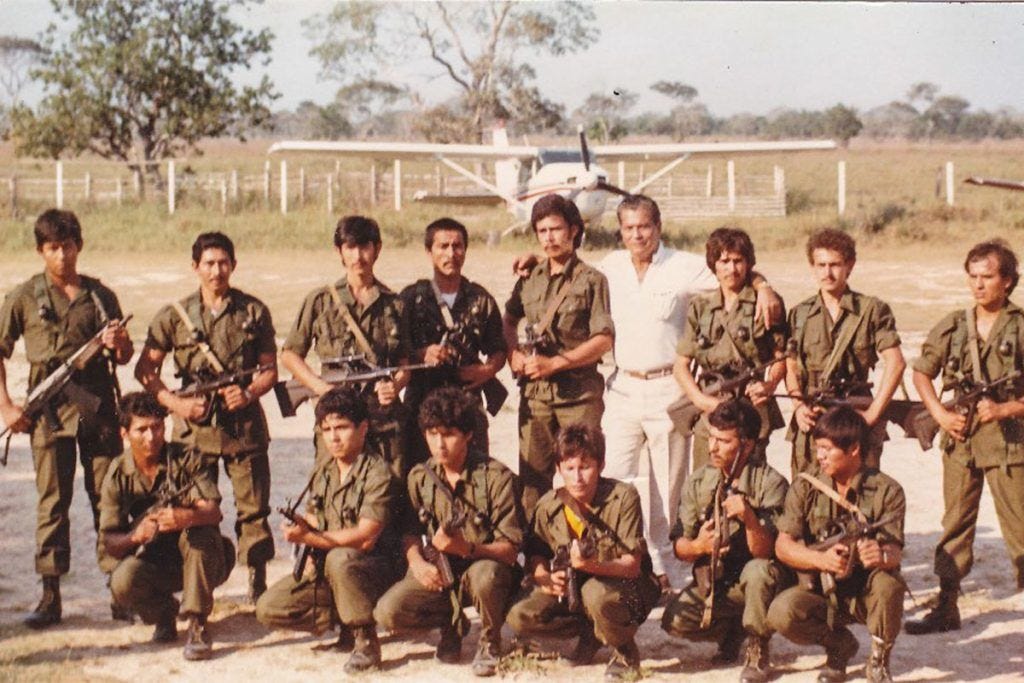
In this piece, Caio Ruvenal reviews El narco y el nazi, a book-length investigation by Christian Bergmann and David López that unearths the stranger-than-fiction history behind Suárez’s empire: the fusion of Amazonian cattle capital and Nazi intelligence networks that birthed the world’s first bona fide narco-state.
The catalyst for this cartel statehood was Klaus Barbie, the notorious “Butcher of Lyon” who fled postwar Europe via Catholic ratlines and reinvented himself as an honorary colonel in the Bolivian armed forces. Over a 1979 dinner, Barbie solicited 5 million US dollars from Suárez to finance General Luis García Meza’s bloody 1980 “Cocaine Coup,” framing the putsch as an ideological crusade against creeping Andean communism.
In exchange, Barbie supplied the cattle baron with an armed enforcement wing christened Los Novios de la Muerte (The Fiancés of Death)—a paramilitary squad staffed by European neo-fascist mercenaries who eliminated domestic competition and protected distribution corridors with Gestapo tradecraft.
What makes Bergmann and López’s account so compelling is their materialist decoding of the drug lord persona. Suárez succeeded not because of underworld mystique, but because he was an experienced agrarian capitalist who understood bulk supply logistics.
Before his intervention, peasant producers sold unrefined coca paste to Colombian buyers for pocket change; Suárez consolidated the supply, established price floors, and turned the Amazonian basin into a vertically integrated agro-industrial assembly line. Between 1979 and 1985, Bolivian coca leaf output exploded from 17,000 to over 141,000 tonnes, generating more than 1.5 billion dollars annually as the military apparatus became a wholly owned subsidiary of the trade.
Ruvenal allows the narrative to revel in its dark, cinematic absurdity without losing sight of the Cold War machinery that enabled it. As the authors note, the Bolivian experiment served as an early blueprint for the Iran-Contra affair, linking anti-communist dirty wars directly to unregulated shadow finance.
The alliance between a Nazi torturer and an Amazonian rancher was never an ideological accident, but a pragmatic marriage of convenience: fascism provided the repressive state umbrella, and wholesale cocaine paid the bills.
Why Autocrats Care What People Think — Paul Sonne, New York Times
The Federal Protective Service, the guard charged with securing Vladimir Putin’s life, does not just rely on body armor. It also operates an internal sociology division that conducts clandestine opinion polling across Russia. At the public end of this apparatus, the director of a state pollster enjoys such institutional proximity that signs of his lavish lifestyle can be seen online, while presidential administration deputy Sergei Kiriyenko monitors real-time municipal chatter.
Writing as Russia’s parliamentary elections kicked off, Paul Sonne uses these details to puncture the misconception that despotic regimes govern in blind indifference to their subjects.
Drawing on Ronald Wintrobe’s classic “dictator’s dilemma,” Sonne unpacks why tyrannical systems obsess over measurement. When open dissent is criminalized, fear poisons upward communication, leaving rulers unable to distinguish genuine loyalty from pragmatic performance, and managed elections or covert surveys are not designed to risk power, but to calibrate coercion, audit regional governors’ mobilizational capacity, and detect the precise points where passive compliance risks curdling into active resistance. That elaborate theater is essentially an information-gathering machine.
This dynamic directly mirrors what Egypt witnessed late last year, where parliamentary ballots functioned as bureaucratic stress tests rather than democratic exercises. Peeling back the New Republic’s choreographed races revealed how different security agencies use electoral management to arbitrate rivalries between their preferred parties, discipline regional clientelist networks, and test local patronage pipelines.

Sonne captures the Russian variant of this exact institutional neurosis, where the ballot box is an administrative instrument to audit elite compliance and quantify stability, entirely divorced from popular sovereignty.
The author is brilliant in demystifying autocratic statecraft, yet its reliance on mainstream institutional political science leaves critical material levers unexamined. By reducing the dynamic to psychological signaling and game theory, Sonne minimizes how wartime industrial subsidies, welfare transfers, and direct military disbursements materially ground the very public sentiment Kiriyenko measures, and for readers accustomed to the security architectures of the so-called “Global South,” the spectacle of intelligence agencies operating polling shops and engineering parliamentary quotas is neither paradoxical nor uniquely Russian, because power does not poll out of vanity, but out of fear of the quiet ruptures it cannot contain in advance.
Marxism & The Global South — Sameh Naguib, Socialist Papers
Sameh Naguib has been on the warpath. Since the rebirth of Egypt’s Socialist Papers last January, Naguib has contributed three essays, dense in history and theory, in defense of the Marxist tradition.
The declared target this time is dependency theory; Prebisch through Baran, Frank, Wallerstein, and finally Samir Amin. However, running underneath it is a second argument, a defense of Marx himself against the postcolonial reading that treats his early writing on India as proof he was simply another Orientalist dressed in revolutionary clothing.
Naturally, with Naguib, this is the first installment in a two-part series.
His defense of Marxism is genuinely pleasurable. Mostly because his method is airtight.
Rather than simply declaring the postcolonial reading wrong, he tracks the actual movement of Marx’s writing across two decades. From the 1853 India articles that carry the “progressive colonialism” framing, set against the same year’s insistence that colonial rule was a form of barbarism whose end was only a matter of time, to the shift on Ireland from “independence after the British revolution” to “independence before it” on the explicit grounds that a British working class marinated in colonial chauvinism could never free itself while participating in someone else’s unfreedom.
He also points to the passages on Indian weavers’ bones “bleaching the plains” and on primitive accumulation’s dependence on conquest, enslavement, and the genocide of indigenous populations across the Americas and Africa from the Capital, Vol. I.
Then, he pivots back to the main argument.
Dependency theory, in most of its variants, quietly substitutes a theory of exchange for a theory of production. Frank’s definition of capitalism as production-for-market rather than a specific relation of exploitation in production is the clearest case Naguib names, but the same slippage runs through Wallerstein’s world-systems account, where what drives accumulation is the volume of trade and the efficiency of regional specialization rather than Marx’s value theory of surplus extracted in production.
Naguib critiques this. He explains that exchange relations alone have historically reinforced unfree labour (slavery, serfdom) as often as they’ve generated wage relations, and that primitive accumulation is specifically the separation of producers from the means of production, not “the spread of markets”.
The Samir Amin section is fantastic.
Naguib starts by clarifying that Amin is the closest of the dependency theorists to the true Marxist categories. That being said, his strategy was to target the conclusion Amin drew from his own theory: that “delinking” from the world market was itself the content of socialist revolution, with Maoist China, North Korea, Vietnam, and Pol Pot’s Cambodia offered as the applicable models.
But these states, he insists, were never workers’ and peasants’ states in any way that mattered, because the workers and peasants in whose name delinking was carried out had no voice in the plans built in their names. And, in Cambodia’s case, the state exterminated large numbers of the very workers and peasants it claimed to represent.
It’s a classic “socialism from below” reading, but a well-executed one, if dense and intricate (as it should be).
Region
Houthi rebels’ control of Red Sea oil chokepoint exposes deep divisions in Brics — Stefan Wolff, The Conversation
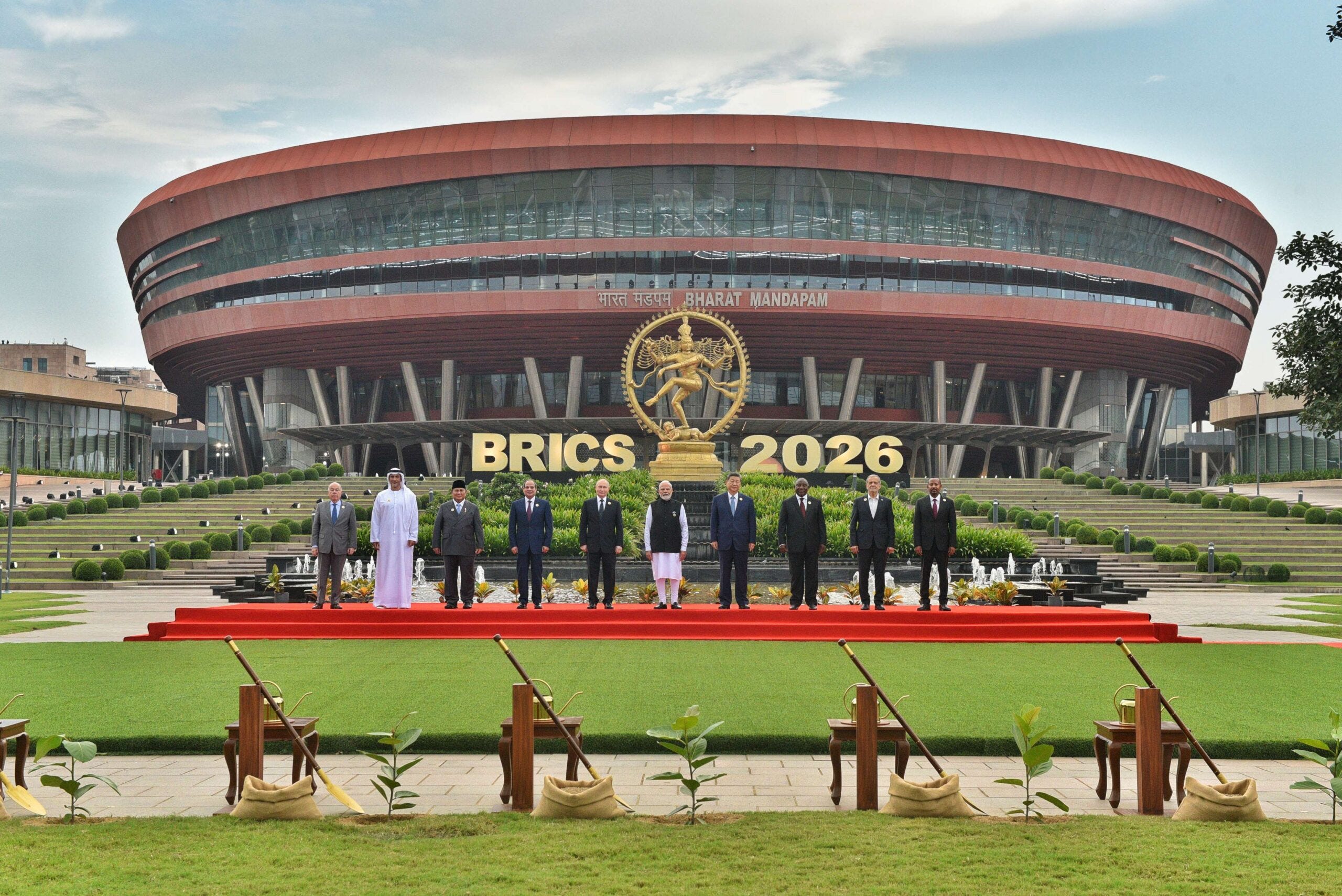
The day after Ansar Allah consolidated its grip on the Yemeni port of Mokha and seized Mayyun Island overlooking the Bab el-Mandab strait, leaders of the newly expanded BRICS bloc convened in New Delhi for their annual summit. On paper, the grouping boasts nearly half the globe's population and over a quarter of international commerce, yet its final communique made zero mention of the Red Sea, maritime navigation, or Yemen.
Writing in The Conversation, international security scholar Stefan Wolff seizes on this conspicuous omission to dissect how the physical capture of global shipping lanes has fractured the diplomatic posture of the non-Western bloc.
Wolff demonstrates that the rapid expansion celebrated by multipolar boosters has institutionalized irreconcilable conflicts within the club. Tehran holds a vicarious veto over maritime chokepoints, while Riyadh finds its strategic bypass—the East–West pipeline terminating on the Red Sea—paralyzed by the very militia Iran arms. Meanwhile, net energy importers like New Delhi and Beijing require open waterways to tame industrial fuel bills, even as Moscow quietly gains leverage whenever maritime transit risks divert energy flows.
In Wolff’s valid reading, a multilateral coalition whose sole unifying consensus is rhetorical opposition to Washington cannot act as a counter-hegemonic pole when its own members occupy antagonistic sides of the same war zone.
This institutional stalemate expands on what we examined last week in our dispatch on the Houthi chokepoint, where Ansar Allah’s tactical offer to guarantee safe passage for non-Saudi vessels was engineered to exploit divergent regional interests. Just as Mohammed bin Salman’s hurried flight to Cairo aimed to prevent Egypt from decoupling Suez Canal revenues from Saudi security guarantees, the silence in New Delhi reflects the same contradiction.

Egypt cannot afford a shuttered canal, Saudi Arabia cannot accept targeted vulnerability, and Iran is unwilling to surrender its regional leverage for the sake of BRICS communiqués.
And while Wolff’s institutional critique effectively deflates the idea of third-worldist solidarity, it remains confined to an elite diplomatic frame in which he treats the bloc’s failure as a crisis of collective decision-making rather than the structural reality of contemporary capitalism, where competing sub-imperial powers join multilateral blocs not to build an alternative world order, but to negotiate better terms of integration within the existing one, and as long as globalized logistics depend on narrow maritime trenches, the rhetoric of multipolarity will continue to founder on the material reality of the coastline.
Israel’s Crocodile Prison Plan Is Part of a Wider Fight Over Nature — Kate McMahon, Wired
When Israeli National Security Minister—and terrorist—Itamar Ben-Gvir allocated 21 million shekels to dig moats around the Ketziot detention facility in the Naqab desert, the initial reaction was to dismiss it as a grotesque parody of Trumpian cruelty and theater.
To bypass wildlife statutes, Environmental Protection Minister Idit Silman, who regularly calls for the genocide and ethnic cleansing of Palestinians in Gaza, stripped Nile crocodiles of their protected status by inventing an administrative reclassification that designated them “cultivated wild animals” fit for prison service. Yet when the Jerusalem District Court halted the trenching in August, it did not intervene on human rights grounds; it issued an injunction responding to an animal advocacy petition concerned with the “reptilian welfare” of the predators.
In this piece, Palestinian ecologists peel back this medieval spectacle to show that weaponizing the non-human world is foundational to Zionist spatial control, detailing how ecological classification has long functioned as a quiet weapon of territorial dispossession.
By tracing disputes over nature reserves across the occupied West Bank—such as the unilateral redrawing of Wadi Qana—the report illustrates how the Israel Nature and Parks Authority uses environmental preservation to encircle Palestinian villages. Under the cover of conservation statutes, indigenous foraging of za'atar and 'akkoub is criminalized, grazing lands are confiscated, and traditional olive groves are uprooted to clear contiguous buffers for expanding settlements.
Ben-Gvir’s moat is not in any way an eccentric rupture from conservation norms, but the logical culmination of an apparatus where botany, zoology, and carceral architecture enforce partition.
The piece performs an invaluable service by grounding spectacular carceral cruelty in routine colonial ecology, but it also skirts the grotesque legalism at the heart of the Israeli judicial response. The spectacle of a colonial bench agonizing over the dietary comfort and cage dimensions of imported reptiles while Ketziot operates as a torture camp is a textbook case of liberal settler-colonial jurisprudence. Environmental regulations, animal-rights litigation, and green master plans serve as civilizational alibis, converting state violence into a technical debate over ecological stewardship. In the settler-colonial imaginary, the land and its fauna are treated as pristine assets to be safeguarded from the native, who is rendered sub-human precisely by being trapped beneath the welfare of the beasts that encircle them.
Egypt
Communism for an Anti-Foundationalist Age — Tamer Wagih, Sifr
Tamer Wagih does not pull his punches, and this essay is all the better for it.
Decades after the defeats of the 1970s and the collapse of the Eastern Bloc, some Leftists argue that communism in the region today survives less as a living horizon than as a set of embarrassed footnotes to be minimized before any “serious” political demand can be made.
Wagih very clearly, and correctly, identifies this as a “lowering of the ceiling”.
But to explain this reflex, he takes us back to the origin: Marx.
He tells us that Marx and Engels’s break with Owen, Saint-Simon, and Fourier was never a repudiation of utopia as such, but rather a materialist relocation of it. Essentially, communism ceases to be a moral ideal invented by a critical intellectual (the intelligentsia) and offered to society from outside, and becomes a real tradition already incubating within capitalism’s own contradictions, waiting for the active historical agent, the working class, to, well, take action.
And so, holding onto the communist horizon is the furthest thing from wishful thinking. It’s what gives even partial, reformist demands their direction, meaning, and weight.
This argument exposes the logic behind our insistence, and its own, on naming both exploitation and dispossession as systemic. The stories we cover in our labor dispatch can, and should be, read as instances of a single relation of production, and a communist horizon is what makes it possible to see them as such in the first place.
Also, there is no “vanishing working class”.
Wagih is obviously vehemently against both liberal triumphalism about a post-industrial, post-proletarian world and left-wing melancholia about an agent that supposedly no longer exists (an agent that the latter treats as secondary, as foot soldiers, not a vanguard).
Instead, he reaches for data. By the International Labor Organization’s (ILO) own conservative definition, the global working class grew from roughly 1.07 billion in 1991 to 1.91 billion by 2025, rising as a share of both world population and the global labour force. What looks like the working class’s historical inertness, Wagih says, is not its disappearance but a transitional crisis. This is the slow, uneven reconstitution of organization and consciousness appropriate to the neoliberal phase of accumulation.
That is an explanation, not a resigned description. It’s an important distinction to make.
However, the entire point of this essay, its spine, is its anti-foundationalism, and Wagih does not disappoint when targeting the postmodern and post-Marxist traditions.
He explains that their underlying claim—that every truth-claim, every standard of right, ultimately dissolves into an arbitrary act of will with no ground beyond the will that asserts it offers a philosophy that abandons the only thing that makes emancipatory politics distinguishable from domination: a materialist account of why some demands are grounded in the actual, contradictory movement of history and others are not.
A left that gives up on foundations loses the ability to say why its own demands are worth fighting for rather than merely willed.
We would have liked to read a proposed answer to a question this essay raises, however. If the communist horizon has to be actively held rather than passively inherited, held by whom, and how?
Wagih insists that the transitional crisis of working-class agency is temporary, and that the task now is reformist demands linked to a maximum horizon rather than substituted for it.
But he doesn’t specify the organizational form through which that linkage actually gets made. We need parties, rank-and-file organization, and the slow, patient work of relating to workers’ actual struggles as they happen, not just theorizing that those struggles remain latent.
The essay stays, deliberately, at the level of ideas: utopia against anti-foundationalism, horizon against ceiling. That is a necessary argument to win, but it remains theory, not strategy. Which is great, by the way, but a concrete offering would have cinched it.
A part two would definitely make for an interesting read.
Gramsci, Marxism, and Revolution: A Critical Reading of “Saad Zaghloul in Gramsci’s Mirror” — Sayed Siddiq, Socialist Papers
This is a fierce reclamation of Gramsci from a domesticated, academicized, and reformist afterlife.
Gramsci is everywhere: in international relations, sociology, literary theory, and postcolonial studies. The problem is, the more universally applicable his concepts become, the less anyone seems to ask what political project they were built for.
Siddiq’s target is Sherif Imam’s book, Saad Zaghloul in Gramsci’s Mirror, which reads the 1919 revolution through Gramscian categories. Siddiq argues, however, that this reading, whatever its merits as history, repeats three separations that together neutralize Italy’s most revered revolutionary: cutting him off from his own revolutionary biography, cutting him off from Marx and Lenin, and cutting his concepts off from one another.
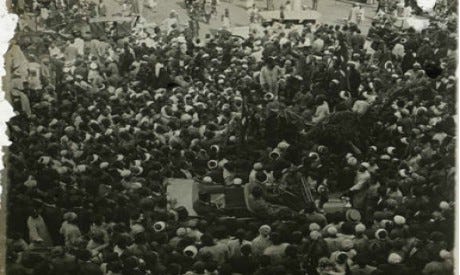
Undo those three separations, Siddiq argues, and the “fog” that supposedly surrounds Gramsci’s prison writings lifts considerably. What is believed to be ambiguity is merely what remains after the revolutionary content has been extracted.
Siddiq insists that Gramsci cannot be read backward from the categories that later claimed him. Eurocommunism and much of the academic left built their Gramsci from the same raw material, but constructed an alternative to Leninism instead. Some slow, parliamentary, institutional road that never has to confront the state directly.
Siddiq’s rebuttal reaches back to the man before the prison notebooks: the editor of L’Ordine Nuovo, the leader who founded the Italian Communist Party on explicitly Leninist lines, the author of the 1926 “Lyon Theses” insisting that no revolution in Italy could be anything but a socialist one led by the working class, and then shows that nothing in the prison writings retracts this.
The often-quoted line about “war of position” replacing “war of maneuver” is not a renunciation of the seizure of power, but a strategic adjustment to the fact that Western states, with their dense civil societies of parties, unions, churches, and schools, cannot be defeated the way Tsarism was—in days, by a direct assault on a weak state exposed behind a “primitive and jelly-like” civil society. The metaphor from trench warfare was always meant to describe how you get to the direct confrontation, not a reason to abandon the idea that one is eventually necessary.
Gramsci never conceived of the “war of position” as separable from the “war of maneuver” it was meant to prepare. Separating them produces exactly the naive assumption that a ruling class holding a monopoly on coercion will hand over power once it senses it has lost the argument.
The essay’s account of the “historic bloc” is its most theoretically substantial section, most clearly indebted to Tony Cliff, John Molyneux, and the Bolshevik experience behind them.
Siddiq critiques the idea that the historic bloc breaks with “orthodox” Marxist class analysis by returning to cases: the Russian working class, only about 5% of the population, could not have won in 1917 without the peasants who rose alongside it, the peasant-soldiers who mutinied, and the revolts of oppressed nationalities. And yet, it was the workers, organized in soviets, whose leadership the wider mass looked to and modelled itself on.
Against this he sets 1923 Bulgaria, where workers and peasants rose in succession rather than together and were crushed in turn, blaming the Communist Party’s fatal hesitation to bridge them.
So, yes, even a working-class majority needs the historic bloc, both to stop the bourgeoisie recruiting the rest of society against it, and because the dictatorship of the proletariat is the democracy of the working class and its popular allies against the old ruling class alone.
The only drawback of this essay is that you go in expecting a Gramscian re-reading of 1919 itself, but you don’t receive it. Nonetheless, it is a brilliantly argued piece.
Mortgaged Sovereignty — Hesham Gaafar, Sifr
Empirically, this is a great essay with a solid, identifiable spine. Yes, it tells us very little we don’t already know, but the way those things—Ras El-Hikma, fertilizer/gas exposure, the Future of Egypt Authority, API dependency in pharma, port and Suez Canal Economic Zone concessions, among others—are woven together is informative and easy to follow.
And despite the absence of a class category, the distinction between “divestment” and “mortgaging” is a genuinely useful empirical category.
This is a descriptive political economy essay that, rightly, identifies a very real issue: creeping alienation of control over strategic assets to capital. However, it’s not a socialist critique, which should be expected of an anti-capitalist site, but a nationalist-institutionalist one.
The unit of analysis being sovereignty makes little sense. The whole essay is constructed around the argument that “Egypt” is losing something to “outsiders,” as if the Egyptian state were a neutral custodian of a national interest that foreign capital is slowly eroding. The state is a committee of the ruling class. In Egypt’s case, that’s a fusion of a military-bureaucratic bourgeoisie and capital (Gulf and domestic). A socialist would not be asking what the state “recedes;” they would be asking which class the state’s decisions serve, and which class bears the cost, and how.
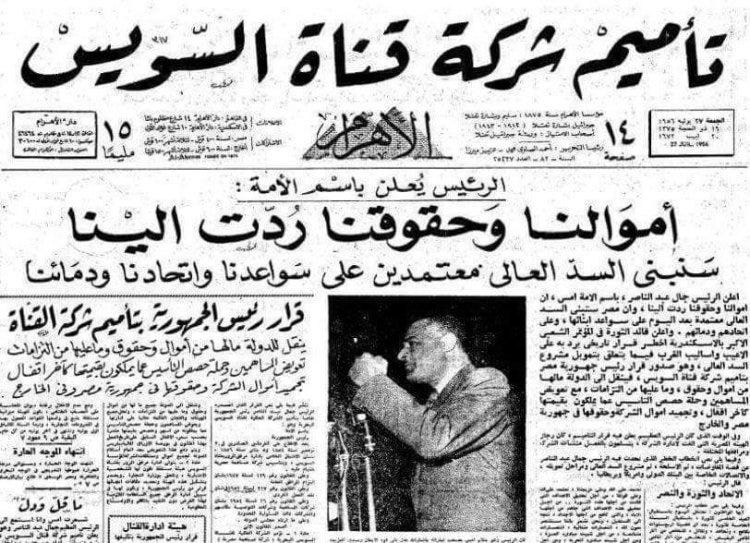
The problem is also that this framework botches any attempt at a proper analysis of why the Suez Canal was never sold. Gaafar builds his theory entirely on Nasser’s nationalization of the Suez Canal as a sacred moment where Egypt reclaimed itself from empire—a myth. That is the epitome of state-capitalism. Nasser’s nationalizations were bourgeois-nationalist, not socialist, substituting the army and the state bureaucracy for the independent action of the Egyptian working class.
One of the peskier aspects of this essay is that, midway, you start expecting an argument on imperialism, it’s a foundational aspect of the Stalinist tradition. Except, imperialism is only mentioned as context? It treats global and regional disturbances as external ones that hit an otherwise autonomous economy. Capitalism is a global system. Egypt’s economy is integrated into it. The “disturbances” offer a read of Egypt’s structural position within a world system of capital accumulation and great-power rivalry.
The IMF, similarly, shows up only as a source of debt-service statistics. That was alarming, especially given it’s a disciplinary class instrument whose conditionality is precisely what forces the kind of asset liquidation the essay describes.
Thankfully, as is expected, the working class is almost entirely absent from this analysis. They are mentioned passingly as cost-bearers, of course. But that’s about where it ends. As if Egypt has not witnessed a relatively sharp spike, a consistent one, even, in labor resistance: strikes, sit-ins, and demos. As if our labor movement has not been actively contesting the very model this essay describes on the ground.
What’s the point of analysis that diagnoses but doesn’t identify where the contradictions generate struggle?
If you have not read it yet, check out this week’s labor dispatch from The Cairo Report:
Egypt, The New Republic: Unpaid workers, broken promises & bulldozer politics

This issue of The Cairo Report covers hundreds of Samanoud workers striking, once again, over delayed wages; Misr Phosphate workers demanding direct negotiations over pay and conditions at desert mining sites; and 1,200 Arab Polvara Spinning and Weaving Company workers protesting over wages, social insurance deductions, and the future of the factory.
*What We’re Reading is a fortnightly list of the stories behind the headlines, read through the lens of class and power. In your inbox every other Wednesday.