


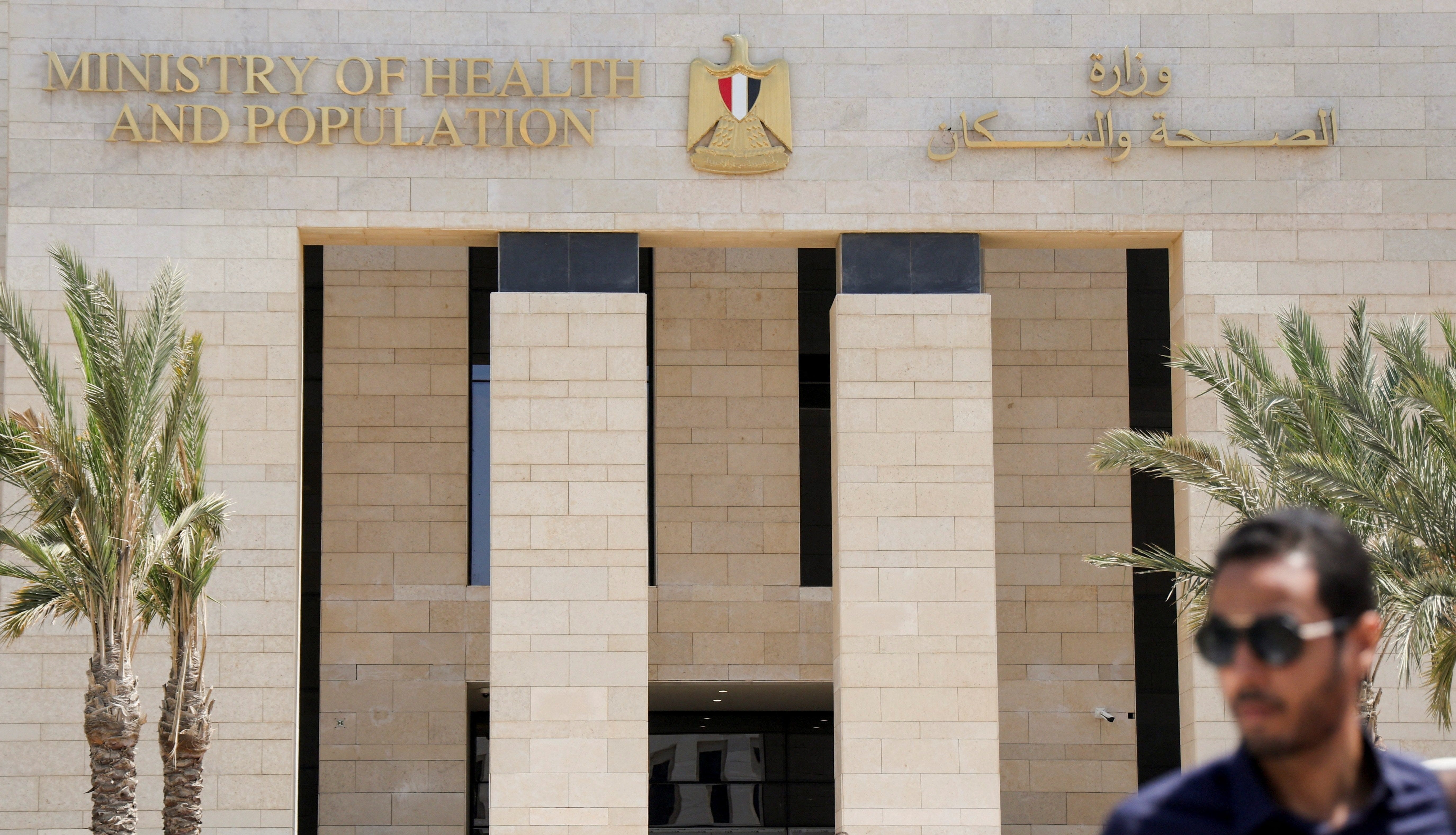
In June 2024, President Abdel-Fattah El-Sisi ratified Law 87, allowing the private sector to operate and manage public health care facilities for profit. The law leaves pricing and oversight arrangements to cabinet decisions on individual concessions to investors, and provides no clear guarantees that treatment will remain affordable for patients who lack insurance coverage or the financial means to pay, further widening an existing gap in access.
The Egyptian Medical Syndicate urged the president to reject the law, warning of its potentially catastrophic consequences. The Egyptian Initiative for Personal Rights (EIPR) also warned that leasing public hospitals would weaken the infrastructure needed to expand universal health insurance, leaving much of their care outside the prices set under that system.
The law is part of a longer trajectory of Egypt’s embrace of neoliberal development.
Egypt entered this decade among the International Monetary Fund’s (IMF) largest borrowers, taking on 20 billion US dollars through three loans since 2017 and expanding its latest loan program to eight billion dollars in 2024.
The current program envisions significant austerity measures, including a cap on public investment aimed at reducing the debt-to-GDP ratio. These measures come as core inflation exceeded 40% last year and inflation in food and beverages surpassed 70%. Public access to health care is at serious risk, and women’s health is central to these concerns. Spending cuts disproportionately affect the public sector and social services, where women are heavily represented. Meanwhile, women’s labor force participation in Egypt ranks seventh-lowest in the world.
The constitution requires the state to allocate at least 3% of GDP to health care, yet the FY2024/25 budget revealed that only 1.2% was allocated. Meanwhile, households pay 62% of health care costs directly out of pocket, compared with 39% in economies of similar wealth. The public ends up footing the bill for the state, and the most vulnerable bear the heaviest burden.
Women are responsible for the majority of unpaid care work in most households. According to the Organization for Economic Cooperation and Development (OECD), women spend an average of 5.4 hours per day on unpaid care work, compared with 0.6 hours for men. They care for children, the ill, and the elderly while also managing their own health. The retreat in public funding is therefore paid for not only out of people’s pockets but also through women’s labor.
The New Woman Foundation’s research on unpaid domestic work shows how national accounts leave much of women’s economic contribution uncounted, and the work that keeps households running disappears from the figures used to measure the economy.
Women also bear the consequences of a health care system increasingly organized around profit rather than patients’ needs. Rising cesarean delivery rates illustrate this trend. The share of births delivered by cesarean section rose from 52% in 2014 to 72% in 2021 — roughly five times the 10%-15% rate the World Health Organization (WHO) considers appropriate at the population level. In private clinics, the rate reached eight in 10.
Women also bear the consequences of a health care system increasingly organized around profit rather than patients’ needs. Rising cesarean delivery rates illustrate this trend. Cesareans accounted for 72% of births in the five years preceding the 2021 Egypt Family Health Survey, up from roughly 52% in the 2014 survey. In private facilities, the rate reached 80%, compared with 63% in public facilities.
The Ministry of Health and Population attributes three-quarters of the increase to recommendations by attending physicians. However, cesarean deliveries can generate greater revenue while requiring less of a doctor’s time. It is a commercial transaction at the patient’s expense. The ministry acknowledges that the surgery can expose mothers to risks including placenta accreta, hemorrhage, and hysterectomy. Women absorb the medical dangers and consequences while providers profit.
EIPR warned in 2025 that targets for reducing cesareans can themselves lead to interventions imposed against women’s wishes, and called for greater investment in maternity services, including care that protects women’s privacy and gives them the information and pain relief they need. Women’s control over the treatment they receive must be part of any effort to reduce unnecessary surgery.
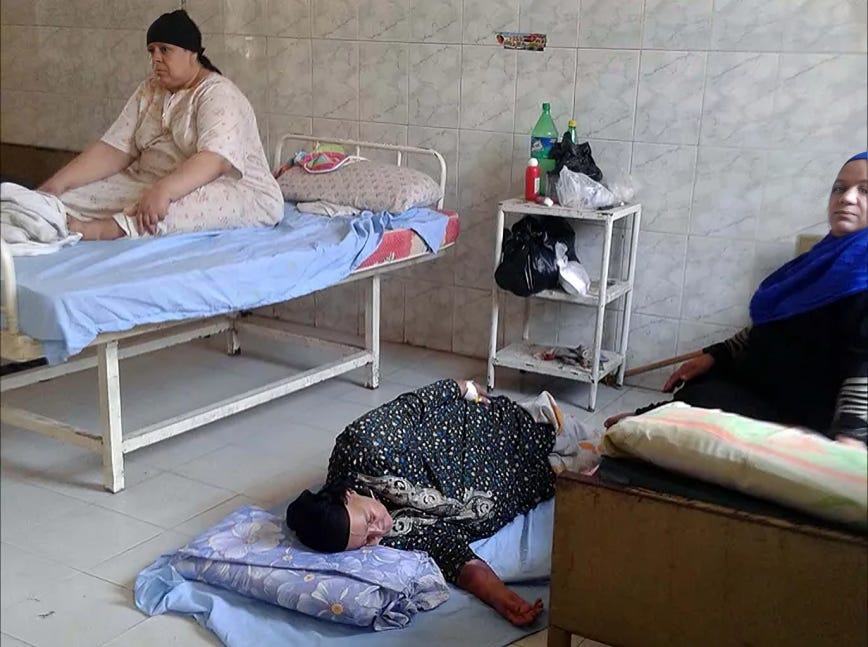
Meanwhile, the public health facilities that low-income and working-class women depend on are being hollowed out, leaving them with few options for care. Roughly half of Egypt’s registered doctors work abroad. Nearly 7,000 left the country in 2023, and the doctor-to-population ratio fell from 7.5 per 10,000 people in 2015 to 6.7 in 2020, which is half the global average. Doctors leave because their salaries barely cover rent and hospitals operate with improvised equipment. A woman who turns to a public facility because private care is beyond her means faces longer queues and dwindling expertise.
Healthcare in Egypt is a collapsing system, here’s how

When examining pre-tax wages, the mass emigration of physicians becomes more understandable. Interns currently make a monthly salary of 2,800 EGP, while entry-level government residents earn about 7,000 EGP. In contrast, today’s average living wage needed to get by is approximately 13,942 EGP.
The law also puts the future of hospital staff in question. The Egyptian Center for Economic and Social Rights (ECESR) warned that operators are required to retain a minimum of just 25% of a facility’s existing workers, leaving the future of the remaining workforce uncertain.
The divide in the quality of care is evident even in prenatal services: 71% of women who received antenatal care through private providers had the recommended number of visits, compared with 44% of women using public services. Access to care increasingly tracks the ability to pay.
The currency devaluation required under the IMF program deepened this divide by contributing to medicine shortages. Essential drugs disappeared from pharmacies, prices multiplied several times over, and patients began reducing doses or abandoning treatment. Meanwhile, about 57 million Egyptians covered by public health insurance reportedly face shortages in state hospitals.
The government approved price hikes of more than 50%, while pharmaceutical companies reported strong profits and their shares rose on the stock exchange. Patients, meanwhile, went without medication or turned to a sky-high black market. Wealthier patients could afford imported alternatives, while others were left rationing whatever medicines remained on pharmacy shelves.
Every closed clinic and every medicine shortage translates into care work performed at home, and women shoulder a disproportionate share of that labor.
According to the United Nations (UN) Women, married Egyptian women spend seven times as many hours as married men on unpaid care work, including nursing the sick and managing the household. Employed women spend nearly as much time on this work as unemployed women, creating a double burden that substitutes for services withdrawn by the state, without compensation. Women also make up about 70% of Egypt’s paid care workforce, meaning they bear the strain both within the health care system and at home.
A health budget balanced on women’s unpaid labor records a saving that is, in reality, a transfer: from the treasury to women’s time.
The drive to commercialize public care predates Law 87. On November 30, 2021, the Egypt Healthcare Authority (EHA) approved in principle the creation of Ri’ayet Misr, a for-profit holding company intended to manage and build hospitals and attract investment, accelerating the prospect of public health facilities being run through a commercial entity.
Speaking to Al Manassa’s Mohamed Hemeid, economist Salma Hussein described the move as a privatization of the new universal health insurance system and an evasion of the law governing it. She questions why the government would build private hospitals while villages still lack basic health units. Law 87 provides the legal framework for the same transfer.
The state frames its response through a narrative of supposed “empowerment.” Official platforms promote the presidential Women’s Health Initiative, which has recorded tens of millions of screening visits and detected nearly 40,000 cases of breast cancer, most at an early stage. These screenings save lives and are necessary. The question is what the campaign obscures.
A 2023 report by health researcher Ahmed Azab for the Arab NGO Network for Development criticized the emphasis on campaigns targeting individual diseases while the basic health units needed to expand universal coverage remained inadequately equipped. The success of individual campaigns cannot compensate for the neglect of everyday care.
A screening campaign is a discrete, visible intervention that photographs well, yet it sits above a system whose everyday provision is corroding. For a woman whose medication is unavailable at her pharmacy, whose public hospital ward has lost its specialists, or whose private clinic steers her toward surgery for profit, early detection alone does little to address the barriers she faces.
The empowerment narrative provides political cover for marketization, and the two advance hand in hand. The state publicizes the campaign while privatizing hospital services, and women experience both realities.
Women who are farthest from the capital and from wealth bear the heaviest burden of Egypt’s failing health care system.
Access to reproductive and antenatal care remains deeply unequal, with disadvantages concentrated among low-income women in rural Upper Egypt, where a shuttered village clinic can turn a routine screening or childbirth into a long, costly journey.
Even within the facilities that remain open, treatment can itself be punishing. A study of obstetric violence in Giza documented women enduring long waits, verbal abuse and neglect when they sought help. Such experiences can discourage women from seeking care in subsequent pregnancies, undermining the very screening efforts the state promotes.
Women’s control over their treatment is also restricted within these facilities. A policy brief by the Egyptian maternal health initiative YourEgyptianDoula found that some doctors treated consent as paperwork to be signed by husbands. Doctors also described overcrowding and shortages of essential supplies as barriers to providing respectful care. Women face both a shortage of services and a system that often gives them little say over what happens to their bodies.
Following the money brings the argument back to its source. Egypt’s IMF loan program now stands at eight billion dollars, of which the country had drawn more than seven billion by mid-2026, underscoring its dependence on external credit. The program’s core conditions—reduced public investment, a floating currency and reforms designed to make the private sector the engine of growth—are the direct causes behind the deterioration of public hospitals, rising medicine costs and the transfer of health care services to private operators. The austerity measures degrading women’s health care, and the conditions attached to the loan, are part of the same policy framework.
Austerity and privatization are not inevitable economic necessities for addressing a national crisis; they are political choices whose burdens fall on women, who hold their families’ health together on shrinking wages and through unpaid labor. Women’s health must therefore be treated as a public obligation, not a market opportunity. Otherwise, we risk the well-being of our societies as a whole.