


Strikes on Russian and Ukrainian export hubs have disrupted routes that supplied about four-fifths of Egypt’s wheat imports in the first half of the year.
In a phone call this week between the two presidents, Volodymyr Zelenskyy warned Abdel-Fattah El-Sisi that food deliveries had already fallen significantly, that they are “now under serious threat because of Russia’s war,” and that the disruption could drive prices higher and cause shortages, Kyiv’s account of their call said.
Russia had supplied Egypt with 4.141 million metric tonnes of wheat between January 1 and June 29, while Ukraine supplied another 1.801 million tonnes, according to official data.
Together, the countries accounted for 5.942 million tonnes, or about 81%, of Egypt’s 7.361 million tonnes of imports during the period.
Relatively speaking, Egypt has a cushion against an immediate shortage, as the government ended its domestic procurement season on Sunday with a record 4.72 million tonnes, purchased from local farmers, mainly through the military-run Future of Egypt Authority (FOE).
That was about 20% more than last year, although it fell short of the government’s five-million-tonne target. Supply Minister Sherif Farouk said in June that strategic wheat reserves covered nine months of consumption.
The buffer reduces the threat to immediate bread supplies. However, does not remove Egypt’s exposure to freight costs, delayed cargoes or more expensive replacement purchases to the country’s subsidized bread program, which currently serves about 66 million people.
The United Nations (UN) Food and Agriculture Organization (FAO) expects Egypt to import 13.5 million tonnes between July 2026 and June 2027, with most purchases coming from the Black Sea because of “competitive prices.”
Cairo’s account of Friday’s call focused on trade, political settlement, and regional de-escalation, without any mention of Zelenskyy’s supply warning or his invitation to El-Sisi to visit Ukraine.
The Ukrainian president also offered condolences for two Egyptian seafarers killed in earlier Russian attacks on commercial vessels, which the Egyptian account of the call has not acknowledged.
Russia’s main grain port stops loading
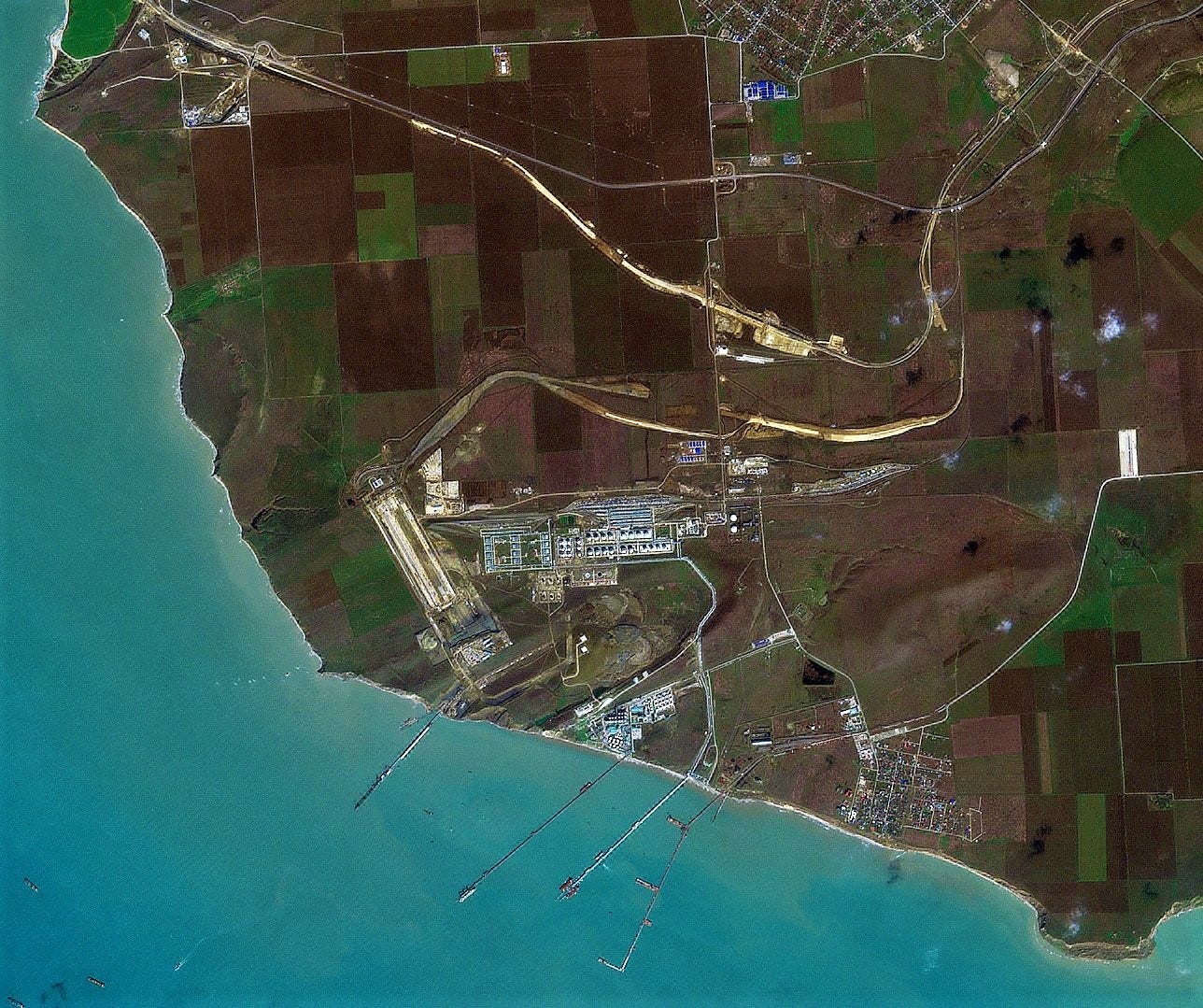
A Ukrainian attack on Novorossiysk, Russia’s main Black Sea export hub, forced two major grain terminals to stop operations on August 12.
The following day, Delo Group, Russia’s most extensive transport and logistics holding, announced that it had suspended work at the KSK terminal—the last of Novorossiysk’s three main grain terminals still operating—saying that it is “ceasing unloading of road and rail vehicles, loading of grain onto sea vessels, and other operations” and gave no date for operations to resume.
Russian Railways also restricted cargo loading toward Novorossiysk’s port stations from August 13 through August 22.
The disruption had become serious enough for Moscow to consider supporting the grain market with subsidized-credit extensions, producer subsidies, and renewed state purchases. Russia’s state grain agent, the United Grain Company (OZK), confirmed that it had begun searching for additional storage for a possible intervention stockpile, explicitly linking the move to slower exports and restrictions on navigation in the Azov–Black Sea basin.
Meanwhile, Russia’s total grain exports are forecast to fall to 2.5 million tonnes in August, less than half the 5.7 million-tonne average for the month between 2021 and 2025.
The effects were visible before the latest stoppages, as Russian wheat shipments to Egypt fell 31.7% from a year earlier to 344,000 tonnes in July, although Egypt remained Russia’s largest buyer.
The Novorossiysk attack sent Chicago wheat futures about 3% higher, and Russia’s Agriculture Ministry said it was trying to redirect exports through other ports.
But those alternatives are also under pressure. A Ukrainian drone strike halted operations at a major terminal in the Port of Taman, another one of the country’s main ports, near the Kerch Strait in late July.
Ukrainian exports fall as ports come under fire
On the other side of the Black Sea, Ukraine faces an equally troubling squeeze, as more than 90% of its grain exports travel through seaports.
Intensifying Russian attacks effectively halted shipments from the Port of Odesa, the largest Ukrainian seaport and one of the largest ports in the Black Sea, in late July, prompting Kyiv to cut its 2026/27 export forecast from 43 million tonnes to between 38 million and 40 million, according to Reuters.
Ukrainian grain exports during the first two weeks of August were about 76% lower than a year earlier. The drop followed strikes on port infrastructure, power networks, and cargo vessels.
A Russian attack on August 13 damaged infrastructure and cut power at the Port of Izmail, Ukraine’s largest grain export port on the Danube River, and low water levels were already limiting the river route.
Prior to the attack, Ukraine and Moldova had discussed moving more grain by rail through Moldova to Romania’s Constanta port. However, rail and Danube routes are more limited and expensive than direct Black Sea shipping.
Kyiv proposed a mutual halt to attacks on civilian shipping and port infrastructure. Russia dismissed the proposal and said it had received no formal offer.
Stronger stocks, weaker monthly imports
Egypt front-loaded wheat purchases earlier this year, helping it build stocks before the latest escalation.
Imports fell to 305,978 tonnes in July, down 57.6% from a year earlier and 33.5% from June, according to S&P Global Commodity Insights.
S&P attributed the slowdown partly to healthy inventories, but also to Black Sea disruption and higher freight costs, which suggest that the current shock is more likely to appear first in transport costs and delivery times than in immediate bread availability.
The government typically imports about 10 million tonnes annually. State purchases account for roughly half that amount and support the subsidized bread system.
Kyiv expands sanctions over disputed grain
Ukraine on Friday imposed sanctions on 13 vessels, 11 Russian nationals and 28 companies accused of exporting agricultural goods from Russian-occupied Ukrainian territory.
In a separate release on the same day, Ukrainian military intelligence alleged that the Tanzania-flagged Naya Falcon transported wheat bran from occupied Sevastopol to Egypt and Cyprus in 2026.
The claim follows an earlier dispute over the Novaya Zemlya vessel, which, as I’ve previously reported for Al Manassa, Egypt’s ambassador told Kyiv that Cairo would not accept grain taken from occupied Ukrainian territory, before the vessel eventually entered El-Dekheila Port, seven kilometers west of Alexandria.
Backfilling Russia’s fuel shortage
Egyptian waters have also become part of Russia’s response to Ukrainian attacks on its refineries, extending a pattern of sanctions-shaped oil movements I’ve previously documented.
A 42,000-metric-tonne gasoline cargo produced at Nayara Energy’s Vadinar refinery in India reached Russia on August 5 after the Russian-flagged Cyclone loaded it on June 18 and transferred it to the Oman-flagged Garnet off Damietta on July 6, according to Kpler and ship-tracking data.
Russia’s state-controlled oil producer Rosneft owns 49.13% of Nayara, whose refinery can process about 400,000 barrels a day.
The completed delivery was not an isolated transfer, as the Varg loaded nearly 40,000 tonnes of gasoline at Vadinar and probably transferred it to the Beast off Damietta on July 30 and 31, judging by changes in the ships’ drafts, and the Cameroon-flagged Photon transferred another gasoline cargo to the Russian-flagged Talisman at Damietta on July 28 and 29.
The final destinations of the Beast and Talisman remained unconfirmed. However, the repeated transfers place Damietta as a hub for moving Indian gasoline into Russian import channels.
Every vessel involved was under European Union (EU) sanctions, while the United States had also sanctioned the Garnet and Talisman.
In June, nearly 140,000 tonnes of Russian fuel oil and vacuum gasoil were destined for transfers near Port Said before onward shipment. Thus, Port Said helped Russian products move outward, and Damietta is now helping gasoline move inward. In both directions, Egyptian waters reduce the cost and distance of an energy trade reorganized by war and sanctions.
Egypt is not insulated from the shortage that these transfers are helping Moscow manage, as Egypt became a direct importer of Russian diesel in June, when Russian seaborne diesel and gasoil exports collapsed 39% from the previous month to 1.8 million tonnes.
Moscow subsequently extended restrictions on gasoline, diesel, marine fuel and gasoil exports through January 31, 2027, although producers will regain exemptions for several products from September 1.
The contraction comes as Egypt prepares to import 1.9 million tonnes of diesel between August and October, part of a 3.2-million-tonne fuel-purchasing program.
Imported diesel already covers about 40% of Egyptian consumption, and the same refinery campaign whose consequences Egypt is servicing as a transit point is therefore tightening the fuel market on which Egyptian transport, industry, and electricity generation depend.
The operations cannot be treated as invisible private movements occurring beyond the state’s knowledge, as Egypt is party to MARPOL Annex I, whose ship-to-ship rules require tankers to notify the coastal state at least 48 hours before transferring oil within its territorial seas.
So, what?!
For Egypt, the immediate threat remains neither an empty silo nor a sudden disappearance of subsidized bread, but the steady narrowing of reliable supply routes, and the growing premium Cairo must pay to keep grain moving through a sea where both sides now treat commercial infrastructure as part of the battlefield.
Nine months of reserves can cover a temporary interruption, but they cannot insulate bread prices from a prolonged increase in freight, insurance, and grain costs.
And while Russia’s invasion created this crisis, Egypt’s exposure is not simply bad luck imposed from abroad, as the government built the country’s wheat policy around cheap Black Sea supplies and short shipping routes, then concentrated state purchasing in the military-run FOE without replacing the old tender system, which, at times, provided limited transparency.
great article