


The annual security script, tightened
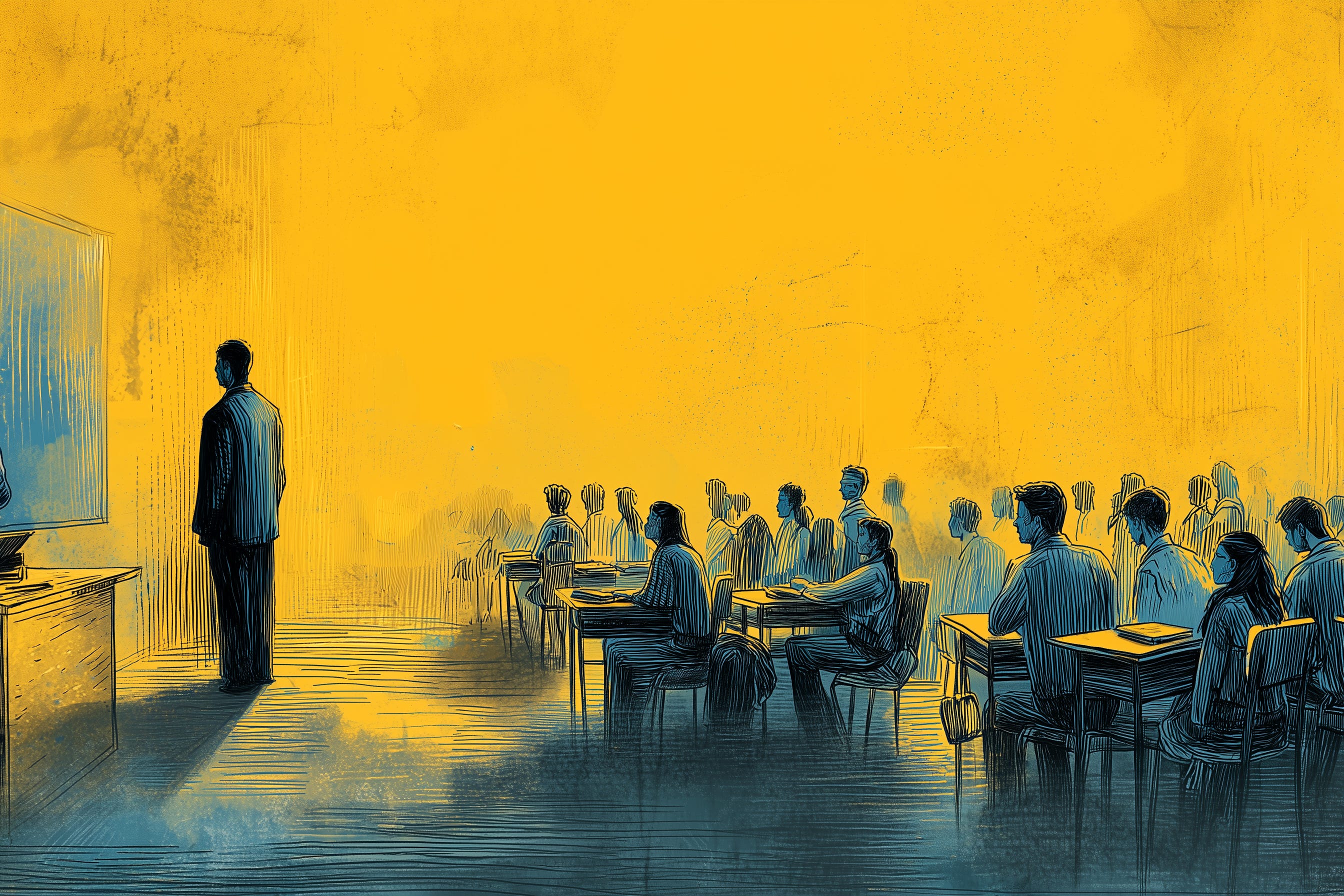
In August 2025, the Ministry of Education issued its now-annual circular with 24 directives aimed at ensuring a disciplined start to the school year. Like previous versions in the past decade, it prohibits anything that might challenge state narratives. Teachers are flatly forbidden from allowing “any contentious political or religious conversations” in class, under the pretext of maintaining “educational neutrality.” The lack of a clear definition for what constitutes contentious discussions leads to a natural tendency for self-censorship among educators and students alike. At the same time, the circular doubles down on existing nationalist rituals; schools are instructed to organize field trips to “national projects and historical landmarks,” such as the state’s New Administrative Capital, so students can behold the state’s grand accomplishments and instill national pride, which are considered essential “foundational pillars in building national identity.”
In early 2024, education directorates similarly ordered that the first class of the second semester be dedicated to “fostering loyalty among students.” Teachers were told to praise the “heroic” police on their holiday and fold that script into the morning broadcast.
For over a decade now, the Ministry of Education has treated September as an opportunity to reassert the state’s narrative monopoly in schools. What’s new this year, though, is how tightly this narrative control is now coupled with the mechanics of exams, religion classes, and even mosque-based tutoring outside school hours. The education system has been weaponized as a seamless extension of state security, effectively functioning as a form of thought police in classrooms.
Blueprint exams: Reinforcing a culture of memorization
Egypt’s high-stakes exam system is being redesigned to further reinforce rote learning. The incoming Egyptian Baccalaureate, a new alternative to the traditional Thanaweya Ammma for high school students, is set to launch this fall with Grade 10. Under this system, students will choose one of four specialized tracks, but all will be required to study four identity-focused constants: Arabic, a foreign language, Egyptian history, and religious education. These core subjects remain compulsory no matter the track (Medicine and Life Sciences, Engineering and Computer Science, Business, Arts and Literature); cementing the role of language, nationalist history, and faith as the immovable center of the curriculum.
Crucially, the exams themselves are now dominated by questions that reward rote memorization rather than critical thinking or argumentation. For instance, the most recent high school civics exam, a subject ostensibly about national identity, moral values, and peaceful coexistence, consisted of 25 multiple-choice questions only, and not a single essay or open-ended prompt. The entire test is a tick-box exercise, ensuring that students’ critical opinions or their varied interpretations of civics can never enter the answer sheet.
Other humanities subjects have been similarly sanitized. The Grade 12 history exam had 46 questions, of which 44 were multiple-choice and just 2 were short essays. Those two token essays account for a mere 4 out of 60 marks. Even Arabic language exams, where one might expect creative or analytical writing, included only 4 essay questions out of 55 total on the final, the rest being MCQ. The practice of student evaluation has swung overwhelmingly toward machine-graded bubble sheets. By design, an MCQ-heavy, centrally marked exam system trains students that every question has one authorized answer and that thinking outside the four provided options is not encouraged.
The Kuttab renaissance, de-romanticized & securitized
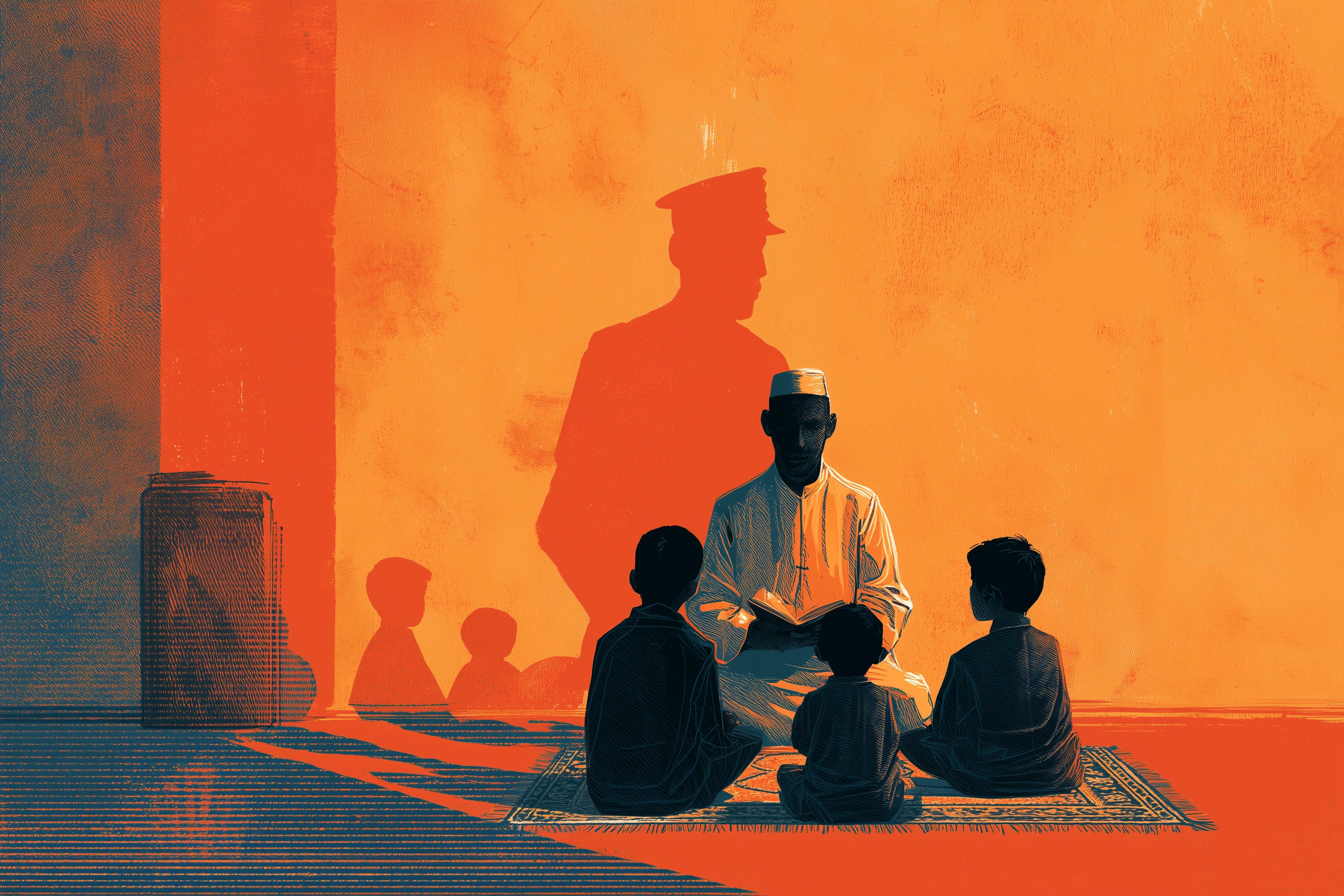
Another one of the government’s education initiatives revives the centuries-old kuttab–traditional Qur’an schools–as a nationwide “identity and values” program. In early 2025, the Ministry of Awqaf (Religious Endowments) issued a “Charter of the Kuttab,” promising schools in every village as “educational structures that build Egyptian character and preserve identity,” designed to “protect generations from extremist thought.” In practice, they are mosque-run circles for scripture memorization and basic literacy, seemingly designed to fuse religious formation with nationalist loyalty.
The state insists this kuttab renaissance will “raise generations on the values of the Holy Qur’an and moderate principles of Islam” while “shielding them from extremist thought.” Yet dispersing education into hundreds of mosque corners guarantees uneven quality and inconsistent messaging. What is presented as heritage revival and moral safeguarding is in reality a low-cost, low-risk religious-nationalist project that equates civic education with Qur’anic instruction and instills obedience to authority. In a system that already mandates Religious Education classes in schools, Kuttab is bound to create a parallel track of socialization even less open to diversity of thought.
The Ministry of Religious Endowments lauded kuttab as community literacy centers, but they function as sectarian, gender-segregated spaces that exclude non-Muslims and minorities, while funneling families into cleric-run environments. Notably, closing prayers are recited “with the intention of preserving Egypt.” The arrangement in effect outsources values-formation to mosques, leaving pluralist or secular alternatives to costly private schools.
✒ Religion and Morals in Sisi’s New Republic
Fourth Generation Wars, Foreign Plots & Conspiracy Theories
Fourth-generation warfare (4GW) and its fifth-generation (5GW) offshoot are “largely undefined” military theories that focus on the ideas of hybrid conflict and psychological operations. The term “Fourth-Generation Warfare” was first introduced in a 1989 article in the Marine Corps Gazette, co-authored by a U.S. military historian and four U.S. military officers. The concept of 4GW was an attempt to explain how contemporary conflicts extend beyond traditional battlefields, emphasizing the role of violent non-state actors and the manipulation of psychology and information.
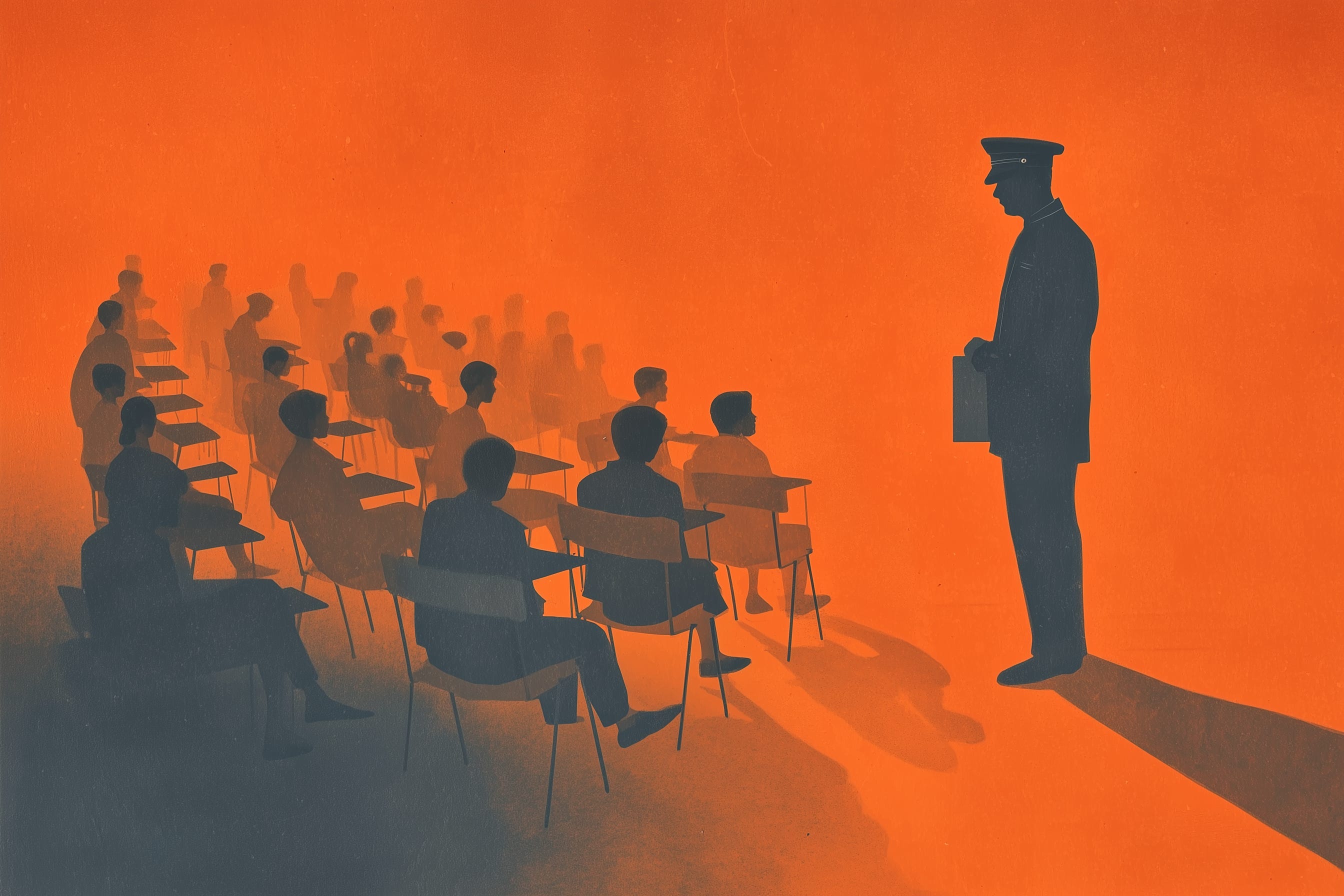
However, vocabulary such as “fourth/fifth-generation wars” has shifted from vague theories in military circles, gazettes, and academies to being exploited as indoctrination tools in Egyptian civic spaces, classrooms, and university campuses. Recently, Alexandria University’s Faculty of Science hosted a so-called “awareness” seminar led by a uniformed military general. The seminar was titled "Fourth-Generation Warfare and its direction to the civilian sector." The general explicitly linked "rumors" to societal destabilization, aiming to “incite chaos,” and to ultimately lead to the "overthrow of the state from within." He emphasized the “important role” students should play as the "first line of defense." The same pattern of indoctrination seminars, lectures, and security institutions tours has been a mainstay in campuses in recent years, targeting students in public and private universities across the country.
High school students haven’t been spared either; the State Information Service’s media centers have simultaneously hosted multiple “national security challenges” sessions in public schools, espousing the same rhetoric regarding the targeting of the state by hidden enemies. Remarkably, none of the students in these institutions are military, police, or any type of national security studies cadets; they are civilian students and undergraduates in standard education programs.
The narrative dominated by the idea of “national security challenges” essentially starts with senior government officials, frequently employed in media appearances and speeches to dismiss criticism of ineffective public policies or to justify acts of repression, and frequently serving both purposes simultaneously. For instance, in mid-July, Prime Minister Mostafa Madbouly claimed that so-called fourth and fifth-generation wars “aim to make citizens doubt the state and its achievements.” In a similar vein, President Abdel Fattah el Sisi regularly asserts that “the emergence of rumors and lies” indicates that Egypt is being targeted, recently reiterating that the state is aware and vigilant about “what is being plotted against us.”
Critically, these so-called "awareness" seminars don't teach the full theories of 4GW/5GW; they present a curated chunk that frames criticism as conspiratorial "plots to overthrow the state" by hidden enemies. Yet even if the theories were presented in full, it would still be a poor fit. These frameworks were originally conceived as a mere exploration of non-conventional conflicts, armed insurgencies, and information warfare, not to guide civic instruction or shape political awareness. In practice, the sessions replace independent fact-checking and plural analysis with a version of state-approved “verification” via official state channels and to align obediently with the authorized narrative, breeding conspiratorial delusions and groupthink at best, and political disillusionment and civic withdrawal at worst.
Recasting military doctrine as “awareness” may serve state-security aims, but it erodes civic reasoning. Repeating the same threat script across schools, campuses, and media exploits the illusory truth effect, in which familiar claims feel truer simply because they are repeated. By contrast, the workable alternative is media and information literacy built on open discussion, lateral reading/cross-checking, and independent fact‑checking—the very approaches international guidance recommends and studies show improve credibility judgments.
📂 More on the militarization of civil services
State-Approved extremism: Ultranationalism
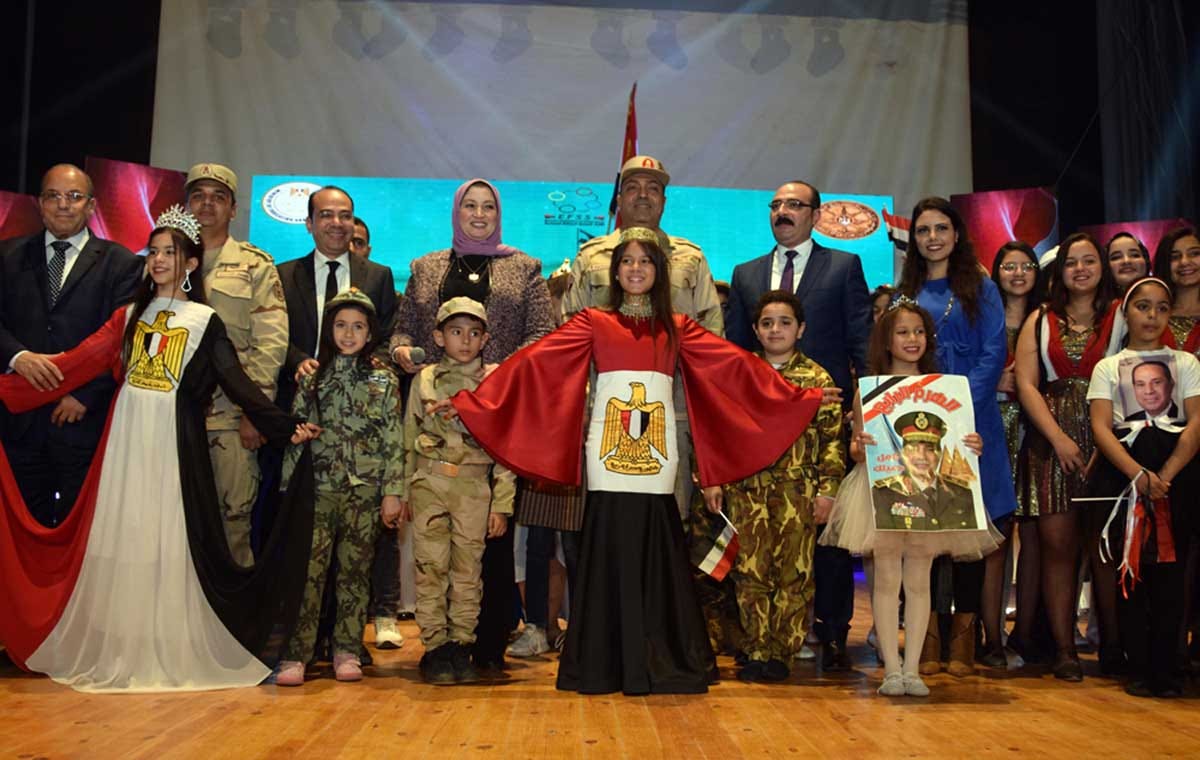
The ultimate irony of Egypt’s “preventive” education model is that it mirrors the very absolutism it claims to oppose. The regime has justified suppressing “controversial” political and religious discussion in schools under the pretense of “protecting” youth from falling prey to extremist ideas. Yet, the alternative is state-sanctioned ultranationalism, a monolithic, securitized worldview that shares key traits with extremism. This approach goes beyond mere overreach; it’s a deliberate, security-oriented identity‑building project. Students are told that questioning authority is a form of disloyalty, that uncritical acceptance of its narrative is an act of patriotism, and that national identity must remain singular and unquestioned.
The shift towards an increasingly restrictive education system isn’t unique to the current regime, but it is particularly significant. Previous Egyptian autocrats similarly employed state-run education to cultivate their own versions of patriotism as a way of ensuring the status quo and legitimizing their authority.
However, the current regime is increasingly reshaping both education and its environment to promote allegiance, compliance, and adherence to the state’s securitized narrative. This is essentially one of the core tenets of ultranationalist ideology: instilling a sense of endless external threat paired with an internal purity test. It nurtures groupthink and intolerance of “the other,” only this time the other is not an infidel but a supposed “foreign agent” or a fifth columnist spreading “rumors.” The government’s mandated “awareness” campaigns even borrow the vocabulary of religious zealotry, warning students of “fitan” (civil strife) spread by agents of chaos, and preaching vigilance against deviance, be it moral or political. Just as a religious fundamentalist teaches that only one sacred interpretation must reign, the Egyptian state imposes a singular narrative of national identity and civic morals.
Empirical data from civic education research shows this model is not just flawed; it is detrimental. The International Civic and Citizenship Education Study (ICCS) has repeatedly found that open classroom climates, those that allow students to hold political and religious conversations and question the role of authority—topics deemed “controversial”—are strongly correlated with higher civic knowledge and stronger resistance against radicalization. Conversely, repressive school environments that avoid “controversial” topics foster disengagement, cynicism, or worse, radicalism.
In effect, Egypt’s education policymakers are fighting one kind of extremism by imprinting another. An education system that limits inquiry can’t help students challenge extremist ideas, because they’re unequipped to distinguish, interpret, or contextualize them. The result is a rising generation fluent in conspiracy theory and groupthink, hardly the informed and “aware” citizens the state claims to be building.
A tale of two worlds: Fragmented educational realities
Egypt's education apparatus is deeply divided, both ideologically and structurally. By the end of the 2024–25 academic year, reports indicated that approximately 25.83 million students were enrolled in pre-university schooling. The increase in the total number of classrooms made headlines in state-owned media, a 20.8% upsurge from the previous year. However, this expansion wasn’t so much a result of the state allocating funds to build new schools as it was a scheduling maneuver. The Ministry of Education expanded capacity primarily by shrinking class durations, dividing school days into multiple shifts, and repurposing rooms across time blocks.
This kind of rotational logic creates the statistical illusion of expanded capacity, without adding the desperately needed space or staff. A single space now runs morning and afternoon classes, sometimes a third on weekends. On spreadsheets, that counts as three classrooms. On the ground, it’s one overstretched space cycling through exhausted teachers and overcrowded students. This is how density gets reported as progress, but the actual strain remains undeniable. The shortage in public school teachers widened from around 450,000 to more than 665,000, even as classrooms were “added.”
In an attempt to keep those numbers upright, Prime Minister Mostafa Madbouly issued a decree permitting state-run schools to postpone teacher retirement by up to three years. As a result, public education has increasingly relied on retaining staff beyond their intended departure dates, resulting in an older and often fatigued workforce. Many classrooms are now managed by teachers on extended contracts, frequently without sufficient support. At the same time, younger qualified candidates, many of whom have met the official hiring criteria, are being sidelined due to discriminatory hiring practices related to factors such as obesity, height, and the failure of physical tests conducted at the military academy in Cairo.
Elsewhere, recruitment looks different. Private institutions, especially at the elite end, hire younger staff, often internationally. Recruiting platforms show Cairo’s top-tier schools offering tax-free salaries, subsidized housing, annual flights, health insurance, and various other benefits. By offering better pay, benefits, and working conditions, these schools certainly attract specialized teachers and boost teaching morale. Class sizes stay small. Facilities are maintained. Education is layered with extracurriculars, personalized feedback, and direct access to global universities.
But the clearest sign of divergence is in who controls time. In public schools, teaching has become a rationed good. Students in overcrowded classes must supplement learning outside school hours. The state has institutionalized this through “support groups” and “premium support groups,” essentially formalizing after-school tutoring, with 80% of the revenue going to the teacher. It’s cheaper than private centers, but still out of reach for many.
Adding to financial strains imposed on households, the Egyptian parliament approved higher re-take fees; students may now be charged up to 1,000 EGP per subject to repeat a failed exam.
The education system in Egypt highlights the state's effort to rewrite its social contract with citizens. Driven by austerity measures, the state’s policies have significantly constrained social mobility.
Austerity: The operating system
Why has Egypt’s government chosen this model of education? One inescapable factor is austerity. Simply put, public schools have been a victim of chronic underfunding for the past decade, and thus, enforcing obedience is cheaper than cultivating critical thought. The state’s fixation on prohibiting “controversial” classroom discussions, imposing exams heavy on multiple-choice questions, and conducting security-oriented “awareness” sessions is cost-effective and doesn’t strain the budget. In contrast, initiatives such as media and information literacy, significantly reducing class sizes, investing in facility maintenance, or hiring qualified teachers would require higher spending. Under the current regime, that price is deemed too high, and the policy architecture has been bent to make the cheap option look like the only viable option.
As the 2024/25 school year was about to start, the Ministry of Education dropped entire subjects like philosophy, psychology, and geology. The rationale was to “ease student pressure,” but the real calculus was fiscal. Eliminating subjects means needing fewer teachers.
Over the past decade, the current regime has repeatedly cut funding for education year after year, worsening educational quality and outcomes. The 2025/26 state budget allocates roughly 315 billion EGP to education, equivalent to approximately 1.54% of GDP. This amount is far below the constitutional minimum for education, which is set at a combined 6% for pre-university and university education. Furthermore, it does not align with international standards, which typically range from 4% to 6% of GDP.
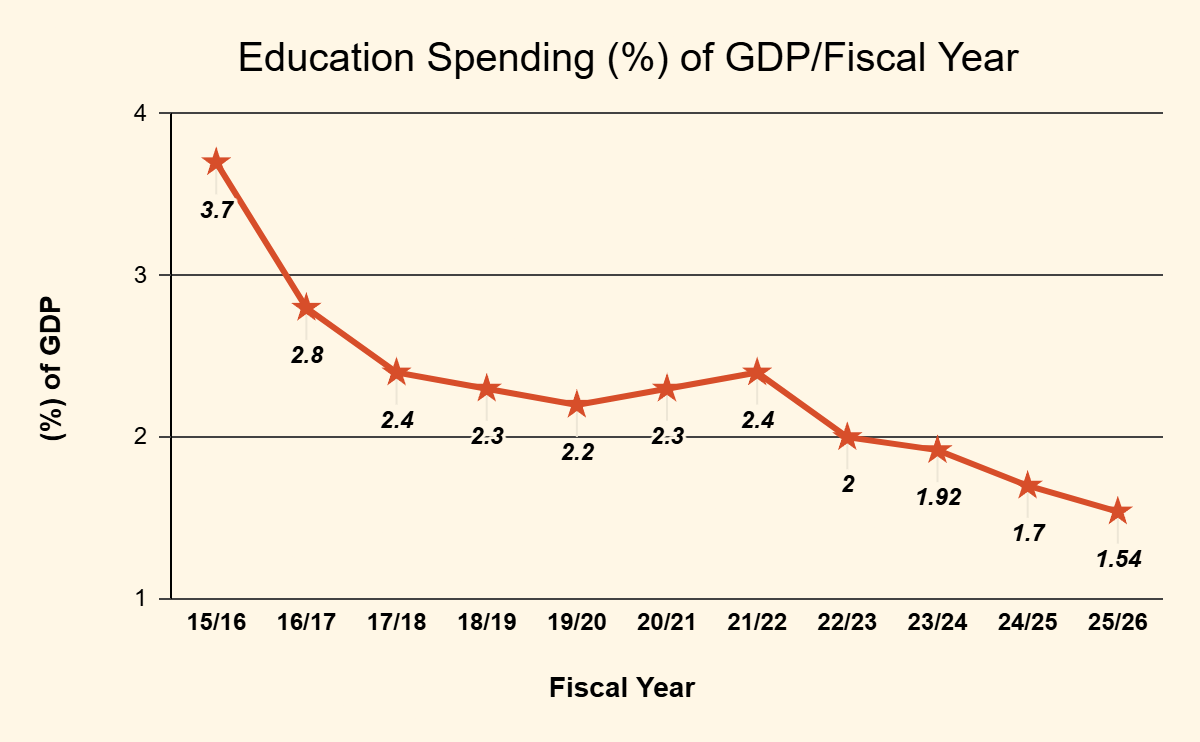
Officials argue that they meet the constitutional requirements for education funding. However, this claim is based on accounting practices similar to those used in counting classrooms. Specifically, they include items such as interest on education-related public debt in their calculations to reach the constitutional target. Independent analysts emphasize this significant distinction between the more focused "functional" education budget and the broader "constitutional" budget, which incorporates additional expenses like debt service and funding for military and police academies to demonstrate compliance.
The state budget’s macro-logic explains why this pattern persists. Debt service now consumes nearly two-thirds of total planned expenditures, about 64.8 percent, leaving roughly a third for everything else, wages, subsidies, investment, and yes, schools. Interest payments alone are projected at about 87 percent of expected tax revenue in 2025/26. Meanwhile, resources are not lacking for mega-projects and new ministerial buildings. Vanity projects, satellite cities, and railway showpieces move ahead unfazed.
The top-down rhetoric regarding education funding reveals contradictions within the state's narrative. Despite officials’ claims that education is adequately funded, the president's response regarding meeting constitutional education standards contradicts their statements. "Do I even have the money for this? The required figures don’t exist." The implication is that educational development is treated as an unreasonable luxury; the implication is also that citizens should expect less and accept less.
It’s no secret that austerity and authoritarianism reinforce one another. And in Egypt, the education apparatus does exactly what an austere authoritarian state needs it to do; it maintains order on the cheap from a young age.
So, what?!
Egypt's educational apparatus is tightening controls for the 2025/26 year by banning "controversial" topics and promoting ultranationalism through various methods, including patriotism drills and rote memorization-focused exams. The government is reviving traditional Qur'an schools to foster religious-nationalist loyalty and using military theories in seminars to frame criticism as threats to the state, eroding civic reasoning and promoting groupthink in the process.
Education in Egypt has become fragmented along lines of class, ideology, and infrastructure. Public school students are shuffled through overcrowded rooms, taught by overstretched or retired staff, and subjected to securitized education. Meanwhile, the private sector caters to an elite minority that bypasses this architecture, almost entirely, with smaller classes, newer facilities, and international syllabi.
Egypt’s education system today is not failing. It is the rational continuation of a decade-long trajectory where authoritarian consolidation and austerity are the de facto operating systems. And so, it is succeeding at doing exactly what it’s been redesigned to do. And that is the problem.