


One of the great illusions of the 1990s was that integrating into the global capitalist market through exports and investment would turn every country in the Global South into an “emerging market.”
Development would accelerate, and the vast gap in living standards between the societies and peoples of the North and South would gradually disappear. The models held up, of course, were those of East and Southeast Asia: first the Four Asian Tigers (Singapore, Hong Kong, Taiwan and South Korea), then the rise of the Chinese giant, alongside Vietnam and a few others.
If these countries had managed to industrialize, develop their societies, and narrow the gap with the capitalist West, why shouldn’t the rest of the South, in Africa, Asia, and Latin America, follow?
That was the economic illusion, and its political counterpart was the idea that globalization would reduce wars and conflicts between states, as the more countries became integrated into capitalist systems of production, consumption, and finance, the more interests they would share. All this would take place under the dominance and direction of the sole remaining superpower, the United States of America, following the collapse of the Soviet Union.
Many of these illusions quickly dissolved as wars, famines, and massacres continued, and rather than bringing the societies and peoples of the South and North closer together, globalization brought mounting racism and segregation. Borders closed, and the major capitalist centers became fortresses barred to people from the Global South seeking work and safety, fleeing “emerging markets” from which they had experienced only poverty and unemployment, or war and prisons. Those who managed to enter these fortresses faced blatant racism and Islamophobia, and even the organized violence of the far right.
Yet the gap in living standards between South and North continued to drive hundreds of thousands to migrate across the Mediterranean, the Mexican desert or the Balkans, in disastrous and deadly conditions. Thousands of Africans and Arabs drown in the Mediterranean in full view of the border forces and navies of southern Europe. In the Mexican desert, too, thousands of poor Latin Americans die of thirst or are thrown into American detention camps.
Faced especially with the rise of the Chinese challenge, US imperialism has returned to using its military superiority and financial dominance to try to halt the decline of its geopolitical hegemony. Its actions range from threatening to occupy Greenland, abducting Venezuela’s president, and imposing a suffocating blockade on Cuba, to providing unconditional support for the genocide in Gaza and the US-Israeli war of aggression against Iran.
One result of these successive developments has been a renewed interest in theories of imperialism among many young people drawn into political activity in recent years, above all by the genocide in Gaza. They have turned particularly to theories of the relationship between the strongest states in the global system and the countries and peoples of the Global South.
What, for example, is the material basis of the blatant racism in Western media and official policy, directed not only against the Palestinian people but against the peoples of the South more broadly, whether migrants, Muslims, Africans, or Latin Americans?
One of the most important schools of thought to emerge in the 1950s and 1960s, alongside the great struggles for national liberation and independence, was dependency theory in its various forms.
The theory’s left-wing variant developed within Marxism, or at least through engagement with it.
This article traces the development of Marxist theory concerning what is now called the “Global South” and engages with the principal dependency theories, particularly those influenced by Marxism.
First, it will address Eurocentrism in relation to Karl Marx himself. Was Marx “Eurocentric”? If not, what did he contribute to our understanding of capitalism’s spread from the centers where it emerged to the rest of the world? Second, it will examine the Marxist theory of imperialism as it concerns relations between imperialist states and colonies and semi-colonies. Third, it will offer a brief critical account of how left-wing dependency theorists developed the theory of imperialism, from Paul Baran and Andre Gunder Frank to Immanuel Wallerstein. Fourth and finally, it will briefly assess Samir Amin’s contributions.
In the second part of this series, it will ask: What forms does imperialist subjugation of the countries and peoples of the South take today? If “delinking” and independent development are no longer viable projects, what is the alternative for the Global South? And does Leon Trotsky’s theory of uneven and combined development still help us understand the development of capitalism in these countries and the possibilities for socialist revolution there?
Karl Marx & the Global South

In the first half of the 19th century, societies outside European capitalism, especially China, were regarded as “backward.” Their only prospect of a future, it was believed, lay in the penetration of these societies by an emerging European capitalism that would modernize them.
In the early development of his thought, Karl Marx was influenced by such views, and this was evident in his 1853 article on India in the New York Daily Tribune titled “The British Rule in India,” in which he argued that British colonialism played an ultimately progressive role in breaking the stagnation of India’s traditional social order and that “whatever may have been the crimes of England” they would be an “unconscious tool of history” in bringing about a social revolution.
Marx regarded social relations in Indian village communities as the basis of what was called “Oriental despotism,” which had left India vulnerable to British colonialism. Despite its brutality and violence, he argued that colonialism would pave the way for India’s progress.
Influenced by Edward Said, postmodernist and postcolonial schools treated Marx’s writings on India from this period as evidence that he was not merely afflicted with Eurocentrism, but was also an integral part of the Orientalist and colonial tradition. This view of Marx’s thought has become a form of received wisdom in many Western academic institutions and has influenced a substantial section of intellectuals in the Global South.
But this reading avoids any serious consideration of how Marx’s ideas developed on the spread of the capitalist mode of production and its implications for the non-European world. Even in the same year, 1853, and in the same series of Tribune articles, Marx wrote that modern India had to find a way to free itself from colonialism, which he described as a form of barbarism, and insisted that British colonial rule would sooner or later end, either with the support of the British working class after its revolution, or through the formation of an Indian independence movement. As the Indian scholar Irfan Habib has pointed out, this aspect of Marx’s early writings on India marks the first instance of a major European thinker supporting Indian independence.
This anticolonial dimension of Marx’s thought deepened markedly in 1856 and 1857, when his articles supported Chinese resistance to the British during the Second Opium War and the Sepoy revolt in India.
Marx’s position on the Irish question also changed. Initially, he believed Irish independence would follow the British working class’s seizure of power, which would enable the Irish people to secure their independence. By 1869, however, he wrote that his position had changed completely, saying that Irish independence had to precede revolution in Britain. The British working class was steeped in a colonial chauvinism that shackled it in its class struggle against the British bourgeoisie, and British workers could break those shackles only if their labor movement supported Irish national liberation. This was also the only way to unite a labor movement divided between British workers and Irish migrant workers.
Raya Dunayevskaya wrote about the American Civil War’s influence on the structure of Volume I of Capital. The war inspired Marx to add the chapter “The working day,” in which he wrote the famous line: “Labor cannot emancipate itself in the white skin where in the black it is branded.”
Marx was also explicit about the connection between the American working class’s revolutionary prospects and the necessity of fighting racism. Many passages in Volume I of Capital, first published in 1867, reveal his radical opposition to colonialism and his insistence on its catastrophic effects across the world. In his analysis of the British textile industry’s impact on India, Marx cites an 1835 report describing the tragedy: “The misery hardly finds a parallel in the history of commerce. The bones of the cotton-weavers are bleaching the plains of India.”
He also points to capitalism’s bloody origins: “In actual history it is notorious that conquest, enslavement, robbery, murder, and force, play the great part.” Elsewhere in the same volume, he writes: “The discovery of gold and silver in America, the extirpation, enslavement and entombment in mines of the aboriginal population, the beginning of the conquest and looting of the East Indies, the turning of Africa into a warren for the commercial hunting of black-skins, signalised the rosy dawn of the era of capitalist production. These idyllic proceedings are the chief momenta of primitive accumulation. On their heels treads the commercial war of the European nations, with the globe for a theatre. It begins with the revolt of the Netherlands from Spain, assumes giant dimensions in England’s Anti-Jacobin War, and is still going on in the opium wars against China.”
Marx was equally clear about the catastrophic impact of British colonialism on its neighbors and their incorporation into British capitalism.
In Ireland’s case, he paints a bleak picture of a dependent economy drained and almost destroyed: “Ireland is at present only an agricultural district of England, marked off by a wide channel from the country to which it yields corn, wool, cattle, industrial and military recruits.” He sardonically recounts the logic of English landlords and economists, for whom Ireland must be depopulated further “that thus she may fulfil her true destiny, that of an English sheep-walk and cattle-pasture.”
He adds: “The Irish famine of 1846 killed more than 1,000,000 people, but it killed poor devils only. To the wealth of the country it did not the slightest damage. The exodus of the next 20 years, an exodus still constantly increasing, did not, as, e.g., the Thirty Years’ War, decimate, along with the human beings, their means of production. Irish genius discovered an altogether new way of spiriting a poor people thousands of miles away from the scene of its misery. The exiles transplanted to the United States send home sums of money every year as travelling expenses for those left behind. Every troop that emigrates one year, draws another after it the next. … [it] sucks out of it every year more people than are replaced by the births, so that the absolute level of the population falls year by year.”
During the 1870s, the final decade of Marx’s intellectual work, his interest in societies outside the major capitalist centers grew, and a central question increasingly occupied him: Could these societies avoid the horrors of capitalist “progress”? Could older communal forms develop directly into communism? During that decade, Marx studied Indian history and village culture; Indonesia’s village economy and the effects of Dutch colonialism; forms of communal property among Indigenous peoples in America; and private and communal property in Algeria and Latin America. He also returned to the economic and social forms of ancient Greece and the Roman Empire.
Drawn to the communal production and ownership in Russian villages, Marx started learning Russian on his own in 1869. He also explored the idea of a socialist revolution in Russia that could be based on these village communities, bypassing the turmoil of capitalist accumulation.
In Algeria’s case, Marx studied communal landownership before and during French colonial rule, and the colonizers’ attempts to destroy it. In his 1879 notes on Maksim Kovalevsky’s Communal Landownership, he examined the colonial rationale for replacing communal holdings with private property, including the French legislation passed in 1873. He copied the statement: “Formation of private landownership (in the eyes of French bourgeois) is a necessary condition for all progress in the political and social sphere.”
His notes also recorded the argument, transmitted through Kovalevsky from French parliamentary debates, that communal property supported communist tendencies and endangered both the colony and the homeland. Another passage explained the purposes of dividing communal holdings: “the distribution of clan holdings is encouraged, even prescribed, first, as means of weakening subjugated tribes which are ever standing under impulsion to revolt; second, as the only way to a further transfer of landownership from the hands of the natives into those of the colonists.”
Primitive accumulation
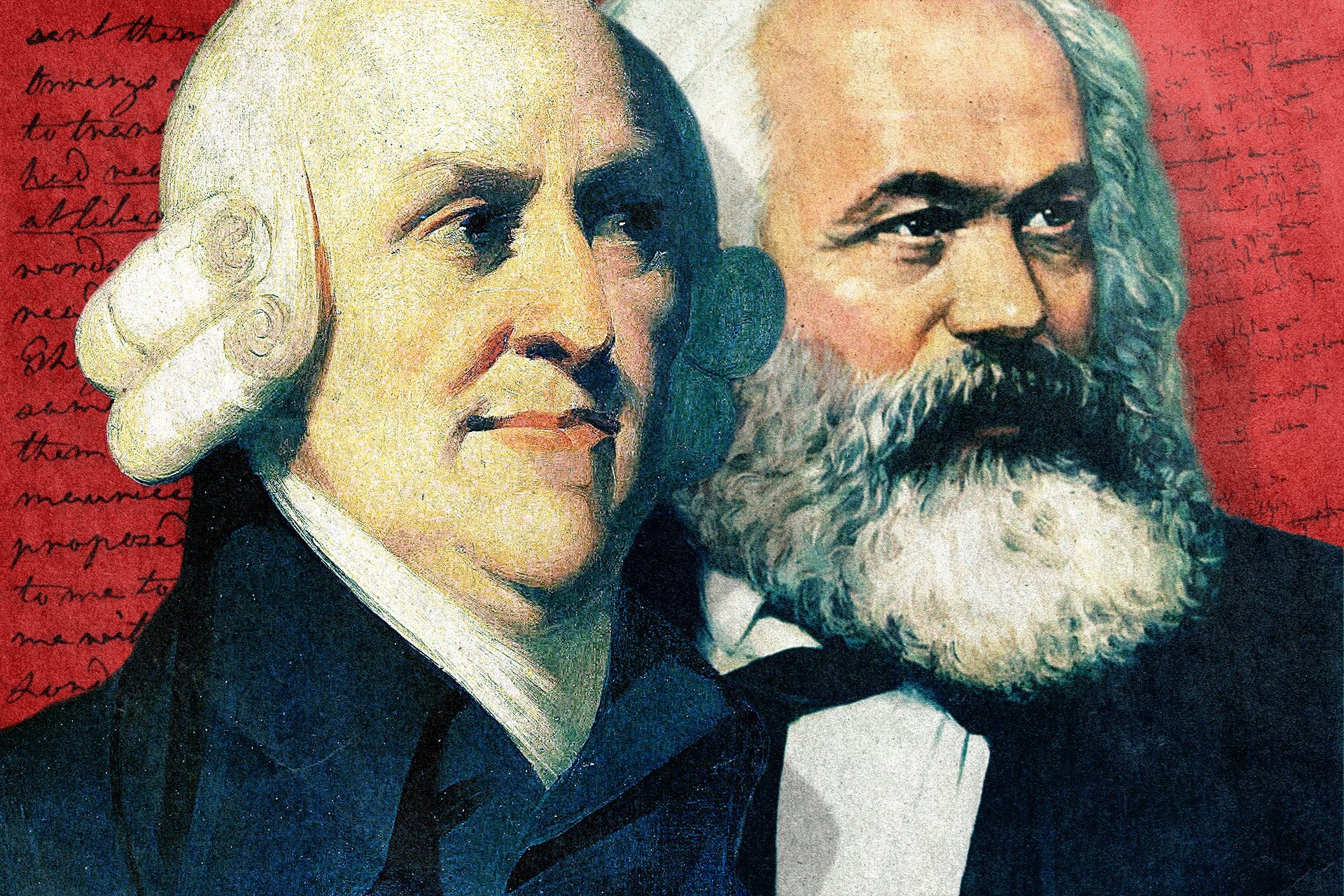
Marx posed what he regarded as a puzzle about capitalism’s origins in Capital, writing that “The accumulation of capital presupposes surplus-value; surplus-value presupposes capitalistic production; capitalistic production presupposes the pre-existence of considerable masses of capital and of labour power in the hands of producers of commodities. The whole movement, therefore, seems to turn in a vicious circle.”
The only way out is to assume a primitive accumulation, what Adam Smith called “previous accumulation,” preceding capitalist accumulation, which is an accumulation that is not the product of the capitalist mode of production, but its starting point.
This means that the methods of primitive accumulation differ qualitatively from those characteristic of the capitalist mode of production. Capitalist accumulation requires the capitalist to own the means of production on one side, and the worker to possess nothing but the commodity of their labor power on the other. The interaction between these two poles is the only means of extracting what Marx calls surplus value, and thus of achieving capitalist accumulation.
But for labor power to become a commodity available to the capitalist on the market, the worker must have been freed from their relationship to the means of production: land in the case of peasants, tools in the case of artisans. They must be left with nothing but their labor power as a commodity.
On the other side, how did the first capitalists accumulate the wealth needed to invest in instruments of production, labor power and raw materials?
Primitive accumulation is Marx’s answer to both questions.
The period preceding capitalist accumulation centered, on one side, on forcibly dispossessing peasants of their land and turning them into propertyless wage laborers. On the other, it centered on the colonial plunder of Africa and South America, the enslavement of their peoples, and even the genocide of entire populations, to accumulate gold, silver, precious metals, and the necessary raw materials. This process was, of course, violent and bloody. Nation-states and armies played a central role in what can be understood as the preparation of capitalism’s path from the 16th century onward.
Capitalism is not simply production for the market with the aim of making a profit, as dependency theorists, for example, have argued. It is a mode of production based on the capitalist’s extraction of surplus value from labor power. This social relationship presupposes, first, a labor market: the commodification of wage labor. Second, it presupposes that commodity production has become dominant over other forms of production. The issue is not simply the existence of a world market, but the central role of capitalist production in supplying it. Third, it presupposes competitive accumulation: competitive pressure on the capitalist to expand and develop production.
The necessary condition for all this is the separation of producers from the means of production, and thus the “freeing” of workers from every form of attachment to agricultural land. A labor market takes shape in which the capitalist finds the commodity of labor power and the worker is forced to sell it. Once this relationship exists, the capitalist can extract surplus value in the production process, rather than through market exchange. Competitive pressure drives the capitalist to increase that surplus value, the source of profit, either by extending working hours and intensifying work (absolute surplus value), or by reorganizing production and improving its technology to raise productivity (relative surplus value). This is what drives capitalist accumulation: the competitive, qualitative development of production, rather than the mere quantitative expansion of the market and division of labor found in dependency theories.
A close reading of Marx’s theory of value shows that explaining the transformation of pre-capitalist social relations into capitalist ones through the spread of exchange is mistaken and superficial. Societies maintain their cohesion through the ruling class’s ability to control the direct producers, and the importance of exchange in any society derives from the form of that control. Even in its capitalist form, exchange is a surface phenomenon resting on the prevailing relations of production. Marx used the term “commodity fetishism” for an analysis of exchange that treats social relations as merely relations of commodity exchange.
The expansion of commodity and monetary exchange does not, in itself, necessarily generate the wage relations on which capitalism’s dynamic rests.
On the contrary, capitalist trade and finance can strengthen pre-capitalist elites, obstructing the development of industrial capital, whether domestic or foreign. By expanding international markets for commodities produced under pre-capitalist relations, the growth of commodity and financial capital can also extend and reinforce systems of unfree labor: slavery, serfdom and forced labor.
Historical evidence suggests that exchange alone cannot generate capitalist relations. That happens only when active steps are taken to create bourgeois social relations out of the destruction wrought by exchange and competition. In Marx’s words: “The so-called primitive accumulation, therefore, is nothing else than the historical process of divorcing the producer from the means of production.”
Lenin, Bukharin & ‘classical theory’
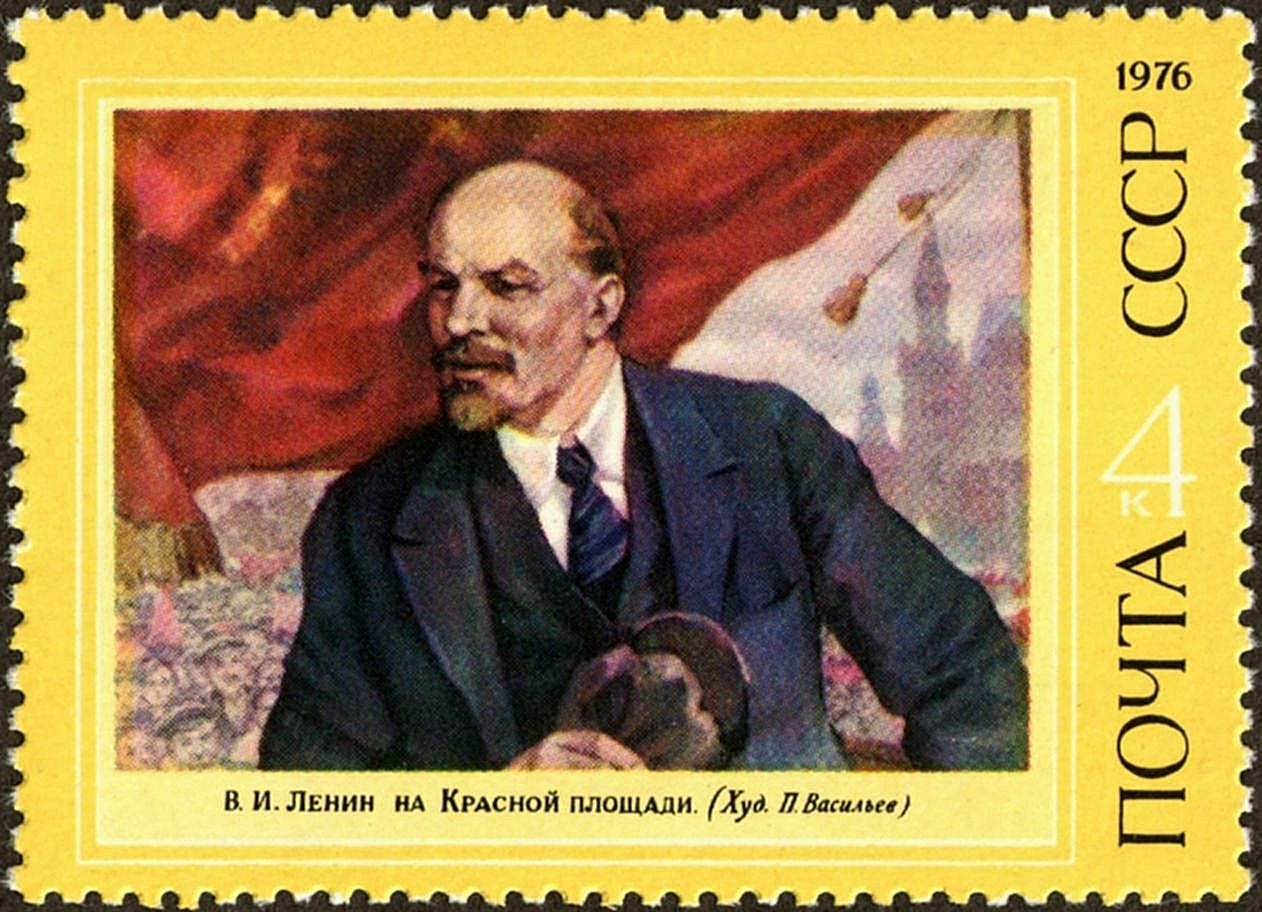
In its classical formulation, the Marxist theory of imperialism analyzed competition and conflict between the major capitalist states and economic monopolies operating across borders. But this analysis extended beyond relations among the imperialist powers themselves, as it also addressed relations between colonial states and peoples under colonial domination, whether direct or indirect.
Although this dimension received no extensive treatment in the works of Rudolf Hilferding, Nikolai Bukharin, or Vladimir Lenin, it became central to the debates surrounding the founding of the Communist International in 1919, and one of the foundations of its revolutionary strategy.
World War I created conditions for a rising wave of workers’ struggles and social revolutions in the advanced capitalist countries, alongside the growth of national liberation movements in colonies such as Ireland, Egypt, and India. In this context, Lenin argued that the victory of socialist revolution in the advanced capitalist countries depended on the advance and victory of national liberation struggles in the colonies. This view rested not only on the weakening of the imperialist system by these movements, but also on their role in establishing proletarian internationalism within the labor movement. They confronted the chauvinist and racist tendencies nourished by the dominant ideologies of imperialist societies.
Marxists from colonized countries also played a prominent role in shaping the Communist International’s position on the national and colonial question. Among them was the Indian revolutionary Manabendra Nath Roy. Through discussions with Lenin and other International leaders, Roy helped reformulate the “supplementary theses on the national and colonial question” adopted by the International’s second congress in 1920. This contribution grew out of his political and organizational activity, as he had helped establish the communist movement in Mexico in 1917 and 1918, and later helped found the Communist Party of India in 1920.
Rosa Luxemburg & the necessity of colonial expansion

Rosa Luxemburg’s contribution to the classical Marxist debates on imperialism placed colonial expansion at the center of the conditions necessary for the capitalist mode of production to continue and reproduce itself. In The Accumulation of Capital, she argued that capitalist development necessarily produces a surplus of capital that cannot be profitably reinvested within the capitalist centers.
As production continually expands, supply grows faster than domestic capitalist markets can absorb it, diminishing the opportunities for profitable investment within those centers. Exporting capital to colonies and regions not yet incorporated into capitalist relations of production therefore becomes the main means of absorbing this surplus and sustaining accumulation. In this sense, Luxemburg argued that capitalism cannot survive on its domestic markets alone. It always needs non-capitalist spaces into which it can expand and through which it can absorb surplus capital and output.
This analysis rested on a direct critique of Marx’s account of expanded reproduction in Volume II of Capital, in which Marx presented a theoretical model showing how a capitalist economy could reproduce itself by absorbing surplus output through a combination of individual consumption and reinvestment in means of production, which he called productive consumption. Luxemburg argued that this model overlooked the central problem of limited demand within capitalist society, and that reinvestment alone could not absorb the growing surplus, making external expansion and imperialism a structural necessity for capitalism, rather than merely a political or economic choice.
Despite the importance of her analysis, particularly its account of relations between capitalist centers and peripheral regions, Nikolai Bukharin sharply criticized her thesis. He defended Marx’s analysis of reproduction, insisting that surplus output is absorbed not only through final consumption, but also through the expansion of capital goods production itself: investment in means of production and intermediate goods.
On this basis, he argued that capitalism does not need a non-capitalist world to continue accumulating, because reinvestment within the capitalist economy provides a mechanism for absorbing the surplus, noting that capital exports did not flow exclusively toward colonies and the periphery, but also between advanced capitalist economies, according to differences in profit rates and investment opportunities.
Leon Trotsky, uneven & combined development
The development of capitalism in the most economically advanced countries would compel other states to follow a similar economic path, and “backward” countries would pass through the same stages as those that had preceded them. Their political development would therefore have to pass through a similar stage of “bourgeois” democracy before socialism became a realistic possibility. Countries that had not yet experienced bourgeois revolutions like the great French Revolution would have to undergo them to begin capitalist accumulation, itself a necessary precondition for socialism.
This was the prevailing view of the future and fate of the “backward” countries within Western socialist movements, and it applied not only to colonies and semi-colonies, but even to a country such as Russia at the end of the 19th century. The Russian Revolution of 1905 sharply contradicted these stage-based conceptions of capitalist development in backward countries.
How had an industrial working class representing only a tiny share of the population, in a predominantly peasant country, managed to challenge the tsarist regime and even propose an alternative form of power?
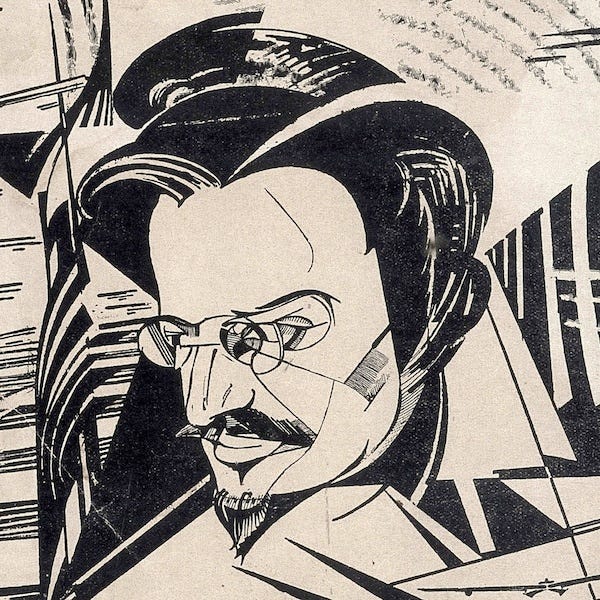
Drawing on the experience of 1905, Trotsky rejected the theory of “revolutionary stages,” according to which Russia had to wait for capitalism to reach full development before socialism could be placed on the agenda. Any Russian revolution had to be understood within its wider context, as a world event in both its causes and its consequences. Despite Russia’s profound “backwardness,” competition with the West and the penetration of Western capital had created vast concentrations of workers capable of challenging tsarist power.
Russia alone, of course, lacked the material basis for socialism, but a workers’ government taking power could lead a worldwide revolutionary process. Globally, capitalist development had already provided sufficient economic foundations for socialism.
Trotsky argued that Russian development could not be understood simply as backward and uneven. It was combined in two respects. First, through its integration into the world economy, which involved several important elements. In particular, the tsarist state devoted an enormous share of its resources to military competition with the more advanced capitalist powers. On one side, this deepened the country’s general backwardness by consuming surpluses that could have been invested more productively. On the other, it brought the products then the machinery of Western capitalism into Russia. Industrial output and productivity remained low by Western standards, but rose enormously in the latter part of the mid-19th century, especially in fields linked to the military, such as railway construction and iron and oil production.
Western capital thus shaped Russia’s political economy, initially through the mediation of the state, and later through direct investment.
For Trotsky, history does not advance along a common path that each country follows through separate stages. It is profoundly uneven, proceeding differently in different places and at different speeds, as the “more backward” regions are affected by what has already happened elsewhere. Different stages of development can therefore overlap, existing simultaneously within the same country.
In bringing countries economically closer together and narrowing the differences between their levels of development, capitalism operates through its own methods: anarchic methods that constantly undermine its own work, set country against country and industry against industry, and develop some parts of the world economy while disrupting and obstructing the development of others. Only the interconnection of these two fundamental tendencies, both arising from capitalism’s nature, explains the living fabric of the historical process.
Rather than establishing a harmonious equilibrium, capitalist competition destabilizes, eliminates the weak and challenges the strong, imposing new standards of “efficiency” and cost on industry. Capital’s movement to equalize profits across industries generates uneven development. Equilibrium in exchange, a uniform market price, conceals the generation of uneven development in production.
The theory of uneven and combined development explained what happens in colonies and semi-colonies, where it is impossible to pass through the same stages as the capitalist West. Capitalist development instead proceeds in a fragmented and contradictory manner, producing profoundly uneven and mixed social formations. Social instability and successive crises become defining features of these societies.
Seemingly paradoxically, this makes revolutions more likely there than in the major capitalist centers, with their greater stability and entrenched reformist traditions.
In other words, uneven and combined development made a strategy of permanent revolution possible in the countries of the Global South.
Dependency theories: From Paul Baran to Immanuel Wallerstein
As seen so far, the classical theories of imperialism developed by Luxemburg, Bukharin, Lenin and others sought to explain capitalism’s development up to the early decades of the 20th century. The world order that emerged after World War II, however, created a qualitatively different reality in the patterns of capitalist expansion, the forms of competition between the major powers, and the instruments of economic and geopolitical domination.
Direct colonial rule diminished in importance, giving way to more complex forms of control involving multinational corporations, international financial institutions, and mechanisms for controlling markets. These changes required theories of imperialism to develop beyond the classical frameworks formulated at the beginning of the century.
Raúl Prebisch & the birth of dependency theory

In the late 1940s, the Economic Commission for Latin America (ECLA), a United Nations regional commission established in 1948, began developing an approach that challenged prevailing assumptions about international trade. A foundational statement was the Argentine economist Raúl Prebisch’s 1949 report, The Economic Development of Latin America and Its Principal Problems.
ECLA sought to promote Latin America’s modernization and industrialization, but identified problems within international trade. According to its analysis, the terms of trade continually deteriorated to the disadvantage of raw material exporters. They sold their products at international prices below their true value, while the core countries sold manufactured goods at prices above their true value.
Unequal exchange therefore existed between the core and the periphery. The commission was the first to introduce these terms into development economics, and this meant that most developing countries had to export increasing quantities of raw materials each year to continue importing the same quantity of manufactured goods. Since this exchange disadvantaged raw material producers, the commission’s proposed solution was for Latin American states to promote, plan, and protect import-substitution industrialization, reducing their dependence on the major centers.
Paul Baran & Andre Gunder Frank
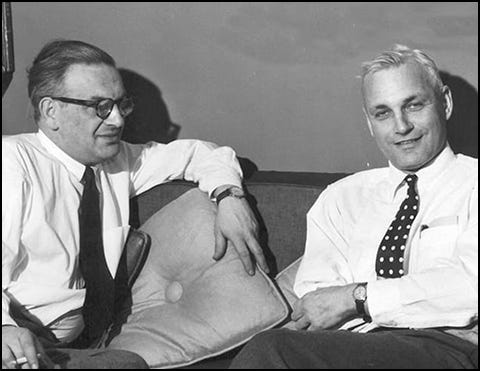
The American Marxist Paul Baran adopted an analysis similar to Prebisch’s, but as part of an effort to develop the Marxist theory of imperialism. This was in the 1950s, when many Marxists still expected the world capitalist system to experience no further periods of growth, but prolonged stagnation instead. In the age of imperialism and monopoly capitalism—Baran and Paul Sweezy co-authored an important book on this, Monopoly Capital—there was no room for major advances in productivity. Large monopolistic corporations completely controlled the world market, reducing competition and the need to innovate and develop the means of production. They also prevented new competitors to American capitalism from emerging.
Baran focused on the effects of all this on developing economies, reaching the same conclusion as Prebisch: the unequal exchange imposed on developing countries by American capitalism would obstruct their economic development. Political independence would therefore be insufficient. A state-led development project was necessary, based on import-substitution industrialization and following the Soviet model of five-year plans. Baran compared the experiences of India and China in the 19th century, recalling how British colonialism destroyed India’s emerging industry, while Japan was able to industrialize because it remained independent.
Any surplus retained by the ruling classes in peripheral economies, meanwhile, could not be invested productively within them. Their extreme inequality prevented profitable investment in industries meeting mass consumption needs, which Baran regarded as essential to capitalist industrialization.
First, the causes of underdevelopment in the so-called “Third World” were external rather than internal, as these countries’ poverty derived from their relations with the West, rather than purely domestic obstacles to economic growth. Second, this relationship produced underdevelopment rather than development, as the rich capitalist states had a strong incentive to obstruct growth and, by creating relations of dependency, the power to do so. They had an incentive to perpetuate underdevelopment because it made capital exports to peripheral countries, or commodity trade with them, more profitable.
Andre Gunder Frank took Baran’s theses in a new direction, arguing that economic development in the core and underdevelopment in the periphery were two sides of the same coin: Frank writes: “The center [the advanced capitalist country] appropriates the economic surplus of the dependent countries [the developing countries] and allocates it to the growth of its own economy. The dependent countries remain underdeveloped because they cannot use the surplus they produce, and because of the same contradictions of polarization and exploitation that the central country creates and maintains within the dependent country’s domestic economic structure. … The same historical process of capitalism’s worldwide expansion and development simultaneously generated, and continues to generate, both economic growth and structural underdevelopment.”
During the 1960s, Frank emerged as the most important left-wing writer developing Baran’s ideas, particularly in Capitalism and Underdevelopment in Latin America. To a large extent, the book simply restated Baran’s original thesis and applied it to Latin America.
Frank defined capitalism through relations of exchange rather than relations of production. Production for the market, rather than for direct consumption, was what made economic activity capitalist. Whether or not property relations involved wage labor or slavery, producing commodities for exchange was sufficient to define them as capitalist.
For Frank, the system consisted of “chains” in which surplus was extracted from peripheral areas by metropolises that might themselves be peripheral to metropolises higher up the hierarchy. These chains operated within countries as well as between them, forming a continuous, extended chain of exploitative relations. Exploitation here became a geographical matter concerning exchange and trade, rather than a social relationship within production, as Marx had argued. Frank acknowledged important changes over the five centuries since the capitalist world economy’s emergence, but claimed that these represented “continuity in change,” with no alteration to the underlying structure.
In the 1960s, however, Frank’s position won wide acceptance because it corresponded to the prevailing radical theories, particularly those associated with the Cuban and Chinese experiences. Peripheral locations could be identified within advanced capitalism, making it easier to connect the oppressed and marginalized in the “First World” with their counterparts in the “Third World.”
At the same time, the integration of the Western working class into capitalism could be explained through its relative affluence, derived from surplus extracted from the periphery. The periphery’s poor, workers, and peasants, in turn, constituted the true revolutionary force, because their double exploitation was the foundation of the entire structure of global capitalism.
Wallerstein & ‘world systems theory’
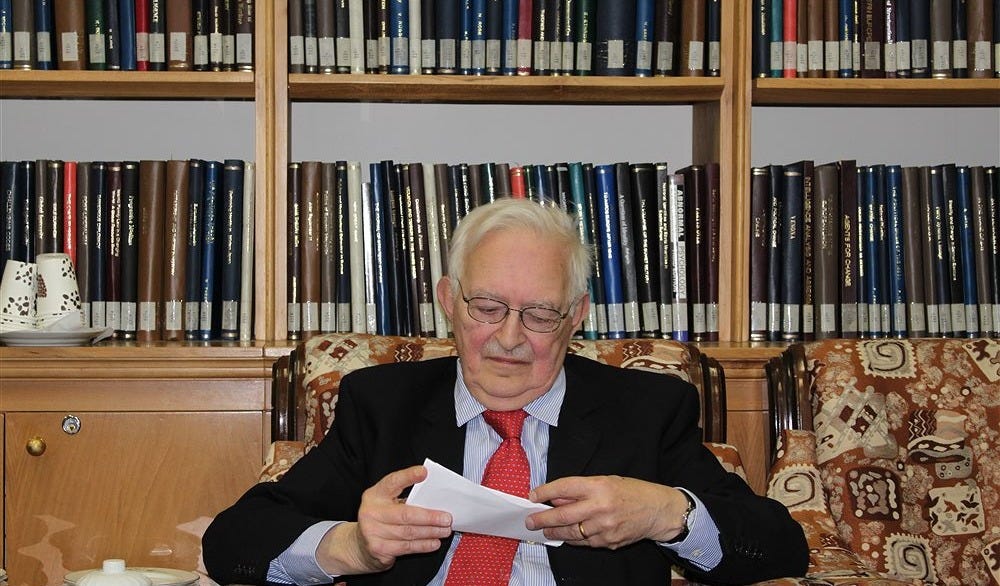
The American thinker Immanuel Wallerstein was perhaps the most important figure in developing Andre Gunder Frank’s ideas into an approach and method for understanding capitalism’s entire history. He did so through a series of historical studies of what he called the “world system.”
Wallerstein argued that capitalism, which he regarded as globally dominant since the 16th century, had formed what he called a “world economy,” whereas pre-capitalist economies had rested on empires. The transformation brought about by the development of world trade drove a global division of labor and changes in the form and efficiency of production. This division of labor meant regional specialization, creating different forms of labor organization suited to the distribution of populations and natural resources. As world trade developed and expanded, a system of nation-states emerged with unequal economic and military capabilities.
This system reproduced the global division of labor, accelerating accumulation in certain regions, the core, and slowing it down in others, the periphery.
Wallerstein’s conception of economic development is essentially quantitative, revolving around three basic concepts: first, the growth of the system through commercial expansion; second, the rearrangement of the elements of production through regional specialization to increase efficiency; and third, the transfer of surplus from the periphery to the core.
For Wallerstein, then, the development of the “world economy” requires three conditions. First, its geographical expansion (incorporation). Second, the development of diverse means of labor control in the production of different commodities across different regions (specialization). Third, the creation of strong state apparatuses in the core of the capitalist world system to secure the flow of surplus.
Trade is the principal driver of capitalist economic development in Wallerstein’s account. Put simply, the pursuit of profit through trade leads to accumulation, the investment of surplus, and thus to technological and productive development. Relations of production and forms of labor vary according to each region’s specialization within the global division of labor.
In the capitalist centers, they revolve around wage labor. Outside the centers, they vary according to the requirements of production and specialization. Eastern Europe in the 18th century relied on serfdom to produce grain as part of its integration into world trade, while slavery was concentrated in South America and the Caribbean, for example.
For Wallerstein, wage labor is thus merely one form of labor control within the global division of labor. These forms are determined by the technical requirements of producing particular commodities in particular regions. As he summarized it: “Free (wage) labor is the form of labor control used for skilled labor in the core countries. Coerced labor (slavery, serfdom, etc.) is the form used for less skilled labor in the peripheral countries.”
Wallerstein offers a quantitative conception of capitalism’s development: accumulation is driven by market expansion and the development of the division of labor through specialization, rather than by the qualitative development of production described by Marx, and different forms of labor emerge and persist according to what makes each region most competitive in the world market. In the 18th century, for example, if wage labor was best suited to core countries such as Britain, serfdom was more efficient for grain production in Eastern Europe, and slavery more efficient for sugar cane and cotton production in America and the Caribbean.
As specific forms of the division of labor become geographically established within world trade, vast differences emerge in the power, armies, and capabilities of nation-states.
The stronger states impose unequal exchange on the weaker: the core imposes it on the periphery.
For Marx, the uneven development of the productive forces is one of the fundamental laws of global capitalist accumulation. The question, however, concerns the mechanisms producing this unevenness between the countries and regions of the world capitalist system.
Perhaps the principal disagreement between dependency theory and Marxist theory turns on this question. The former sees inequality as a result of world trade, through which core countries appropriate the surplus of peripheral countries.
Marxism locates its essence in the sphere of production and the relationship that arises and is reproduced globally.
Samir Amin & Marxism
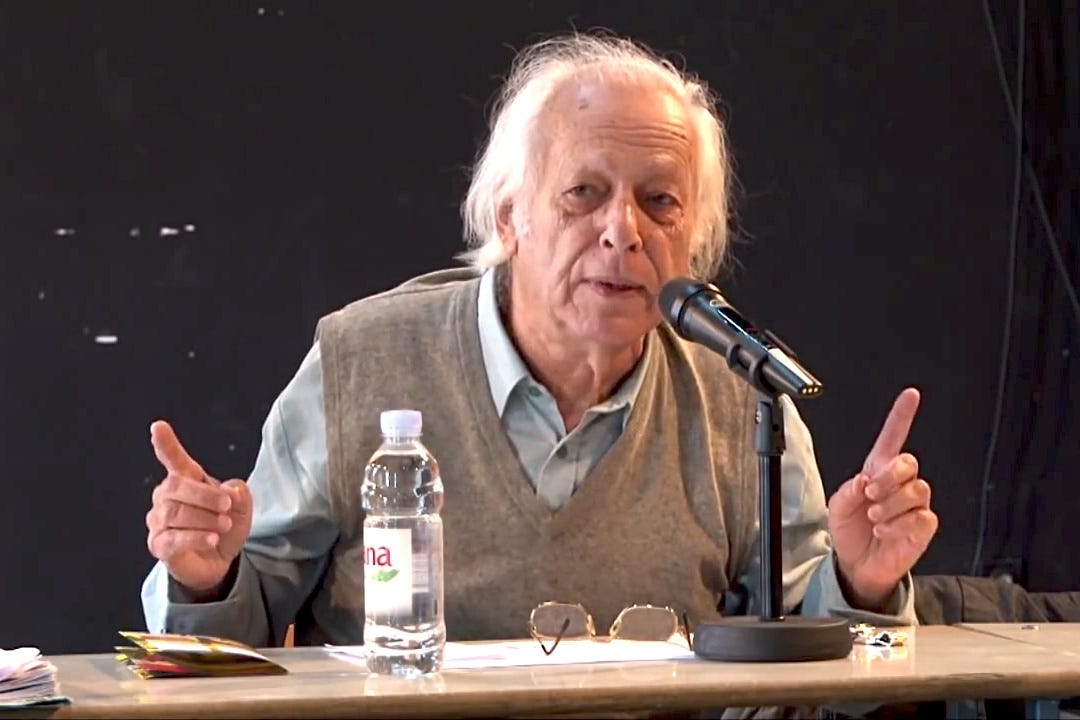
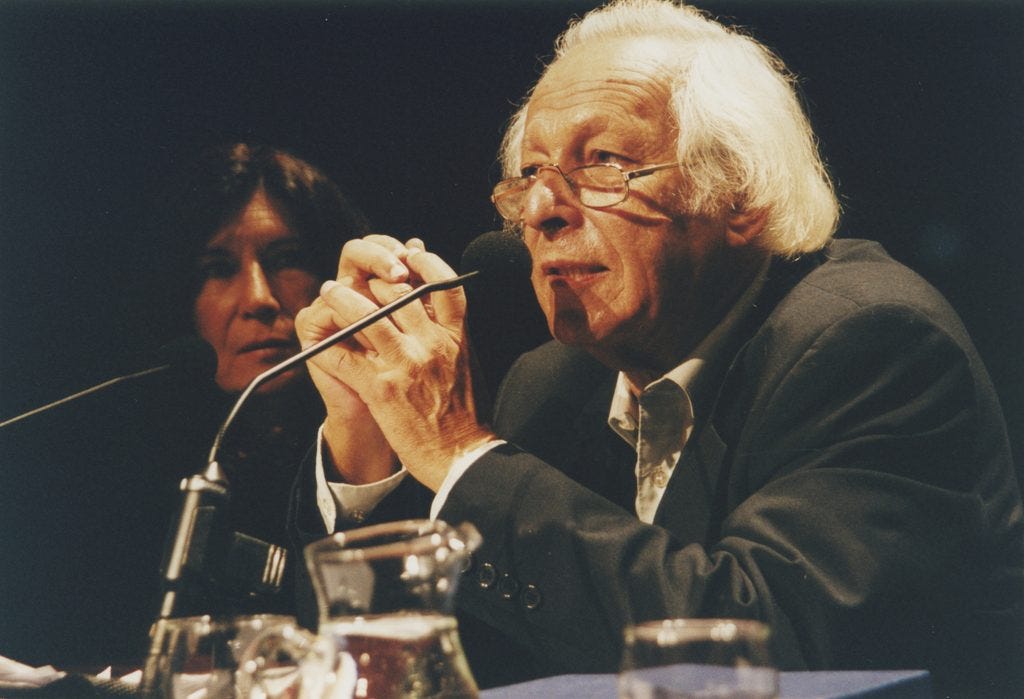
The late Samir Amin was one of dependency theory’s most important thinkers, and among the most influential on the Arab left generally and the Egyptian left particularly. In his concepts and theoretical tools, he was also the closest to Marxism, even if I disagree with his theoretical, practical, and political conclusions. A product of the Egyptian communist movement, Amin spent his life fighting imperialism and working for national liberation, and until his passing in 2018, he was one of the Global South’s most important voices against capitalist globalization and neoliberalism.
Amin brought a qualitative shift to dependency theory’s treatment of unequal exchange between core and periphery. He rejected the idea, advanced by Andre Gunder Frank among others, that capitalist accumulation in the core depended primarily on surplus extracted from peripheral countries.
For Amin, accumulation in the core is internally driven, or “self-centered.” By this he means that it does not need surplus from the periphery to grow, expand, and accumulate further. His analysis of capitalist accumulation in the core rests on Marx’s account in Capital: the source of the surplus is “surplus value,” extracted from labor power in production. Most of this surplus is invested in developing and expanding production and increasing productivity, the transition from absolute to relative surplus value, through mechanization and technological development. This process permits wages to rise, and wages play an important role in the consumption of manufactured products, thus allowing reproduction on an expanded scale.
In the periphery, capitalist accumulation takes a qualitatively different form. Production is directed primarily toward the markets of the core and the luxury consumption of the peripheral bourgeoisie, rather than the domestic consumption of the majority.
According to Amin, this permits the super-exploitation of workers in the periphery, since their consumption plays no significant role in absorbing output. It also perpetuates pre-capitalist modes of production in the countryside. First, the surplus needed to bring the countryside under capitalist production and mechanize it is extremely limited, with a large part transferred to the core. Second, these modes are preserved to keep food prices low for urban workers, whose exploitation is intensified and whose wages remain low.
The capitalist centers thus developed as the classical Marxists had predicted, dissolving earlier modes of production, namely feudalism, and moving toward a self-sustaining system of accumulation.
In the periphery, however, capitalist accumulation continued to face structural obstacles. Peripheral countries could compete only in minerals, raw materials, and agricultural commodities, and capitalist expansion remained confined to narrow domestic markets. Most of their populations remained excluded from the capitalist sector. Sectors based on pre-capitalist modes of production were therefore continually reproduced, rather than dismantled as they had been in the core.
Most dependency theorists regarded capitalist accumulation in the periphery as distorted by the absence of a key element present in the core. For Frank and Baran, for example, the missing element was the plundered surplus itself.
For Amin, it was high wages capable of absorbing the surplus through consumption.
Unequal specialization is one of the foundations of Amin’s conception of the world economy. He argues that global specialization is determined by cost, rather than comparative advantage as Ricardo believed, and that cost is determined by productivity and wages. The capitalist centers achieved enormous productivity gains during a period when wages remained very low in both the core and the periphery. This produced a pattern of unequal specialization.
Wages later began to rise in the core, but its productivity advantage remained sufficient to ensure lower costs in most industrial sectors.
Unequal specialization is therefore both a cause and a consequence of uneven development. Both are rooted in the conditions of production and reflected in relations of exchange. This unequal specialization and uneven development thus produced two qualitatively different paths of capitalist accumulation.
Amin divided global capitalist development into several major stages. The first was the mercantilist stage, marked by capitalism’s emergence in Western Europe and the establishment of a network of exchange relations with pre-capitalist formations. The second, extending roughly from 1800 to 1900 and known as the stage of competitive capital, was characterized by a degree of equal exchange between core and periphery, while wages in the core remained low.
The third stage, the most important in Amin’s analysis, was the imperialist stage, beginning at the start of the 20th century. Wages began to rise in the core alongside productivity, and world markets became integrated on the basis of unequal exchange between core and periphery. Capitalist development in the periphery remained obstructed by the competitive strength of industrial production in the core.
According to Amin, then, Marx’s theory did not apply in the same way to capitalism’s development at the system’s periphery, especially during the imperialist stage. This development was marked by a structural distortion. Wages remained low, even in industries with productivity close to that of the core. Industrial development remained obstructed and limited, and part of the economy remained subject to pre-capitalist relations of production or, at least, operated at very low productivity.
Amin thus agreed with other dependency theorists that unequal exchange existed between core and periphery, transferring a large share of the surplus produced in the periphery to the core. He also agreed that peripheral workers were subject to super-exploitation compared with workers in the core. But he disagreed that workers in the core benefited from this super-exploitation. He also disagreed that the transferred surplus was necessary for accumulation in the core. While the transfer obstructed capitalist development in the periphery, it played no important role in accumulation in the core.
Throughout his writings, Amin insists on the impossibility of “real” development at the periphery of the world capitalist system. In Accumulation on a World Scale, he argues that “So long as the underdeveloped country continues to be integrated into the world market, it remains helpless. At the level of ‘equilibrium,’ therefore, the possibilities of local accumulation are nil, because the whole of the surplus that could have been obtained from production is transferred, flowing into the pool of profits belonging to the monopoly.”
What political conclusions follow from Amin’s theses? The particular character of accumulation in the core had profoundly important political and social consequences, as Amin explains, since World War II, conditions have emerged in the ‘center’ (the advanced capitalist countries) that allow the labor movement to be controlled through a social-democratic social contract. Income redistribution has thus produced stability by absorbing growing surplus value. This is not the case in the periphery, where growth is obstructed or severely constrained by low wages and the associated small size of the market, he argues.
Since development and capitalist growth are impossible in peripheral countries while they remain integrated into the world system, their only path is to “delink” from it.
Amin’s theory of delinking was more than a call for national independence and independent development. For him, it was the essence of socialist revolution. We must recognize that the socialist revolution he advocated was represented, in his view, by the experiences of China during the Cultural Revolution, North Korea, Vietnam and, to a lesser extent, Cuba. Amin even supported Pol Pot and the Khmer Rouge regime in Cambodia.
The logic is simple and clear. Since class struggle in the imperialist age is a struggle between the workers and peasants of the periphery on one side and the imperialist bourgeoisie of the core on the other, what about the working class in the core and the bourgeoisie in the periphery? What role do these classes play?
Amin’s answer is equally simple and clear.
The working class in the core has been tamed through high wages, strong reformist trade unions and welfare state policies, and can therefore no longer play a revolutionary role. The peripheral bourgeoisie is wholly dependent on the bourgeoisie of the core (he uses the term “comprador,” denoting a bourgeoisie serving foreign capital), and has consequently become counterrevolutionary.
The solution is thus a revolution in the peripheral countries that overthrows the ruling domestic bourgeoisie and forms a mass class alliance of workers and peasants.
This alliance would lead a process of independent economic development that would also constitute the first step toward socialist transformation.
For Amin, socialist transformation means delinking from the world market and pursuing an independent development project. Its models were China under Mao, North Korea under Kim Il Sung, and Cambodia under Pol Pot. What Amin means by leadership by “workers and peasants,” then, is not workers and peasants themselves, but parties that raise the slogan of “workers and peasants.”
In all these models he praises, workers and peasants had no role in leading the state or drawing up its celebrated five-year plans. No one consulted them about any of this. In Cambodia, the regime even exterminated a substantial proportion of workers and peasants through forced labor, starvation, disease, torture, and executions in its so-called “socialist” project.
Even if we assume that independent development and delinking are necessary steps for peripheral countries, which is an entirely mistaken assumption, the question remains, as we enter the second quarter of the 21st century: Where is the state in the Global South that has achieved economic or social growth, or improved its population’s conditions, by delinking from the world economy?
If we can find no successful model of delinking and development independent of global capitalism, what about the examples of rapid economic growth through integration into the world market? What about China and Vietnam, for example, over the past three decades?
If Amin was right about the transfer of surplus from periphery to core, the obstruction of industrialization and the persistence of pre-capitalist modes of production, where is all of this in China and Vietnam? Their rapid growth coincided with deep integration into global trade, particularly with American and European markets.
If surplus capital is transferred through unequal exchange from China to the United States, for example, where did the enormous investments come from that enabled China to become a major industrial power over the past three decades?
The second part of this essay will advance a critical reading of dependency theories, seeking to develop a Marxist understanding of contemporary imperialism and the forms of economic, military, and geopolitical subjugation imposed on the countries and peoples of the Global South.
* This essay was first published in Arabic in the third edition of the Egyptian Marxist periodical, Socialist Papers.
