


Originally published in Arabic by Mohamed ElKholy in 2024, this essay is republished here in English because it reflects the foundational ethos of The Cairo Report. ElKholy’s argument that journalism fundamentally requires taking sides resonates with our commitment to practicing journalism from below.
As an independent socialist publication, we reject the illusion of neutrality, choosing instead to view Egypt through the lens of class and to equip people with the information they need to be conscious and active historical agents.
Mohamed ElKholy is also the author of “Death Visits My Room at Dawn,” a collection of 17 short stories set in the Egyptian countryside. The stories return to childhood, village life, memory and estrangement, resisting idealized depictions of the rural world while dwelling on its everyday textures and losses. Written in a poetic register, the collection asks what remains of one’s roots after leaving in pursuit of education and modernity.
The term “neutral newspapers” emerged in Egypt sometime around the 1920s and 1930s. These newspapers were mostly owned by foreigners. Although their owners generally became “Egyptianized,” they could never match the enthusiasm of native Egyptian citizens.
This was the argument made by Egyptian socialist writer Salama Musa in the opening chapter of Journalism: A Craft and a Mission, titled “The Day Egyptian Journalism Died.” He was looking back at the press under occupation and monarchy, and he was not using “neutrality” in its contemporary professional sense.
By “neutral,” Musa did not mean factual accuracy or verification. He meant a commercial and political posture: remaining above the parties so that a newspaper could follow whichever government prevailed, retain every section of its readership and avoid retaliation. Neutrality was therefore not the absence of alignment. It was an alignment with survival, profit and the existing distribution of power.
The owners of these newspapers were more fortunate. Their publications were neither shut down nor subjected to persecution or harassment. This stood in stark contrast to the restrictions, imprisonment, and closures imposed on Egypt’s national press and its Egyptian owners. Abdel Qader Hamza, for example, launched 14 newspapers between 1920 and 1930. Every one of them was shut down.
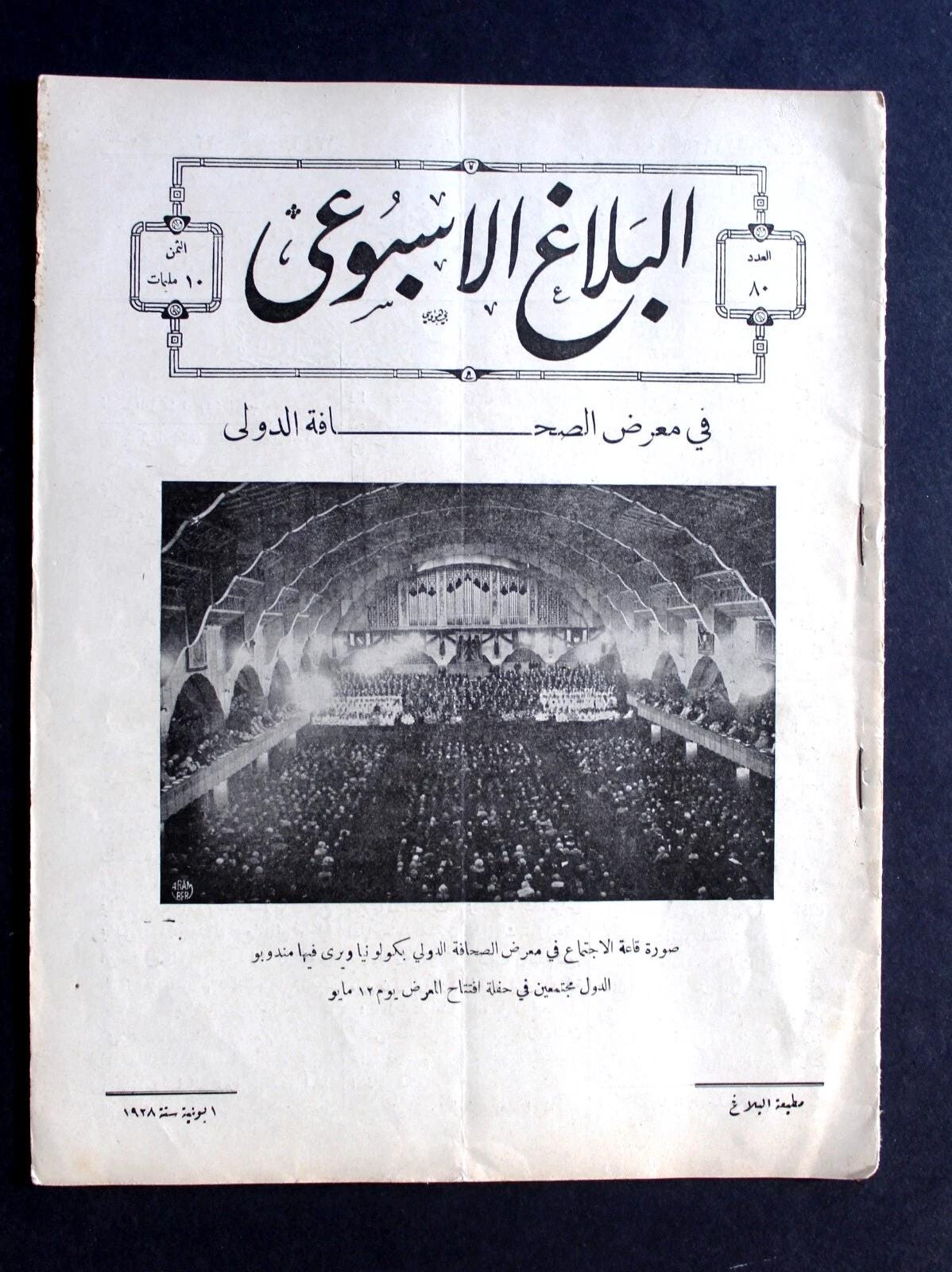
The repression worked economically as well as politically. Musa described the newspaper house as a factory. When Ismail Sidqi’s government closed Al-Balagh, Al-Kawkab, and Al-Yawm in 1930, it did not merely suppress opinion; it also idled printing machinery, dispersed skilled workers, and cut livelihoods that Musa estimated supported about 500 families around each newspaper.
Al-Balagh had purchased a color printing press for 7,000 Egyptian pounds, payable in monthly installments of 700 pounds. The newspaper was closed just as the investment was approaching profitability, forcing Hamza to choose between selling the machine at a fraction of its value and declaring bankruptcy.
Newspapers spared by the authorities meanwhile accumulated all the advantages of continuity: trained staff, distribution networks, reader loyalty, and advertisers’ confidence. Censorship therefore reorganized the market. By repeatedly making oppositional newspapers commercially unreliable, the government transferred their readers and advertising revenue to safer competitors. Musa’s account is supported by the documented history of Hamza’s newspapers and their repeated closures.
The “neutral” newspaper pursued profit by any means available.
The original function of journalism was to inform, educate, enlighten, and raise awareness—something that often required confronting society and its prevailing ideas, as the national press generally did. The “neutral” press, however, used vulgar language and followed public opinion wherever it went. If society believed, for example, that girls should not be sent to school, these newspapers would endorse that view and publish articles on the supposed benefits of depriving girls of an education.
The same applied elsewhere.
During this period, such newspapers published reports and stories promoting a culture of laziness and fahlawa—the pursuit of clever shortcuts—and presenting fraud as the fastest route to immense wealth.
One of these newspapers’ cleverest tricks was to do one thing and its opposite. A daily newspaper might attack the government and praise a particular party, only for its weekly edition to reverse course, supporting the government and attacking the party. The publishing house could thereby secure readers who opposed the government and readers who supported it at the same time.
Advertising went to the “neutral” newspapers because merchants and businesspeople, i.e., the advertisers, sought outlets that offered stability and, therefore, security.
Advertising was not incidental to this arrangement, since the cover price often failed to meet even the cost of paper, making commercial and government advertisements essential to survival.
Musa recalled that after he opposed Sidqi in Al-Masri in 1930, the government withheld advertisements from it and 12 magazines he subsequently launched. Advertising became a subsidy for obedience and a financial sanction against dissent.
By the 1930s, the streets were filled with “neutral” newspapers, while most of the national press had disappeared.
This is the thread connecting that period to the present.
The technology changed, but the relationship between power, ownership, and survival did not. Fifty-three Egyptian newspapers stopped publishing between 2014 and 2019, as economic crisis coincided with growing political control over the media after 2013.
Thus, what disappeared was not simply ink on paper, but the newspaper as an institution: a newsroom able to retain reporters, cultivate sources, and address a stable public. Journalism did not become neutral in any way; rather, its material basis was hollowed out until fewer institutions remained capable of taking any side independently.
Then came the age in which we now live, and newspapers disappeared altogether.
