


During the quarter in which Cairo’s shops were ordered to close at 9 p.m., and fertilizer plants lost their gas supply, Egypt’s petroleum-product exports rose by more than 50%.
The shortages began on February 28 with the outbreak of the US-Israeli war on Iran, when Tel Aviv halted production at the Leviathan field, suspending supplies to Egypt for 32 days. The government then cut gas to factories, dimmed public lighting and imposed early closing hours as it sought to curb demand. By June, Egypt’s fuel-import bill for the first half of 2026 had reached about $12.5 billion.
The export figures do not mean Egypt had spare gas sitting idle, but they do show how the energy system ranks competing claims when supply tightens. Export contracts, dollar earnings, and some industrial users remain protected while other factories, shops, and households absorb the shortage.
The government, its media auxiliaries, and technocrats describe this as a temporary regional emergency. Condemnations of “normalization” and “betrayal,” meanwhile, often stop at the identity of the supplier.
However, neither account explains how Egypt became dependent on Israeli gas, why a cutoff ordered outside the country’s borders can reorder life inside it, or who pays to keep the arrangement running. Those are the questions I set out to answer in a three-part series below.
How Egypt became dependent on Israeli gas
Energy entered the Egyptian-Israeli settlement as a byproduct of the 1978 Camp David Accords, the so-called “peace treaty” most known for covering the return of Sinai.
The treaty’s lesser-addressed economy-centric Annex III committed Egypt to normal commercial relations with Israel, explicitly including oil sales and Israel’s right to bid for Egyptian-origin crude.
The following month, the Organization of Arab Petroleum Exporting Countries (OAPEC) suspended Egypt’s membership in protest of the treaty, meaning Egypt, now cut off from the Arab oil bloc, had effectively become a supplier to Israel instead within the new regional order.
The domestic economy built under Mohamed Anwar Sadat’s open-door policy made that role easier to sustain. Known as Infitah, the shift launched in 1974 away from Nasser-era state socialism toward foreign investment and private enterprise–reshaped how Egypt developed its energy resources.
Oil and gas were produced largely through production-sharing agreements, where foreign contractors recovered their costs and took an agreed share of output, while the Egyptian General Petroleum Corporation (EGPC) and Egyptian Natural Gas Holding Company (EGAS) received and marketed the state’s share.
Above ground, the government sold subsidized gas to energy-intensive industries, and cheap public energy supported private margins in sectors such as fertilizer, steel and cement, with the budget carrying much of the difference.
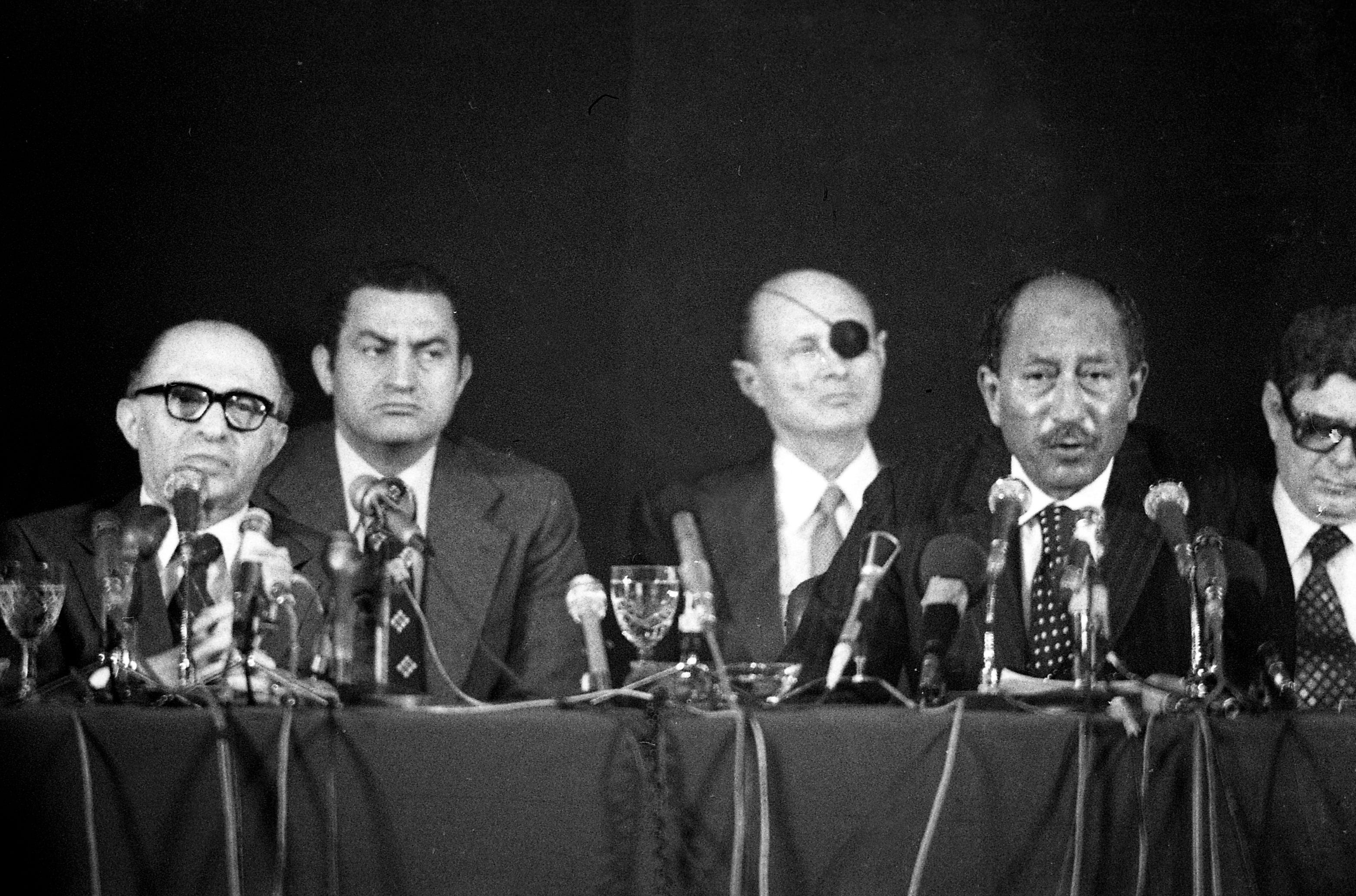
In 2000, the cabinet approved gas exports to Israel, setting up an arrangement in which EGPC and EGAS sold gas to East Mediterranean Gas (EMG), the “private” intermediary that supplied the state-owned Israel Electric Corporation. EMG was majority-owned by Egyptian businessman Hussein Salem, a close associate of President Hosni Mubarak, alongside Israeli businessman Yossi Maiman; the company’s Israeli arm was later headed by a former seven-year director of Mossad.
In June 2005, EMG signed a formal supply agreement with EGPC and EGAS that priced the gas below its production cost, leaving the Egyptian Treasury to cover the gap.
In 2008, the Administrative Court ordered exports halted, but the government appealed, and in 2010 the Higher Administrative Court allowed them to continue supplying Israel with gas. The pipeline kept operating until repeated attacks in Sinai interrupted deliveries after the January 2011 revolution.
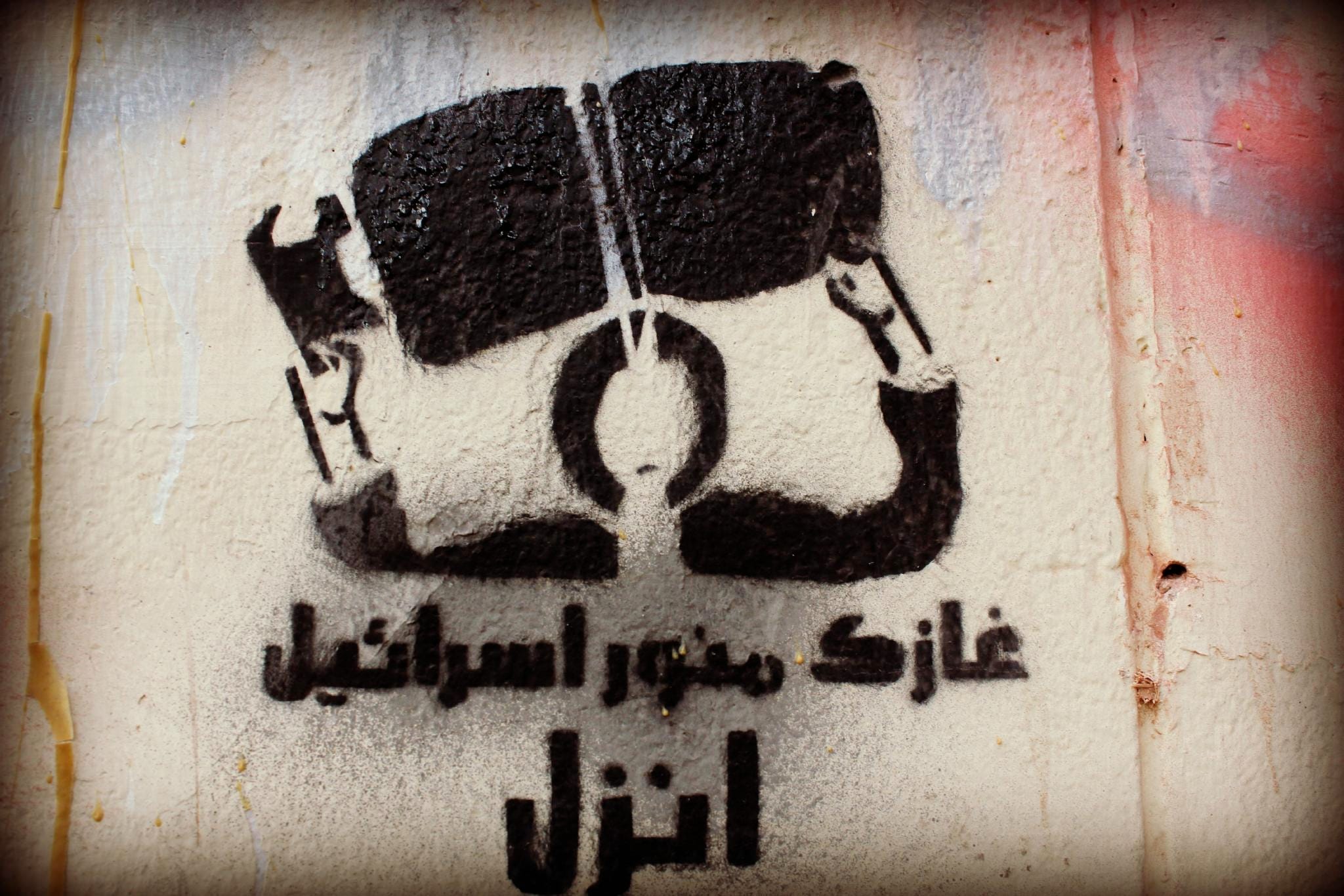
By then, canceling the agreement had become a popular demand.
EGPC and EGAS terminated it in April 2012, and the response came through the contract’s dispute machinery. In December 2015, an International Chamber of Commerce (ICC) tribunal ordered the two public companies to pay Israel Electric Corporation $1.76 billion. Another award followed, and Swiss courts upheld it in 2017—EGPC and EGAS eventually settled the claim in 2019 for $500 million, payable over eight and a half years.
Thus, a contract made under Mubarak survived the political decision to cancel it because the arbitration clause converted the breach into a liability on two public companies. Egyptians no longer sent gas north, but public money still traveled in that direction.
Zohr, the largest gas field ever discovered in the Mediterranean, appeared to offer a way out. After production began, Egypt declared gas self-sufficiency and promoted itself as an eastern Mediterranean energy hub. Yet the hub plan did not replace the old pipeline system. The Dolphinus agreement was signed as Zohr output rose, and the EMG pipeline was reversed to carry Israeli gas south.
Zohr’s production later fell. At the same time, EGPC and EGAS fell behind on payments to the foreign companies expected to drill and develop new fields. By early 2024, the petroleum sector’s arrears had reached roughly $4.5 billion, while companies slowed investment and drilling, and domestic output declined further. Egypt returned to the liquefied natural gas (LNG) market as a net importer in mid-2024. And, as partner invoices remained unpaid, Cairo used scarce foreign currency to buy immediate cargoes needed to keep power stations running.
The next long-term commitment came in August 2025 when oil giants Chevron, NewMed Energy, and Ratio Energies agreed to sell an additional 130 billion cubic meters from Leviathan through 2040 to Blue Ocean Energy, the intelligence-affiliated buyer that supplies the Egyptian market, in a contract worth up to $35 billion, using a formula linked to Brent crude. Its first phase depends on new pipelines, and its second requires an expansion of Leviathan and a new connection through Nitzana.
Egypt now carries several risks at once: a price tied to an international oil benchmark, supplies dependent on one field and pipelines that cross a militarized border. The February 2026 stoppage was the third in less than three years, after interruptions in October 2023 and June 2025. In each case, Israel decided whether security conditions allowed production and exports to continue. Cairo could buy replacement LNG, switch power stations to fuel oil or cut supply to factories, but it could not reopen Leviathan.
How the cost is passed on
The emergency measures showed where the immediate losses landed. Fertilizer factories lost feedstock, shops lost evening trading hours, EGAS bought more expensive LNG, and power plants burned fuel oil when gas was unavailable.
The government then moved part of those costs onto users, raising domestic fuel prices by up to 17% in March. A prime ministerial decree increased gas prices in May for cement, iron and steel, fertilizer and petrochemical producers, in some cases by $2 per million British thermal units. Then, on August 1, the Ministry of Electricity and Renewable Energy raised most household electricity rates by an average of 12%.
The ministry decided to keep only the lowest consumption tier, which covers usage from zero to 50 kilowatt-hours (kWh) per month, unchanged. However, staying within this limit during an Egyptian summer can be quite a challenge for a household that, hypothetically, relies on just a refrigerator and a fan. What’s even more significant is what lies ahead at the next consumption threshold.
At 100 kWh, the bill still benefits from the lower prices assigned to the first two bands, but at 101 kWh, households enter a band calculated “from zero”, and the distributor reprices all 101 units at the higher rate, making households pay more on the first 100 kWh because they used one additional unit.
The same “from zero” rule applies again to high-consuming households, creating cliffs rather than a smooth progression between brackets, where once a meter crosses one, cutting consumption later in the month cannot restore the lower rate already lost. The rule raises revenue, but it is a poor instrument for conservation.
This is where the export figure at the start of the article belongs. Egypt needs the foreign currency earned by petroleum and energy-product sales, just as EGPC, EGAS, and private producers have contracts to meet. When supply falls, authorities preserve those earnings where possible, import replacement fuel in dollars, and recover part of the cost through factory input prices, pump prices, and electricity bills.
Households do not sign the gas contract, choose the Brent-linked formula, or decide when Leviathan closes, but they still receive the adjusted bill.
Why renewables will not solve an ownership problem
Egypt needs more renewable power because solar projects can generate electricity more cheaply than gas-fired plants, reduce fuel imports, and enter service faster than new offshore fields. But the contracts now being used to build them often reproduce the same division of ownership and risk seen in gas.
Consider the Norwegian-owned Scatec project for Egypt Aluminium (Egyptalum) which is the country’s sole manufacturer of primary aluminum. Scatec signed a 25-year, dollar-denominated power-purchase agreement backed by a sovereign guarantee. Scatec initially owns 100% of the project, will provide engineering and construction services, and will remain its asset manager and operator.
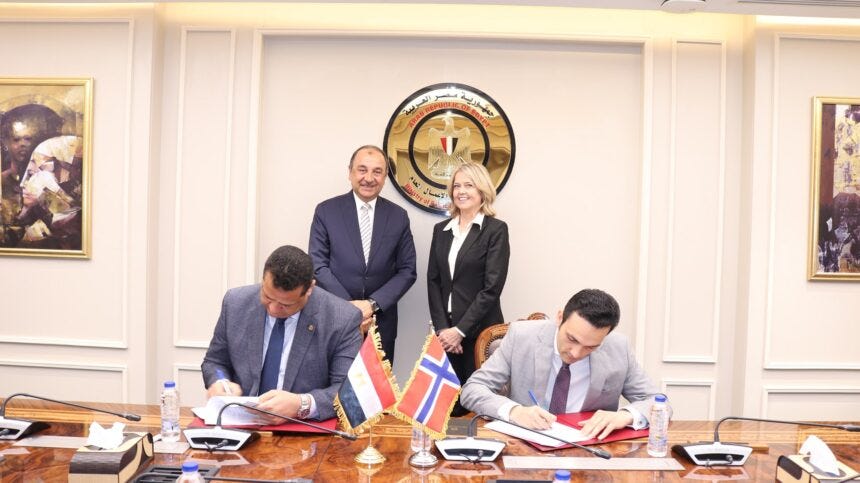
Debt is expected to finance about 80% of the $650 million cost, and Egyptalum, the off-taker, exports about 60% of its output to Europe and wants the solar plant partly to meet the European Union’s (EU) carbon-border rules.
The plant will add useful capacity, but its contractual structure also tells us who owns the asset, who receives the guaranteed dollar payments, and who stands behind the agreement if revenues fail. The government guarantee protects the investor’s return, but it does not turn the plant into a publicly owned source of cheap electricity.
Green hydrogen makes the export orientation clearer.
Egypt has announced a project pipeline worth more than $80 billion, but binding contracts cover only about 13%. The only operating facility, a 100-megawatt project in Ain Sokhna, began partial production in early 2026, and its planned market is Europe.
Egyptian sun, land, and desalinated water will help lower the carbon content of European industry, while dollar obligations and sovereign guarantees remain on the Egyptian side of the ledger.
A different course would begin with demand.
Better insulation, appliance standards and industrial efficiency can displace gas without waiting for another field. Egypt could also loosen the rules around distributed generation. At present, many apartment residents cannot install a two-way meter unless they own their entire building, and new net-metering applications have been suspended pending a regulatory overhaul.
Ownership would also have to widen, as Egyptian law and policy largely offer a choice between centralized public utilities and privately financed projects, usually led by foreign developers. Cooperative, municipal, and community-owned generation would create another route. Local manufacturing would then have to be judged by who owns the factories, technology, and returns, rather than by the nationality printed on a component.
None of this removes gas quickly because ammonia plants need hydrogen as a feedstock, not simply as fuel. Some high-temperature industrial processes are difficult to electrify, storage remains limited, and a major generation project approved today may not supply power for at least 18 months—a transition that will take years.
The direction of those years is still a political choice. The existing path runs through the Leviathan contract to 2040, dollar-denominated power-purchase agreements and distribution companies that retain control of the grid.
A more distributed system would run into the conditions attached to external financing, the ownership of gas-trading companies and the power of public distribution monopolies.
Each engineering proposal therefore has built-in beneficiaries and opponents.
The valve is not in Tel Aviv. The valve is the class structure that made that valve possible—and that will produce another one, under a different energy source, if it remains unchanged.

