


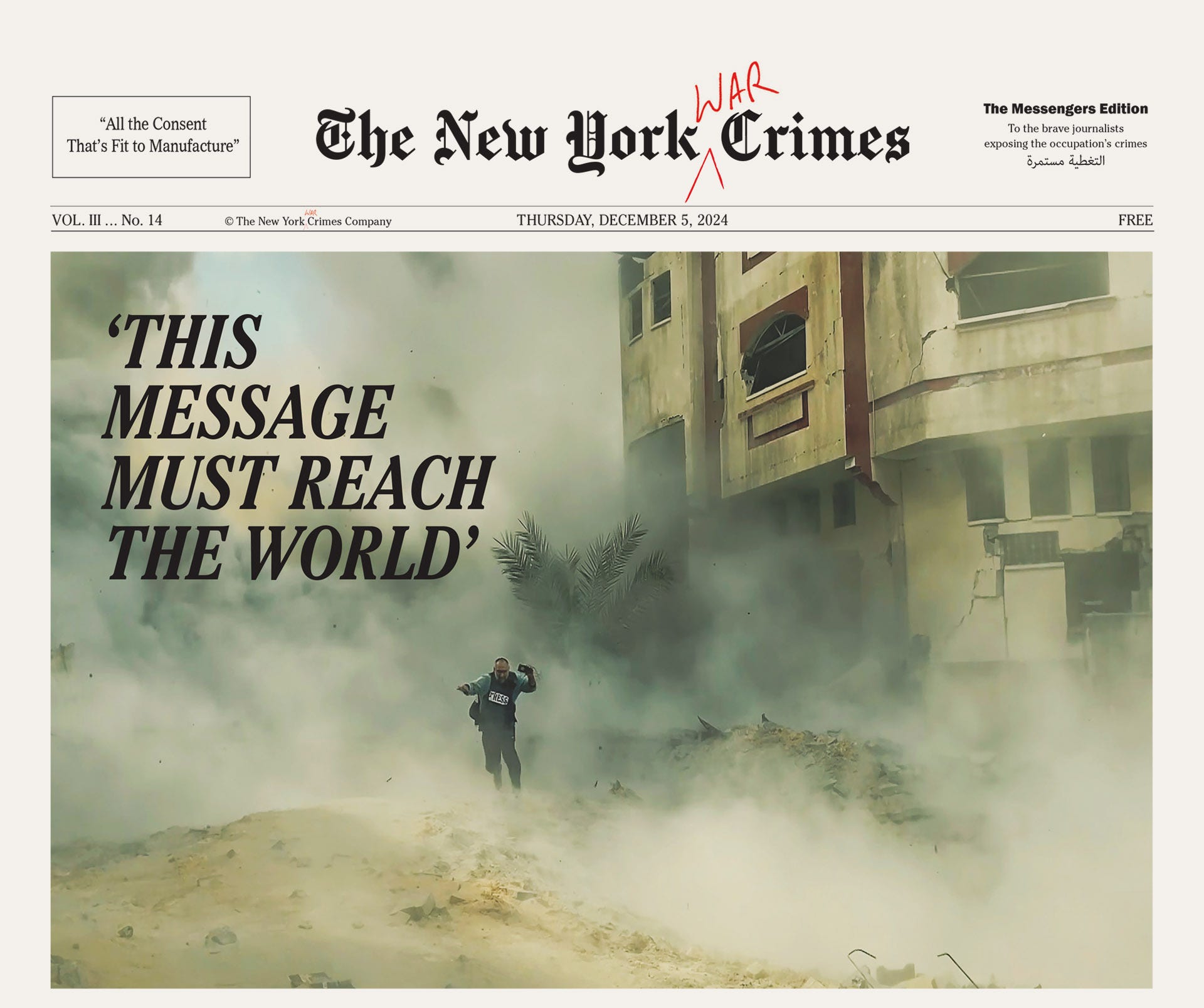
A new UN Office for the Coordination of Humanitarian Affairs (OCHA) report accused Israel of systematically killing Palestinian journalists, destroying media infrastructure, and suppressing evidence of atrocities in Gaza, describing the campaign as a form of “mediacide” that has helped conceal genocide and obstruct accountability.
Francesca Albanese, the UN special rapporteur on human rights in the occupied Palestinian territories, presented the findings to the General Assembly on October 26 in a report titled ‘Truth under the rubble: media in the time of genocide’. The report examines the targeting of Palestinian media workers, Israeli information controls, and the role of international news organizations and digital platforms in shaping coverage of the war.
“Some aspects of this assault on truth might be described as ‘mediacide’,” Albanese wrote.
The report estimates that Israeli forces have killed nearly 300 journalists and wounded more than 400 since October 2023, including approximately 70 journalists killed, particularly in reprisal for their work. More than 100 Palestinian media workers have been detained, while Israeli attacks have destroyed much of Gaza’s communications infrastructure.
The death toll cited by OCHA exceeds the 191 Palestinian journalists and media workers documented by the Committee to Protect Journalists in September, following a review that removed individuals alleged to have participated in combat or belonged to armed groups.
The OCHA report concluded that the killing of journalists, attacks on their families, and destruction of civilian communications infrastructure constituted war crimes and crimes against humanity, adding that the systematic elimination of witnesses could also provide evidence of genocidal intent.
Albanese cited the August 2025 Israeli strikes on Nasser Hospital in southern Gaza, which killed Reuters cameraman Hussam al-Masri and four other journalists, as an example of attacks on media workers documenting the war.
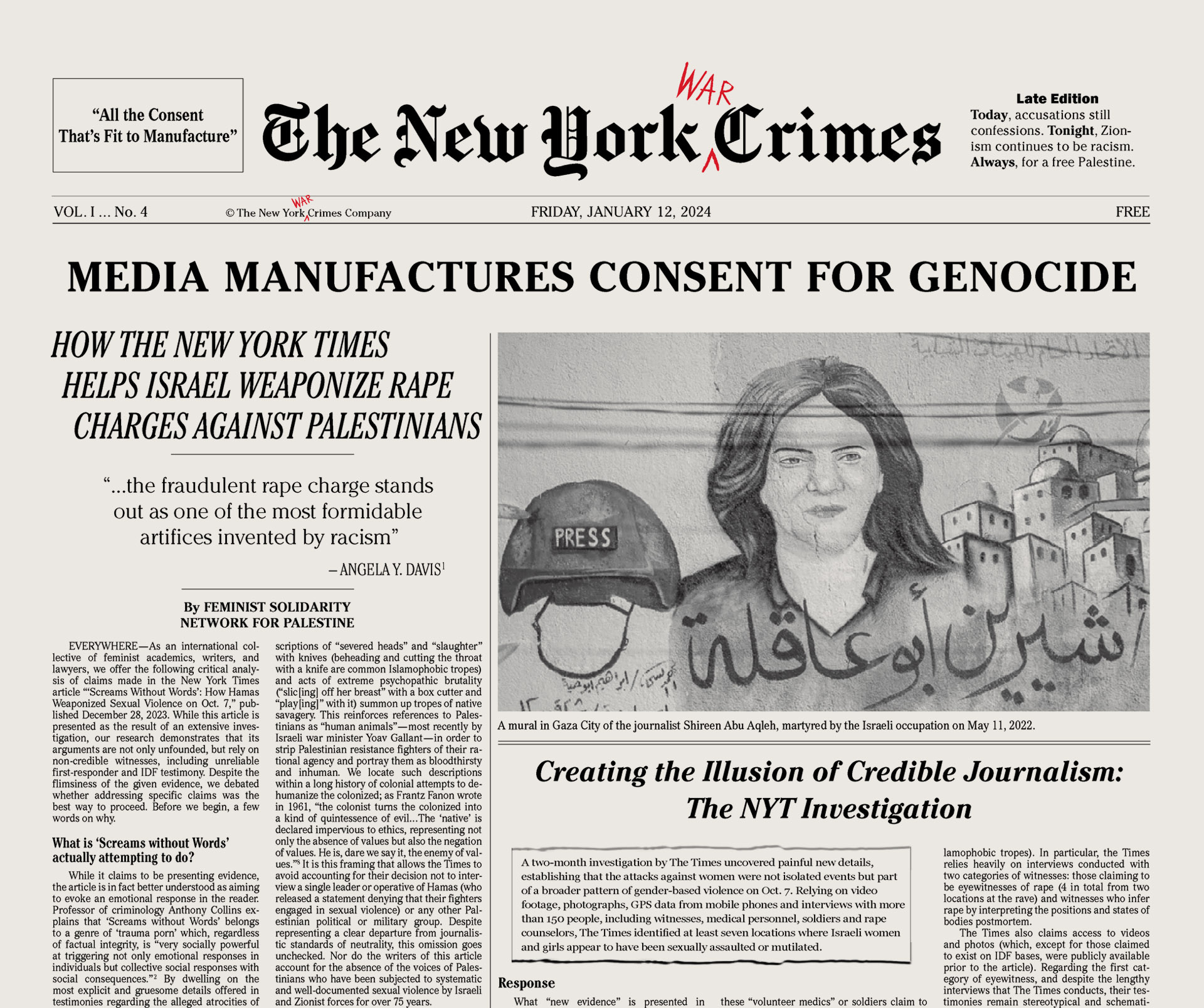
Israel, as it has usually done throughout its genocidal campaign on Gaza, denies deliberately targeting journalists. In October, the Israeli military published a “database” alleging, without evidence, that 170 Palestinians identified as media workers had belonged to armed groups. The database has been debunked by +972 Magazine.
Furthermore, the Arab and Middle Eastern Journalists Association challenged the claims, warning that the occupying military’s evidence had not been independently verified and that alleged affiliation alone did not establish whether an individual was a lawful military target.
The OCHA report also accused Israeli authorities of using censorship, restrictions on foreign media access, and state-funded information campaigns to control reporting from Gaza. It said Israeli military censorship had banned nearly 2,400 articles and redacted more than 11,000 others during 2024 and 2025.
The investigation extended to international media organizations, accusing influential Western outlets of parroting unverified Israeli military claims, marginalizing Palestinian testimony, and presenting forced displacement and military operations through language that obscured potential violations of international law.
The New York Times rejected the criticism, and a spokesperson for the newspaper, quoted by The Times of Israel, said Albanese’s report “is not impartial, nor are the sources she relies on,” adding that she relied on “studies with flawed methodologies” and misrepresented the paper’s reporting.
The report further accused major technology platforms of disproportionately restricting Palestinian content while permitting incitement against Palestinians. Citing leaked Meta data, it said approximately 38.8 million Facebook and Instagram posts had been removed, banned or suppressed since late 2023.
Albanese urged the General Assembly to establish an independent mechanism to preserve evidence of crimes against journalists. She also called for the release of arbitrarily detained reporters, international media access to Gaza and investigations into attacks on Palestinian media workers.
The findings come amid a broader collapse of Palestinian employment and working conditions, highlighted by the International Trade Union Confederation (ITUC) following a solidarity mission to the occupied West Bank earlier this month.
In an October 26 statement, ITUC General Secretary Luc Triangle described 950 Israeli military checkpoints, settlement expansion, and restrictions on movement as major obstacles to Palestinian employment and economic activity.
Triangle, who visited Palestine from October 12 to 15, said businesses were struggling to maintain production and workers faced increasing difficulties reaching their workplaces.
At the National Aluminium & Profile Company in Nablus, he said a 20 million US dollar production line intended to create 260 jobs remained unused because foreign engineers needed to commission the equipment could not enter the West Bank “due to insurance and safety concerns.”
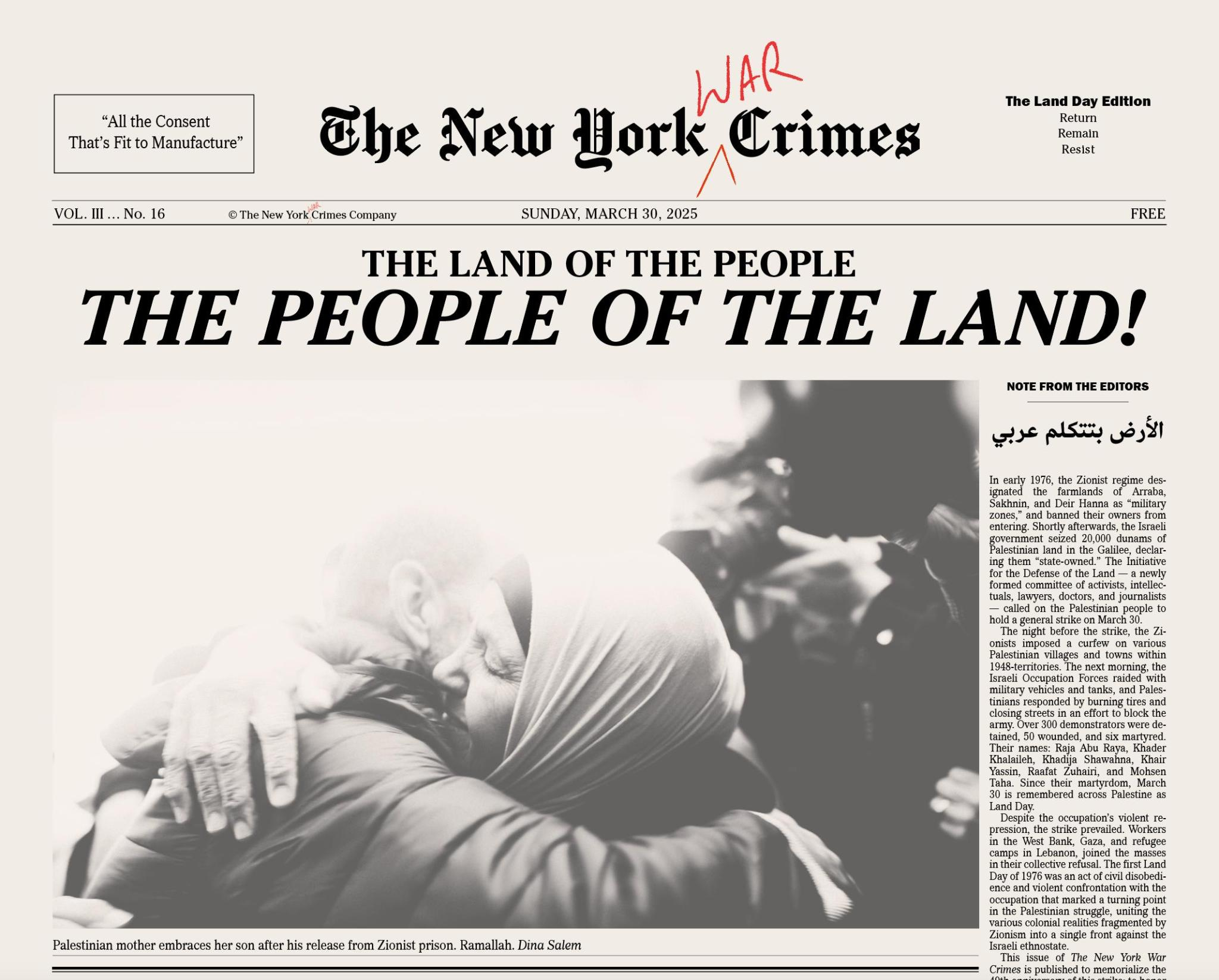
Triangle also criticized Israel’s withholding of tax revenues collected on behalf of the Palestinian Authority, warning that the restrictions were undermining public services and economic activity. The United Nations Trade and Development (UNCTAD) estimated in a report last month that Israeli deductions and withheld transfers totaled 3.67 billion dollars between January 2019 and March 2026, placing further pressure on government finances and public sector employment.
The ITUC said unemployment reached 46% across Palestine in 2025, including 78% in Gaza and 28% in the West Bank, citing figures from Palestinian statistical authorities. More than 650,000 Palestinians were unemployed, while the West Bank’s unemployment rate had roughly doubled since before the genocide.
More recent figures from the Palestinian Central Bureau of Statistics (PCBS) showed West Bank unemployment at 27.9% in the second quarter of 2026, down from 29.5% in the preceding quarter. About 284,000 people remained unemployed, however, and the rate was still more than twice its pre-genocide level.
The economic collapse obviously extends across Gaza’s productive sectors, as PCBS estimates show that agricultural output fell 92%, industrial production 94%, and construction 99% between 2023 and 2025, leaving almost no productive capacity through which displaced workers can earn an income in the face of a blockade and genocide.
UNCTAD estimated that 92% of Gaza’s economic establishments had been damaged or destroyed since October 2023. It put cumulative labor income losses across the occupied Palestinian territories at approximately 2.8 billion dollars.
The ITUC also said approximately 30,000 tourism jobs had been lost across Palestine. Hotel occupancy in Bethlehem fell from 80% in 2023 to 3% in 2024, recovering to just 25% in 2025, and last month, PCBS figures showed hotel guests across the West Bank declined 28.5% in the first half of 2026, while Bethlehem recorded just 12,170 guests, down from 221,377 in the corresponding period of 2023.
In Gaza, Palestinian statistical authorities estimated that 4,992 tourism-related establishments had been destroyed, leaving 15,265 workers without jobs.
The ITUC signed an agreement in Bethlehem to support tourism workers, protect religious and cultural heritage, and press for measures to restore employment.
The confederation also called for international action to protect Palestinian agricultural workers during the olive harvest, which supports an estimated 80,000 to 100,000 families. OCHA documented 199 harvest-related settler attacks between September 1 and October 12, while settler attacks had damaged more than 20,000 Palestinian-owned trees and saplings since the beginning of 2026.
The mission, organized with the Palestinian General Federation of Trade Unions, also included meetings with workers, employers, and government officials, as well as the signing of a collective bargaining agreement at an electricity distribution company in Nablus.
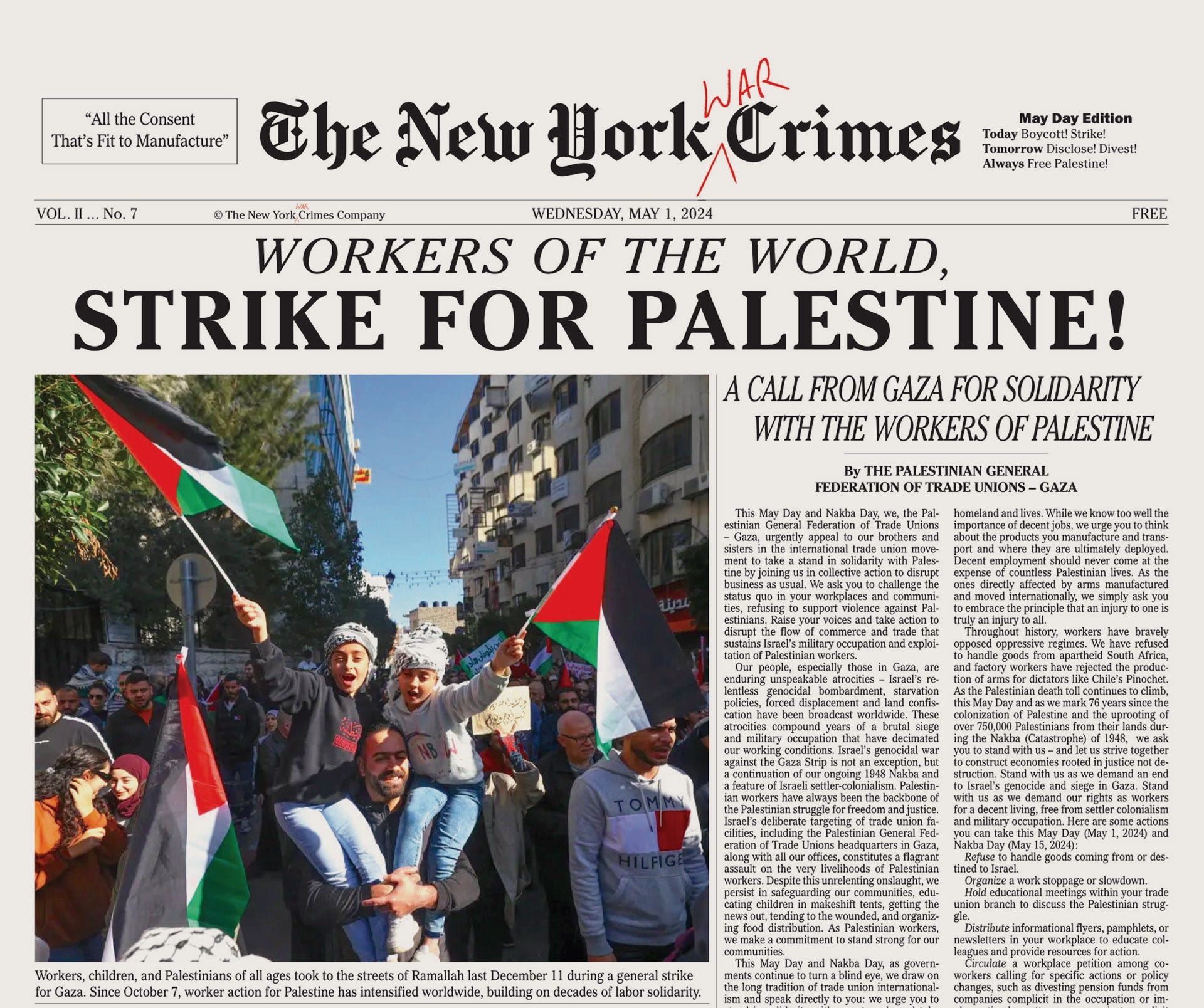
The economic crisis has compounded longstanding disputes over Palestinian workers’ treatment in Israel.
The number of West Bank Palestinians employed in Israel and illegal settlements fell from approximately 172,000 before October 2023 to 53,000 in the second quarter of 2026, according to PCBS, which also showed employment conditions within the West Bank remained increasingly precarious: 42.1% of private sector wage employees lacked contracts, while approximately 41,000 earned less than the official monthly minimum wage.
In September 2024, nine international trade union organizations filed a complaint with the International Labor Organization (ILO), seeking unpaid wages and benefits for more than 200,000 Palestinian workers affected by the suspension of work permits and wrongful termination of contracts after October 7, 2023.
However, political scientist and scholar Hossam el-Hamalawy rightfully questioned the limits of that response. While acknowledging the importance of recovering unpaid wages, he argued that the international union movement had failed to give comparable attention to the treatment of detained Palestinian workers.
“It cannot substitute for a ‘political’ campaign against imprisonment, torture, military occupation and genocide,” he wrote, referring to the wage complaint.
Human Rights Watch documented the detention of thousands of workers from Gaza, reporting that some were subjected to beatings, humiliation, and prolonged detention without contact with their families or lawyers, while at least two workers died in Israeli custody, according to the rights organization.
Three years later, el-Hamalawy argued that the international labor movement had yet to secure a full accounting of those detained, including workers whose whereabouts remained unclear.
“Missing workers must be accounted for,” he wrote, also calling for support for survivors and accountability for torture and deaths in custody.