


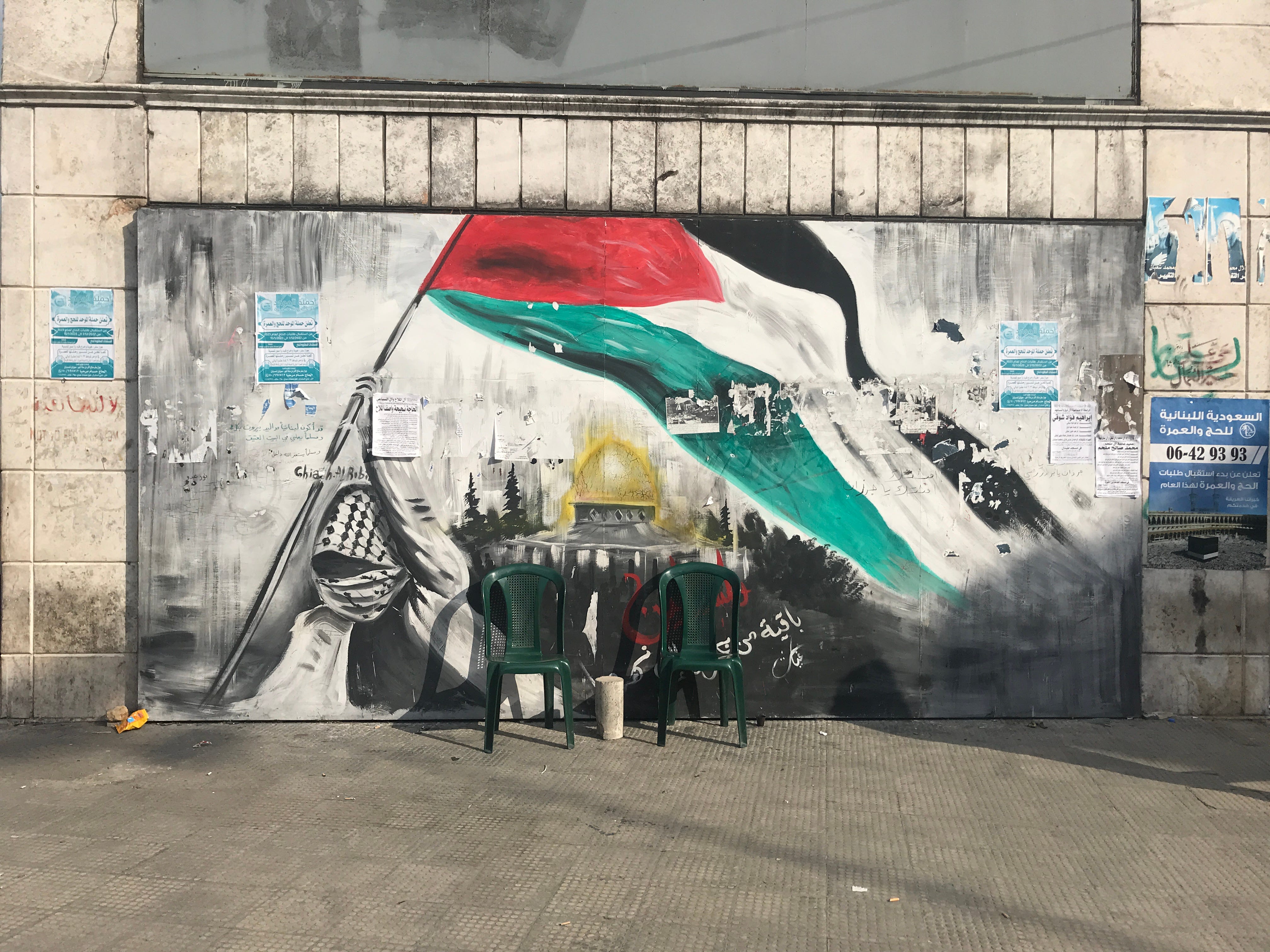
On August 22, 2025, the Integrated Food Security Phase Classification (IPC) initiative declared a famine in Gaza, the first officially declared famine in the Middle East. More than half a million people were living through it. Fifteen days earlier, Cairo had signed a deal worth 35 billion US dollars to import gas from the Leviathan field until 2040, the largest export deal in Israel’s history. The Egyptian government called it “purely commercial.”
Eleven months later, the same state celebrated the 70th anniversary of the the Suez Canal nationalization. Images of Gamal Abdel Nasser filled television screens, and the Ministry of Religious Endowments described the nationalization as “a national epic embodying the will of the Egyptian people.”
A famine, a deal, and a celebration in less than a year. This contradiction is the starting point for this article’s examination of the genocide’s third anniversary.
This article offers neither an elegy for Gaza nor a prosecution of the resistance for how events have unfolded. Its concern is what three years of bloodshed have done to an entire generation’s consciousness.
Why, having discovered radical politics, is a substantial part of that generation turning toward Stalinism, Maoism, allegiance to the regimes of the “axis of resistance,” and nostalgia for Nasser? Why is the past being offered as a substitute for the future?
The argument here is that the genocide marks a new phase of capitalism in crisis, seeking a way out through war. October 7, 2023, restored young people’s confidence that organization can make a difference. The tragedy is that no revolutionary left is there to nurture that confidence. Instead, that revolutionary energy has flowed toward state capitalist projects that our region has already tried, followed to their conclusions, and emerged from defeat.
To understand why war has become a way out, we must return to 2008, because figures published by capitalism’s own institutions show that the crisis was deferred rather than resolved.
Michael Roberts’ GDP-weighted series for the United States, United Kingdom, Japan, Germany, and China shows average annual corporate profit growth falling from 16.1% in the 2000s to 3.9% in the 2010s. Roberts attributes the partial recovery in US profits after the pandemic to labor’s share of national income falling to a historic low, rather than renewed investment or a productivity leap. Put simply, capital recovered some of its profits from workers’ pockets.
Meanwhile, global debt accumulated, surpassing 365 trillion dollars in the first half of 2026, more than three times global output. The World Bank forecasts global growth of no more than 2.5% this year, the weakest since COVID-19, explicitly linking it to the “Middle East conflict.” It estimates that, by 2028, developing countries outside China and India will have spent almost a decade without narrowing the per-capita income gap with the wealthier economies at the capitalist core.
When the scope for productive expansion contracts, capitalism returns to its old instruments: tariffs and weapons.
In April 2026, Yale’s Budget Lab put the average effective US tariff rate at 11.8%, which, apart from 2025, is its highest level since the early 1940s. Global military spending rose for the 11th consecutive year, reaching 2.887 trillion dollars in 2025. NATO members have pledged to spend 5% of GDP by 2035: at least 3.5% on core defense and up to 1.5% on broader defense and security investment.
Amid this arms race, Gaza has become both a testing ground and a showroom. The “Lavender” system placed around 37,000 Palestinians on targeting lists. Human review took roughly 20 seconds per name, and the military permitted the killing of 15 to 20 civilians for each low-ranking fighter. Sales followed testing, and Israeli arms exports reached 19.2 billion dollars in 2025, a record for the fifth consecutive year. More than a third went to Europe. The Defense Ministry attributed demand to “unprecedented operational achievements.”
A report titled “From Economy of Occupation to Economy of Genocide” by the United Nations (UN) Special Rapporteur on the Occupied Palestinian Territories, Francesca Albanese, traces the financial machinery behind the assault. The Tel Aviv Stock Exchange’s own review records a 28.6% rise in its TA-125 index in 2024.
The massacre we watch live ends up in arms catalogs.
But profit calculations alone cannot explain the war’s expansion on this scale; there is also the anxiety of an empire that senses its grip on the region loosening.
China, with its state capitalism, has become the leading trading partner for several countries in the Global South. It alone buys more than 80% of Iran’s exported oil. This directly affects a region Washington has organized since the 1970s as an oil reservoir, a repository for Gulf surpluses, and a network of military bases. Washington chose to reimpose its control by force over a region whose balance of power had changed. The events of 2026 alone are evidence enough.
Since February 28, the United States and Israel have been waging a war of aggression on Iran. In the process, Ali Khamenei has been killed, the Strait of Hormuz has been closed, and the war continues to this day. By June 20, 2026, Israel has killed over 4,000 people in Lebanon—which has been dragged into the war—according to the Lebanese Health Ministry, and a trilateral framework then made Hezbollah’s disarmament a condition for any Israeli withdrawal.
In Syria, Israel’s occupation of the south continues as Washington removes Damascus from its list of state sponsors of terrorism.
Gaza’s “day after,” meanwhile, has been handed to the so-called “Board of Peace” chaired by Trump, and the US president’s son-in-law, Jared Kushner, is presenting plans for 180 towers along the coast, while Netanyahu said in May 2026 that the Israeli military controlled around 60% of the territory, and ordered the occupation to seize 70% of the strip under the banner of a “ceasefire.”
This free rein would not have been possible so easily without the vacuum left by the defeat of the Arab revolutions. The 2011 uprisings raised the slogan “Bread, freedom, social justice.” But the organized forces that led them, and their dominant political horizons, remained within a liberal framework: elections, a constitution, and the transfer of power. No program addressed wealth ownership, relations of production, or dependence on the capitalist core. The young people who made that moment possible secured no tangible social reform before counterrevolution swept everything away.
Today, the outcome is written in numbers. In 2023, youth unemployment in the ILO’s Arab States subregion, which excludes North Africa, stood at 28%, the highest regional rate worldwide. Across the wider Middle East and North Africa, almost a third of young people were outside education, employment, and training. In Egypt, food price inflation reached 54.7% in fiscal year 2023/24. The World Bank’s 2019 data put 68.8% of the population below its 6.85 dollars per day benchmark for upper-middle-income countries, measured in 2017 purchasing-power-parity dollars. Meanwhile, public companies are being put up for sale under the government’s privatization program, and the coastal area of Ras El-Hekma went to an Emirati fund.
These are the people who opened their eyes to the genocide: a generation that emerged from 2011 defeated and has known liberalism only through impoverishment.
October 7 came amid this political impasse. We might disagree for a long time about that day’s calculations and consequences, and the terrible price paid by the Palestinian people. That disagreement is legitimate and necessary, but what is certain is that an organized faction, besieged for 16 years in a narrow strip of land, overturned a regional equation being drawn up over Palestinians’ heads.
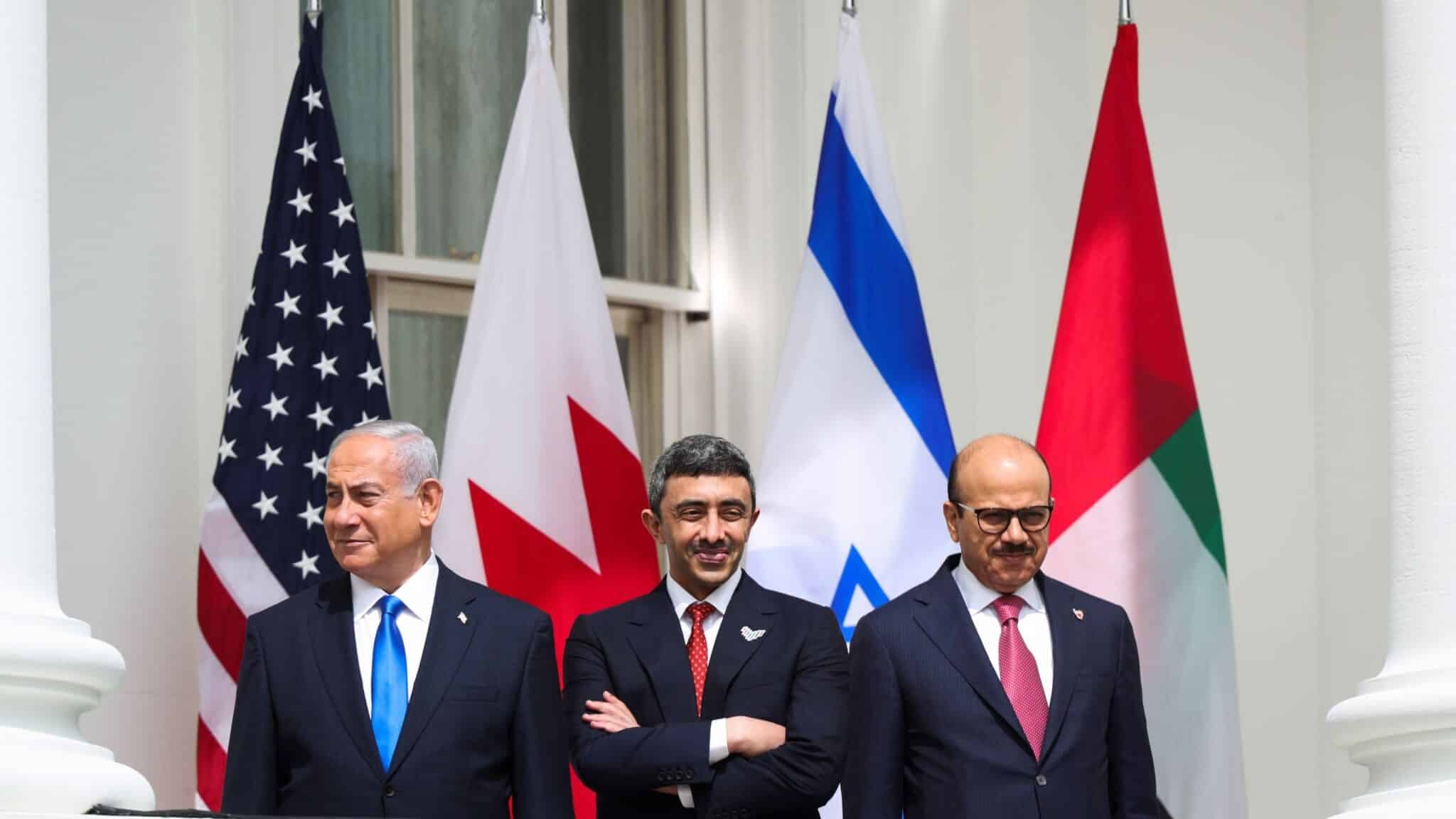
Before that day, the Abraham Accords were expanding. Saudi normalization was presented as a matter of time, and the Palestinian cause was treated as an aid dossier filed away by mediators. Afterward, the percentage of Saudis opposed to recognizing Israel jumped from 38% to 68%, and the share of Arabs who considered Palestine a cause for all Arabs rose from 76% in 2022 to 92% in early 2024.
Youth learned an organizational lesson, not a military one: an organized force, however small it appears, can change the course of history. The world is not closed off, as they had been told during a decade of defeat. A generation raised to believe that politics was futile and survival was an individual matter of emigration or silence, saw organized determination force its cause onto the world’s agenda.
Gaza’s impact went further. It also laid bare the Zionist project before people who had long refused to see it for what it was. Genocide became an official finding, not just a description used by analysts. On September 16, 2025, a UN commission of inquiry concluded that Israel had committed genocide, and that genocidal intent was the “only reasonable inference.” By late September 2026, the Israeli occupation forces had killed over 74,000 Palestinians, according to the Palestinian health ministry, including more than 1,100 killed after the “ceasefire”. However, since the ministry counts only registered deaths or those recorded at hospitals, the true toll is likely much higher, as it excludes the thousands missing or buried under rubble.
For example, a survey published in The Lancet Global Health estimated 75,200 violent deaths between October 7, 2023, and January 5, 2025, compared with the ministry’s 49,090 for the same period: about 53% higher.
What historian Ilan Pappé has repeated for years became visible to everyone: a settler-colonial project reaches the height of its violence when it senses its foundations shaking. Israeli society, as well as its extremist government, slid into treating genocide as an ordinary policy.
International Criminal Court (ICC) fugitive and former defense minister Yoav Gallant’s phrase “human animals” was no individual slip of the tongue. Behind it stood a military institution allowing personnel roughly 20 seconds to review an algorithm’s recommendation about an entire family’s fate, and a society that provided it with cover.
This combination of renewed confidence in organization and unprecedented clarity about the enemy produced widespread radicalization among younger generations, in the region and beyond.
In Tunisia, favorable views of the United States fell from 40% before October 7 to 10% just three weeks later. In the United States itself, favorable views of socialism exceeded 40% for the first time, reaching 57% among 18- to 34-year-olds.
Campuses were filled with protest encampments. Words such as “imperialism,” “settler colonialism,” and “national liberation” returned to young people’s vocabulary, when it was thought to have abandoned politics.
This is what Gaza created: hope that change is possible, that organization has power.
But hope needs a compass, and this is where the problem begins.
The generation that radicalized found no strong revolutionary left offering a coherent reading of the 20th century.
Such a reading plainly says that what was called “actually existing socialism” in Moscow and Beijing, and “Arab socialism” in Cairo, Damascus and Baghdad, was, at best, state capitalism: a bureaucracy that managed capital accumulation in place of the private bourgeoisie, over a working class denied independent organization and power.
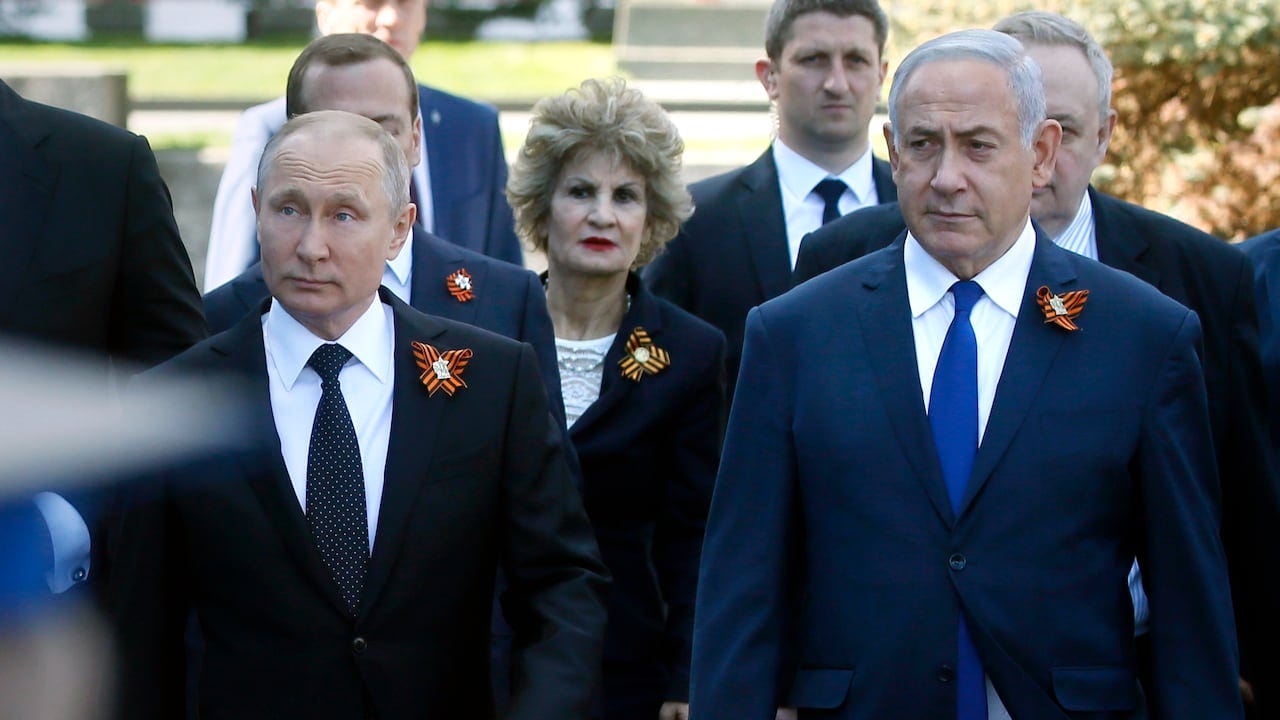
Without this critique, frustrated youth reach for the nearest symbols of hostility to America: the Soviet flag, Mao’s portrait, Nasser’s speeches, and a “multipolar” axis led by Moscow, Beijing, and Tehran.
It would be unfair to treat this inclination with condescension. It has its reasons. When Washington supplies aircraft with bombs, and its companies’ servers store Palestinians’ communications, the logic of “the enemy of my enemy is my friend” seems self-evident. Arab Barometer surveys capture this with striking precision. China’s popularity rose in Jordan, Lebanon, and Iraq after October 7, although no more than 14% believed it was defending Palestinian rights.
This is attraction born more of defiance than conviction, and one glance at the Arab present is enough to burnish the past: Arab summits took no tangible punitive action even after Israel bombed Doha, while trade between the UAE and Israel grew by 11% in 2024. Against this backdrop, a time when an Arab state openly challenged Israel looks like a golden age.
The problem is that this understandable inclination does not survive an encounter with the facts, and the facts are brutal. The alternative axis that young people are being asked to line up behind has itself helped fuel the machinery of genocide.
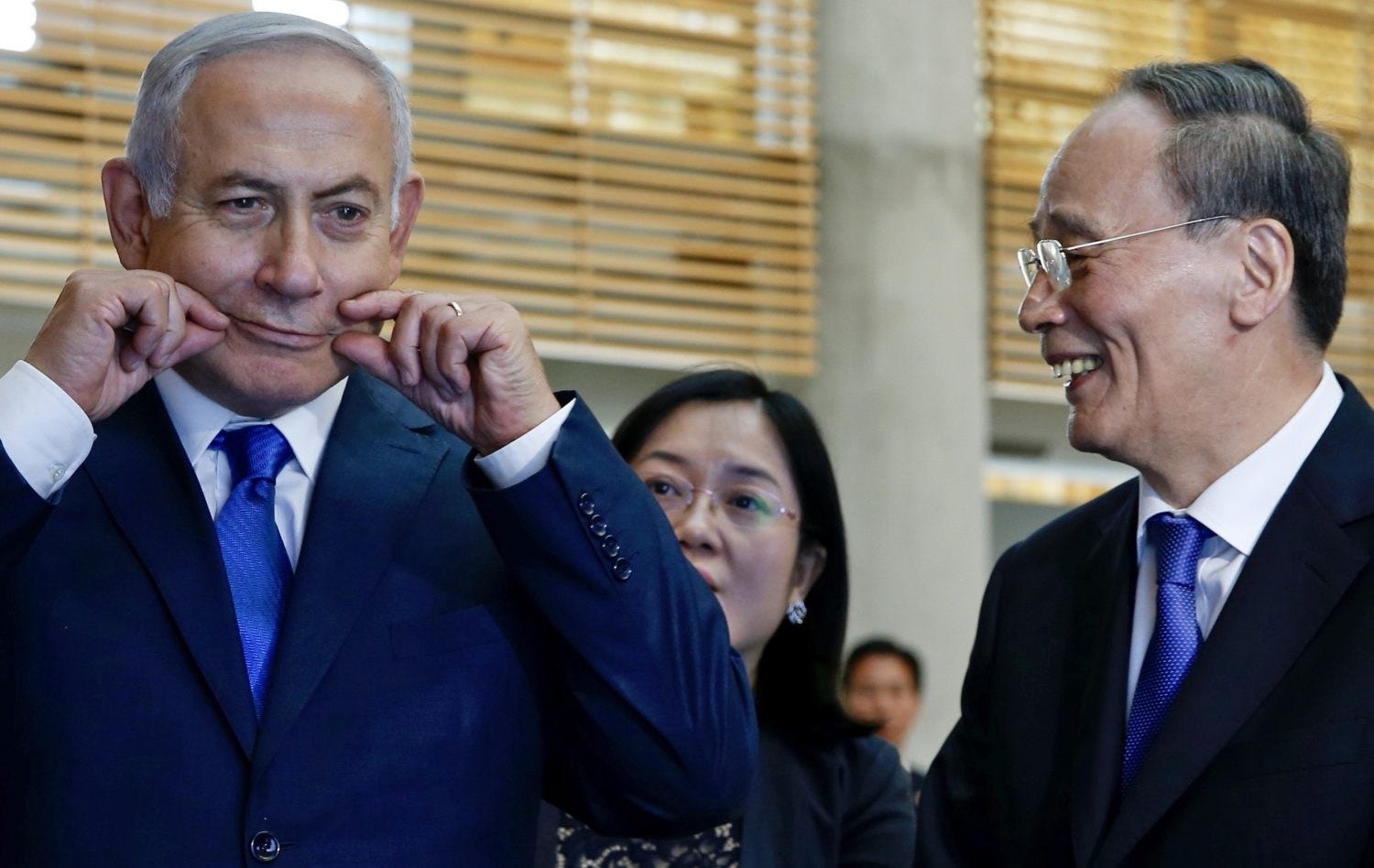
Israel’s imports from China increased by around 20% in 2024, and China remained its largest source of imports, while in 2025, bilateral goods trade reached a record 21.7 billion dollars, up approximately 8% on the previous year, with growth driven primarily by Israeli imports.
Russia was Israel’s largest supplier of refined fuel, accounting for around 45% of import volume between November 2023 and October 2025. Around 70% of its crude oil came from Azerbaijan and Kazakhstan.
When Iran was bombed in June 2025, and again in February 2026, neither Moscow nor Beijing intervened militarily to defend it. Tehran itself notified Qatar and Washington of its strike on Al Udeid Air Base hours before carrying it out. No one was injured. At home, meanwhile, it raised the number of executions to at least 1,639 in 2025. Its crackdown on labor protests included the arrest of at least 40 truck drivers and supporters by June 2025.
The harshest testimony comes from the country that lived under the “axis” longer than any other. In a 2025 Arab Barometer poll, only 5% of Syrians viewed Iran favorably. In the Arab Opinion Index’s Syrian survey that summer, 56% said they felt hopeful always or most of the time after Assad’s fall, and 53% reported relief as frequently. At the same time, Egyptian Nasserist politician Hamdeen Sabahy described that fall as “a deep wound in the heart of Arabism.”
Nasserist nostalgia fares no better under the same scrutiny, once we read the record rather than the myth. On September 7, 1952, barely six weeks after the officers took power, the worker Mostafa Khamis was executed, alongside Mohamed el-Baqari following a three-day military trial over the Kafr El-Dawwar strike. The former’s dying words were: “I have been wronged. I want a retrial.” In 1960, Shohdi Attiya died under beatings in Abu Zaabal detention camp.
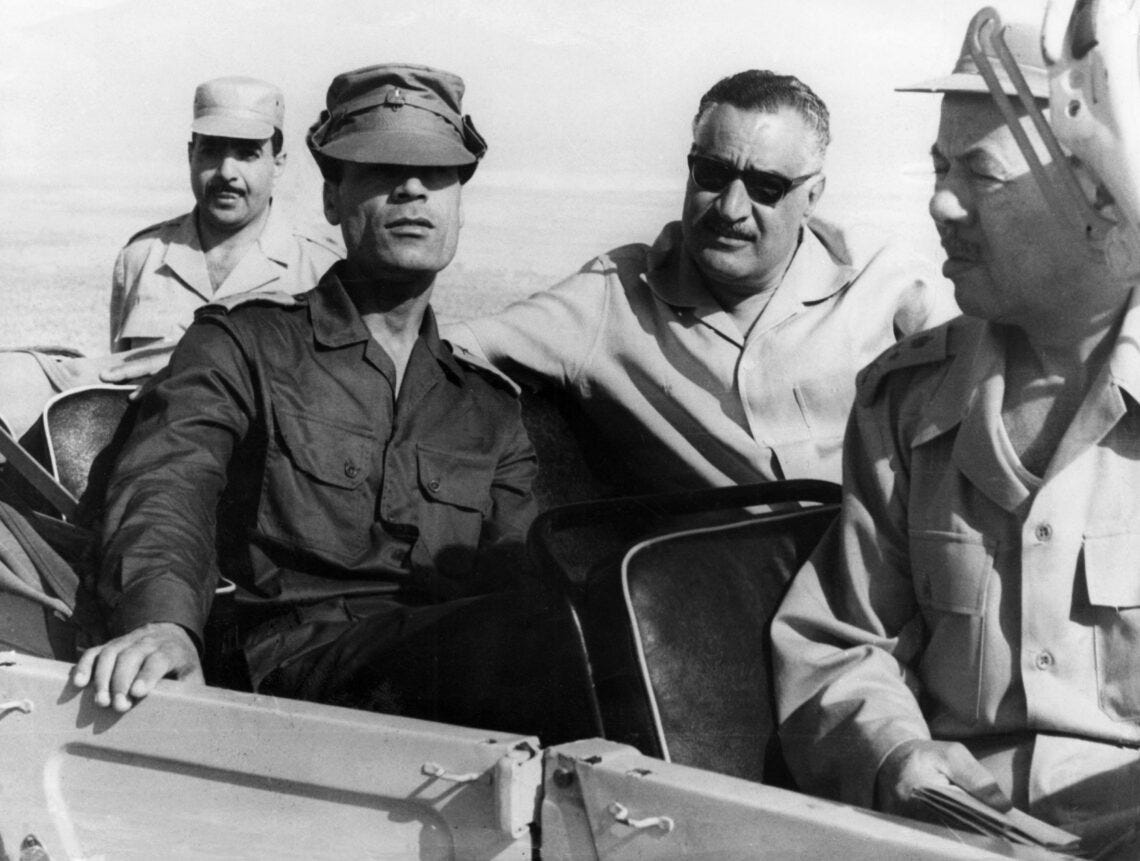
Five years later, Egyptian communists dissolved their organizations and joined the Arab Socialist Union, the organization of the very state that had imprisoned them. In August 1970, during the week the ceasefire under the US-sponsored Rogers Plan came into effect, Nasser told Muammar Gaddafi in a recording whose authenticity his son confirmed: “The Jews are stronger than us.”
Cairo accepted the plan. The Palestine Liberation Organization unanimously opposed it.
Weeks later came Black September, the Jordanian army’s assault on Palestinian organizations. Syria’s Baathist regime then inherited the rhetoric of “resistance” while keeping the Golan front Israel’s quietest border for four decades. It entered Lebanon in 1976 to confront the Palestinian resistance and its left-wing allies, with tacit American approval. The Palestinian refugee camp of Tel Al-Zaatar fell amid that intervention.
Syria also sent troops to the US-led coalition in 1991 during the Gulf War, tortured Maher Arar on behalf of the US extraordinary rendition program, and besieged Yarmouk refugee camp until its residents starved to death.
In Egypt today, Nasser’s symbolism legitimizes the state that signed the gas deal. The state retains the form, with its sovereignty, army, and leader, and discards the substance.
Some may argue that the fault lay in implementation, and that these models can return in a “renewed” form.
The answer is that state capitalism, whether wearing Stalin’s cap, a Free Officer’s uniform, or the turban of Iran’s supreme leader, remains a project of national accumulation within a capitalist world market. Those who accumulate within this market sell their oil to whoever pays, buy gas from whoever sells, and measure their position on Palestine against their own survival.
The Russian fuel that reached Israel was wholly consistent with Moscow’s logic. The Egyptian gas deal was the natural product of the state the officers founded.
The officers who nationalized industries in 1961 were the predecessors of the military economic empire that now sells the country’s assets to Gulf funds.
Socialist writer and activist Tony Cliff explained this mechanism in 1963. The forces expected to bring about a socialist workers’ revolution, he wrote, “can lead, in the absence of the revolutionary subject, the proletariat, to its opposite, state capitalism.”
After the 1967 defeat, Lebanese philosopher and historian Mahdi Amel posed his famous question: a crisis of Arab civilization, or a crisis of the Arab bourgeoisies? His answer was that June marked the defeat of ruling classes incapable of waging a war of liberation. Such liberation would threaten their own power before anything else. It was not the defeat of a “people” or a “culture.”
In the genocidal phase we are living through, this incapacity becomes an imminent danger. Neofascism is now led by the world’s greatest powers. Trump, Netanyahu, Modi, and Putin converge beneath its umbrella.
Those who advocate lining up behind regimes can only repeat a familiar historical error, albeit from the opposite direction.
In Germany’s November 1932 election, the Nazis won 33.1% of the vote, less than the Social Democrats and communists combined. Yet the Communist Party, at Joseph Stalin and Moscow’s behest, insisted on branding Social Democrats “social fascists” and rejected a united front, and Hitler rose to power over a fractured working class.
Today, we see social media influencers who founded an “American Communist Party” preaching “MAGA communism,” glorifying Assad while opposing immigrants and feminists. One of its founders declared “MAGA communism” dead in March 2026. A left that places Putin, one of the pillars of the global fascist wave, in the ranks of resistance to it has misidentified the enemy from the outset.
Nasserist nostalgia reaches the same impasse by another route. It directs anger toward waiting for a savior, in a region where 60% of Arab Opinion Index respondents reported high confidence in the military, compared with 24% in parliament.
We in Egypt know very well where this road ends.
In 2014, Abdel-Fattah El-Sisi played the role of Nasser better than the Nasserists themselves. In the presidential elections that followed the 2013 military coup, Nasserist politician Hamdeen Sabahy came in third place, winning around 3% of the vote, and invalid ballots came second, ahead of him.
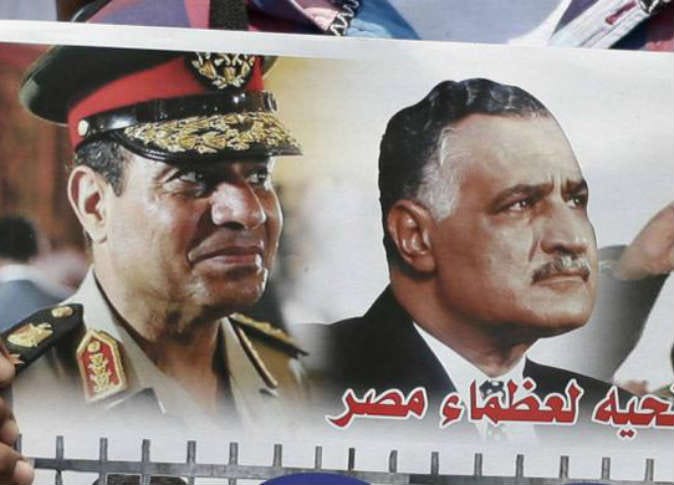
Nostalgia that makes the “strong state” the center of its program cannot confront a strong, complicit state. It speaks that state’s language and borrows its vocabulary of national security, the army, and sovereignty. Amid a global fascist wave led by Trump and Netanyahu, waiting for a leader hands the anger against that wave to another form of authoritarianism.
If the past is a dead end, and the alternative capitals are partners in the trade of genocide, where does an alternative begin?
Well, it begins with building internationalist revolutionary Marxist organizations that take the outcome of the 20th century’s experience as their starting point. They must critique that experience as state capitalism rather than defend it. They must offer Palestinians unconditional support in resisting occupation while retaining a critical political perspective, and oppose the US–Israeli war on Iran, Lebanon, and Yemen. They must give no regime of the “axis” a political blank check, and never demand that Iranian or Syrian workers stay silent about their torturers in the name of the struggle. They must connect anti-Zionism with the democratic and social demands that Arab publics hold. Among these publics, 87% reject recognition of Israel, and 68% support democracy.
They, rightfully, see no reason to trade their freedom for “the struggle.”
These organizations must do what the revolutions of 2011 could not: formulate economic, political, and social programs that begin with working-class interests. Wages, housing, energy, and land must be their starting points, rather than the interests of the nation-state. The key to power lies with those who keep the region’s arteries running: workers in the Suez Canal, ports, gas fields, and power stations.
Israeli gas passes through a network run by Egyptian workers. Ships pass through a canal operated by Egyptian workers.
This is where the road to Jerusalem runs, from Cairo, rather than Moscow or Tehran. The struggles of workers in Mahalla in Egypt, Atbara in Sudan, and Iran’s iron and steel industries remind us that the region’s working class is a living force searching for organization and a political horizon. It cannot be reduced to a category in theoretical texts.
One small indication suggests that the battle over this generation’s consciousness is still open.
When a Trotskyist current in the United States announced the formation of the “Revolutionary Communists of America” in early 2024, it said its membership had almost doubled in just six months. The figure comes from the organization itself and remains modest. But it means that young people searching for the meaning of “communism” have not yet surrendered the word to Stalin, Mao, or another populist leader. Its meaning is still contested.
Fighting that battle is our task.
This generation learned from Gaza that organization makes history. It has the right to find an organization that helps it liberate itself, without demanding that it choose between Washington and Beijing.
Socialism has not been defeated. It has not yet been tried.
* This essay was first published in Arabic in the third edition of the Egyptian Marxist periodical Socialist Papers.