



In Sisi’s New Republic, property tax is not a fiscal instrument in any serious sense. At best, it is a diagnostic tool, and one doesn’t need to squint to uncover who matters in the political settlement, who is shielded from redistribution, and where the state is willing—and unwilling—to build administrative capacity needed to politically confront the powerful. Thus, it is best understood as a political instrument that reveals one of the many boundaries of power.
The January 2026 amendments to the property tax law are a case in point. They adjusted exemption thresholds, tweaked collection mechanisms, and attempted to reassure ordinary homeowners, while leaving intact the legal architecture that shields the largest and fastest-growing concentrations of land and real estate wealth. In doing so, they reaffirmed a central feature of The New Republic’s political economy, tax justice is more-or-less rhetorically acceptable only when it does not collide with the state’s own asset strategy or the military’s expanding commercial role.
This issue of The Cairo Report looks at Egypt’s property tax as a mirror of power, it maps who owns and controls land, explains why genuine progressivity was never discussed when the opportunity arose, and examines what progressive property taxation would actually require in an economy where real estate wealth functions as a primary store of value in the face of successive failed state policies that lead to inflation, economic uncertainty, and currency instability.
Who owns land, who controls development, and why the distinction matters
Egypt’s land regime operates through two overlapping but distinct systems. Title and allocation authority on the one hand, and development control and monetisation on the other.
Legal title and allocation, a state monopoly with internal hierarchies
The New Urban Communities Authority (NUCA) remains the central civilian institution controlling land for urban expansion. By the end of 2023, NUCA managed approximately 9,001 square kilometres (around 2.2 million feddans) of state land across 23 governorates, according to the Built Environment Observatory.
NUCA’s authority is primarily based on its role as the land allocator, which involves designating land for new cities, coastal areas, and special projects, and then issuing development rights through contracts and specialised vehicles.
The authority’s dominance means that land value in Egypt is overwhelmingly created by state decisions, zoning, infrastructure, and allocation, rather than independent auditing efforts. In theory, this makes land an ideal tax base for redistribution. In practice, the way NUCA allocates land also creates politically protected beneficiaries.
Military-linked land: expansion without a ledger
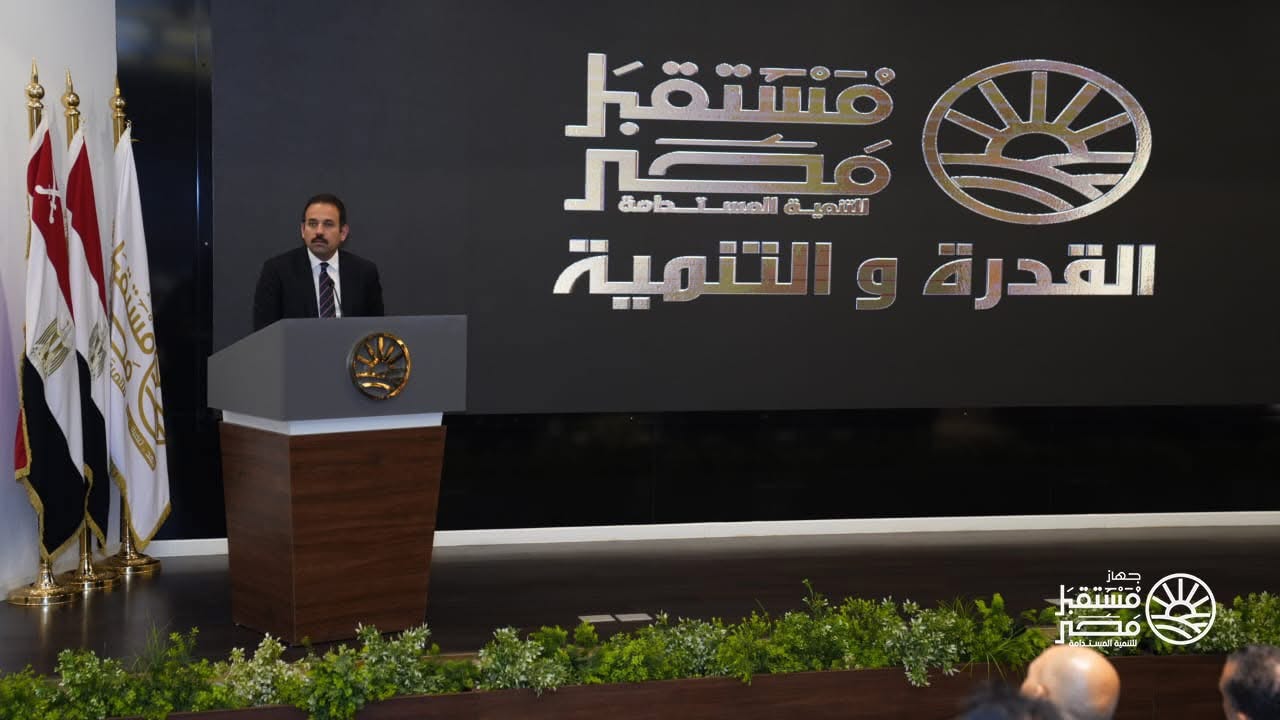
Military involvement in the civilian economy and land management has long complicated and effectively annihilated any chance at meaningful progressive property taxation. Still, recent developments have shifted the scale of the problem. The Future of Egypt for Sustainable Development, a state authority that is affiliated with the Egyptian Air Force and run by Colonel Bahaa el-Ghannam, exemplifies this shift.
Dig deeper: Future of Egypt for Sustainable Development
The Future of Egypt Authority was formally established by Presidential Decree 591/2022 and inaugurated as the “Future of Egypt project for sustainable agriculture.” Initially, official statements framed the project’s remit around reclaiming roughly 1.5 million feddans, with about 350,000 feddans already reclaimed and cultivated at the time.
From 2023 onward, the authority transitioned from a project into a quasi-autonomous agency, reporting directly to President Sisi and expanded through presidential decrees that allocated to it an extra 985,476 feddans, particularly in Beni Suef, Minya, Aswan, and North Sinai.
In 2024, the authority’s footprint grew through successive land-allocation decrees, notably Decree 114/2024 and Decree 285/2024, with additional expansions in Sinai through Decree 538/2024. By the end of the year, it had accumulated approximately 3.5 million feddans across its various jurisdictions, including lands previously held by the military’s commercial arm, the National Service Projects Organisation.
The authority’s trajectory continued in early 2026 with a major administrative consolidation. In January, the National Centre for Planning of State Land Uses transferred 606,000 feddans from the General Authority for Reconstruction Projects and Agricultural Development, bringing the authority’s formally allocated holdings to approximately 4.1 million feddans. This transfer represented not new territory acquisition but the reorganisation of previously established agricultural projects, including sugar beet cultivation zones, orchard development areas, and production facilities, under the Future of Egypt Authority control, putting it on track to reach 4.5 million feddans by 2027, and establishing it as a significant landholding arm of the state.
The Future of Egypt Authority has expanded its land holdings beyond agriculture to include agro-industry and urban real estate. Through its real estate development branch, Nations of Sky, which describes itself as a “national real estate alliance that brings together Egypt’s leading development companies under a unified urban vision,” it is constructing Jirian, an upscale private city in Cairo targeting Gulf speculators and non-residents looking for summer homes, with a projected cost of EGP 1.5 trillion. Additionally, through a joint venture with the Ministry of Housing, it is positioning itself to “create sophisticated communities” in The New Republic’s upscale compounds and new cities.
Dig Deeper: Has Sisi Found a Competent Military Entrepreneur?
Progressive property taxation is influenced not only by the scale of investments but also by their direction. Almost all of these activities sit squarely in the commercial property and real estate market. Yet, Future of Egypt operates under the legal umbrella of “national projects,” operated by the military, which are exempt from property taxation. There is no consolidated public ledger of military landholdings, and the presidential decree establishing the Future of Egypt has not been published in the Official Gazette; it was merely referenced in later decrees.
This combination, rapid expansion, commercial activity, and legal opacity, creates a structural barrier to taxing the largest concentrations of land wealth.
Foreign sovereign developers
Foreign sovereign involvement in Egypt’s real estate sector has expanded through long-term development concessions rather than direct land ownership. The Ras El Hekma project, developed by ADQ, spans approximately 40,600 feddans as part of a USD 35 billion agreement with the UAE, in which Egypt retains a 35% equity stake. In 2025, ADQ secured exemptions from a slew of taxes under the Egypt-UAE bilateral tax treaty. Critically, because the New Urban Communities Authority (NUCA) retains formal ownership of the land, and government entities are statutorily exempt from property tax under the Real Estate Tax Law, Ras El Hekma development itself generates zero property tax revenue despite its USD 24 billion upfront valuation.
Similarly, Qatari Diar’s Alam El-Roum project on Egypt’s North Coast encompasses 4,900 feddans under a USD 29.7 billion development agreement, with NUCA allocating the land while Qatari Diar assumes developmental and operational control.
In both cases, the structural arrangement effectively insulates these mega-projects from property taxation for the duration of their concessions. This fiscal architecture matters materially because it locks Egypt’s tax revenue expectations into a single profit-sharing mechanism rather than diversified taxation across property, income, and corporate levies. Introducing recurrent property taxation retroactively would either breach contractual terms or signal fiscal unpredictability that could deter future foreign capital investment. For The New Republic, the trade-off is accepting near-term tax forgiveness in exchange for long-term equity stakes and promised employment in the shape of cheap labour and infrastructure benefits.
In terms of overall tax revenue, land taxes account for roughly 0.0003%, while taxes on buildings make up approximately 0.32%. To put this into perspective, Egypt’s real estate wealth is estimated to be around EGP 10 trillion.
Concentrated cash flows
On the real estate monetisation side, concentration is extreme. In the first nine months of 2025, the top ten developers operating in the private market recorded contracted sales of EGP 1.05 trillion. Three groups, Talaat Mostafa Group, Palm Hills Developments, and Emaar Misr, accounted for roughly 65% of that total.
Yet their disclosed land banks amount to tens of thousands of acres combined, which underscores how regime-connected developers benefit from privileged access to state-allocated land and from a regulatory environment that keeps speculation and holding costs low.
In an environment of currency devaluation and inflation, real estate becomes a store of value, a hedge against currency risk and a vehicle for wealth preservation. Taxing real estate wealth aggressively would reduce the “attractiveness” of real estate as an inflation hedge and, as the Prime Minister would often put it, “investment opportunities.” It would also force an undesirable confrontation with these same developers and the wealthy, who are the regime’s domestic political base. Finally, it would risk capital flight if the wealthy perceive property as increasingly taxed.
The state chose to raise exemptions and ease payment, which only confirms the state’s priorities and that real estate will remain a protected asset class, never a source of progressive taxation.
What Egypt taxes and why it avoids taxing wealth
The revenue breakdown from the Ministry of Finance’s reports reveals the state of Egypt’s tax system. During the period from July to November 2025, “Taxes on Property” amounted to approximately EGP 181 billion. Of this total, only about 0.02% (EGP 3 million) was generated from land taxes, while 1.94% (EGP 3.5 billion) came from taxes on buildings. The majority, nearly EGP 170 billion, was collected primarily from withholding taxes on interest from treasury bills and bonds.
In terms of overall tax revenue, land taxes account for roughly 0.0003%, while taxes on buildings make up approximately 0.32%. To put this into perspective, Egypt’s real estate wealth is estimated to be around EGP 10 trillion, illustrating the scale of the issue.
Meanwhile, consumption taxes collected from VAT and international trade, taxes that are regressive by nature, stood at roughly EGP 489 billion, or 44.5% of total tax revenues.
The state overwhelmingly taxes financial flows that can be withheld automatically, not stocks of wealth that require valuation, enforcement, and political confrontation. Recurrent property taxation, which would directly target concentrated land hoarding and housing wealth, is treated as administratively inconvenient and politically risky.
Compared to the value of real estate wealth, the effective annual tax take on that stock is negligible. The wealthy pay proportionally less on property than middle and low-income households pay on consumption. This inversion of progressivity is built into the structure of the tax system.
“National projects” and the limits of reform
Law 196 of 2008 exempts lands allocated to “national projects” as defined by presidential decree. This clause functions as a built-in veto over progressive property taxation. Any attempt to tax large-scale state or military developments would require presidential action to narrow the exemption.
The January 2026 amendments left this framework untouched. They did not redefine “national projects,” did not require publication of exempting decrees, and did not distinguish between public-interest infrastructure and commercial real estate developed under the same label.
As a result, the exemption is anything but static. It expands as new projects are designated “national.” For progressive taxation, this means the tax base can shrink even as land wealth grows.
Progressive alternatives & the administrative wall
The concepts of progressive or marginal property taxes aren’t particularly complex; various forms of taxation, such as land value taxes, progressive surtax, vacancy levies, and capital gains taxes, are already utilised in many countries. However, for The New Republic, the successful adaptation of these tools hinges on significant political confrontations and administrative barriers.
The most obvious avenue would be Land Value Tax, aimed at undeveloped, serviced plots. This tax would target large land holdings that remain idle, applying a progressive rate schedule based on land value and location. In areas where land is scarce, rates would be higher, allowing small owner-occupied homes to remain largely exempt. The beauty of this approach is that land is immobile, meaning owners cannot shift the burden onto renters, effectively addressing issues of speculation and hoarding.
Yet, introducing this tax would directly challenge the allocation authority of the New Urban Communities Authority (NUCA) and threaten the expansive land bank managed by entities like Future of Egypt, ACUD, and other arms of the military apparatus.
Another mechanism could be a Vacancy Tax, designed to penalise property owners for keeping units vacant as a means of speculation and wealth preservation. This tax would only apply when a unit is demonstrably unoccupied, verified through utility consumption or self-declaration, and would escalate the longer the unit sits empty. By forcing owners to either rent or sell, it could alleviate housing shortages without unduly affecting tenants. However, such an initiative would require real-time occupancy data from a consolidated property registry, a significant gap that currently exists in Egypt.
Additionally, a progressive surtax on second homes could help diversify the tax base. By placing a tax burden primarily on wealthy property owners, those who benefit from leisure properties rather than necessary rentals, this approach limits the chances of cost pass-through to renters, as second homes typically act as wealth storage rather than rental units. Nonetheless, tracking second-home ownership poses another challenge, especially in a registry system that is lacking transparency.
Integrating a Betterment Levy is another avenue that would be worth pursuing. This levy would apply when land values increase due to publicly funded infrastructure or rezoning, capturing a portion of these windfall gains. This not only provides funding for local community projects but also ensures that those benefiting from public investment contribute fairly. However, acknowledging that much land-value appreciation results from “private state entities” could threaten political discretion over land pricing.
Finally, a Capital Gains Tax on high-end real estate, indexed for inflation, presents a way to ensure that profits from property sales contribute their fair share. By marginally taxing gains on second homes or speculative flips, this measure aims to impose a fair burden on wealth without impacting middle and low-income households.
Despite the potential of these progressive taxation measures, every one of them hinges on a robust, consolidated property ledger that tracks ownership and transactions. The absence of such a registry reflects a broader political reluctance to subject state and military landholdings to scrutiny, risking exposure of asset mismanagement within The New Republic.
In summary, while no shortage of innovative ideas exists for genuine progressive property taxation in Egypt, the political landscape presents formidable barriers. Without foundational improvements in property valuation and transparency, the path toward implementing these alternatives remains in the realm of imagination. The state seems to resort to conveniently collectable taxes, sidestepping the pressing issues of wealth inequality and adequate housing for its citizens.
Why This Matters Beyond Tax
Property tax serves as a reflection of power dynamics, revealing who holds influence and what assets are deemed significant. In nations where property wealth is heavily taxed, it signals a commitment to ensuring that accumulated real estate resources contribute to public finances. Such states view land and buildings not as privileged entities but as integral components of the economy that should be subjected to financial accountability. Transparency in property ownership is a crucial aspect of responsible governance.
However, Egypt is a stark contrast to this model. The country’s property tax system operates at nearly negligible levels, with mere single-digit billions generated from an estimated EGP 10 trillion in assets. This lack of robust revenue generation underscores a broader trend wherein the state has shielded military-managed and regime-connected developers’ land entirely from taxation, sidestepping one of the most significant sources of public income.
Additionally, the state favours short-term financial gains over sustainable, transparent revenue strategies. High-profile deals, such as those involving ADQ’s Ras El-Hekma and Qatari Diar’s Alam El Roum, are treated as isolated fiscal windfalls rather than being woven into a comprehensive framework for long-term revenue generation. This approach has resulted in an environment where private and foreign developers can negotiate individualised agreements with the state, further undermining the principle of tax justice.
Each bloc has incentives to keep property tax weak, and nobody has strong enough incentives to push for real reform.
And thus, property tax remains a mirror for Sisi’s curated New Republic. Rather than a technical problem to be solved, it reflects a political choice that has been made; taxation will protect the powerful and connected, and ordinary homeowners will bear the symbolic burden of a tax that yields almost no revenue within a wider, inherently regressive tax net.
An excellent, insightful dive into how Egypt's property tax law ties in with the military's deep involvement in real estate markets, with many implications