



This week covers the state’s promise of labor “protection,” which appears chiefly as a discretionary favor, a domestic workers’ “roadmap” without a bill, seasonal grants presented as social insurance, and a legal minimum wage withheld to force Qalyubiya water workers into more precarious contracts.
Meanwhile, striking workers at Samanoud faced retaliation after striking over healthcare, small beet farmers were sidelined for a military-run agribusiness scheme, and medical graduates remained stranded by the state’s retreat from public employment.
Another vague “roadmap” for domestic workers
The Ministry of Labor and the International Labour Organization (ILO) announced on July 13 that they are drafting a “roadmap” and timeline to finalize a long-stalled legislative bill governing domestic workers.
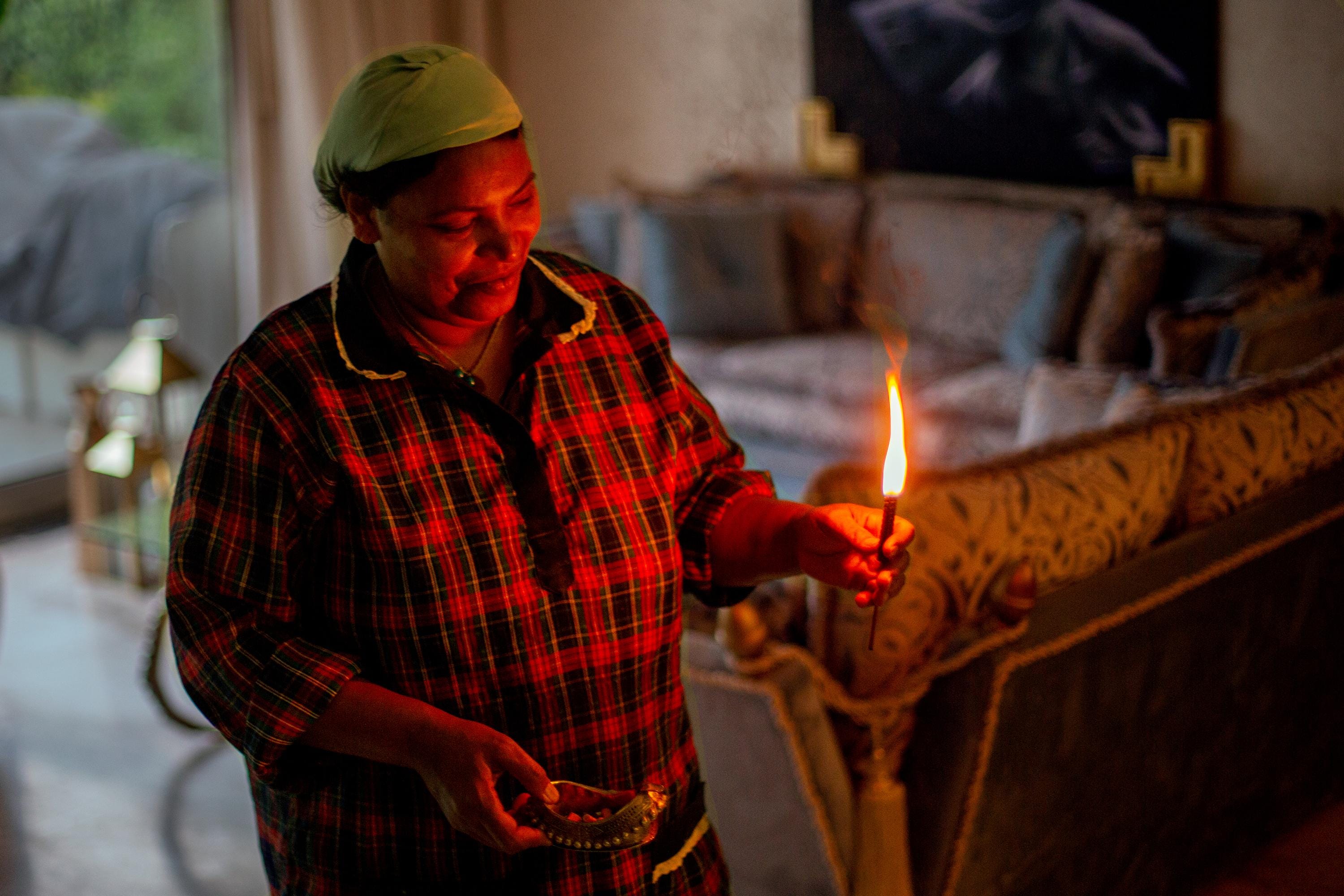
In a meeting with the ILO’s Cairo office delegation, Minister of Labor Hassan Raddad directed officials to accelerate the drafting process. According to the ministry, “specialized technical working groups” have been tasked with developing provisions that cover social protection, employment relations, skills and occupational classifications, fair recruitment, and enforcement and monitoring mechanisms.
The official statement claims that “consultations” and “social dialogue” with relevant parties have already taken place, yet it conspicuously failed to identify any of the participating stakeholders, publish preliminary drafts, or provide the actual timeline for the law’s completion.
The ministry broadly stated that the goal is to provide legal and social protection for domestic workers and “integrate them into the formal labor market in accordance with international standards.”
The renewed focus on domestic workers comes a year after the passage of Labor Law No. 14 of 2025, which, like its 2003 predecessor, explicitly excluded domestic labor from its basic protections regarding wages, working hours, leave, and arbitrary dismissal.
This deliberate legislative omission has left a vast, predominantly female workforce, estimated at 800,000 workers as of last year, entirely outside the scope of legal protection, subjecting them to hyper-exploitation and the unilateral whims of employers.
Decades of state promises to introduce specific legislation governing this marginalized sector have historically yielded nothing, making the implementation of this newly announced “roadmap” a critical test of the state’s willingness to extend enforceable rights beyond mere rhetoric.
Law without justice: The neoliberal trap of Egypt’s “labor reform”

The most glaring example is the outright exclusion of domestic workers, like those who perform household services, from the law’s scope (Article 1, Promulgation), continuing the practice of the previous 2003 law (Article 4). This vast workforce, predominantly women, is estimated to be around 800,000 strong as of 2025
Labor rights recast as welfare
The Ministry of Labor disclosed this week that it has spent 10.284 billion Egyptian pounds (around USD 203.7 million) on “social and health protection” programs for workers between 2014 and June 30, 2026, a figure the ministry frames as evidence of a comprehensive social safety net but which, on closer inspection, describes a system of targeted handouts rather than universal, enforceable labor rights.
The bulk of the spending, 7.275 billion pounds, flowed through the Central Account for Social and Health Care for Informal Workers, of which nearly 4.994 billion pounds was disbursed as “periodic and seasonal grants” tied to religious and national holidays.
Only 37.165 million pounds of that account, a tiny fraction of the total, went toward actual healthcare and hospital or pharmaceutical treatment, while 763.446 million pounds was classified more broadly as “social care” and 108.340 million pounds as “exceptional accident grants.”
A further 1.371 billion pounds was earmarked as an “exceptional pandemic-era grant,” a one-time infusion that Minister of Labor Hassan Raddad’s ministry now folds into a 13-year cumulative figure to inflate the appearance of sustained institutional commitment.
Separately, the Emergency Aid Fund for Workers paid out 2.576 billion pounds to 441,600 workers across 3,999 “distressed establishments,” a mechanism the minister described as designed to keep workers employed during employer crises, though it functions in practice as a public subsidy for private payroll shortfalls and employer exploitation rather than a direct guarantee to workers themselves.
The ministry also touted a newly introduced “personal accident insurance policy” covering death and total permanent disability, with compensation of up to 200,000 pounds per case, financed through 26.3 million pounds in premiums covering approximately 251,000 informal workers. Set against Egypt’s informal workforce, estimated in the tens of millions, a coverage figure in the low hundreds of thousands exposes the vast gap between the state’s rhetorical embrace of “comprehensive social protection” and the residual, means-tested character of what it actually provides.
Nowhere in the ministry’s disclosure is there a breakdown of the total number of eligible informal workers, annual coverage rates, average benefit per recipient, or the inflation-adjusted value of 13 years of nominal spending, omissions that make it impossible to independently verify whether the system is expanding protection or merely repackaging existing subsidies as a growing achievement.
Raddad closed by crediting the figures to “directives of President Abdel Fattah El-Sisi” and the state’s investment in “the Egyptian human being as the foundational pillar of comprehensive and sustainable development,” recasting the absence of universal social insurance as a triumph of paternalistic presidential largesse.
Samanoud strike ends, retaliation begins
Workers at Samanoud Weaving and Textile Company in Gharbiya governorate ended their four-day strike after National Security officials and company management pledged to “arrange treatment for workers awaiting surgery,” even as the company’s management moved to suspend seven women for their participation in the walkout. The strike, which began on Monday, July 13, protested the continued suspension of health insurance services since January, the withholding of sick-leave compensation, and the unpaid minimum wage, a triad of violations that has been flagged several times this year.
A worker who requested anonymity told The Cairo Report that the strike began at nine that morning, specifically in the weaving and textile section, not the adjoining garment and clothing factory under the same corporate umbrella, which “chose not to join,” noting that with a maximum of 200 workers, the textile section’s walkout was structurally weak on its own, adding that “they need the solidarity of the clothing factory because they’ve got the numbers,” a solidarity that, as of the strike’s second day, had not yet materialized.
Management’s response followed a now-familiar script of deflection and delay. According to the source, the head of the company’s executive board told striking workers the crisis was a matter for parliament and the state, not company management, yet all eight members of parliament representing the district had been unresponsive to the workers’ appeals. This buck-passing echoes the company’s public statement, attributing the health insurance freeze to “contacts with relevant ministries,” language that similarly shifts institutional responsibility onto unnamed, vague, and unaccountable third parties.
The financial picture disclosed to The Cairo Report diverges sharply from the company’s public accounting. While the Egyptian Commission for Rights and Freedoms (ECRF) cites a debt to the National Organization for Social Insurance (NOSI), chaired by Major General Gamal Awad, exceeding 15 million pounds, the source put the real figure at around 85 million pounds, a nearly six-fold discrepancy that, if accurate, suggests the publicly cited debt reflects only a partial or outdated liability.
Two specific incidents, the source said, served as the immediate triggers for the walkout, both originating in the textile section. One worker was struck by a tricycle and was forced to cover his own medical costs; another fell and injured his ribs in a workplace accident, only to find that “insurance did not help at all” despite the company’s continued monthly deductions from workers’ pay for coverage that has been effectively suspended since January. These accounts corroborate the broader pattern documented by the ECRF, which found some 500 workers denied treatment for chronic conditions, including diabetes and hypertension, and one worker requiring radiation sessions costing 75,000 pounds each with no insurance to cover them.
The strike’s conclusion, however, did not end the retaliation. Management suspended six women from the garment department on Thursday morning without explanation, a number Mada Masr’s Ahmed Ashmawy later reported had risen to seven, and the Samanoud Labor Office initially refused to register their complaints, forcing the workers to file police reports instead.
This is consistent with the company’s pattern since its 35-day minimum-wage strike in August 2024, when 10 workers, including labor leader Hesham El-Banna, were arrested on charges of “inciting a strike, unlawful assembly, and attempting to overthrow the regime,” before their release and El-Banna’s subsequent arbitrary dismissal, a precedent that The Cairo Report previously examined in an analysis of the company’s recurring strike cycle.

Medical graduates stranded by “needs-based” placement
Egypt’s Ministry of Health and Population announced, before dawn on July 12, the results of the 2023 graduating class’s mandatory residency placement, the “takleef,” process for dentistry and physical therapy graduates, capping a process that had taken more than two months from the opening of registration. The results assigned roughly 2,733 physical therapy graduates and about 3,700 dentists, in both cases, roughly half of each graduating class, triggering widespread objections over how placements were allocated.
A ministry source told Al-Shorouk that the total number of physical therapy graduates reached 5,072, while the ministry set “the actual need” at 2,732 practitioners, describing the exercise as aimed at matching medical staffing to real system needs and improving the distribution of healthcare personnel.
Many assigned graduates complained of being posted to remote locations far from their homes.
One physical therapy graduate assigned to a hospital in North Sinai, speaking to The Cairo Report on condition of anonymity, described the distance as untenable: “The hospitals I’ve been assigned, near Arish, Bir al-Abd, Sheikh Zuweid, and Nakhl, are all very far from my home, and I don’t even know if I need a security permit just to travel there.”
Graduates also pointed to apparent inconsistencies in the process, placements went mostly to those with final grades of 82% or above, while some graduates with identical scores found their preferences exhausted without being assigned at all.
The same graduate said the cutoff appeared to vary by institution: “It’s not a fixed number. Some faculties, mostly in private universities, accepted people with 79 or 78%. Public universities, on the other hand, held the line closer to 82%. We only know this from comparing notes with classmates, not from any official breakdown.”
Graduates also noted a stark imbalance in available postings during the registration window, which opened in late April. Dentistry graduates had access to roughly 1,000 listed positions, while physical therapy graduates had only 174 available, most of them outside Greater Cairo; far fewer, in relative terms, than what was offered to dentistry and pharmacy graduates from the same class. The graduate told The Cairo Report that they ranked their preferences by geography, starting with Cairo and Giza before working outward toward Beni Suef, the Red Sea, Sinai, and finally Upper Egypt, but added that the actual allocation looked arbitrary.
“There’s random distribution, some people from border governorates ended up with nearby postings, and people from Cairo or Giza got sent to border areas and Upper Egypt,” they said.
The ministry has told newly assigned graduates they must report to claim their placement decisions within two months of issuance.
Separately, the ministry’s medical professions development sector and its placement affairs administration announced that appeals against the results would be accepted starting July 27 for a two-week window, submitted in person at the placement affairs office rather than online through the placement platform, as had been the practice in prior years.
The graduate said the eligible grounds for appeal remain unclear. “We think the appeal categories will be limited, things like being married, having a medical condition, or obtaining a transfer letter from another hospital, but we won’t know the exact rules until the window actually opens.”
The ministry stressed that accepting and receiving an appeal does not mean it will be granted, and that any change to a placement decision requires the request to be studied, reviewed, and approved by the competent authority under the governing rules.
Some graduates argue the 2026 placement round for the 2023 class amounts to a retroactive application of the “placement according to actual need” policy, since they enrolled in 2018, when placement covered all graduates without exception, which they contend violates both the law and the constitution.
The graduate framed their own attachment to the decision in these terms: “I entered college believing placement was guaranteed. The law that applied when I enrolled says we have the right to full placement, that’s not the reality now, and that’s exactly why I’m holding onto my assignment, even though it’s far away.”
The graduate told The Cairo Report that they are not filing a lawsuit, since they did receive a placement, but added that watching classmates who got nothing fight for their rights has made them hold onto their own posting even harder, precisely because they’ve seen how unevenly the allocation played out.
Several graduates who took legal steps to challenge the shift to the “needs-based” system are due in court on July 25, with more graduates who were left out of this round reportedly preparing separate suits against the health ministry, demanding equal treatment under the placement decision.
“More graduates are now planning to join the lawsuit, coordinated partly through a lawyer’s office. It’s essentially the same process the 2023 physical therapy class used before,” the graduate explained.
Meanwhile, the General Physical Therapy Syndicate (GPTS) issued a statement on July 14, where syndicate head Dr. Samy Saad said the union had pursued negotiation and coordination with the Cabinet, the Ministry of Health and Population, members of parliament, and media figures on graduates’ behalf, and that this pressure raised the placement ratio for the 2023 class from 25% to 50%.
The statement frames that increase as insufficient given the limits of the syndicate’s own authority, and commits to pursuing further legal measures on behalf of the 2023, 2024, and 2025 classes going forward.
It is formally addressed to Egypt’s president, prime minister, the head of parliament’s advisory council, the ministers of health and finance, university boards of trustees, university presidents, and the deans and student unions of physical therapy colleges nationwide.
A companion appeal document grounds the syndicate’s demands in the Egyptian constitution, citing provisions on social solidarity, equal opportunity, and the right to work.
Its six demands include: pursuing further legal action on behalf of the rest of the graduating class; convening an employment conference under the health and higher education ministers; the rapid assignment of at least 2,000 more graduates to university and other hospitals, noting some university hospitals currently have zero open slots; coordination with other medical syndicates facing similar placement shortfalls; a call to close some private, national, and foreign physical therapy colleges that admit more than 40 students per year; and a reduction in new admissions from this year’s science-track high school graduates until the oversupply of graduates relative to available placements eases.
Graduates also raised questions about capacity at some of the system’s flagship teaching hospitals. One graduate noted that Kasr El-Ainy, among Egypt’s most prominent teaching hospitals, appeared closed to new placements this round, though they said they didn’t know why.
The placement results notably did not include Mohamed Osama and Mostafa Arabi, two dentists who have been held since late February over their union activity opposing the placement policy changes. Alongside pharmacist Ehab Sameh, the two remain in pretrial detention in case No. 945 of 2026.
Their detention has been renewed repeatedly, reaching an eighth 15-day renewal by early June, with the case built on broad accusations of misusing social media and spreading false news, charges defense lawyers say were not tied to specific incidents or posts. Later reporting also cited additional, more serious charges added to the case, including joining a terrorist group and spreading false news.
The dispute traces back to a decision, framed by the ministry as a governance reform, to shift mandatory placement, in place since the 1960s as a guaranteed one-to-two-year posting for medical graduates in state hospitals, to a “needs-based” system, applied retroactively to classes that had already enrolled under the old rules.
Physical therapy graduates have separately criticized the shrunken placement numbers as falling well short of actual demand, citing persistent shortages of rehabilitation specialists in orthopedics, neurology, pediatrics, obstetrics, intensive care, and disability services.
Critics link the policy to years of constrained health spending: Egypt’s health budget share has remained a fraction of both its constitutional floor and international benchmarks, even as the number of new, and often private, medical colleges has expanded sharply, raising graduate numbers without a matching expansion in employment capacity.

Future of Egypt squeezes beet farmers
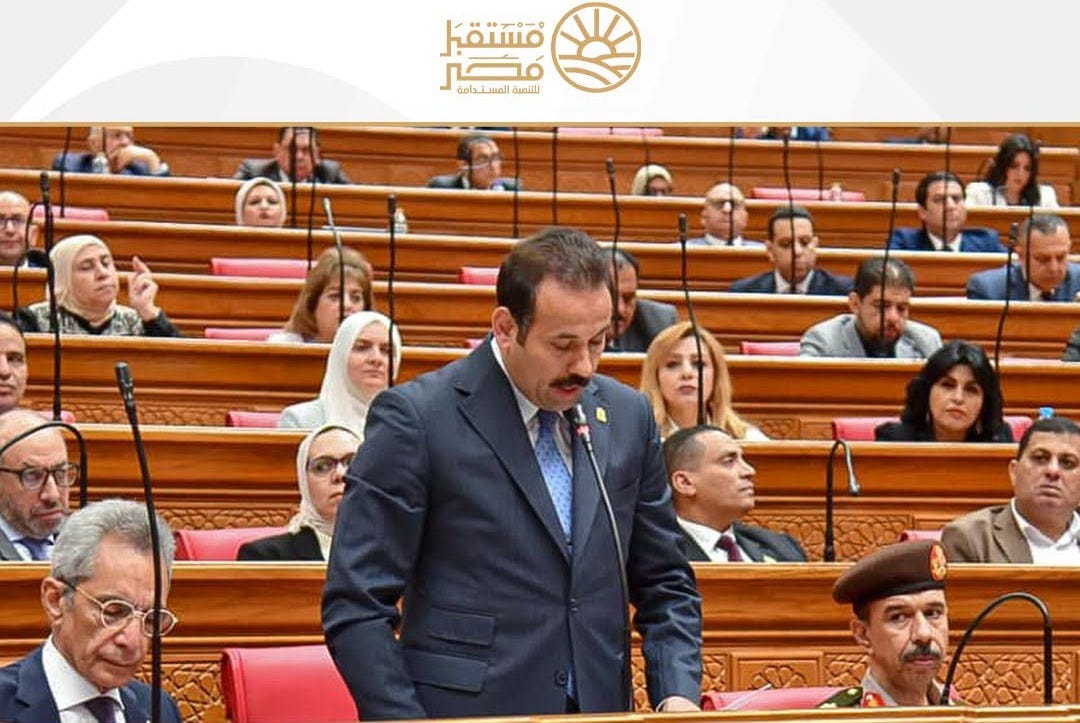
State-owned sugar companies have abruptly halted their customary annual crop-purchasing contracts with small sugar beet farmers, a freeze that Al Manassa’s Enas Hussein and Basma Ahmed reported stems from an “exclusive agreement” to instead source the crop from 100,000 feddans managed by the military-run Future of Egypt (FoE) for Sustainable Development Authority.
The move, coming just weeks before the mid-August planting season, functionally evicts hundreds of thousands of traditional farmers from a guaranteed government supply chain they have historically relied upon to finance their agricultural cycle.
The structural engineering of this market displacement is undeniable, since usually, state sugar companies complete 60–70% of their crop-purchasing contracts by mid-July, providing farmers the necessary financial predictability to secure seeds, arrange crop rotations, and manage production inputs. This year, the Ministry of Agriculture’s Sugar Crops Council, which directs national policies for sugarcane and sugar beet production, confirmed that absolutely no new contracts have been signed.
Instead, the state will absorb approximately 2.4 million tons of beets, sufficient to produce roughly 400,000 tons of sugar, directly from the 100,000 feddans held by FoE, concentrating procurement within a single, state-sponsored, military-managed mega-project, effectively cutting traditional agricultural producers out of the market entirely, and denying smallholders their primary source of stable income.
This monopolistic pivot follows aggressive legislative maneuvering to consolidate agricultural capital under executive control. The freeze on smallholder contracts is the first immediate material consequence of a controversial draft law, passed just days ago by the House of Representatives, granting FoE unprecedented legal autonomy and unchecked market power while stripping regulatory duties from relevant civilian ministries and transferring them to an authority answering exclusively to the presidency.
The squeeze on small farmers is further exacerbated by the state’s pricing policies. In August 2025, the government unilaterally slashed the sugar beet procurement price by 16 percent to a mere 2,000 pounds per metric ton, a move initially framed as an incentive to push farmers toward wheat cultivation but which now appears as a deliberate step in a broader strategy to systematically marginalize small producers.
Confronted with plunging domestic sugar prices, down from 27,000 to 22,000 pounds per ton, and cheaper imported alternatives, state companies are exploiting their resulting liquidity constraints to justify abandoning traditional farmers in favor of a centralized, agricultural model managed by the Air Force’s Colonel Bahaa el-Ghannam.

The result is a profound spatial and economic restructuring: the horizontal expansion of mega-projects in the New Delta is being subsidized by the systematic economic erasure of the smallholders who have long formed the backbone of Egypt’s agricultural labor force.
Gallup Poll: Egyptian workforce under strain
According to its most recent “State of the Global Workplace 2026,” Gallup, the US-based analytics and advisory firm that has run the World Poll since 2005, typically interviewing about 1,000 people per country each year in nationally representative, probability-based samples of civilian adults aged 15 and older, then weighting results to match national demographics, Egypt’s employees sit at the extreme end of a global picture of workplace detachment and everyday strain, with the latest country figures drawn from people employed by an employer for any number of hours.
Only 4% of Egyptian employees are classified as “engaged,” meaning psychologically involved in and enthusiastic about their work on Gallup’s proprietary Q12 instrument, which covers expectations, resources, recognition, managerial care, development, voice, purpose, colleague commitment, feedback, and learning opportunities. That is 10 points below the Middle East and North Africa (MENA) average of 14% and 16 points below the global average of 20%, and it marks a three-point drop from the previous 2022–24 rolling average. Just 9% are “thriving” on Gallup’s life-evaluation ladder, rating present life at 7 or higher out of 10 and expected life in five years at 8 or higher, versus 26% regionally and 34% worldwide, leaving most workers in the “struggling” or “suffering” categories.
Daily emotional conditions are even worse, as 57% said they experienced stress during much of the previous day, nine points above the MENA average and 17 above the global average, and the highest reading in Egypt’s series stretching back to a 38% three-year average ending in 2010; anger stood at 27%, sadness at 24%, and loneliness at 16%, the last of these below both regional and global benchmarks of 22%.
Perhaps the most politically resonant indicator is job-market perception, as only 17% of Egyptian employees said it was a good time to find a job where they live, 19 points below MENA’s 36% and 35 below the global 52%, even after a four-point rebound from a series low of 13% in the 2024 rolling average and far short of the mid-decade peak of 28% in 2016.
Together, the numbers describe not a single bad year but a structural bind, workers report exceptionally weak attachment to their present employment while also seeing little realistic chance of exit or alternative employment, a combination that is more severe in Egypt than in the MENA grouping that also includes Algeria, Bahrain, Iran, Iraq, Palestine, Jordan, Kuwait, Lebanon, Libya, Morocco, Oman, Saudi Arabia, Israel, Tunisia, Turkey, the UAE and Yemen. Stress has climbed in three broad phases, rising through the early 2010s, easing mid-decade, then climbing again from 2017 into the present high, while job-climate optimism has swung in a narrow, low band, recovering only modestly after pandemic-era and post-pandemic swings.
Gallup’s engagement measure is not a wage or unemployment statistic, and its target population is people employed by an employer rather than the full, sprawling informal economy, own-account workers or the unemployed; still, for a labor market long shaped by public-sector weight, informal work, military and state economic interests and exploitation, constrained organizing and successive rounds of “economic reform,” the survey captures a workforce that experiences work less as a site of advancement than as a constrained, high-stress condition with limited external options, bleak life evaluation, structurally elevated stress, and historically weak confidence in the local job market.
Alexandria’s Kilo 26 residents face displacement


In a Facebook statement posted July 13, rights lawyer Mohamed Ramadan said residents of the Kilo 26 housing project in Agami, western Alexandria are facing an organized push to drive them out, ahead of what he described as preliminary state moves toward expropriating the area.
According to Ramadan, authorities have formed survey committees as a precursor to an expropriation decree, and residents are now coordinating with lawyers to weigh their legal options.
Ramadan describes Kilo 26 as one of three sites, the others being Toson in Abu Qir and Umm Zaghio in Agami, chosen by the Mubarak government for a youth-housing scheme: subsidized apartments distributed by public lottery at reduced prices for young Egyptians. He says the project comprises 39 buildings totaling 1,160 apartments, of which only around 500 units have been distributed since 2010, leaving the rest vacant; occupied units, he says, are held under full-ownership contracts.
This lines up with what governorate officials have said publicly over the years.
In 2014, Alexandria’s then-governor, Major General Tarek El-Mahdy, stated that units at Kilo 26 were being sold with a down payment of 5,000 pounds and a total price of 35,000 pounds, according to Al-Mal.
By 2018, officials cited 399 remaining subsidized units there, with eligibility criteria requiring being from Alexandria, not owning another apartment, and meeting age limits (20–50 years). In 2020, a lottery offered 394 fully finished 63-square-meter units in Kilo 26 alongside similar batches in Toson and Umm Zaghio, with installments extendable to 20 years.
The purchase contracts governing these units, issued under the 2007 National Housing Project framework and Law No. 148/2006, show buyers acquired the building only, not the land beneath it, which the state retained permanently.
A sample contract for a 63-square-meter, two-bedroom unit in Agami, reviewed by The Cairo Report, priced the unit at roughly 64,469 pounds, made up of a 25,000 pounds state subsidy, a smaller governorate contribution, and about 35,000 pounds from the buyer, paid as a deposit plus a second installment.
The contract barred owners from selling, renting, mortgaging, or otherwise encumbering the unit for five years after handover, after which they can resell.
Ramadan’s central claim is that Kilo 26’s affordability always rested on its remoteness, but that this changed with the construction of the Admiral Fouad Abou Zekri Axis (formerly the “Al-Tameer Axis”), a major highway along Lake Mariout linking Alexandria to Borg El Arab and the North Coast. The road was significantly redeveloped starting in January 2021 and reopened by President Abdel-Fattah El-Sisi in December 2022 as a 35-kilometer, 9-lane-per-direction corridor.
That corridor now runs past Kilo 26’s doorstep, and the area sits inside the footprint of the Alex West development, a roughly 620-feddan luxury compound stretching from Kilo 22 to Kilo 26 along Lake Mariout, which includes international schools, a golf course, and the German Saudi Hospital (Al-Borg City medical complex), which opened in autumn 2021.
Ramadan’s statement points to the hotel, the Alex West compound, and the Saudi hospital specifically as the developments that have made the surrounding land newly attractive, using the colloquial phrase that “the government has set its eye on the area.”
Internal governorate records, also reviewed by The Cairo Report, suggest the process didn’t begin with the survey committees Ramadan describes from this year.
A committee formed by a 2023 governor’s decision, made up of the local engineer-director, an accredited real-estate appraiser, and a commerce professor, was tasked with determining how to handle Kilo 26 occupants: either relocating them to Masharef El-Amreya or paying compensation, calculated in tranches according to each unit’s legal status and priced against the current market value of Kilo 26 real estate, a notably different valuation basis than the subsidized price residents originally paid.
The same records reference a separate 2023 inventory of the housing project and a Supreme Valuation Committee that had already priced dozens of files across the governorate at a combined 132.5 million pounds. Together, these suggest the relocation-versus-compensation framework was being worked out administratively at least two to three years before the survey committees and sale freeze residents are now describing.
Ramadan, in his Facebook post, lists two main tactics residents say are being used to push them out.
The first is withdrawal of security. He stated that the private security company that once guarded the area has disappeared, which residents link to a rise in theft, including stripped water pipes, doors, and windows from vacant units, and drug use inside empty apartments, compounded by an absence of police follow-up, leaving residents feeling unsafe.
The second is an administrative blockade. Ramadan described a state-imposed freeze on the units: a ban on buying or selling them, instructions to the Real Estate Registration Authority office to refuse powers of attorney tied to the units, and utility companies being barred from processing service requests for residents there.
Ramadan said residents have obtained documents showing the state has formed survey/inventory committees, a standard preliminary step in Egypt before issuing an expropriation decree.
This isn’t an isolated complaint. Ramadan is also the lawyer representing residents of Toson, who are experiencing a similar, if more aggressive, dispute covered by The Cairo Report.
Dissent meets detention, medical negligence & delay
A wave of prosecutions and court rulings this week underscored the scope of an ongoing crackdown on dissent, with labor organizers, journalists, and political activists facing arrest, extended pretrial detention, and delayed trials.
In one of the most prominent cases, Cairo Criminal Court’s Terrorism Circuit renewed the detention of labor leader Shadi Mohamed and five co-defendants for another 45 days in the case widely known as the “Palestine Solidarity Banner” case.
Mohamed, addressing the judge by videoconference from Borg El Arab Prison on Monday, described a worsening shoulder injury that prison authorities have refused to properly diagnose despite repeated requests for an MRI, previously covered by The Cairo Report.
Journalists have also come under pressure. Al-Dostor reporter Haidar Kandil resurfaced before the Supreme State Security Prosecution after being forcibly disappeared for 22 days, and was ordered held for 15 days pending investigation.
He was one of at least 20 Shia Muslims swept up in a security campaign that began on June 22, coinciding with the Ashura commemoration, according to the Egyptian Initiative for Personal Rights (EIPR), which represented several detainees in the case and said interrogations focused almost entirely on their religious beliefs, including questions about their views on the Prophet’s companions and differences between Sunni and Shia practice. The EIPR stated that Kandil himself was questioned for nearly 20 hours on charges of leading and financing a terrorist group, with his lawyer permitted to attend only 30 minutes of it.
EIPR said the detainees had been held for weeks without access to family or counsel before appearing in court, and called the campaign a violation of constitutionally guaranteed freedom of belief.
Meanwhile, AlManassa cartoonist and translator Ashraf Omar saw his trial postponed for a second time, now pushed to October 12, to allow testimony from an investigating officer, according to his legal defense team.
Omar has already spent nearly 24 months in pretrial detention on charges of “financing and participating in a terrorist group,” a case that has drawn condemnation from Reporters Without Borders (RSF), the Committee to Protect Journalists (CPJ), Amnesty International, and hundreds of writers and artists who signed a solidarity statement.
Additionally, an appeals court on Thursday upheld a one-year sentence with hard labor against poet and activist Ahmed Douma over a Facebook post and article describing prison conditions, a ruling his defense maintains punishes him for nothing more than expressing an opinion.
Douma was released in 2023 under a presidential pardon after a decade in prison, most of which he spent in solitary confinement, but has faced renewed legal pressure since, drawing criticism from the United Nations (UN) and Egyptian rights groups.
Rounding out the week, the Supreme State Security Prosecution also ordered the detention of Mohamed Zahran, founder of the Teachers’ Independence movement, for 15 days over a Facebook post calling on teachers to organize around long-delayed union elections, his third security prosecution since 2020.
Rare win for labor against online delivery giant
The Second Circuit for Major Labor Disputes at the Helwan Court of First Instance ordered Delivery Hero Egypt, which operates the Talabat platform, to pay 100,000 pounds in compensation to a former customer service representative identified as Ahmed A. H., ruling that his dismissal was arbitrary and that the company had unlawfully terminated his indefinite-term employment contract.
The court, ruling in Case No. 414 of 2025, also awarded him compensation in lieu of the statutory notice period, along with payment for unused accrued annual leave.
According to the case details, revealed by the Egyptian Center for Economic and Social Rights (ECESR), Ahmed had been employed under an indefinite-term contract when he was suddenly barred from entering the company’s premises on May 20, 2025, and prevented from carrying out his duties, before being informed that his employment had been terminated.
He made several attempts to seek an amicable resolution and have the company reverse the decision, but those efforts failed. When the company also refused to pay his outstanding dues, he filed a police report at Maadi Police Station documenting the dismissal and his financial claims, and separately lodged a complaint with the Maadi Labor Office.
After the Labor Office failed to broker a settlement, the dispute was referred to the Helwan Court of First Instance, where it was assigned to the Second Circuit for Major Labor Disputes and heard over several sessions. On May 25, 2026, the court issued its ruling in Ahmed’s favor, ordering the company to pay the full compensation package for his unfair dismissal.
Lawyers Syndicate polices women
Egypt’s Lawyers Syndicate is at the center of a growing public controversy after disciplinary actions against two female lawyers, Loa Khalaf, over her appearance and social media presence, and Nessma AlKhateeb, over a Facebook post on sex workers’ health rights, reignited debate over the professional body’s authority to police its members’ personal conduct and speech.
The Sohag branch of the Lawyers Syndicate suspended lawyer Loa Khalaf Bakry Othman from practicing, pending a disciplinary hearing, after videos and photos of her circulated online and drew criticism from other lawyers who argued her conduct violated the profession’s traditions.
Sohag bar chief Ahmed Helmy El-Sherif said the suspension order was issued on June 10, though it only drew wide public attention on 13 July, after being recirculated online.
Khalaf has rejected the decision, saying she committed no professional violation and that the real dispute centers on criticism of her appearance and clothing rather than her legal work. She has also pushed back against online mockery, accusing her of using filters to alter her looks, and has accused what she called “paid campaigns” of hijacking a syndicate dispute to attack her personally.
The syndicate has repeatedly denied that her hijab-free appearance played any role.
Hossam Saeed, a General Syndicate council member overseeing disciplinary affairs, said the hijab was never a factor in the case, insisting the suspension followed a formal complaint from fellow lawyers over workplace conduct.
Separately, the syndicate clarified that the Sohag branch did not itself issue a final suspension order but referred the file to the General Syndicate, the body with authority to impose it. Prominent lawyer Nehad Abou El-Qumsan has criticized the syndicate’s handling of the case, arguing any accountability should proceed strictly through legal and disciplinary channels rather than social media pressure.
The matter remains pending before the disciplinary board.
A parallel case has drawn even sharper criticism from rights advocates.
In early June, Nessma AlKhateeb, a lawyer and founder of the legal-aid initiative Sanad, was referred for investigation in mid-June over a Facebook post—later deleted—calling for medical and physical protection for women working in commercial sex, citing their exposure to health risks.
Syndicate council member Rabie El-Malwani accused her of promoting “deviant ideas” and effectively advocating for the legalization of prostitution, a crime under Egyptian law, and said the syndicate had received complaints from lawyers offended by the post.
He declared that women’s rights were “protected by religion, law, and reality,” and, in the same breath, that freedom of opinion is not absolute but bound by a duty not to offend society’s values and morals. He announced that legal and syndicate measures would follow.
The investigative committee was convened within a day of the complaints.
AlKhateeb told Mada Masr’s Sara Mahfouz that the investigation took place in an atmosphere characterized by “neutrality and understanding” from the four members of the committee: Rabie El-Malwani, Issa Abu Issa, Muhammad Radi Abu Saud, and Muhammad El-Kayyar.
During the investigation, she denied calling for legalization, saying she was only highlighting that sexually transmitted infections are more prevalent among this group and that they deserve health care to protect public health more broadly.
Nessma told Mahfouz that she based her argument on Article 9 of Egypt’s 1961 anti-prostitution law, which mandates medical examinations and care for women detained in such cases, arguing the law itself already assumes state responsibility for their health without legalizing the underlying activity. She also said the term “sex workers” was drawn from a Health Ministry document tied to Egypt’s Sustainable Development 2030 plan, not her own framing.
Despite her defense and testimony from fellow lawyers Fatma Seraj, Aziza El-Tawil, and Mahienour El-Massry, who attended in solidarity, the General Syndicate’s council issued a formal order on June 16 suspending Nessma from practicing law for an indefinite period, following her refusal to apologize during questioning.
Qalyubiya water workers coerced into precarity
ECRF reported this week that bill collectors and meter readers at the Qalyubiya Drinking Water and Sanitation Company are facing a coordinated campaign of coercion, with management withholding the legally mandated minimum wage to force workers into signing precarious “agency contracts.” They documented accounts from 120 workers who have been systematically pressured by the administration to abandon their original employment contracts, reclassifying them as commissioned agents stripped of accumulated seniority and basic job security.
The mechanism of this coercion is financial strangulation. According to worker testimonies, the company disbursed partial wages this month, ranging between 3,000 and 4,000 pounds, less than half of the 8,000-pound minimum wage recently mandated by the National Council for Wages. When workers demanded their full legal entitlement, management explicitly informed them that the remainder of their salaries would only be released if they signed the new agency contracts, effectively holding their rights hostage and transforming a binding legal obligation into a conditional tool of administrative extortion, deploying the threat of poverty to manufacture consent for downgraded labor conditions.
This represents a deliberate escalation of a conflict that has simmered for months. As previously covered in The Cairo Report, Qalyubiya workers engaged in sustained protests in June to demand the integration of frozen allowances and formal appointments. While the company initially “formed committees to study the demands” in a classic pacification maneuver, it is now moving aggressively on the offensive, utilizing the structural vulnerability of temporary workers to permanently restructure the company’s labor obligations.
The imposition of agency contracts explicitly targets the workers’ legal standing. By reclassifying them as agents, the company aims to exempt itself from the Labor Law’s protections against arbitrary dismissal and mandate performance-based renewals that can terminate an employee based solely on unmet, unrealistic collection targets.
This standoff in Qalyubiya is not an isolated administrative dispute; it is a test case for the broader architecture of precarity within the public utility sector, in which payment of the state-mandated minimum wage is contingent upon workers voluntarily surrendering their job security. The water company is actively subverting the very concept of a labor right. More importantly, if the company successfully uses wage theft to force contract downgrades, it establishes a blueprint for neutralizing labor protections across the entire state-managed utility apparatus.
Security Sector update:
So, what?!
The developments covered this week show how the New Republic manages labor not through durable rights but through selective inclusion, administrative delay, and coercion. Benefits arrive as conditional grants rather than guarantees; wages and insurance become bargaining chips; and public institutions offload responsibility onto workers, farmers, and households.
The same logic organizes the state’s wider development model. FoE’s expansion displaces small sugar-beet producers from a state procurement chain, while public companies such as Samanoud and Qalyubiya manage their own financial failures through unpaid entitlements, fractured contracts, and retaliation against workers who resist.