




This issue of The Cairo Report examines how the state tightens political and administrative control over organized labor while insulating private capital and external balances. We look at moves to postpone union elections and preserve state-aligned leadership, the prime minister’s hollow wage pledge for 2030 that excludes private sector workers, and how Tax Authority staff secured regularization only after mandatory military academy training.
We also trace how coastal land liquidations and five trillion pounds in planned investment zone expansions rely on tax exemptions to draw foreign capital as the current account deficit widens.
Meanwhile, islanders in Warraq reorganize against ongoing police siege and expropriation, and Mada Masr editor-in-chief Lina Attalah is referred to an expedited trial amid an expanding press crackdown. Finally, the Medical Syndicate confronts a bottleneck that cuts medical school admissions, and delays graduate appointments to manage systemic underfunding.
Workers oppose another delay to union elections
Independent union federations and rights groups called on October 24 for elections without another extension of the current union boards’ tenure, warning that postponement would protect incumbent leaders from accountability to workers. Signatories include individuals, politicians, parties, political movements, rights organizations, independent unions, and workers’ organizations.
Their statement follows Labor Ministry consultations on amendments to Trade Union Law No. 213 of 2017, where labor minister Hassan Raddad chaired the latest meeting last week, although the ministry’s announcement specified neither an election postponement nor a new timetable.
The existing boards have already received six additional months under Law No. 74 of 2026, issued on June 8, which requires an election call at least 60 days before that extension expires.
However, participants in the government-led “Supreme Council for Social Dialogue” recommended another year, elections at the end of 2027, and five-year terms for future cycles. The reasons included “updating membership databases” and “allowing committees to complete registration requirements”.
The Center for Trade Union and Workers Services (CTUWS) had opposed the first extension in May, arguing that administrative intervention and restrictions on unions’ internal affairs were the underlying problems.
Those restrictions shaped the elections that produced the current boards. CTUWS’s monitoring report on the 2022 elections estimated that more than 1,500 candidates were excluded, documenting withheld nomination papers and rejected appeals. The state-aligned Egyptian Trade Union Federation also holds a formal position in the current consultations: its president, Abdel Moneim El-Gamal, is the council’s worker-side vice-chair. Incumbent representatives therefore participate in discussions that could prolong their own tenure.
Because, by law, only state-approved union committees negotiate collective agreements and handle workplace disputes, another extension would leave existing leaders exercising that authority while independent unions and workers wait to choose who should exercise it on their behalf.
A wage promise for 2030, private workers excluded
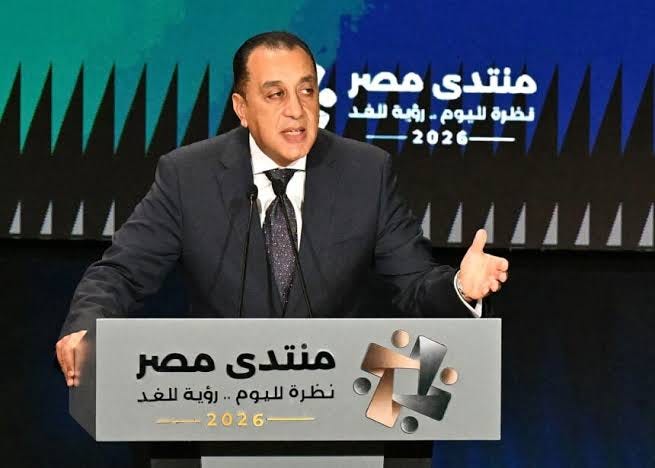
Prime minister Mostafa Madbouly announced on October 24 that the government aims to raise its minimum wage from 8,000 Egyptian pounds to 15,000 pounds by fiscal year 2029/30, covering “about 4.5 million state workers.”
The target represents an 87.5% nominal increase over three years. Private sector workers, however, have no equivalent binding commitment, an unnamed government source told Al Manassa, that companies would be asked to raise wages annually without being obliged to follow the government’s increases.
Two days before that announcement, Madbouly had pledged to raise minimum wages in both sectors and increase the personal income tax exemption, without specifying the exemption’s new value, but delivering the private sector pledge requires a separate wage-setting decision.
The National Wage Council set the private minimum at 7,000 pounds from March 2025, and it remained below the 8,000 pounds government floor introduced in July 2026. Under Articles 102–105 of Labor Law No. 14 of 2025, the council can revise the minimum, and covered employers must implement its decisions, while the Labor Ministry must inspect compliance.
The government therefore has the authority to turn its request into an obligation.
Workers’ organizations have already demanded that it do so. A CTUWS-led memorandum submitted in September called for the private sector minimum to match the government floor and rejected using low wages to attract investment or support exports. Enforcement remains unresolved even where public money pays for the service: during June parliamentary proceedings on Luxor, an MP reported security and cleaning contractors serving the governorate and airport paying 1,500 pounds for 12-hour days; the Labor Ministry acknowledged violations involving pay, hours and contracts.
Tax Authority regularizes workers after military staff training
Egypt’s Tax Authority has approved the regularization of 562 temporary workers, principally in specialist tax examination and taxpayer enumeration roles. Authority chair Rasha Abdel Aal’s Decision 5000/2026 makes the appointments effective during October, following Human Resources Committee approval on October 13.
The measure promises greater employment security in an agency that has continued relying on contracted staff for years while their permanent appointments remained unfinished.
That reliance followed a recruitment system that separated doing the job from obtaining a permanent post. The authority had advertised 1,700 contract positions in November 2020 under budget legislation permitting renewable contracts for up to three years. Permanent appointment required vacant, funded posts, and further administrative approvals, but circulars issued in 2024 and 2025 instructed offices to retain contractors beyond expiry while appointment procedures continued, acknowledging their labor and contribution to tax collection.
Still, the tax authority obtained continuing skilled labor while workers carried the uncertainty of temporary status.
Moreover, that employment had been conditional on military oversight. In an official statement in January 2026, Abdel Aal described contract workers as essential and confirmed “coordination with the Military Academy” over their training, including accommodation for staff traveling from other governorates.
Investment zone expansion links tax concessions to coastal land deals
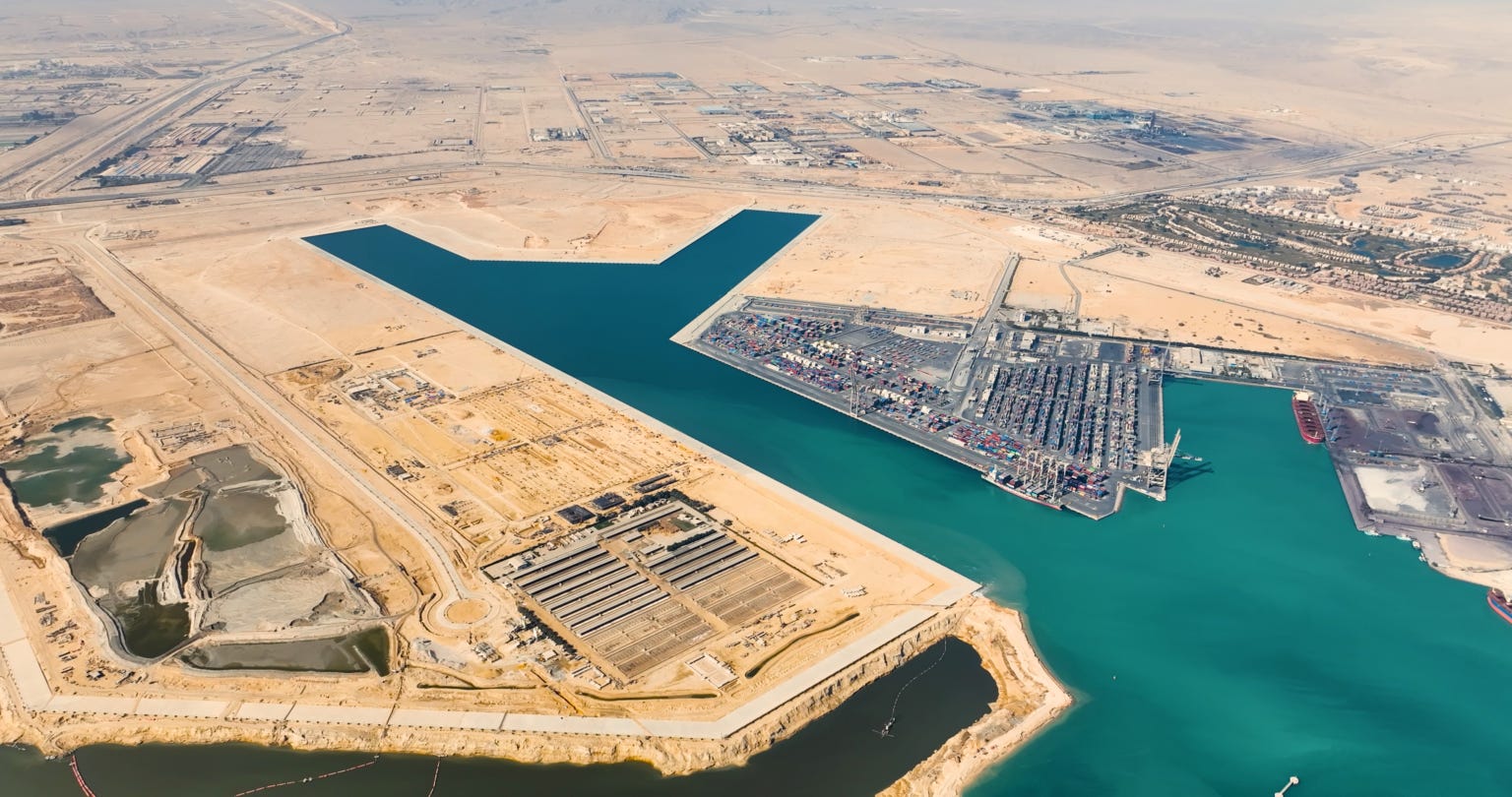
Egypt is developing nine investment zones with more than 5 trillion pounds in planned investment, seeking foreign capital and service-export earnings as its current account deficit widened to 22.5 billion US dollars in fiscal year 2025/26. General Authority for Investment and Free Zones (GAFI) official Ahmed Kamal said on October 18 that “construction had reached approximately 40%,” with development periods stretching from five to 20 years. The investment authority is mainly courting data centers and outsourcing companies, but the investment total also encompasses major property developments.
The UAE Ras El Hekma deal accounted for about 92.5% of an earlier, seven-zone investment forecast in May; Presidential Decree 55/2024 transferred its 170.8 million square meters from the armed forces to the New Urban Communities Authority. Developers also combine investment zone licensing with separately authorized free zone components, including the 50,000-square-meter zone proposed inside Qatari Diar’s Alam Al Roum development, which, like Ras El Hekma, is also on the Mediterranean coast.
Under Article 41 of the Investment Law, free zone projects and their distributed profits are exempt from ordinary Egyptian taxes; private service projects instead pay a fee of 2% of gross revenue, alongside applicable service charges.
Warraq islanders reorganize against expropriation
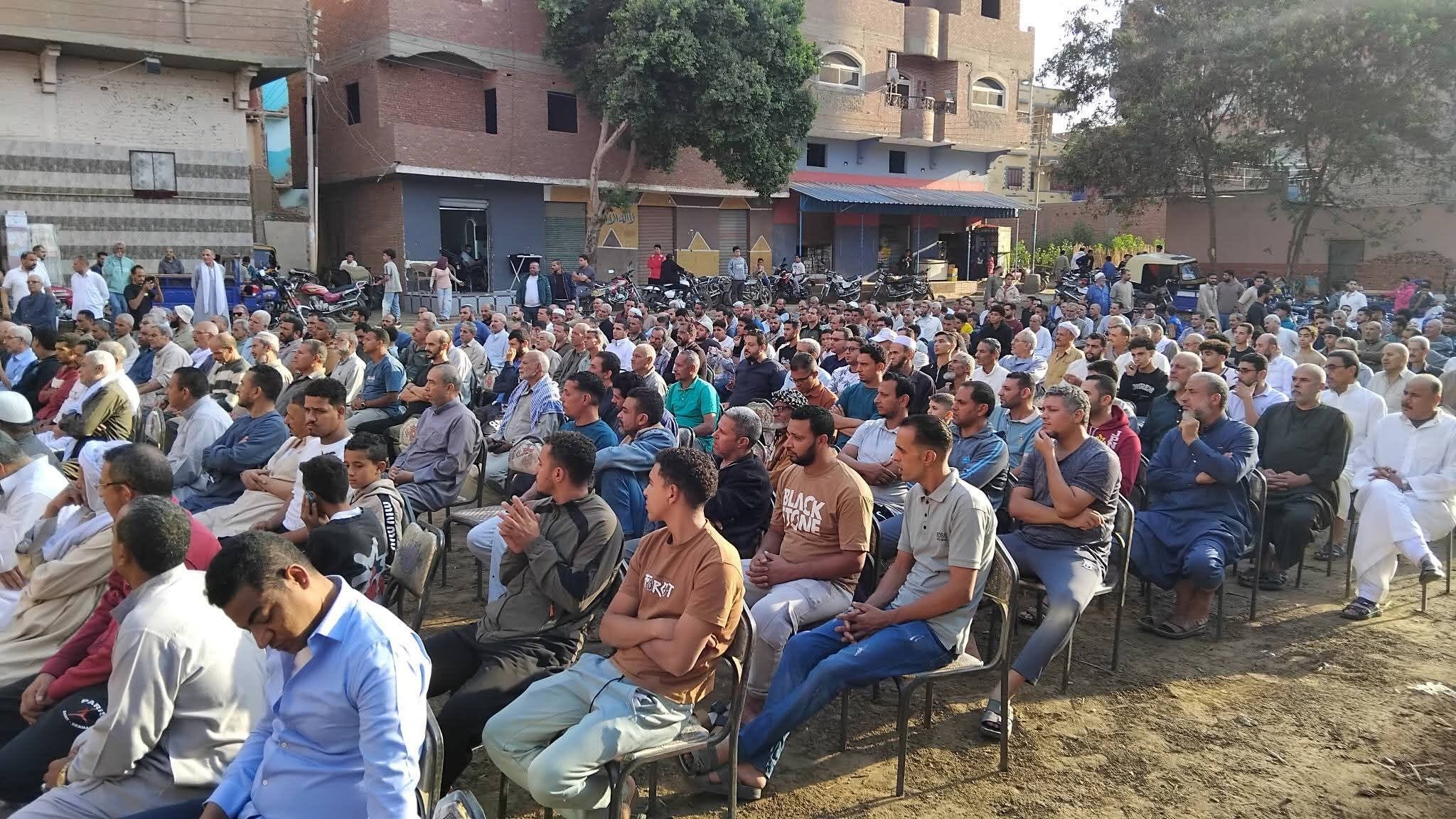
Update: Dozens of residents of Warraq Island protested on Friday, October 23, against police intimidation and the ongoing siege of the Nile island, gathering afterward for a mass meeting to discuss resistance to measures they fear could lead to their displacement.
Residents called for the removal of police checkpoints from ferry crossings and streets, according to residents’ Facebook posts. Slogans included demands for security forces to leave the island and declarations that Warraq belonged to its residents, not outside commercial interests.
“The island belongs to its people, not thieves and Gulf sheikhs,” one resident wrote on Facebook.
The protests come amid growing frustration over unfulfilled promises to residents and the lack of progress on their central demand: securing replacement homes on the island rather than being displaced from their existing communities.
A member of the residents’ negotiating committee, speaking to Al Manassa’s Beesan Kassab, said authorities had fulfilled only two commitments made at the committee’s last meeting with representatives of the National Security Agency: assigning a doctor to the island’s medical clinic and providing additional sewage suction trucks to address the island’s sanitation crisis.
“The fundamental demand of the residents has remained stalled,” the committee member told Kassab.
The residents’ main demand is the implementation of the principle of “a home for a home,” under which land would be allocated on the island for replacement housing built in keeping with its existing rural character, in exchange for residents surrendering their current homes. Despite previous assurances that the matter would be resolved, the committee member said, no formal executive measures had been taken.
Tensions have also risen following the recent arrest of a resident accused of assaulting a police officer near the ferry landing in the Warraq al-Hadar neighborhood, the source said, adding that residents are demanding that pending cases against islanders linked to previous protests be preserved from further prosecution and dropped.
The “We Are Staying in Warraq Island” group has yet to release a statement detailing the mass meeting’s agenda.
Press crackdown escalates
Update: Egyptian prosecutors have referred Lina Attalah, editor-in-chief of critical news outlet Mada Masr, to an expedited criminal trial on charges of operating a website without a license, hours after releasing her on 100,000 pounds bail following questioning by the Supreme State Security Prosecution.
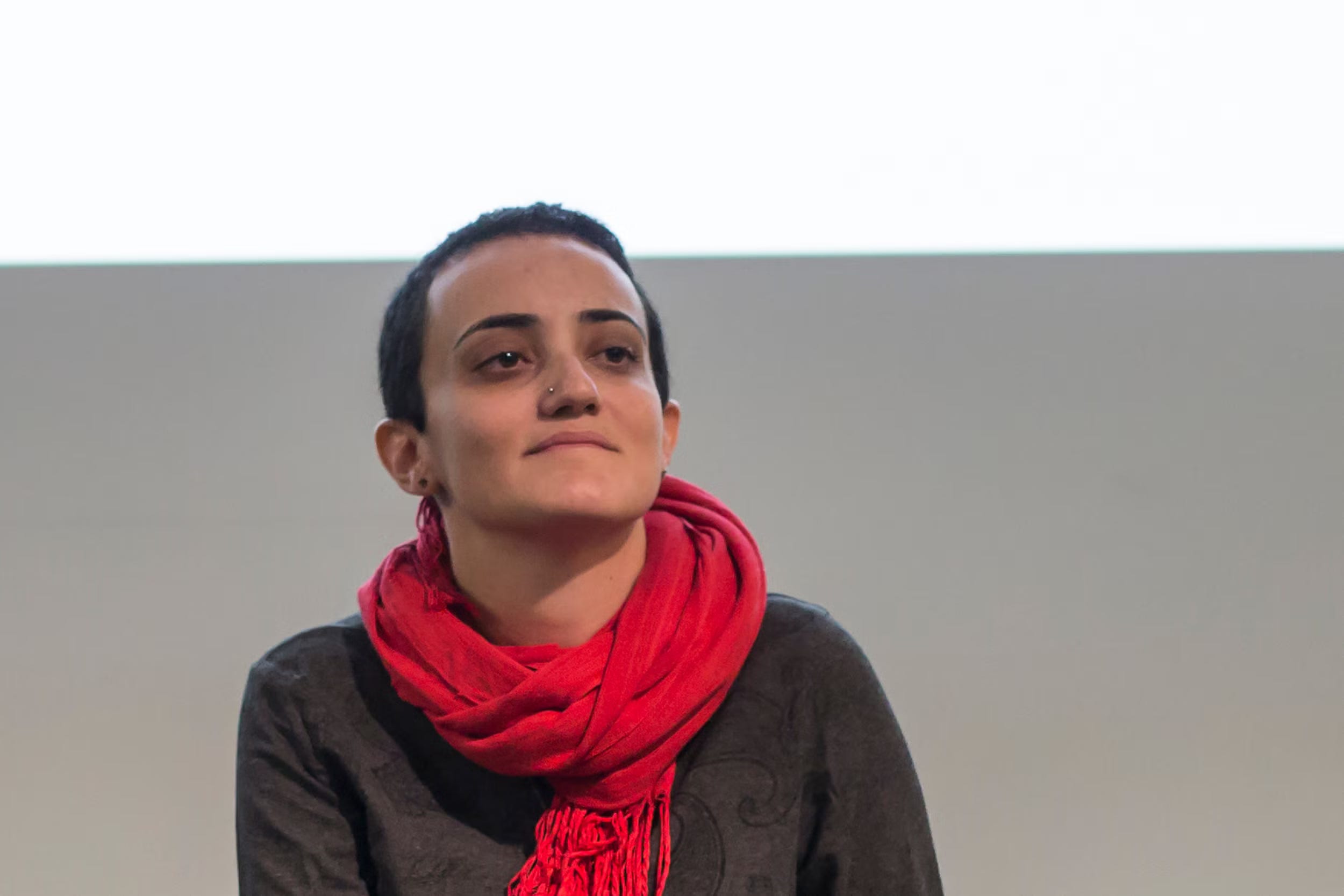
The New Cairo Misdemeanors Court is scheduled to hold the first hearing on October 27. The referral follows a six-hour interrogation in which prosecutors focused on Mada Masr’s founding, funding and ownership, as well as a recent report documenting prison hunger strikes and punitive transfers of inmates amid delays to criminal procedure amendments.
Defense lawyer Nabeh Elganadi confirmed Attalah’s release on bail. Prosecutors also accused her of “publishing false news domestically and abroad,” according to the defense account.
The case marks the sixth criminal proceeding brought against Mada Masr, its journalists or its editor-in-chief over the past six years, according to the outlet’s account of the proceedings.
The latest action follows an October 12 summons ordering Attalah to appear for questioning on October 14 in a newly opened investigation. The notice did not specify the reasons for the summons.
In August 2025, prosecutors questioned Attalah and released her on 30,000 pounds bail after Homeland Security accused her of publishing false news and operating an unlicensed website following an investigation into alleged abuses in Egyptian prisons.
The renewed prosecution comes amid broader pressure on independent journalism in Egypt. Six journalists from fact-checking outlet Matsada2sh were recently arrested, prompting eight Egyptian and regional newsrooms—Mada Masr, Al Manassa, Saheeh Masr, Daraj, Sifr, Megaphone, Nawaat, and al-Jumhuriya—to launch a collective campaign in solidarity with the detained journalists and to scrutinize official government records.
The rapid progression from interrogation to trial has renewed concerns among press freedom advocates about the use of licensing regulations and criminal proceedings against independent media outlets and journalists critical of the government.
Al Bawaba News
North Giza Court of First Instance ordered Al-Bawaba News newspaper to pay journalist Mohamed E.A. 293,100 pounds in compensation and unpaid wages after ruling that he was unlawfully dismissed following a dispute over the country’s minimum wage requirements, according to the Egyptian Center for Economic and Social Rights (ECESR).
Of that sum, 174,000 pounds are in compensation for material and moral damages resulting from his dismissal, 21,000 pounds in lieu of notice, 54,700 pounds for unused annual leave, 14,000 pounds in unpaid wages for November and December 2025, and 29,400 pounds in outstanding wage differences.
The court also ordered the newspaper to issue the journalist a certificate of experience and return his employment documents. It rejected a counterclaim filed by the newspaper’s management.
The ruling, issued in case No. 553/81 of 2026, applied provisions of Egypt’s Labor Law No. 14 of 2025 and the minimum wage requirements established under National Council for Wages Decision No. 15 of 2025, the center said.
The ECESR, which represented the journalist, welcomed the judgment, saying it reinforced workers’ rights to fair wages and prevented employers from circumventing statutory minimum wage obligations.
The case stems from a labor dispute involving 257 journalists and other employees at Al-Bawaba News who sought enforcement of the minimum wage decision.
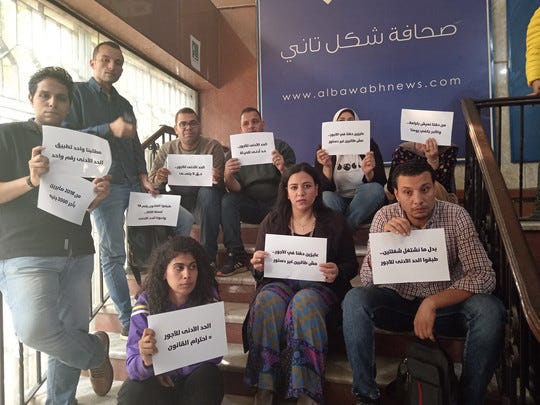
Mohamed joined the newspaper in 2014 as an editor under an open-ended employment contract. His monthly salary initially stood at 1,500 pounds and later rose to 2,000 pounds, according to the center.
After management declined to implement the minimum wage requirements, the employees began an open-ended sit-in at the newspaper’s headquarters on November 17, 2025, with support from members of Egypt’s Journalists Syndicate, including Freedoms Committee head Eman Ouf and syndicate head Khaled Elbalshy.
The following day, the journalist and several colleagues filed a collective complaint with the Dokki Labor Office. A labor inspector subsequently documented the alleged violation and filed a misdemeanor case against the institution, the center said.
On January 4, 2026, the journalist and several colleagues were prevented from entering the newspaper’s premises, which prompted the journalist to file a police report and lodge a complaint with the labor office on the grounds of wrongful dismissal.
The syndicate’s board voted unanimously on January 5 to remove the newspaper’s founder and chairman, Abdelrahim Ali, from its membership rolls, following a recommendation by its Registration Committee. The decision was announced on January 6.
The syndicate cited Article 5(a) of Law No. 76 of 1970, which sets eligibility requirements for membership, including restrictions on journalists who own or hold shares in media outlets.
The judgement follows a similar ruling involving another Al-Bawaba News journalist. In a separate case, the same court ordered the newspaper to pay journalist Asmaa H.A. 280,000 pounds in compensation and other employment-related dues after finding grounds for a claim of arbitrary dismissal.
In a related development, the North Giza Labor Misdemeanor Court on April 20, fined the newspaper’s board chairman 13,000 pounds for each of 257 employees over the failure to implement the minimum wage, bringing the total fine to 3.341 million pounds. The court also ordered 2,000 pounds in provisional civil compensation for each of 25 journalists who joined the case as civil claimants.
The rulings come amid broader concerns over wage protections and employment conditions for journalists and other workers in Egypt.
Medical school admissions cut amid residency bottleneck
Update: Egypt’s medical education system is facing mounting pressure as authorities restrict public medical school admissions while budget constraints delay the employment and placement of successive cohorts of graduates, raising questions about the government’s approach to staffing a health system dependent on publicly trained doctors.
Dr. Osama Abdel Hay, head of the Egyptian Medical Syndicate, warned at the opening of the syndicate’s ordinary general assembly on October 23 that the uncontrolled expansion of medical schools, without corresponding investment in teaching hospitals, training facilities and faculty, threatens both the medical profession and patient care.
His remarks come amid a broader shift away from near-universal public employment for medical graduates toward recruitment determined by government-defined staffing needs.
The restrictions highlight a contradiction in the management of Egypt’s medical workforce: authorities are limiting entry into public medical education because training infrastructure is insufficient, while budget constraints have also delayed the appointment of three consecutive cohorts of graduates, according to the reporting.
Abdel Hay said medical schools depend heavily on practical training and should not be established without a teaching university hospital capable of providing students with the clinical experience required to practice medicine.
“We reject any increase in the number of students admitted to medical schools unless it is accompanied by an increase in teaching and training places and in the number and capacity of faculty members,” he said.
The syndicate has also called for a freeze on admissions at medical colleges that fail to meet teaching-hospital requirements, arguing that classroom instruction cannot replace the experience of examining patients, diagnosing illnesses and responding to medical emergencies.
The syndicate has raised particular concerns about branches of international universities operating medical programs in Egypt, arguing that they should face the same admission and training standards as Egyptian private and national universities. It has cited cases in which international branches admit students with scores as low as 50%, compared with the substantially higher thresholds for public medical schools.
The dispute over admissions is unfolding alongside a growing backlog of doctors seeking government assignments and specialist training.
Abdel Hay said extending the medical education system to five years of study followed by two years of clinical training, replacing the previous six-year study and one-year internship model, has created additional difficulties. A syndicate poll found that most professors were dissatisfied with the change and expressed serious reservations, he said.
The extension of the internship period from one year to two has doubled the number of intern doctors without a corresponding increase in training facilities, equipment or other resources, leading to overcrowding, Abdel Hay said. He warned that the additional year could become wasted time for young doctors if adequate clinical opportunities were not provided.
The syndicate chief also cited continuing problems with mandatory assignments, residency placements and access to postgraduate education, including the Egyptian Board and master’s degree programs. Training capacity has not expanded in line with the growing number of medical graduates, he said.
The employment dispute has persisted through 2026. The syndicate has held repeated negotiations over assignment and residency-placement delays, including a meeting in mid-August with representatives of the May 2026 residency cohort to hear complaints after an appeals window opened.
The disputes over admissions, training and employment point to a structural problem extending beyond the number of medical graduates.
Expanding enrollment without building the infrastructure needed to train students risks producing poorly prepared doctors, while restricting admissions and delaying appointments leaves aspiring students and qualified graduates confronting separate barriers within the same public system.
Prison Watch: Some releases, more tadwir
Egyptian courts and prosecutors issued a series of decisions on October 19 and 20 involving the release of several defendants and the renewal of pretrial detention for others in cases handled by the country’s terrorism circuits and Supreme State Security Prosecution.
On October 20, Sayed “Moshagheb” Faheem, the Ultras White Knights capo, and four other defendants were acquitted by the First Terrorism Circuit, convening at the Badr Court Complex, in Case No. 7304 of 2026, according to lawyer Islam Salama.
The defendants had faced charges of participating in an unlawful assembly and possessing explosive materials without authorization.
Faheem had been rearrested on April 19, hours after his release from prison following a decade in detention.
Separately, on Monday, October 19, lawyer Essam Refaat was released, according to a rights lawyer Khaled Ali.
On the same day, founder of the Independent Teachers Movement, Dr. Mohamed Zahran, was released subject to a guarantee of his place of residence, according to lawyer Nabeh Elganadi. Zahran subsequently thanked lawyer Khaled Ali and his office for voluntarily attending all his Supreme State Security Prosecution sessions until his release.
Meanwhile, the First Criminal Circuit renewed the detention of lawyer Mohamed Abu El-Diyar, coordinator of the Committee for the Defense of Prisoners of Conscience, for 45 days in Case No. 4502 of 2026, registered by the Supreme State Security Prosecution. He has been in detention since May 25.
In a separate case, the Supreme State Security Prosecution renewed the detention of Romany Gharib for 15 days in Case No. 4832 of 2026, according to the Egyptian Commission for Rights and Freedoms (ECRF). Gharib was arrested after publishing a video on Facebook in which he complained about an incident at an airport, alleging that an officer had forced him to transport someone against his will, confiscated his driving licence and delayed him.
The prosecution also renewed the detention of 13 defendants, including Al-Dostour journalist Haider Kandil, for 15 days in Case No. 5635 of 2026, known as the “Shia case,” on October 18 . The defendants face accusations of joining and financing a terrorist group. Nine other defendants in the same case had their detention renewed the previous Sunday.
Separately, the Second Terrorism Circuit renewed the detention of 19 building-materials traders from Qalyubia for 45 days in Case No. 10709 of 2025, registered by the Supreme State Security Prosecution. The defendants face accusations of joining a terrorist group, participating in an unlawful assembly and spreading false news.
The traders were presented before the Supreme State Security Prosecution in batches between December 23 and 25, 2025, following varying periods of alleged enforced disappearance. Their arrests were linked to their supplying of building materials to Warraq islanders.
In a separate development, nine human rights organizations called for the conditional release of writer and poet Ahmed Douma, arguing that he had become eligible to apply for release after serving half of his one-year prison sentence.
Douma was sentenced on June 3 by the New Cairo Misdemeanour Court in Case No. 4894 of 2026, involving allegations of deliberately publishing false news, statements and rumours inside and outside Egypt. The New Cairo Appeals Court upheld the sentence on July 16.
He was referred to trial on April 27, following his arrest on April 6 in connection with opinion articles and social media posts, including an article published by The New Arab titled “From Prison Inside the State to the State Inside Prison,” which discussed the imprisonment of political opponents.
Security sector update

So, what?!
This week’s developments illustrate the aggressive suppression of reproduction costs for domestic labor alongside the unconditional underwriting of conditions for foreign and enclave capital.
The state does not act as a neutral arbiter of crisis. Rather, its judicial, legislative, and security arms actively discipline organization. By indefinitely delaying independent trade union elections, conditioning civilian public sector tenure on military academy vetting, and criminalizing independent reporting on carceral conditions, the state disorganizes labor at the point of struggle.
Concurrently, it liquidates communal land in Warraq and the Mediterranean coast into sovereign concessions and tax-exempt investment zones to bridge structural balance-of-payments shortfalls. The systemic crisis of Egyptian capitalism is thus managed by transforming public infrastructure into de-risked extractive enclaves, while the physical and economic reproduction of the wage earners is treated as an expendable liability.