



This week’s issue of The Cairo Report covers mass layoffs across the appliance sector as consumer demand collapses, the proposed transfer of millions of square meters of public enterprise land to the military-run Future of Egypt, and state offers to de-risk private capital while inflation forecasts worsen.
We also look at the IMF’s closing review and Moody’s upgrade—both premised on locking in years of austerity regardless of whether formal lending continues—alongside Egypt’s auction of UN carbon offsets that allow corporate polluters to sidestep operational change.
Meanwhile, labor authorities fragment a collective wage dispute at Misr El-Amria into individual court cases, while residents in Zeinhom and Warraq Island continue to organize and defend their neighborhoods against expropriation and state pressure.
Mass layoffs in the electronic appliances sector
Egyptian appliance manufacturers are cutting jobs as falling sales and higher costs squeeze production, according to industry representatives interviewed by Al-Shorouk’s Mohamed Fawzy. Sherif Salah, deputy head of the Giza Chamber of Commerce’s appliances division, estimated that recent job losses exceeded 20,000. Similarly, an executive at an unnamed manufacturer said his company had shed thousands of temporary workers by declining to renew their contracts.
The report prompted El Araby Group to deny that it had been affected by layoffs in its industrial operations that evening, although the report by Al-Shorouk did not identify the company whose executive acknowledged the losses.
The demand squeeze developed over months, however. The outlet had reported in May that manufacturers raised prices by up to 30% during March, amid currency and energy shocks associated with the US–Israeli war on Iran. Industry interviewees described households bringing purchases forward before sales fell relative to March. By October, traders in Cairo were reporting weak demand despite stable or falling prices for some appliances. Families prioritized school expenses, while buyers reduced purchases or sought installments, and cheaper products in some categories had not restored households’ ability to buy.
Manufacturers also face a conflict over protection for their suppliers. Egypt’s steel safeguards aim to protect domestic producers against increased imports; covered hot-rolled steel currently attracts a 13.5% duty, with a 75 US dollar per tonne minimum. Separate duties cover cold-rolled, galvanized and pre-painted steel, although both measures exempt specified products. Hassan Mabrouk, head of the Federation of Egyptian Industries’ appliances division, estimated that steel duties alone added 5–7% to production costs.
Future of Egypt set to gain trove of public companies
The government is reportedly considering routing unused public company land and buildings to the military-run Future of Egypt (FoE) for “investor partnerships,” according to Enterprise. An unnamed official cited by the outlet put the available pool at more than 2 million square meters, adding that “local and international investors would develop the property,” excluding assets belonging to companies entering the stock market offering pipeline.
The proposal would grossly change who controls assets that could support the originating workplaces and their workers.
The plan follows the abolition of the Public Business Sector Ministry in February, when Prime Minister Mostafa Madbouly promised “no liquidation or layoffs.”
A recent dispatch by The Cairo Report covered subsequent discussions about changing control of six public holding companies in which FoE chairman Colonel Bahaa el-Ghannam participated. A few days later, Asharq Bloomberg reported a proposal to place the chemicals and metals holding companies under the authority, with four other holding companies going to the Sovereign Fund of Egypt.
The government, of course, continues to present this restructuring as a means of raising asset returns and reducing public debt.
FoE, which began as an Air Force-supervised agricultural project in 2017, now has financial and administrative independence under the presidency through Law No. 147 of 2026. Article 89 makes transfers of its surplus to the treasury dependent on presidential discretion. Higher commercial returns therefore do not automatically become public budget revenue. The transfer terms would also determine what the original enterprises receive.
Government pushing for investor guarantees, inflation outlook worsens
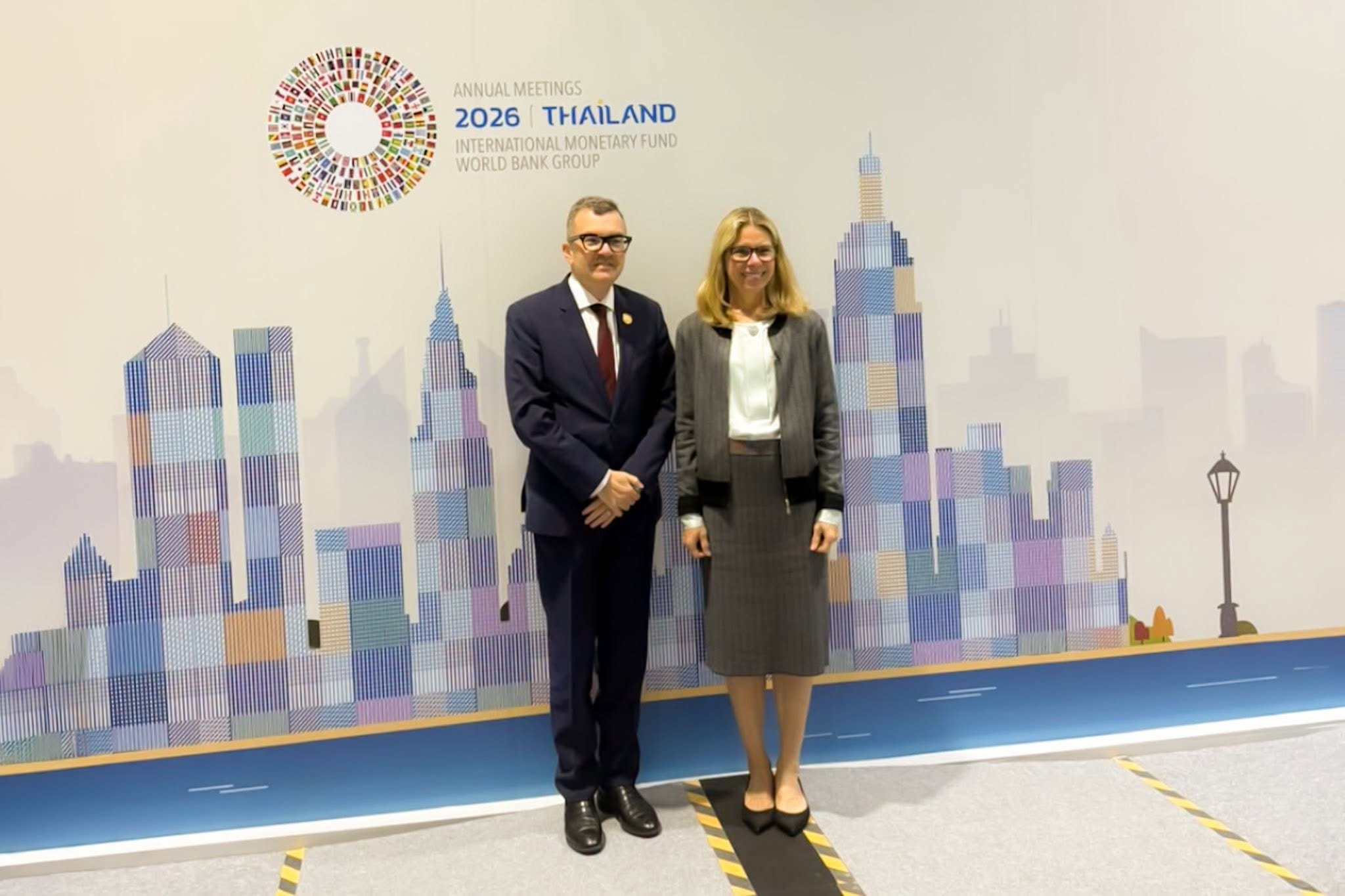
Egyptian officials are proposing the government absorbs initial losses on infrastructure projects to attract private investment, while workers face a worsening inflation outlook. Planning Minister Ahmed Rostom outlined the proposal in Bangkok, during talks with the International Finance Corporation (IFC), the World Bank Group’s private sector arm.
In the proposed arrangement, the state would participate as a minority investor in a mechanism covering sectors including water, energy, and transport.
At the same time, the latest World Economic Outlook report by the International Monetary Fund (IMF) forecasts average inflation of 14.8% in FY2026/27, against 13.3% in the preceding fiscal year and an April forecast of 11.1%, representing a 3.7% upward revision.
Wage earners whose pay fails to keep pace would lose purchasing power, even with the economy projected to grow 4.7%. Growth alone says little about whether new employment pays enough to meet rising household costs.
The pressure reflects both external shocks and domestic policy choices. The IMF’s September assessment links inflation to currency depreciation and energy price adjustments, while its Egypt program review records commitments to fuel cost recovery and automatic pricing.
Those arrangements transmit energy costs into transport, production, and household budgets.
Finance Minister Ahmed Kouchouk’s pitch to investors also promised continued “fiscal discipline,” making the distribution of public spending central to how wage earners bear the brunt of “adjustment.”
Final IMF review offers no exit from austerity
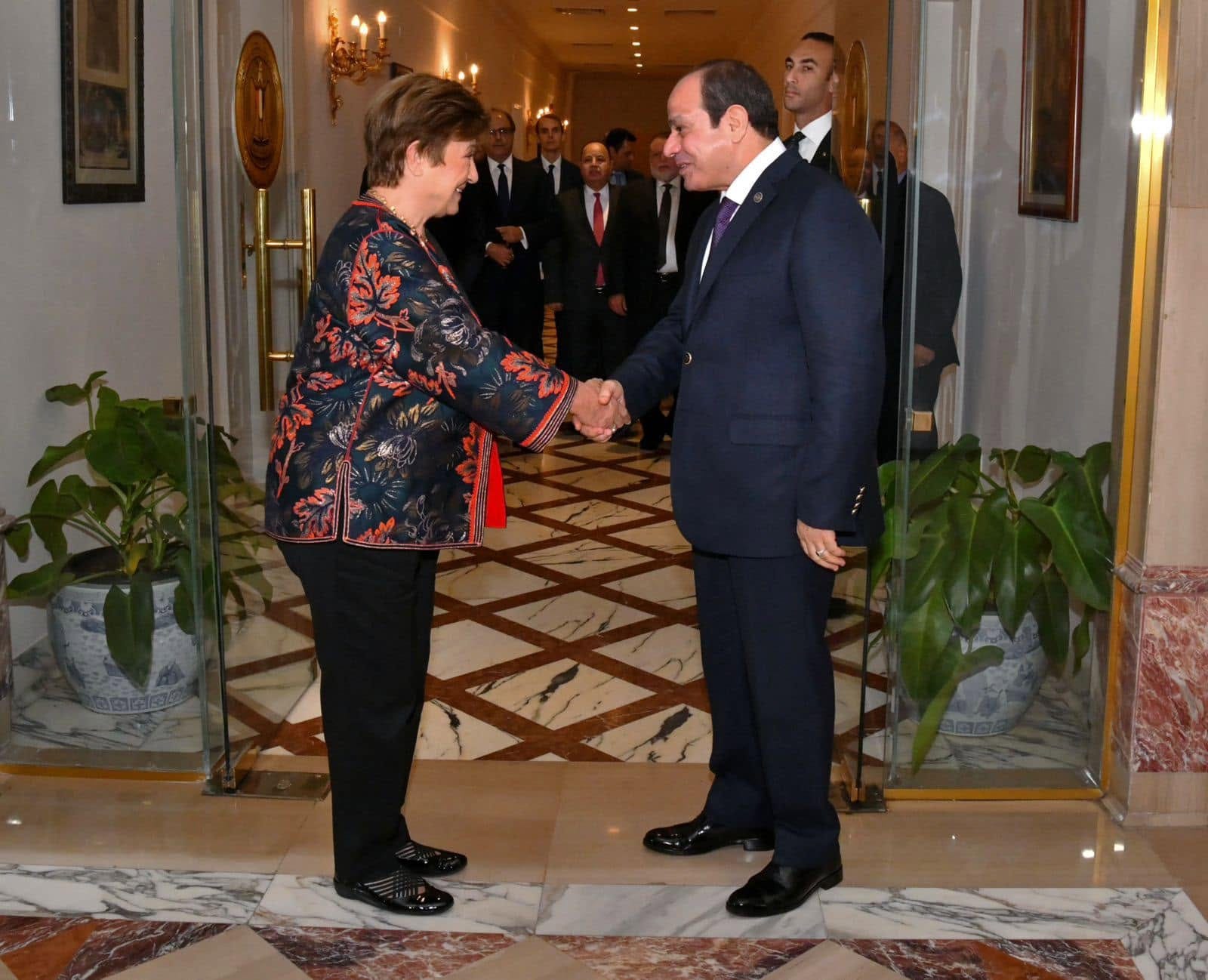
The IMF aims to complete the final review of Egypt’s 8 billion dollar loan program by December of this year, with further borrowing potentially up for discussion afterward. Talks will begin after this month’s annual meetings, regional director Jihad Azour told Bloomberg, noting that the fund and the government “can discuss with the authorities what are their plans, what are their priorities, and if they want another program or not.”
Egypt has not announced a request for another program. The existing framework, however, already assumes years of fiscal restraint beyond the review, keeping wages, subsidies and services subject to debt reduction priorities.
The IMF’s seventh review projects primary surpluses of 5% of GDP annually from FY2026/27 through FY2030/31, which means government revenue would exceed spending before debt interest payments. Maintaining it limits room for additional wages and services unless the government raises revenue or reduces other expenditure.
These projections reveal the adjustment envisaged after the program ends: the final review closes a lending arrangement whose fiscal model is intended to outlast it.
Azour reinforced that direction in his public regional briefing, urging governments to avoid broad subsidies and provide “targeted, temporary and budget neutral cash transfers.” Relief would therefore require offsetting revenue or spending measures, preserving the fiscal balance.
Egypt’s existing program calls for automatic fuel pricing and energy cost recovery. When energy prices rise, that approach is going to pass more of the cost to users, reaching wage earners through fares, freight, everyday consumption, and household purchases.
Further lending is, in its essence, meant to meet immediate obligations while renewing creditors’ influence over policy. Another lending program built around the same priorities would prolong that pressure. The government nominally retains choices over taxation and spending, but preserving the debt targets while making relief conditional organizes adjustment around creditors’ claims on public resources.
Moody’s upgrade rests on austerity beyond the IMF
Moody’s raised Egypt’s credit rating to B3 from Caa1 on October 16, maintaining a “positive outlook” while expecting “fiscal restraint” to continue after the IMF program ends in December. The agency forecasts government debt falling below 70% of GDP by 2030, from 81.8% in June 2026, supported by primary budget surpluses slightly below 5% over the medium term.
The figures behind the upgrade show the adjustment already underway. According to Moody’s assessment, spending excluding interest fell to 10.6% of GDP in FY2025/26 from 10.9% a year earlier. Non-interest expenditure is therefore taking a smaller share of national income, even where individual allocations rise in nominal terms. Meanwhile, the ratings agency estimates that interest absorbed about 59% of general government revenue. Lower financing costs could eventually ease that pressure, but the forecast depends on sustaining restraint while waiting for those savings.
The government is preparing to carry these constraints into domestic policy beyond the loan arrangement. Planning Minister Ahmed Rostom told Asharq Bloomberg in Bangkok that Cairo would retain its public investment ceiling and announce debt limits and a minimum primary surplus, adding that “exceeding the current investment cap would require amending the budget law.”
These plans would give creditors greater assurance that restraint will continue, while requests for better staffing, wages, and public services and facilities must compete within the spending limits. The government retains choices over whom it taxes and which projects it funds, and is seeking to make debt reduction the rule around which those choices are organized.
Egypt offers carbon offsets as UN deadline approaches
Egypt has opened bidding for publicly owned UN carbon credits, offering companies and banks a way to offset their emissions without requiring changes to their own operations. Offers run from October 11 to 31, or until the available credits are exhausted.
Buyers pay the Egyptian Environmental Affairs Agency (EEAA) to cancel credits in their name through the UN’s Clean Development Mechanism (CDM) registry. Each credit represents one tonne of carbon-dioxide-equivalent reductions credited to the original project.
The timing reflects an approaching deadline for converting those existing assets into revenue. An EEAA committee meeting in early October discussed accelerating procedures before the CDM winds down. Under UN registry rules, cancellations and other transactions must end by December 31, and eligible credits can instead be transferred to the successor Paris Agreement mechanism before that deadline.
The sale follows Egypt’s broader effort to make emissions reductions a source of investment income: Decree 4664/2022 classified credits as tradable financial instruments, and a separate Egyptian Exchange market began trading in August 2024.
Commercial pressure helps explain the appeal to buyers. A government official reportedly told Enterprise that exporters facing overseas customers’ environmental requirements could purchase credits more cheaply than investing in solar generation. That incentive favors the least costly acceptable environmental claim, which is a totally different issue than investment in cleaner production. The difference also matters for export competitiveness: EU guidance bases its carbon border charge on emissions embedded in covered goods. Cancelling these voluntary credits does not discharge that obligation.
The immediate transaction places revenue with the agency and offset documentation with corporate buyers. The published offer contains no commitment to direct proceeds toward workplace improvements, and does not disclose the quantity or expected revenue. The United Nations Development Program (UNDP) had previously warned that companies can use offsets to avoid structural changes to their own emissions.
Labor office refers hundreds of Misr El-Amria workers to individual lawsuits after failed settlement
Update: Egypt’s labor authorities acknowledged the failure of efforts to reach an amicable settlement between management and workers at Misr El-Amria Spinning and Weaving Company, directing individual workers to file separate complaints in preparation for referral to labor courts, according to the Egyptian Commission for Rights and Freedoms (ECRF).
The development comes more than two months after the company barred workers from entering its premises following a strike over an agreement on periodic wage increases, while workers have continued to receive reduced wages, the rights group said.
In an official response dated October 7, the Amria Labor Relations Office, part of the Alexandria Labor Directorate, said an amicable settlement could not be reached in the collective complaint filed by workers on August 9, the day after the company closed its doors to them. The response, reviewed by the commission, followed a request workers added to their complaint on September 29.
The office said it had notified the Amria Labor Inspection Office to take the necessary legal measures but did not specify what those measures would entail or provide a timeline. The response also contained no directive requiring the company to reopen or pay workers their full wages for the period they were prevented from working, the commission said.
The commission criticized the handling of the dispute, arguing that referring workers to separate lawsuits risks fragmenting a collective labor dispute and placing the financial and procedural burden of prolonged litigation on employees who have already suffered wage reductions.
“The dispute is collective in nature,” the ECRF said, pointing to the wage agreement at the center of the conflict, the closure affecting hundreds of workers across the company and the wage deductions imposed on them.
Workers are demanding implementation of an agreement providing for a periodic increase of 12% of their insured wage, comprising a 7% increase in basic pay and a 5% supplementary allowance, effective July 1. They are also seeking retroactive payment of outstanding differences, reinstatement without conditions, full wages for the closure period, repayment of deductions and assurances that no worker will face retaliation for participating in the strike or filing a complaint.
Management has refused to resume negotiations and went as far as closing the workplace and reducing wages.
The rights group warned that requiring hundreds of workers to pursue separate cases could weaken their collective bargaining position and prolong the dispute, giving management additional time while employees face the costs of litigation and reduced income.
Zeinhom residents resist forced evictions, expropriation
Update: The Zeinhom Housing Complex and Ezbet-Haridy residents have launched a campaign opposing the demolition of their homes, calling for redevelopment that allows them to remain in their homes and opposes the forced displacement of families from the areas where they have lived for decades.

On October 10, state-aligned Homat Al Watan (Protectors of the Nation) MP Mohamed Ahmed Shiha stated that he had contacted and met with Cairo governor, Ibrahim Saber, and other officials to discuss concerns over the measures affecting properties in the neighborhoods. He said he had been informed that no final decision had been taken and that the matter remained under study and review.
Shiha urged residents to continue their daily lives as normal and said further details would be “announced transparently” when available. His statement did not specify what options authorities were considering or provide a timetable for a decision.
The residents’ campaign—#NoToDemolitionYesToDevelopment—argues that redevelopment should improve living conditions without uprooting families. Organizers say many of the homes were built by the state and that residents paid installments over decades before acquiring ownership.
They have questioned why residents of Zeinhom and Ezbet-Haridy might face a different outcome from communities in other Cairo redevelopment projects, citing Tal al-Aqarib, the Tibbi area, and Rawdat al-Sayeda, where authorities have pursued redevelopment and rehousing initiatives.
Warraq islanders reorganize against expropriation
Update: Warraq Islanders have called for a public meeting on Friday, October 23 to renew demands for housing guarantees and the right to remain on the island amid a continued siege and recurring attacks by the Ministry of Interior (MOI), the latest of which took place on Saturday, October 10, and injured several residents.
The “We Are Staying in Warraq Island” organizers said the meeting would take place at 4 p.m. at Al-Sikka Al-Kebira, a main street on the island. They said the gathering was being organized in response to residents’ requests for an update on their efforts to secure their future on the island.
The statement called for the government to issue an official, public decision allocating a plot of land within the island, in accordance with its overall development plan, for homes for island residents.
The organizers said they had delayed public meetings in recent weeks to give government officials more time to address residents’ demands. They said the delay was intended to allow officials to make progress before residents decide on further steps to pursue their claims.
The statement outlined four principles guiding the organizers’ efforts: that public work on behalf of residents should remain open to everyone; that all residents should be free to attend public meetings and express their views; that demands should be pursued through lawful and peaceful means; and that anyone committed to helping residents remain on the island should receive their support, provided their aims align with those objectives.
The organizers also called for unity among residents, saying the outcome would affect the entire community rather than a particular group. They urged residents to attend the meeting, describing participation as essential to strengthening their campaign.
“We are staying on Warraq Island as long as we remain committed,” the group stated.
Security sector update

So, what?!
This week’s dispatch is yet another example of how the state socializes private risk while privatizing the costs of economic adjustment.
When global lenders and corporate investors require guarantees, the state creates de-risking mechanisms, absorbs initial infrastructure losses, and carves out public assets for autonomous military vehicles like Future of Egypt—ensuring returns remain entirely insulated from the public budget. But when manufacturing demand dries up, domestic suppliers clash over tariffs, or inflation outpaces wage agreements, that same state offers no safety net. Instead, it disciplines the wage earners: companies dismiss temporary workers by the thousands, labor offices atomize collective strikes into exhausting individual lawsuits, and credit rating upgrades are celebrated on the backs of suppressed wages and slashed social spending.
The structural logic of the state is not an absence of intervention, but its active redirection, acting decisively as guarantor and underwriter for creditors and corporate capital, while functioning as an enforcer of austerity and fragmentation against the labor and communities that sustain it.