



This week’s issue of The Cairo Report covers steel workers protesting overdue wages amid rolling mill stoppages, Port Said University Hospital staff working for three months without pay, and Agriculture Ministry employees pursuing salaries withheld for more than five years despite final court rulings. Maspero retirees still await end-of-service benefits, while education workers seek salary adjustments dating back a decade.
We also look at hiring amid shrinking private sector activity, a factory rescue fund without binding worker protections, and a proposed overhaul of public companies’ legal framework. Fitch keeps Egypt’s credit rating stable while anticipating another fuel price increase—a different outlook for households already struggling to make their earnings last.
Meanwhile, Matsada2sh journalists report torture and coerced confessions as their colleagues continue daily sit-ins. Zeinhom residents organize against threatened evictions, Warraq islanders press for binding housing guarantees, and prisoners and their families demand an end to prolonged detention and reported reprisals against protesters.
More hiring & pressure on workers’ incomes, weaker demand
Egypt’s non-oil private sector hired more workers in September while producing less, as rising operating costs coincided with weaker demand. The S&P Global purchasing managers’ index fell to 47.2 from 49.6, below the 50-point threshold indicating improving monthly conditions.
Recruitment partly addressed unfinished work accumulating for five successive months, while wage-cost inflation slowed to an eight-month low. This combination is mainly a result of firms needing additional capacity to complete existing work even as incoming orders weakened, limiting the basis for sustained employment expansion.
The immediate pressures reach production and household budgets through connected channels. In its September assessment, the central bank identified renewed regional tensions pushing up energy and agricultural commodity prices. It also recorded increases in electricity tariffs and housing rents, with annual urban inflation at 14.5% in August, as it retained overnight deposit and lending rates of 19% and 20%, maintaining restrictive financing conditions. Higher energy costs increase firms’ expenses and eventually pass through to the consumer, while higher living costs restrict what wages can buy.
Expensive financing makes it harder to bridge weaker sales and rising production costs. Slower wage growth certainly eases an employer’s cost pressures, but it definitely weakens the household demand on which other employers depend.
The government has chosen a side to back, and its intervention is addressing firms’ financial distress. On October 1, the central bank and the Ministry of Industry launched a one billion Egyptian pounds fund offering equity investment and loan restructuring for distressed factories. The announcement specifies no binding commitments covering wage arrears, insurance contributions, or protection against layoffs.
Restoring production can preserve livelihoods, but its distributional outcome depends on the terms imposed on owners and management, as support that restores productive assets while leaving workers’ incomes insecure only reproduces the same demand constraint: wages finance the household spending that allows firms to sell their output.
Steel workers protest over overdue pay amid rolling mill stoppages
Update: Dozens of steel rolling-mill workers staged a protest outside their industry union on October 7, demanding overdue wages and the resumption of production. The union estimates that 22 affected mills support roughly 30,000 direct and indirect jobs.
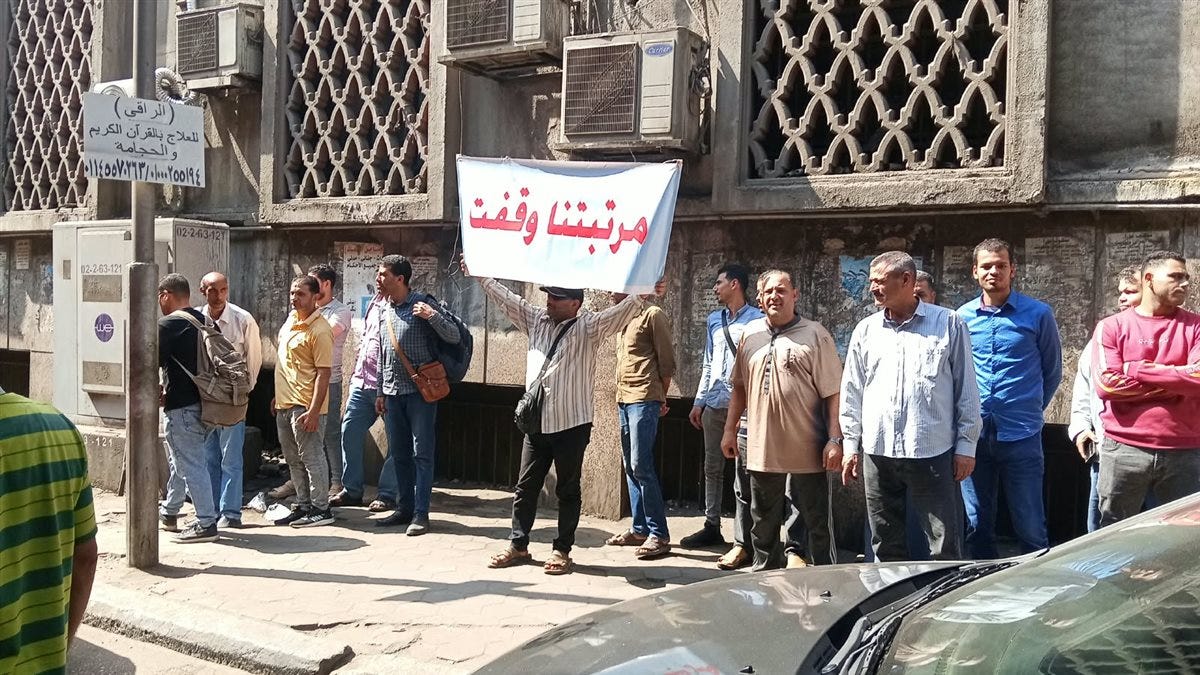
The protest brings workers’ pay demands into the billet tariff dispute that The Cairo Report covered last month.
The stoppages now have more specific company accounts. Garhy Steel vice chairman Ashraf El Garhy said this month that two company plants had stopped completely, while a third operated at 15% capacity, which he attributed to billet shortages and production costs exceeding selling prices.
Currency and energy pressures compound the squeeze, while weak demand limits mills’ ability to pass costs to buyers. Speaking to Al-Ahram, unnamed industry sources disputed the stoppages and shortages, without supplying plant-level operating or payroll records.
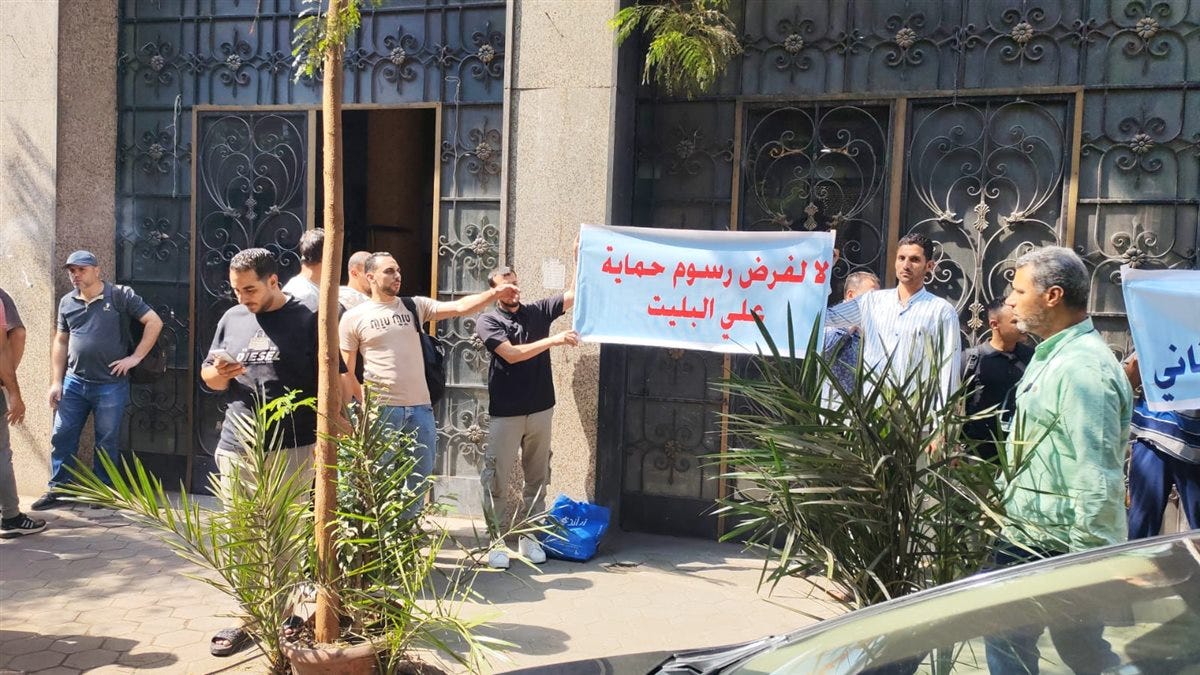
The conflict reflects different positions within steel production. Integrated producers make billet—the semi-finished steel rolled into rebar—while rolling mills must purchase it, sometimes from competitors in the finished steel market.
Egypt’s current safeguard duty is 12%, with a minimum of 64 dollars per imported ton. Protection for billet producers therefore raises costs for mills dependent on purchased inputs.
This contradiction has surfaced before when the government removed earlier safeguards in November 2021, citing “expensive inputs and insufficient domestic alternatives.”
Prior to the protests, the union’s September letters sought reconsideration of the duties and a committee including worker representatives.
Stable credit, rising household costs
Fitch Ratings expects Egypt to raise fuel prices again during October–December 2026, putting workers’ transport costs and household budgets under renewed pressure. In its latest assessment, the agency affirmed Egypt’s B rating with a stable outlook, while forecasting average inflation of 12.3% in 2026/27, against 11.6% in 2025/26, citing higher energy and food costs.
Fuel costs feed into passenger transport, freight and production; wage earners would lose purchasing power wherever earnings fail to keep pace with the resulting price increases.
The fiscal pressure is more concrete than the unchanged rating suggests. Egypt’s interest payments on debt are 63% of general government revenue in 2025/26, forecast to decline to 52% by 2027/28. Even then, the ratio would remain far above the 14% median for comparable B-rated countries.
Fitch also expects the overall deficit to widen despite higher tax collection and “restrained” capital expenditure, as interest costs increase. Wages, subsidies and public services consequently compete for resources within a budget carrying exceptionally large claims from creditors.
External financing creates another route through which shocks reach workers. Fitch says foreign investors withdrew more than 6 billion US dollars from government debt during the fallout from the US–Israeli war on Iran, while the pound depreciated by over 14%. The funds subsequently returned, and most depreciation reversed.
Fitch regards maintaining currency convertibility as strengthening policy credibility. For incomes paid in pounds, however, exchange rate volatility exposes purchasing power to movements in imported food, fuel and production costs. Egypt’s dependence on—mostly Israeli—imported gas compounds that exposure.
The agency concluded by saying it expects the current policy mix to continue after the International Monetary Fund (IMF) programs end in November, even without a successor lending program. Meanwhile, it forecasts growth slowing from 5.1% to 4.7%, with inflation restraining household consumption and investment weakening. The expected program expiry therefore offers no automatic relief from fiscal restraint, and the distributional question remains who absorbs adjustment through higher living costs, constrained public spending, or reduced creditor claims on revenue.
Forced labor or detention
Egypt’s Supreme State Security Prosecution renewed taxi driver Romany Gharib’s pretrial detention for 15 days last week, according to the Egyptian Commission for Rights and Freedoms (ECRF). Gharib, a Christian, faces accusations of “joining a terrorist group” and “spreading false news,” which are ready-made charges usually assigned to Muslims.
His arrest came after he had posted a video on social media complaining that a police officer obstructed his work after he refused to transport someone into Cairo International Airport.
Gharib said he had arrived from Suez to collect a passenger when the officer demanded that he take another person inside. After he declined, the officer confiscated his ID, driver’s license, and route permit, and blocked his entry, according to his account. Gharib stressed that his papers were valid and that he “paid taxes and insurance.”
The additional requirement, apparently, was making his labor available on a policeman’s instructions—a request whose refusal has rather little of the voluntary about it.
Also, while unrelated, his criticism of rising operating costs also entered the investigation. In August, his defense said prosecutors examined a photograph showing him riding a donkey after gasoline prices rose, alongside a joke suggesting this would become the future means of transport. According to the defense, investigators treated the post as involving terrorist ideas.
For a driver, fuel prices determine the cost of working; the investigation made his satirical response to that cost a matter for State Security.
The labor issue runs through the entire case: who decides which service a driver must perform, whether he can refuse, and what happens when he does refuse, or when he complains.
Maspero retirees wait as the state restructures debts
More than 8,000 Maspero workers and retirees remain affected by unpaid end-of-service benefits dating to August 2020, the Center for Trade Union and Workers Services (CTUWS) said. The organization reported unanswered complaints and outstanding payments despite final court judgments recognizing some claimants’ entitlements. The National Media Authority, which runs Egypt’s state radio and television, has acknowledged that the payment process remains incomplete. Chairman Ahmed El-Muslimani said late last month that a repayment schedule would “follow the completion of procedures and transfer of the budget,” months after renewed promises of relief.
The financing problem predates the current backlog. In June 2020, the authority said its budget “lacked a provision for retirement gratuities,” while Treasury restrictions prevented payment from state appropriations. It relied on limited own-source revenue and was still arranging payments for people who had retired in July 2018. Former chairman Hussein Zein said in October 2022 that a benefit fund established in 2019 “required substantial actuarial funding.”
This arrangement left accrued retirement benefits dependent on resources the institution had failed to secure. Finance Minister Ahmed Kouchouk announced approximately 1 billion pounds in additional annual funding in June 2026, promising relief from July, which coincided with the start of the new fiscal year.
The state has meanwhile agreed to reorganize Maspero’s obligations to the National Investment Bank. In late August, a settlement waived 51.4 billion pounds in interest and penalties, leaving 88.3 billion pounds to settle through transfers of unused Maspero assets and other state land. The agreement also provides for releasing pledged shares in Nilesat and Media Production City after the asset transfers.
In theory, these measures could improve the broadcaster’s finances, but retirees’ payments still depend on liquidity and execution, and the institutional settlement has advanced further than the delivery of workers’ accrued benefits.
Workers have repeatedly challenged this arrangement. CTUWS documented protests in 2022 demanding retirement dues alongside allowances and promotions, followed by suspensions, dismissals, and arrests. Retirees interviewed by the Egyptian Observatory for Journalism and Media described unimplemented judgments and paying for unavailable medicines themselves.
Their experience connects the funding dispute to both household survival and workers’ ability to enforce their rights, and while the state negotiates debt relief and asset transfers, retirees absorb the immediate cost of delay through incomes that must cover living and care expenses without the benefits owed to them.
Education workers still await decade-old salary adjustments
Workers at Giza’s Omraneya Education Administration still await salary adjustments covering 2014–2016, according to an October 3 briefing request. Egyptian Social Democratic Party MP Ehab Mansour asked the finance and education ministers to explain the delay and provide a timetable for full payment, adding that the outstanding differences in basic salaries had remained caught between assertions of insufficient budget appropriations and years of administrative procedures.
However, the MP did not provide either the total owed or the number of affected workers.
The calculation of basic pay determines percentage-based teacher allowances. In a separate ruling reported in early August, a Beni Suef teacher won recalculation of her accreditation allowance against her basic salary when the allowance became due, rather than the previous financial year’s salary, and the court ordered payment of resulting differences through June 2016, subject to limitation rules and deductions for amounts already paid.
Omraneya has faced earlier complaints about delayed education payments. In April 2018, a Teachers’ Syndicate official said school tutoring group payments arrived two months late because of “accounting delays,” discouraging teachers from continuing that work.
More recently, The Cairo Report covered Mansour’s account of piece-rate teachers going unpaid from November through February because of paperwork and missing signatures. He said payment accelerated after he “threatened to oppose approval of the Education Ministry’s final accounts,” and while these were separate claims, each shows how administrative control over payment makes workers dependent on the rare intervention to collect their earnings.
The arrears claim follows the education minister’s September presentation of higher teacher salaries, which put the ministry’s reported average at 11,822.42 pounds in 2026, against 7,763.14 pounds in 2024, a nominal increase of 52.3% that, when adjusted for Egypt’s cumulative inflation over the same period, translates into an estimated 2–5% fall in real purchasing power.
State ownership, new rules for workers
Egypt’s Parliament referred a bill to replace Public Business Sector Law 203/1991 to a joint committee last week. Submitted by Justice Party MP Mohamed Fouad, the proposal would move covered public holding companies and subsidiaries into Companies Law 159/1981. According to the reported provisions, companies would retain state ownership, assets, contracts, and liabilities, while existing permanent and temporary workers would retain their employment, financial, and insurance positions.
The bill follows the government’s abolition of the Public Business Sector Ministry under Presidential Decree 75/2026. At a September meeting examining six holding companies’ affiliation, Prime Minister Mostafa Madbouly linked restructuring to asset returns, private investment, and commitments to international development partners. The IMF’s July review likewise called for faster divestment and stronger state-company governance. Fouad’s reported explanatory memorandum describes the proposed transition as moving from the state as manager to the state as shareholder.
Together, these developments place the bill within a broader effort to organize public companies around commercial returns.
However, that process began under Law 203 itself. A World Bank assessment in 2001 identifies the 1991 reorganization into holding companies as the foundation of Egypt’s privatization program, and the 2020 amendments subsequently reduced workers’ representation on subsidiary boards from half the seats to one or two elected representatives, while removing the ceiling on cash profit shares, and providing workers with 10–12% of distributable annual profits in cash.
By comparison, Law 159 provides at least 10% of profits selected for distribution, capped at total annual worker wages. Whether the bill preserves better arrangements for future distributions is therefore a concrete question about workers’ share of the wealth they produce.
Accrued leave presents another unresolved issue. The proposal explicitly protects unused annual leave from the three years preceding the law’s commencement, allowing workers to take it or receive payment when employment ends. The published account does not resolve older balances. Separately, Labor Law 14/2025 requires employers to settle leave balances or equivalent pay at least every three years; that duty differs from protecting a defined period during transition.
University hospital withholds three months’ worth of employee wages
The Port Said University Hospital has withheld the wages of over 70 recently appointed staff members for three months, with neither the hospital nor the university offering any justification despite the employees having been hired through an official recruitment process for administrative and nursing roles, the ECRF stated on October 7.
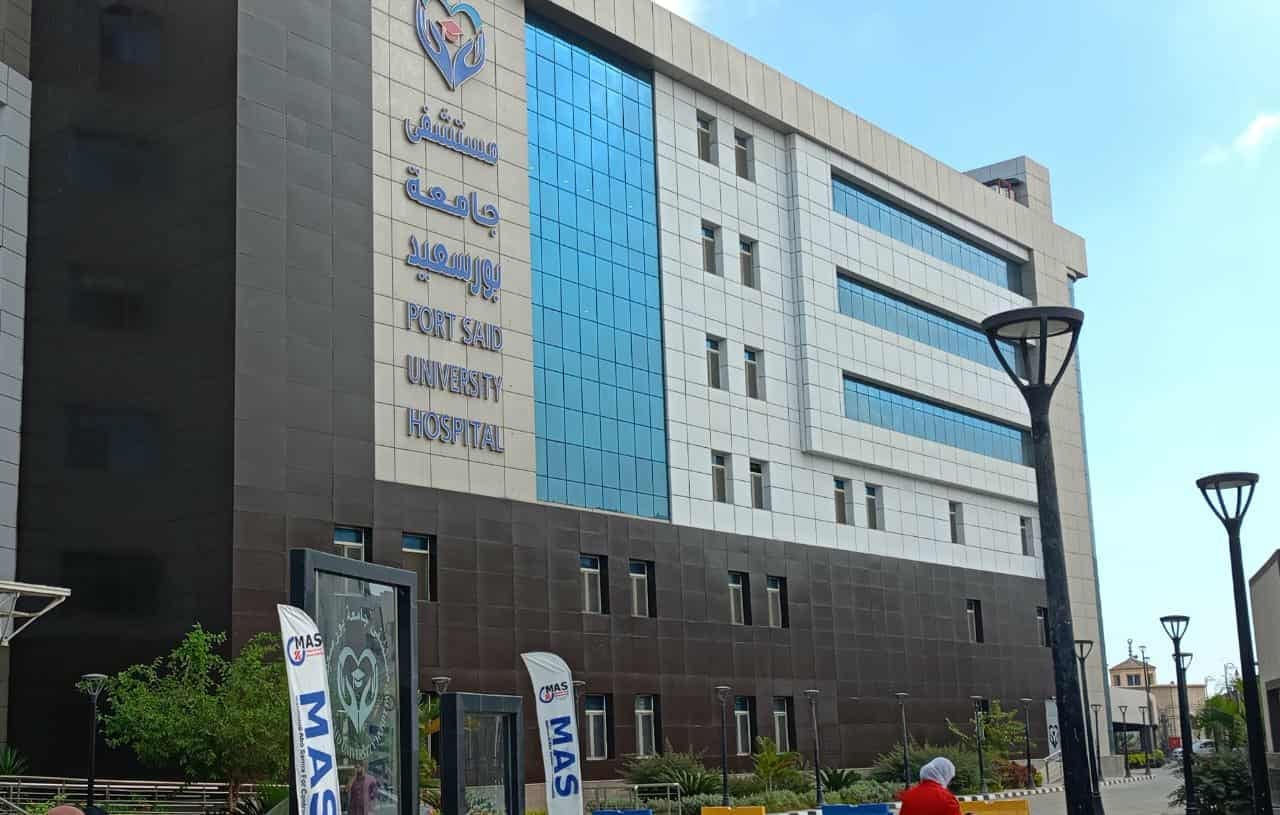
“This constitutes a compounded violation of the right to fair and regular wages, the right to decent work, and the right to economic security for the worker and their family; it effectively transforms the employment relationship with a government entity into unpaid labor, in violation of the Constitution and the law,” the commission wrote.
While some workers were forced to quit due to the withheld wages, around 70 others continue to work without receiving “a single pound”. The ECRF documented testimonies via its hotline, which revealed that most of these employees are experienced workers, many of whom had left stable jobs in the hopes that employment at a public university hospital would provide regular pay and better job security.
This is but the latest episode in a series of violations exposing how the state, as Egypt’s largest employer, treats wages not as a right, but as a burden it can set aside or defer indefinitely. The state, which is responsible for enforcing the law and protecting workers on paper, is regularly violating its own laws twice, as employer and trustee, on paper.
This violation, as the ECRF pointed out, also impacts Port Said residents and their right to healthcare amid mounting financial pressures within a sector already suffering from a severe shortage of nursing staff and a continuous exodus of personnel to the private sector and abroad.
“Forcing skilled professionals to leave their jobs just months after their appointment not only violates their rights but also squanders the public funds spent on the recruitment process and deprives patients of services the facility urgently requires—the very needs that prompted the recruitment drive in the first place,” the ECRF concludes.
Agriculture workers: Zero-wage mandate
Update: The ECRF’s legal team filed a complaint on October 7 with the Administrative Prosecution Authority—registered under No. 17526 of 2026 and currently under review—on behalf of several Agriculture Ministry employees whose salaries have remained withheld by the ministry for over five years despite the workers holding final court rulings mandating their official appointment.
This is an escalation from last June, when hundreds of workers from the Central Administration for Seed Certification, a governmental authority operating under the Ministry of Agriculture, staged a protest outside the ministry in Giza over the fact that they have been reporting for duty, running the state’s agricultural certification apparatus, without receiving their salary, as covered by The Cairo Report.
The security apparatus responded by arresting seven of the employees before releasing them.
“The complaint calls for an investigation into the failure of officials at the relevant administrative bodies to execute enforceable court rulings and seeks to establish liability for the obstruction of the payment of workers’ financial dues over the past years,” the ECRF stated.
Warraq islanders reorganize against expropriation
Update: The “We Are Staying in Warraq Island” group announced on October 4 that Egyptian officials have agreed in principle to residents’ demand for replacement homes on the island, with a formal decision expected soon.
Island representatives met with government officials on October 3 at 5:30 p.m. Participants said the island’s future concerns all residents and that discussions focused on housing and urgent day-to-day needs.
Residents called on the government, through the Ministry of Housing, to issue an official decree allocating land on the island for replacement housing, with full utilities and development suited to the island’s character.
Participants also called for all legal cases related to events on Warraq Island to be resolved. Officials said they would work toward addressing the cases, according to the statement.
Officials further said apartments in residential buildings constructed on the island had been allocated exclusively to residents who wished to receive them. The apartments are expected to become available after construction companies hand them over, with a deadline of October 15, 2026, the statement said.
Officials also outlined several planned or ongoing public services. These included preparations to open a post office following an inspection, plans to install an automated teller machine to facilitate access to salaries and pensions, and the provision of a Health Ministry doctor at a local clinic established through residents’ own efforts in the area known as Al-Zawiya.
Weekly medical convoys are to continue, with the fourth having arrived on October 9, while construction debris is to be removed. Officials also said two sewage-pumping vehicles had already been allocated to provide free services and were suitable for the island’s narrow internal streets.
On security, officials pledged firm action to maintain order and said intimidation of residents would not be tolerated.
However, days earlier, a video was circulated showing policemen harassing residents, while another showed men damaging a resident’s car while his kids were inside it.
The Warraq islanders continue to prove that the only way to preserve their rights is to organize.
Press crackdown escalates
Update: On October 5, the Egyptian Initiative for Personal Rights (EIPR) stated that most of the Matsada2sh journalists stated during questioning at the Supreme State Security Prosecution headquarters in New Cairo that they were subjected to torture, including being blindfolded, bound, stripped, beaten, and electrocuted. They were threatened with harm to their families. Additionally, they were forced to film false confessions, according to the EIPR.
Some of them requested a referral for forensic examination to document their injuries, one of which was ordered by prosecutors on that day.
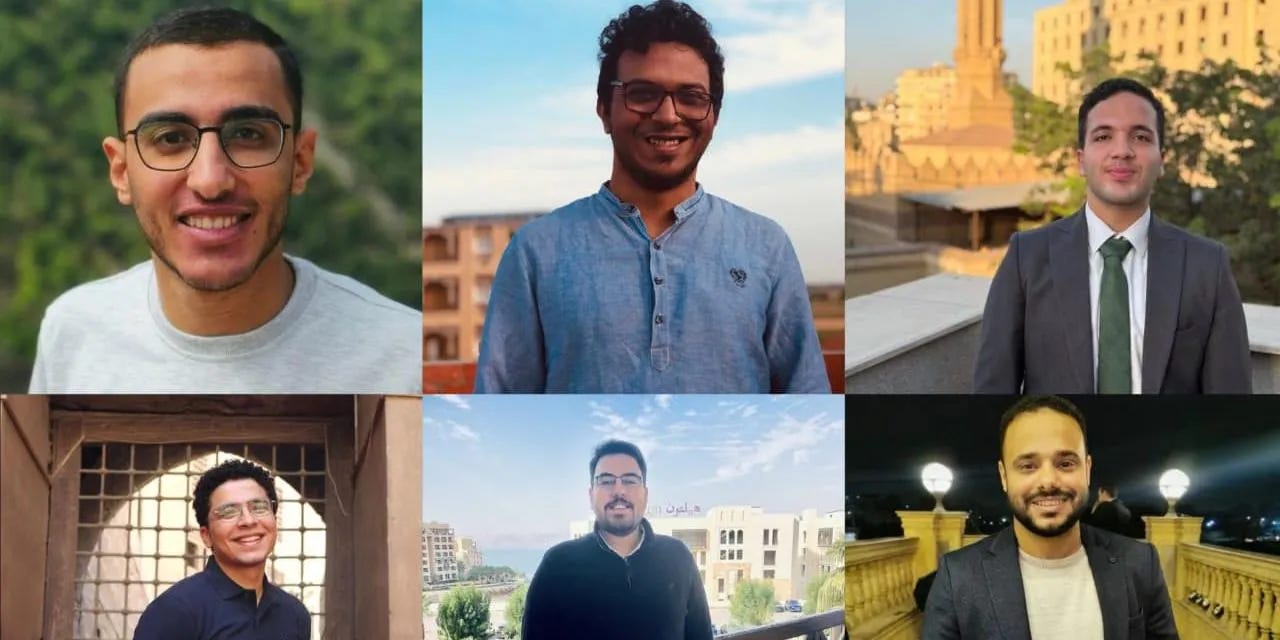
In the meantime, questioning continued, intersecting with Rasha Azab’s summons by the same prosecution, which, after an eight-hour investigation, released her on bail of 10,000 pounds.
On October 7, the Public Prosecution issued a statement regarding the case, which immediately drew widespread condemnation among independent journalists and citizens.
The EIPR responded immediately, saying the prosecution failed to acknowledge that the journalists had not appeared before prosecutors until five days after their arrest and enforced disappearance, during which they were denied contact with their families and lawyers. This was despite 18 complaints filed by their families and lawyers over the five days.
The rights group also criticized the prosecution’s decision to place the journalists in custody under an exceptional provision of the 2015 Anti-Terrorism Law, which permits such a measure only when necessary to address an imminent terrorist threat. It argued that the accusations against the journalists, based on National Security investigations, concerned the publication of alleged rumors or false reports and did not establish what imminent terrorist threat justified denying them access to a judicial authority within 24 hours of their arrest.
The initiative further argued that the prosecution’s statement contained indications that the journalists were being targeted for their professional work, including reporting on shortcomings in state institutions, criticizing officials’ performance, highlighting domestic problems, and exposing failures across various sectors. Despite repeated allegations that the platform had published false news, EIPR noted that the statement did not identify a single article or report that could be considered fabricated or based on inaccurate information. It added that during approximately 30 hours of questioning over three days, the journalists had not been confronted with a single report alleged to be false or fabricated.
Regarding allegations of torture, ill-treatment, threats, and physical and psychological coercion raised by some of the journalists during questioning, EIPR said the prosecution’s statement merely noted that no visible injuries had been found.
The initiative stressed that the journalists and their lawyers had not claimed otherwise.
It also criticized the statement for mentioning that three journalists had been referred to the Forensic Medicine Authority without acknowledging that prosecutors had refused to hear the journalists as victims or investigate their complaints against the officers who allegedly detained them at National Security facilities in several governorates. The statement also made no mention of summoning or questioning the officers accused of the violations or other potential witnesses.
The initiative added that the prosecution’s statement omitted the journalists’ accounts of being unlawfully coerced into recording fabricated confessions intended to be used as evidence against them.
The EIPR concluded that the Public Prosecution’s social media statements had no evidentiary value in legal proceedings and merely reflected the prosecution’s position and the National Security investigations, none of which had been tested before a court.
According to media reports, five of the six journalists—who are non-syndicate members due to their status as digital journalists—were sent to pretrial detention in the Badr Prison Complex. All six are currently imprisoned.
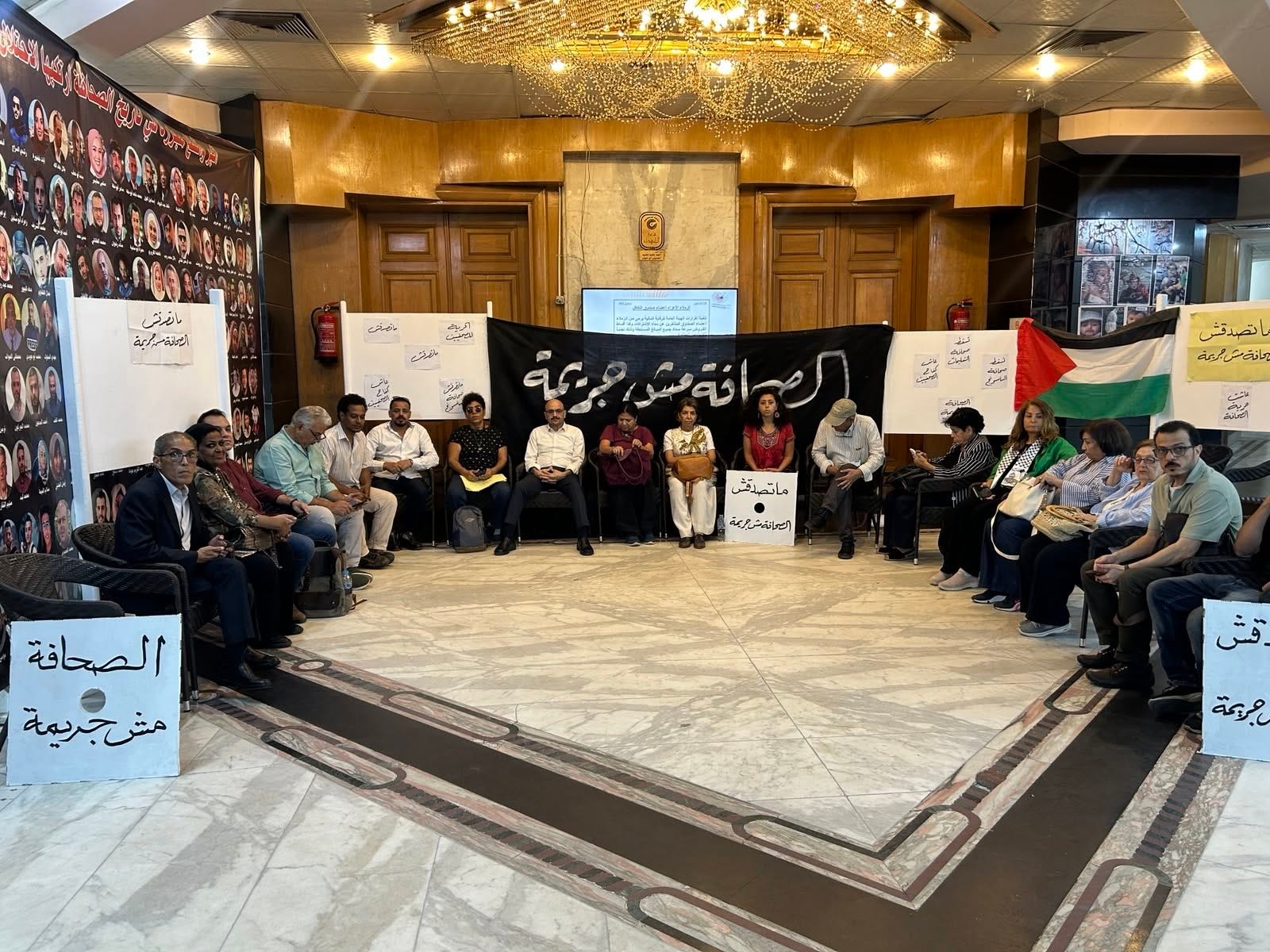
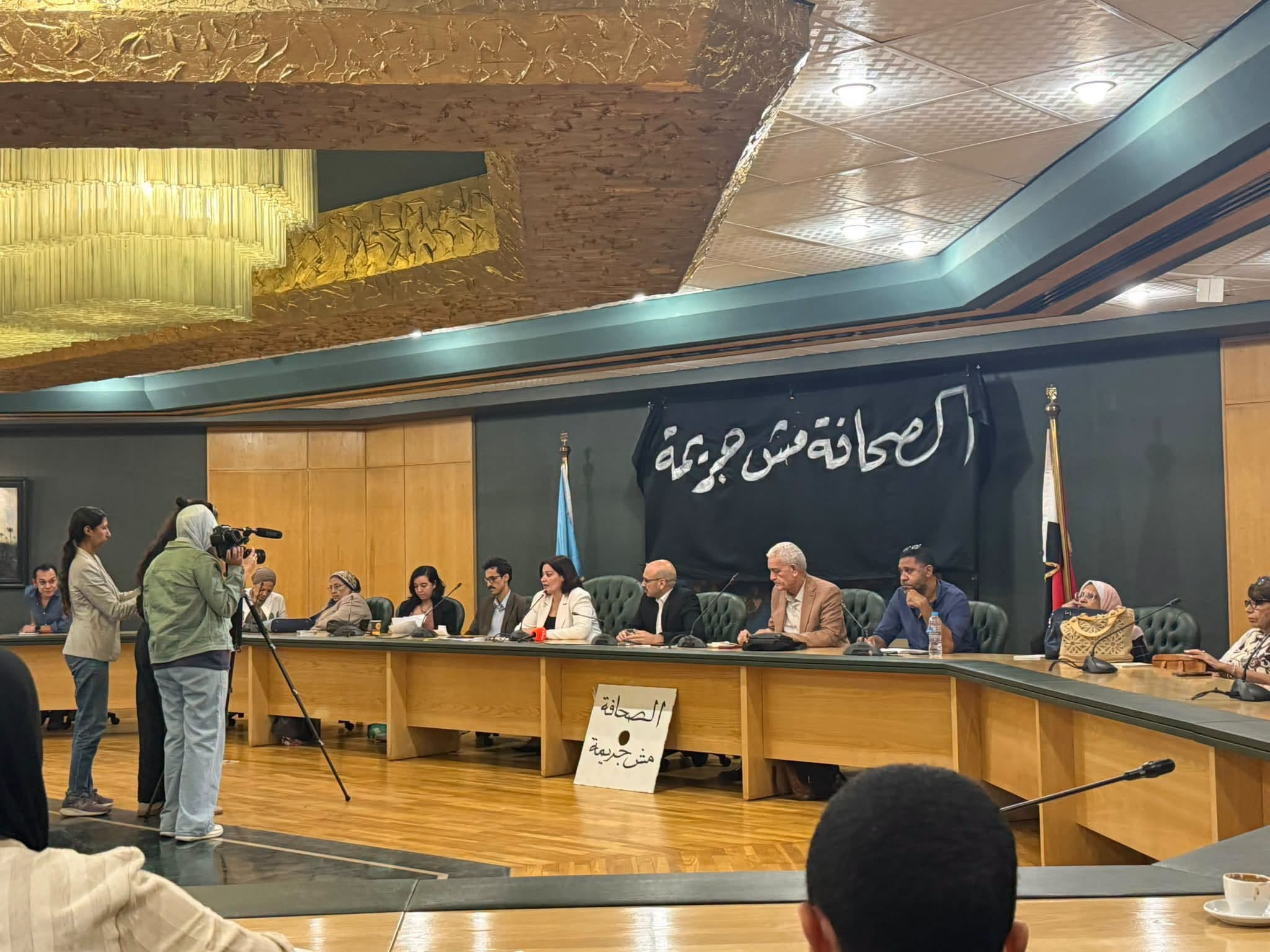
Since October 5, journalists have continued to stage daily sit-ins at the syndicate demanding their release, most notably raising the slogan “journalism is not a crime”.
On the same day, syndicate head Khaled Elbalshy stated that the Journalists Council unanimously decided to file a formal complaint with the Public Prosecutor regarding the reported torture and coercion.
“The Council decided to form a standing committee, chaired by the Syndicate Head, to monitor the case and utilize legal expertise to support the colleagues,” he wrote. “It called for their release under the Syndicate’s guarantee, or any other guarantee that takes into account their youth and limited experience.”
The statement emphasized the syndicate’s legal obligation to defend all colleagues. It cited Article 5, Paragraph (a) of the Syndicate Law, which requires journalists to practice the profession as a prerequisite for Syndicate registration, implying that professional practice precedes registration. Therefore, the syndicate is obligated to defend all actual practitioners of the profession, whether syndicate members or not.
It demanded the immediate release of the six detained journalists.
On October 10, the Journalists Syndicate’s Freedoms Committee hosted a talk about imprisonment in publishing cases, attended by the families of detained journalists, including caricaturist Ashraf Omar, lawyers, journalists, editors, and others who showed up in solidarity.
Zeinhom residents resist forced evictions, expropriation
In late September, residents of the Zeinhom Housing Complex in the Sayyida Zeinab district and Ezbet-Haridy received official notices to vacate their homes in preparation for demolition “for the sake of public interest,” according to residents’ posts on Facebook. This has left hundreds of families in a state of shock and apprehension, suddenly facing an uncertain future.
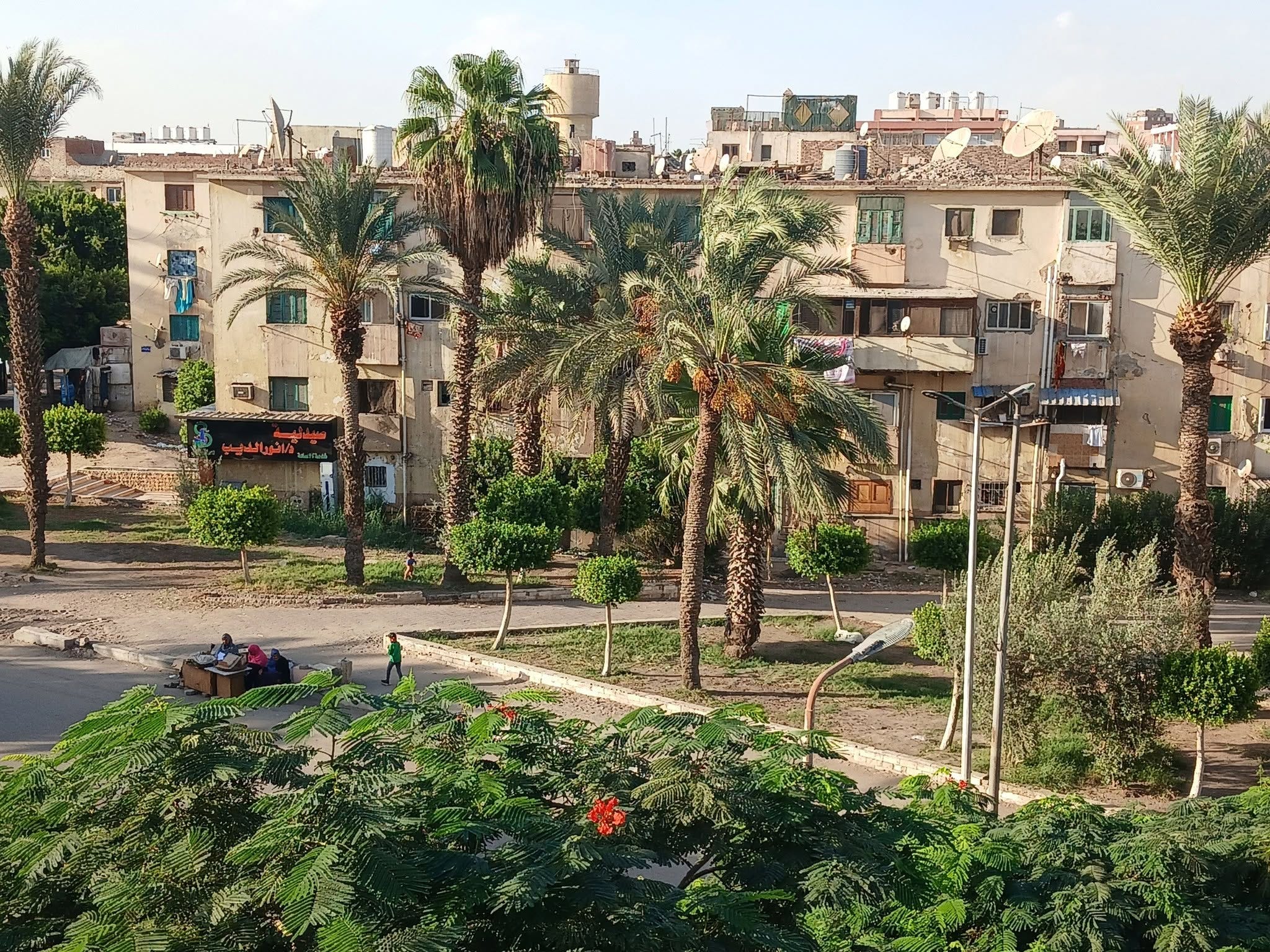
The Zeinhom complex is a formal, state-sanctioned public housing project built by the government in 1955. The area features an organized urban layout with expansive green spaces and comprehensive infrastructure, including health and educational facilities. Additionally, the buildings do not obstruct major traffic routes, nor do they conflict with any previously announced government development plans.
Authorities have yet to offer clarification regarding the nature of the “development”. There have been no announcements on the project intended to replace these homes, the type or scale of proposed compensation, or any guarantees that residents will be able to return to the area once the project is complete.
The Zeinhom land expropriation is part of a larger pattern: the Old Manial district, Warraq Island, Tora El-Balad, Toson, Kilo 26, and Maspero, to name a few.
But Zeinhom in particular is part of an ongoing series of clearance campaigns affecting various neighborhoods in the same geographic zone, spanning Sayyida Aisha, Sayyida Nafisa, and Old Cairo, all the way to Sayyida Zeinab.
These operations are part of development plans that lack transparency; to date, they have resulted in the erasure of entire neighborhoods, along with their architectural heritage, and the dismantling of their social fabric.
Bulldozers have even encroached upon historic burial grounds, especially in the Imam al-Shafie area, all without the public being presented with clear feasibility studies or convincing justifications regarding the necessity of such radical interventions or their impact on the city’s memory and urban fabric.
But Zeinhom residents, like all their predecessors, have not taken this lying down.
Already, they have sent letters to the National Council for Human Rights (NCHR) and are leading an online campaign addressed to the President.
“Given that evacuating the area and displacing families and children—without providing ready-made alternative housing or fair financial compensation commensurate with current market rates for purchasing a replacement home—constitutes a clear violation of Article 78 of the Egyptian Constitution, which guarantees citizens the right to adequate, safe, and sustainable housing and obliges the state to formulate a national housing plan that respects environmental specificities and ensures the provision of basic utilities,” the residents wrote in the template letter they are collectively filling out and filing with the NCHR.
They demand a halt to demolition and forced eviction operations pending a review of the legal and social status of all affected families; ensuring the provision of decent, fully equipped alternative housing capable of accommodating all family members in a nearby area, or providing fair and immediate financial compensation prior to commencing any demolition work; and the formation of a NCHR committee to visit the area and inspect the situation on the ground to assess the impact on the citizens.
Prison Watch: Prisoners and their families fight back
Update: A coalition of 10 Egyptian and regional human rights organizations—among them the EIPR, the ECRF, the Refugees Platform in Egypt (RPE), the Egyptian Front for Human Rights (EFHR), and the El Nadim Center for Management & Rehabilitation of Victims of Violence—has expressed concern over reports of protests in several Egyptian prisons and during court hearings, as detainees demand their release and an end to prolonged pretrial detention.
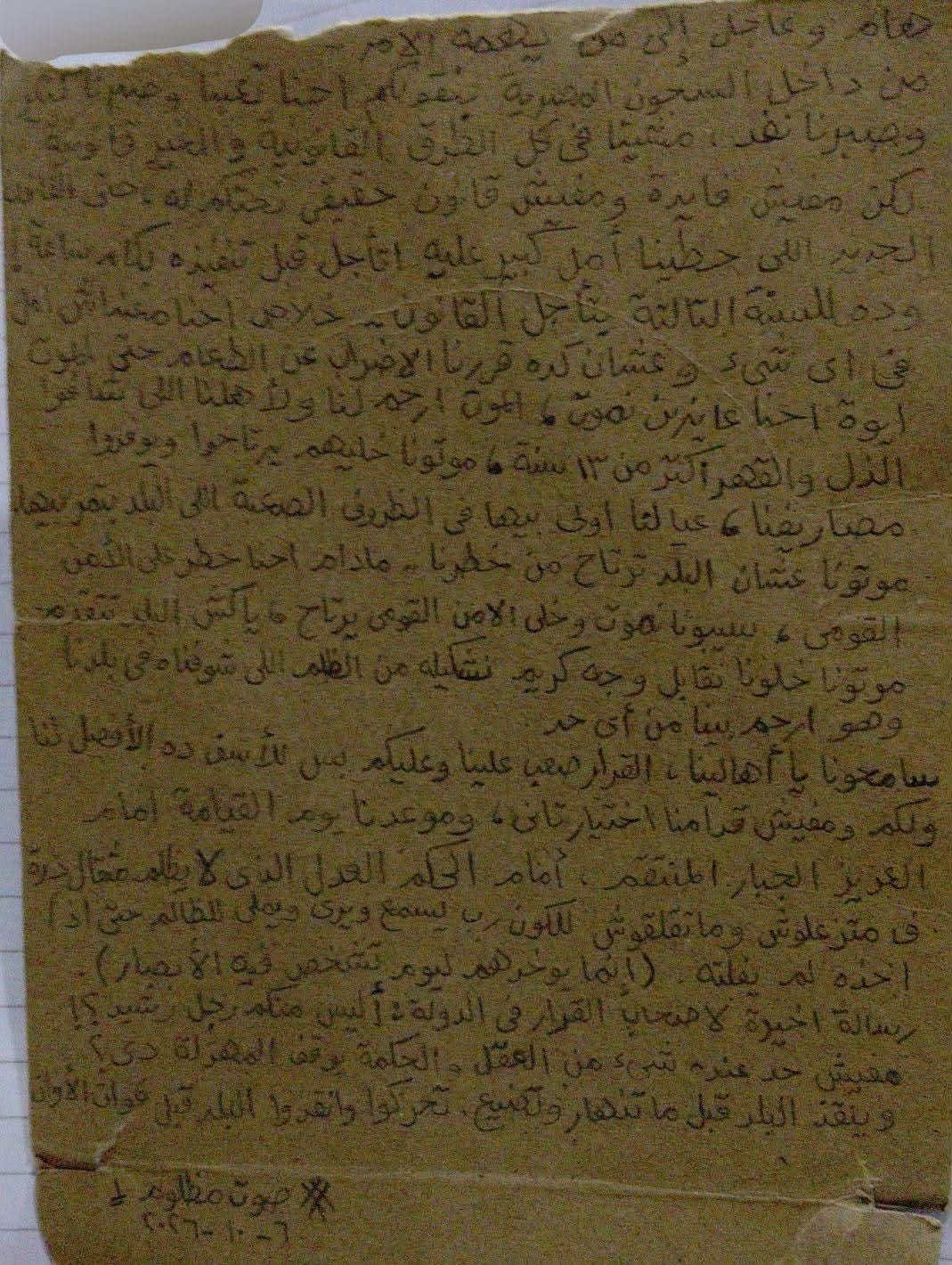
The groups said in a joint statement published on October 9 that protests or calls for demonstrations had been reported in prisons in Minya, 10th of Ramadan, Abu Zaabal, Badr, and New Valley in recent weeks. Detainees were protesting their continued detention without a resolution of their legal status, the statement said.
The organizations also reported protests during court proceedings, including an incident in which detainees refused to leave a holding cell at a courthouse and appear before a judge, demanding their release and the implementation of legal provisions intended to reduce pretrial detention periods.
Egypt’s new criminal procedure law, which included provisions to shorten the maximum periods of pretrial detention, had been scheduled to take effect October 1. As previously covered by The Cairo Report, parliament approved a one-year postponement shortly before the law was due to come into force.
The groups said one defendant was sentenced to a year in prison for disrupting a court session during one of the reported incidents. They called for an investigation into the circumstances and legal basis of the sentence and whether the defendant’s right to a defense had been protected.
The statement also cited messages attributed to detainees in several prisons warning of planned protests in October, including hunger strikes, refusals to accept prison meals, and boycotts of court hearings.
The organizations said they had received reports of protests at a detention facility and prison in 10th of Ramadan, where security forces allegedly entered detention areas to regain control. They also reported that detainees had been stripped of personal belongings and transferred to other cells or prisons far from their original places of detention.
The groups called for an independent investigation into the operations, including whether security forces used excessive force or subjected prisoners to assault or other punitive measures.
The organizations linked the protests to the prolonged crisis over the use of pretrial detention in Egypt, which they said had been exacerbated by the postponement of the new criminal procedure law.
They argued that the delay did not remove detainees’ existing legal rights to release after reaching the maximum detention periods permitted under current law.
The signatories urged Egyptian authorities to review the cases of detainees who have exceeded legal detention limits, enforce release orders, and investigate allegations of abuse or the use of force against prisoners involved in protests.
They also called for an end to retaliatory measures, arbitrary transfers, and restrictions on visits and communication, as well as guarantees of access to medical care. They urged the public prosecutor and the NCHR to carry out their oversight responsibilities and inspect detention facilities.
The organizations further called for an end to the use of pretrial detention in politically motivated cases and cases involving the exercise of freedom of expression and peaceful assembly.
In tandem, the “Enough Prisons” campaign, a coalition of female family members of detainees, has been calling on the state to “reassure” them about their loved ones in prison.
On October 8, the group stated that “reports of ongoing strikes and protests in various detention facilities—along with news of detainees being transferred to remote locations, intensified searches, the restriction or suspension of exercise time, and limits on visits and communication—cause our fear to grow with each passing day.”
The group demanded an end to punitive measures, a halt to taghrib, the return of those forcibly transferred, the restoration of exercise, visits, and communication, and a guarantee of their loved ones’ safety.
Security sector update

So, what?!
This week’s dispatch raises a question beyond who gets paid and who gets pushed out: who can afford to wait?
Officials can offer agreement “in principle” on replacement homes. But workers, retirees and residents cannot put food, medicine or shelter on hold until the paperwork catches up. Delay gives institutions room to maneuver while narrowing the choices of those waiting on them.
That makes a deadline—and the power to enforce it—a political demand. The struggles here are not simply appeals for better promises: they seek payment, housing guarantees, investigations and release. Warraq’s negotiations offer a possible opening, not yet a secured outcome; the journalists’ sit-ins insist that professional solidarity extends beyond syndicate membership.