




This issue of The Cairo Report covers a third strike this year at a textile factory in Alexandria over wage-calculation sleight of hand, a rights report documenting the systematic impoverishment of fishermen under a military-run state monopoly, a wave of factory shutdowns and layoffs squeezing manufacturers between rising costs and collapsing demand, hundreds of teachers held hostage to bureaucratic inertia in Matrouh, wage discrimination inside state-owned rice mills, the quiet automation of drug pricing, month six of a pension-system backlog, a fatal farm-worker commute, an escalating expropriation campaign in Alexandria’s Toson neighborhood, and a rare labor-court win against two ready-made garment companies.
Minimum wage shell game continues in Alexandria
Last week, textile workers at Alexandria’s Misr El Amria Spinning & Weaving Co. shut down their production lines, entering their third strike of the year over a familiar dispute: management’s math regarding mandatory wage increases. The current strike centers on a July management circular that calculates a newly mandated 12% special allowance on workers’ basic wage rather than their social insurance wage.
As one worker who spoke to The Cairo Report on the condition of anonymity explained, the basic wage at the factory “accounts for only about a third of the social insurance wage,” turning a legally mandated cost-of-living increase into a fraction of its intended value.
The workers’ anger is compounded by a broken promise.
Just last week, the company’s CEO pledged to calculate the allowance correctly on the social insurance wage, even promising to fold 7% of it into the basic wage. That pledge vanished in Tuesday’s administrative circular, leading workers to reject offers from the company’s union committee, which urged a return to work in exchange for a promise to resolve the dispute. The union leadership itself had previously conceded that Law No. 75 of 2026 legally requires the allowance to be calculated on the social insurance wage, a fact the striking workers threw back at them.
This isn’t just about the 12% allowance, however, workers are also demanding parity with the rest of the textile sector, specifically asking for a 1,300 cost-of-living grant already being paid to workers at the Kafr El-Dawar Spinning company. According to Al Manassa’s Ahmed Khalifa, management had previously agreed to match financial benefits granted elsewhere in the sector, but when presented with pay slips proving the Kafr El-Dawar payouts, the company’s CEO suggested the documents might be fabricated.
This is the third time the company’s workers have had to strike in 2026 just to force compliance with basic wage laws. In February, they struck over massive payroll deductions for taxes and social insurance that effectively wiped out minimum wage gains, and in April, they struck for six days over minimum wage violations and hazard pay.
In both previous cases, strikes were suspended based on management promises that ultimately evaporated, and the workers, it seems, have stopped taking IOUs.
Fishermen drowning in debt following FOE takeover
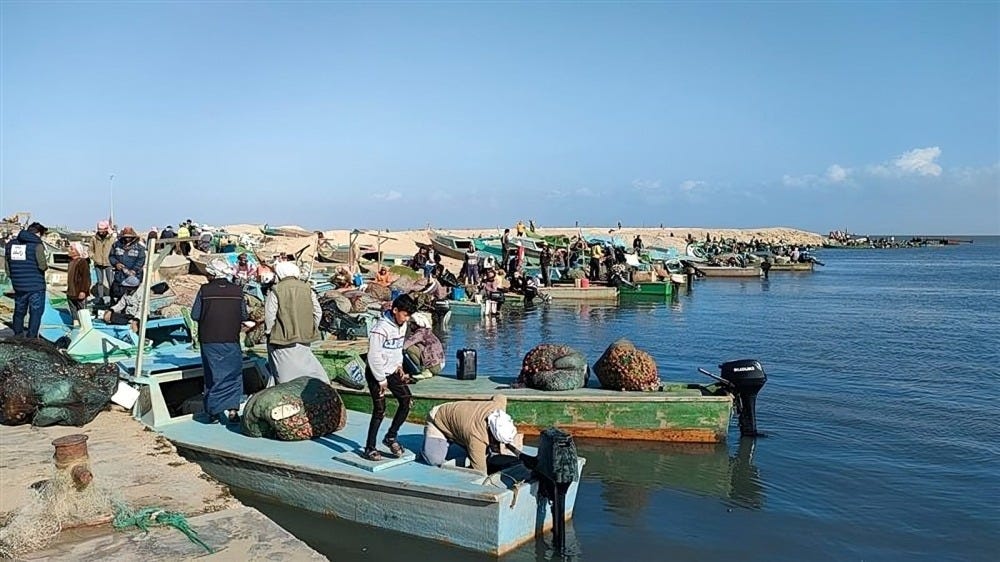
A new report published by the Sinai Foundation for Human Rights (SFHR), in cooperation with Egyptwide for Human Rights, and the Egyptian Front for Human Rights (EFHR), accuses the Future of Egypt Authority for Sustainable Development (FOE) of systematically impoverishing thousands of fishing families since taking control of Lake Bardawil, Egypt’s second-largest natural lake, in November 2024.
The report, based on 28 interviews conducted between December 2025 and March 2026, states that the FOE has built a near-total monopoly over fish production and sales at the North Sinai lake, which supports an estimated 3,500 to 5,000 registered fishermen and roughly 20,000 jobs overall in surrounding trades.
According to the gathered testimonies, licensing costs have risen dramatically since the FOE took over.
Bank fishers, who fish on foot, who previously paid around 50 Egyptian pounds a year for a security permit, became required to pay 300 pounds every three months for the right to fish.
“These are young people and the elderly who do not own boats and fish on foot within 200 meters of the shore,” the report read.
The FOE also imposed limits on the number of fishermen permitted to engage in this type of fishing, preventing many low-income individuals from continuing the activity. Consequently, a number of these fishermen, who experience the most precarity, lost their sole source of income.
Fishermen, who also previously paid 50 pounds a year, now pay 600 pounds every three months, roughly an eightfold increase on an annual basis.
Boat license renewal fees also rose from 350–500 pounds a year to 2,500 pounds, while license rental fees jumped from about 22,000 to 30,000 pounds per season, now demanded upfront.
In tandem, fishermen stated that the authority pays them far below market rates for their catch and resells it at a steep markup.
Interviewees cited dorade (denis) purchased from fishermen at around 100 pounds per kilo and resold for 200–250 pounds; grouper (wakar) bought at roughly 300 pounds versus a market price near 850 pounds; and mullet (bouri) purchased at 70–90 pounds against a market rate around 300 pounds. One trader estimated the FOE now captures about 80% of total production.
The report cites fishermen saying that the FOE controls essential inputs, including fuel, engine oil, and even drinking water, barring them from sourcing supplies elsewhere, including in emergencies.
It also documents a pattern of steep, arbitrary penalties, with fines ranging from 20,000 to 60,000 Egyptian pounds for infractions such as drifting near a restricted channel, catching undersized fish, or anchoring within 200 meters of shore. Some cases reportedly resulted in a full year’s imprisonment alongside the fines.
In 2019, Presidential Decree No. 294 classified Egypt’s major lakes as border-adjacent security zones, which means that fishermen accused of violations have been referred to military courts.
The report documents at least 13 fishermen prosecuted this way between January 2025 and March 2026 across three known cases, No. 5/6 of 2025, No. 324/2025, and No. 14/2026, with rights lawyers alleging due-process violations, including hearings held without defendants or their lawyers present.
In May 2025, fishermen staged a collective strike demanding a rollback of the new fees and restrictions.
The FOE initially suspended fishing in the lake entirely “until further notice” after fishermen refused to sign a pledge never to fish there again, Mada Masr’s Mourad Hegazy reported at the time, adding that administrators allegedly recorded the names of everyone present at the docks before halting operations.
A day following the strike, management abruptly reopened the lake to a limited number of boats, approximately 300 of the roughly 1,228 registered, a move one fisherman told Hegazy was designed to create the appearance that “the lake is working and the fishermen are the ones refusing,” even as other fishermen said they were turned away when they tried to return to the docks.
Hegazy later reported that the FOE resumed full fishing operations only after partially meeting fishermen’s demands, while also requesting to communicate with fishermen directly, bypassing intermediaries.
The rights report also describes the erosion of local fishing cooperatives that once supplied subsidized equipment and represented fishermen collectively, leaving them without an institutional channel to negotiate or appeal authority decisions.
Fishermen reported daily catches falling from around 20–25 tons before the takeover to roughly 10–13 tons today, a decline they attribute to low morale, fear of penalties, and disrupted equipment access rather than fish scarcity. Multiple fishermen also described falling into debt to cover new fees and fines.
Cutting production, blaming the war
Egypt’s industrial sector is quietly bleeding jobs and output as manufacturers get squeezed between soaring input costs and collapsing consumer demand. The Federation of Egyptian Industries estimates factories’ working capital has been eroded by up to 40%, while the state’s Central Agency for Public Mobilization and Statistics (CAPMAS) recorded a historic 17.4% annual jump in producer prices as the direct result of energy hikes, currency volatility, and a government gas-pricing decision in May that pushed costs to as high as USD 14 per million BTUs for cement makers.
In Aswan, marble and granite plants have accumulated up to 28 million pounds in unpaid electricity debts and simply stopped production; in Gamasa, a cosmetics factory owner says he’s halved both output and his workforce; and in Mahalla, a single textile line has seen daily output collapse from 2.5 tons to 1.2 tons, and workers describe being discarded once the machines stop running.
Mahmoud Saudy, a welder laid off from a 10th of Ramadan City factory alongside six colleagues, told Al Masry Al Youm that driving a tuktuk, purchased jointly with a former coworker, now feels more financially secure than factory employment ever was.
Officials interviewed frame this largely as an “unavoidable casualty of geopolitics,” chiefly the US-Israeli war on Iran disrupting Gulf shipping routes, rather than domestic policy failure. Yet instead of cushioning the shock, the government raised energy prices and every service fee it provides by multiples, compounding the crisis it claims to be merely reacting to.
Rather than address this cost spiral directly, the Industry Ministry’s own response has been to focus almost entirely on expanding industrial land and business licensing, not relief for currently struggling factories. The
Minister of Industry, Khaled Hashem, unveiled nine new mechanisms for allocating industrial land, a forthcoming industrial investment fund launching in September, and an AI-powered “diagnostic platform” to help struggling factories, even as small business federations testify before Parliament demanding emergency credit lines, customs relief, and unpaid VAT refunds just to keep their lines running.
It is a familiar mismatch where the state prioritizes the appearance of future industrial capacity and expansion, while the workers being laid off from currently operating factories are left waiting for a “relief package” that has yet to materialize.
Matrouh’s captive teachers
For nearly a month, some 250 public school teachers have been protesting in Matrouh over the governor’s refusal to execute secondment orders that would allow them to return to their home governorates.
According to complaints filed with the Egyptian Commission for Rights and Freedoms (ECRF), many of these teachers were hired in 2017 under three-year contracts intended to temporarily fill local shortages, with the promise that they could transfer back home afterward. However, up to nine years later, they are still trapped in Matrouh, separated from their families, and struggling to survive on a median salary of 7,300 pounds a month, which is under the 8,000-pound mandatory minimum wage.
The bureaucratic cruelty here is highly specific: the Ministry of Education already approved these secondments back in June after a five-member committee reviewed the teachers’ social and family circumstances.
The teachers successfully cleared their paperwork, only for Matrouh Governor Major General Mohamed El-Zamlout to unilaterally block the transfers, citing an ongoing local teacher shortage. Meanwhile, other governorates processed identical Ministry-approved transfers without issue, making Matrouh’s refusal an arbitrary application of executive power.
The financial math for the teachers compounds the devastation. They receive a housing and transport allowance of just 500 pounds, but basic room rentals run at least 900 pounds, meaning the state is essentially forcing them to subsidize its own staffing shortages out of pocket. In videos circulating from their protests, teachers described women separated from young children, families fractured, and teachers working through severe illnesses like cancer just to make ends meet. “We’re not asking for a full transfer, just a temporary secondment so we don’t lose our tenure,” one teacher pleaded in a video, adding, “We served this governorate for 15 years... our families are falling apart.”
This is how The New Republic manages its chronic underinvestment in education: it treats its workforce as a captive asset, and rather than hiring enough teachers or paying a wage that matches the cost of living, the governorate is simply holding hundreds of teachers hostage to paper over the gaps.

Rice mill workers left behind by selective wage decisions
The CTUWS stated on July 25 that it had received repeated complaints from workers at seven rice milling companies affiliated with Egypt’s Holding Company for Food Industries (HCFI), the country’s largest state-owned food group, saying the companies are not fully implementing presidential decisions governing periodic wage increases and additional financial incentives.
Workers clarified, per the statement, that the decisions had been applied selectively across the HCFI’s subsidiaries.
CTUWS reported that employees at oil, sugar, and flour milling companies received both the additional incentive stipulated by presidential decree and a 15% increase to their basic wages in line with a decision by the holding company. However, workers at the rice milling companies received only an additional incentive worth roughly half the prescribed amount, with no legal justification for the difference.
“The issuance of a decision is not sufficient if its implementation is left to interpretations by individual administrations that diminish or circumvent workers’ rights,” the organization stated, adding that unequal application creates unjustified discrimination between workers performing comparable jobs under the same administrative framework.
Pricing power goes invisible, then automated
Egypt’s Drug Authority (EDA) is moving to obscure and automate medicine pricing, beginning next month by stripping printed prices off medicine packaging for the first wave of companies enrolled in its digital tracking system.
While officials try to frame this as a mere technical upgrade, shifting prices to a QR code to avoid the “discrepancies” of old and new prices, it is an end-run around consumer protection laws that strips patients of their ability to know or contest what they are paying.
As Mahmoud Fouad of the Egyptian Center for the Right to Medicine (ECRM) pointed out to Mada Masr’s Mostafa Hosny, making prices invisible grants the EDA cover to hike costs without the immediate political friction of a public announcement. It also requires the public to trust a digital system that assumes universal smartphone access and digital literacy, in a country where the digital literacy score is 51.3 out of 100, which is the international average of 63.7, as per the Digital Cooperation Organization. At the same time, the system allows pharmacies to quietly hoard cheaper inventory and sell it at unverified, newly inflated rates.
This invisibility sets the stage for a much larger structural shift: the EDA is preparing to abandon its old pricing thresholds and link drug costs directly to an automated economic index—60% exchange rate, 30% inflation, and 10% interest rates. Under this new system, cumulative 10% swings will automatically open the door for companies to demand price hikes, formalizing a mechanism where macroeconomic volatility is instantly passed down to the sick.
The authority is simultaneously restructuring pharmacy margins, trading away flat fees for higher percentage cuts and locking in massive fixed margins (up to EGP 4,000 per pack) for high-cost and oncology drugs.
This is the same austerity architecture previously documented in a broader breakdown of the collapse of the Egyptian healthcare system.
When the Unified Procurement Authority (UPA) centralized medical purchasing, it choked on EGP 43 billion in unpaid debts and foreign currency scarcity, leading to devastating stockouts of cancer drugs. Rather than the state absorbing the risk of its own currency crisis, the burden was forced downward, pushing out-of-pocket healthcare spending past 60% of total expenditure.
Now, the EDA is ensuring that the next time the pound slips or inflation spikes, the cost recovery will be seamless, systemic, and hidden behind a QR code.

Month six of the digital pension blackout
Update: Egypt’s digital pension infrastructure remains functionally paralyzed for tens of thousands of retirees, entering its sixth consecutive month of backlog since the National Organization for Social Insurance (NOSI) migrated to a new digital platform in late February.
The ECRF issued a warning last week, documenting how the transition has trapped beneficiaries who have completed all paperwork but remain locked out of their life savings.
One case documented by the ECRF involves a private sector worker who retired in December 2025 after 25 years of service, and despite registering in the new system in March, his pension remains entirely suspended.
For thousands of others, the delay means relying on going into debt to cover rent and electricity, which is facing a fresh hike in pricing, rationing medication, and effectively living without healthcare coverage while they wait for NOSI’s “performance bottleneck” to resolve. The ECRF framed the crisis not as an IT failure but as an outright violation of the right to social security, demanding immediate manual disbursements to prevent further financial ruin.
This falls within the same “performance bottleneck” that the head of NOSI, Major General Gamal Awad, insisted was largely resolved back in June. As The Cairo Report noted at the time, Awad refused to appear before Parliament to answer for the roughly 500,000 backlogged transactions that had piled up after NOSI shut down its paper-based system without a functional digital replacement. The Prime Minister subsequently promised a full resolution by August, an arbitrary deadline that has now arrived with the system still fundamentally broken.
It is another manifestation of the bureaucratic guardianship over worker capital in The New Republic, where the state borrows heavily from pension funds to plug budget deficits, funnels the remainder into low-yield government debt, and installs military generals to oversee the architecture.
Now, when the infrastructure built to manage that capital collapses, the risk is immediately offloaded onto the beneficiaries themselves, turning what is legally a financial right into an unpayable pension hidden behind a dysfunctional system.
Workers’ blood still waters Egypt’s asphalt
The week’s first tragedy struck on July 25, when a pickup truck overturned on the Western Desert Road near a sugar factory in Mallawi, as grape-farm workers from Zawiyat Hatim village in Abu Qurqas district returned home from the vineyards, Al-Ahram’s Adel Abdellatif reported.
The crash killed 20-year-old Mohamed Wael and injured 37 others, all from the same village. Mallawi Specialized Hospital’s director, Dr. Ahmed Omar, said 12 of the injured were discharged after treatment, while the rest remained hospitalized under observation.
The Center for Trade Union and Workers Services (CTUWS) condemned the crash, noting that the ages of the dead and injured ranged from 12 to 25; evidence, the organization said, of the continued employment of children and irregular laborers under conditions lacking basic safety, legal, or insurance protections.
The organization argued that such accidents are not fate, but the direct result of weak enforcement of worker-protection laws, lax oversight of labor transport, and the absence of deterrent penalties.
Less than 24 hours later, two more accidents struck elsewhere in the country.
A pickup truck carrying workers overturned on the international coastal road near Baltim in Kafr El-Sheikh, injuring 12 people with wounds ranging from cuts and bruises to fractures and spinal injuries, according to Masrawy’s Islam Ammar. Hours later, a motorized tricycle carrying workers overturned on the Belbeis–10th of Ramadan Road in Sharqiya, injuring 11 more.
“These accidents are not inevitable,” CTUWS said in response, condemning “a pattern of state and employer failure to protect workers”.
Three days later, on July 28, a minibus transporting employees of a wood manufacturing company overturned on the Regional Ring Road near Belbeis. Authorities said the vehicle was carrying workers to their jobs at the time of the crash, according to Al-Ahram’s Adel El-Shaer. One worker was killed, and at least 10 others were injured.
The grim pattern returned to Mallawi on the morning of August 1, when a transport truck collided with a motorized tricycle carrying grape-farm workers on the same Western Desert Road as the July 25 crash as they headed to work, killing two workers and injuring eight, some of whom are in critical condition, Masrawy’s Gamal Mohamed reported.
The accidents fit a grim and worsening trend.
Data released in June by CAPMAS showed road traffic fatalities rose 10.8% in 2025 to 5,829 deaths, while injuries climbed 10.7% to 84,553.
In April 2025, Egypt’s Finance Ministry raised road and bridge investment allocations by nearly 10% for the 2025/2026 fiscal year. The budget was set at 24.2 billion Egyptian pounds ($484 million), up from 22 billion pounds ($440 million) allocated to the Roads and Bridges Authority in the 2024/2025 fiscal year, according to a board member at the authority who spoke to Al Manassa’s Mohamed Ismail.
In May of this year, Ismail reported that Egypt’s Transport Ministry will advance 21 road and bridge projects in the 2026/2027 fiscal year, with an estimated investment of 28 billion Egyptian pounds ($525 million), while shelving 46 initiatives from its 2026 plan amid budget tightening.
CTUWS and other labor advocates have long warned that agricultural and informal workers are especially exposed, as employers routinely transport them in pickup trucks, tricycles, and other vehicles never designed to carry passengers, rather than investing in safer transportation options.
Prison Watch: More fear, more renewals
Poet Galal El-Behairy, imprisoned since March 2018, ended a hunger strike on July 11 after prison authorities transferred him to a separate cell and allowed some clothing brought by his family to reach him. El-Beheiry had begun the strike on July 2 in protest over restrictions on access to books, writing materials, and personal belongings.
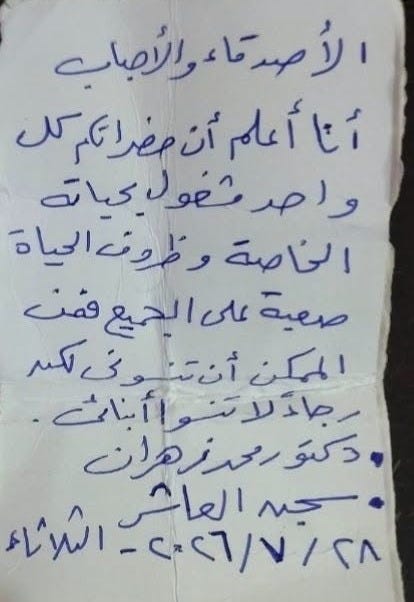
Separately, the family of Mohamed Zahran—founder of the Teachers’ Independence movement, detained two weeks ago over a Facebook post, as covered by The Cairo Report—published a handwritten message that his son said was passed to him during a prison visit.
“Friends and loved ones, I know that each of you is busy with your own life and that life’s circumstances are difficult for everyone; you might forget me, but please, do not forget my children,” the note reads, signed by Zahran and dated July 28 from the 10th of Ramadan Prison.
Egypt’s Supreme State Security Prosecution renewed the detention of Al-Dostor reporter Haidar Kandil and 31 other Shia Muslims, for an additional 15 days in Case No. 5635 of 2026. Prosecutors accused the defendants of joining and financing a terrorist organization, according to the ECRF.
In a separate statement, the ECRF also expressed concern over the condition of imprisoned political activist and former 6 April Youth Movement spokesman, Mohamed Adel, after his wife, Rofayda Hamdy, issued a second public appeal following a prison visit on July 28.
According to Hamdy’s account, Adel was brought to the visit in restraints, and prison officers initially attempted to prevent the meeting before the prison warden intervened. She said she fears a “repeat of an earlier assault against him inside prison” and described his psychological condition as deteriorating. Earlier this month, she said Adel had begun an open-ended hunger strike to protest more than 12 years of imprisonment.
Additionally, the Supreme State Security Prosecution renewed the detention of political activist Nael Hassan for another 15 days in Case No. 4373 of 2026, according to lawyer Mohamed Ramadan. Hassan’s lawyer, Mahienour El-Massry, had stated previously that he is facing charges of using a website to promote terrorist acts and disseminating false news both domestically and abroad. He has been in pre-trial detention since 24 May.
Toson residents escalate against continued expropriation
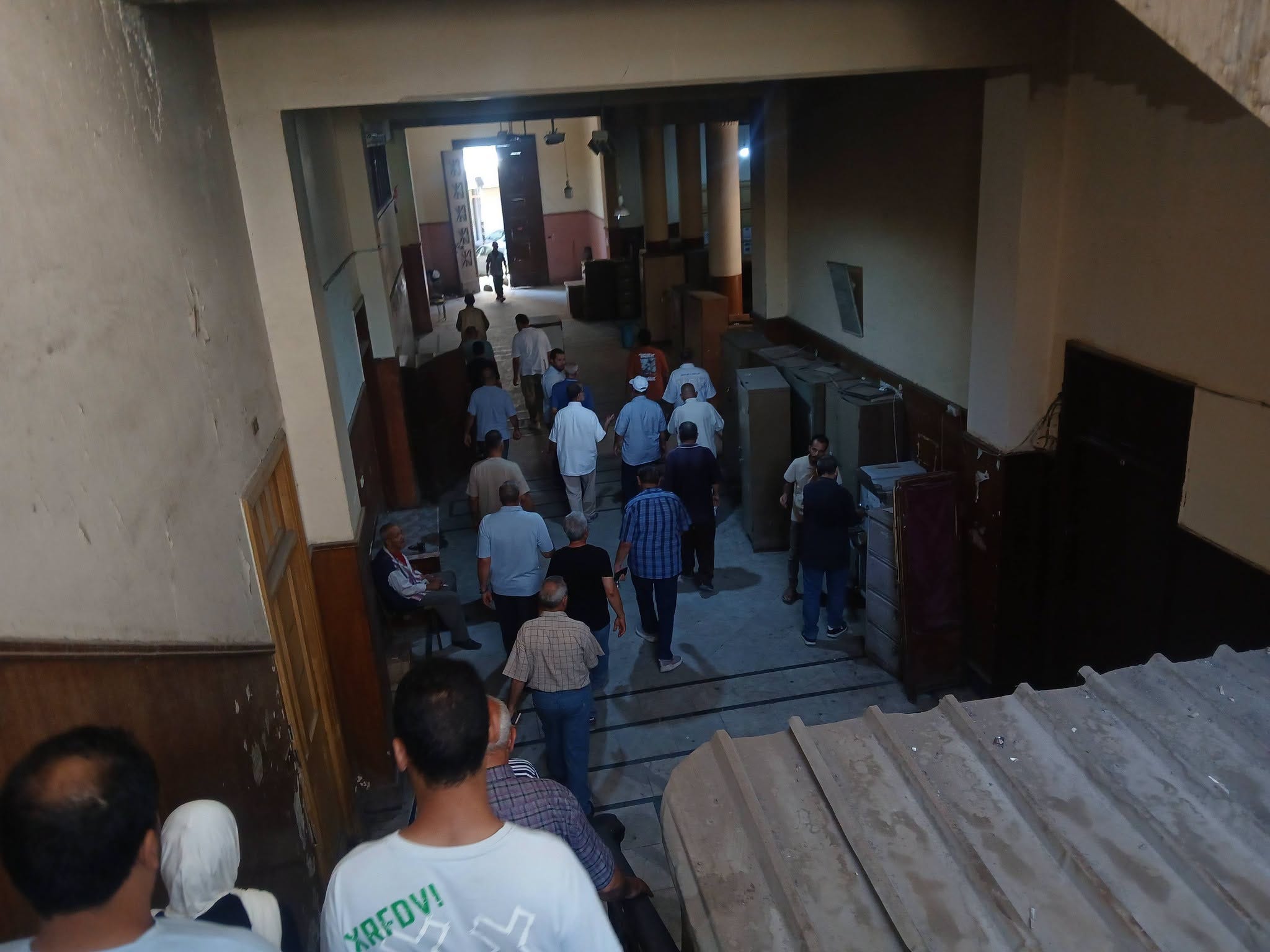
Update: On July 30, dozens of Toson residents gathered outside the Justice Ministry’s experts building to file an urgent request with the ministry’s representative, demanding that the court-ordered tripartite committee begin its long-delayed work, lawyer Mohamed Ramadan wrote on Facebook.
The delay comes as residents face mounting pressure from Production for Integrated General Supplies and Contracting, a “demolition and excavation company,” that has stationed “agents” in the neighborhood to pressure residents into selling, as previously covered in The Cairo Report.
Ramadan, who has been defending Toson residents since 2008, stated that residents engaged in a heated exchange with the ministry’s representative, who told them that cases proceed according to their assigned order on the docket.
Residents pushed back, arguing that appeals involving life-altering decisions, such as demolition and expropriation orders, should be prioritized under existing regulations and law, given the serious and potentially irreversible harm that delay would cause.
Ramadan said residents submitted an urgent request to the ministry representative, who told them a further urgent request needed to be filed with the Assistant Minister of Justice for Expert Affairs, to be sent by express mail. Residents have since done so, according to Ramadan.
Court victory for a labor leader
On July 30, the First Circuit of the Port Said Labor Court ruled in favor of labor leader Mahmoud Youssef in Case No. 68 of 2025, accepting Youssef’s lawsuit against Al Nahr Al Khalid International Co. for Ready-Made Garments and Saba International Garments in a wrongful dismissal case after he was fired over allegations of inciting workers to strike.
According to the lawsuit, filed by the legal office of the CTUWS, Youssef was dismissed on May 15, 2025, after more than 22 years of employment.
He said he had worked at the factory since 2003 and had held an open-ended employment contract with Saba International since April 1, 2004, while management operated the two companies as a single entity.
According to a CTUWS statement, Youssef, who worked as a sanding technician, was accused by the company of encouraging workers to organize a strike and sit-in inside the factory. He challenged the dismissal by filing a complaint with the Labor Relations Office, seeking reinstatement before the dispute was referred to the labor court after mediation efforts failed.
During the proceedings, the court appointed an expert from the Ministry of Justice’s Port Said Experts Office to review the case. The expert’s report stated that the decision on reinstatement or compensation rested with the court and calculated the financial entitlements that would apply if compensation were awarded. These included EGP 343,202 in compensation for material damages, in addition to payment in lieu of notice, accrued annual leave, and wages for the days worked in May 2025.
Youssef sought the cancellation of his dismissal, reinstatement to his position, and payment of all financial entitlements. The court ultimately ruled in his favor against both companies.
Security Sector Update:

So, what?!
The specific mechanism that connects fishermen at Lake Bardawil, rice mill workers, and pharmacy customers is the insertion of an unaccountable gatekeeper between people and something they need to survive. The FOE doesn’t just tax Bardawil’s fishermen, it controls their fuel and drinking water, and the HCFI doesn’t deny rice mill workers their raise outright, it lets individual administrations “interpret” it into nothing. In each case, the chokepoint itself, not an outright denial, is where the extraction happens.
But this week also complicates the bleaker pattern with two genuine cracks: a Port Said court ordered two garment companies to reinstate a labor organizer it fired for encouraging a strike, and Toson residents, after months of stalled expropriation proceedings, refused to remain idle and marched toward the Justice Ministry office responsible to escalate their case.
Neither outcome is systemic, nor are they guaranteed to last.
Youssef’s reinstatement doesn’t touch the thousands of workers who never sue, and Toson’s active resistance doesn’t touch the security-linked demolition company still pressuring their neighbors. What both share, though, is the lesson that the gatekeepers rarely yield to appeals through the front door. They yield to sustained, specific, and public pressure that makes the cost of continued extraction higher than the cost of a concession.