


Egypt’s agricultural policies imposed a net burden of 7 billion US dollars on food buyers in 2025, the Organization for Economic Cooperation and Development (OECD) estimated, while identifying gaps in the accounting of support to state and military businesses.
The ‘Agricultural Policy Monitoring and Evaluation’ report, published on November 2, finds that the burden rose to 13.3% of the consumption expenditure measured, from 10.9% in 2024, and recommends reducing support for staple crops and fertilizer, improving nutrition, while disclosing transfers to public enterprises.
However, the institutions administering support also operate businesses that receive public purchases.
The overlap extends beyond military farms, as provincial fertilizer meetings, a presidential board decree, and the food safety regulator’s founding law document officers managing agricultural records, ministers governing a commercial agency, and security institutions participating in regulation.
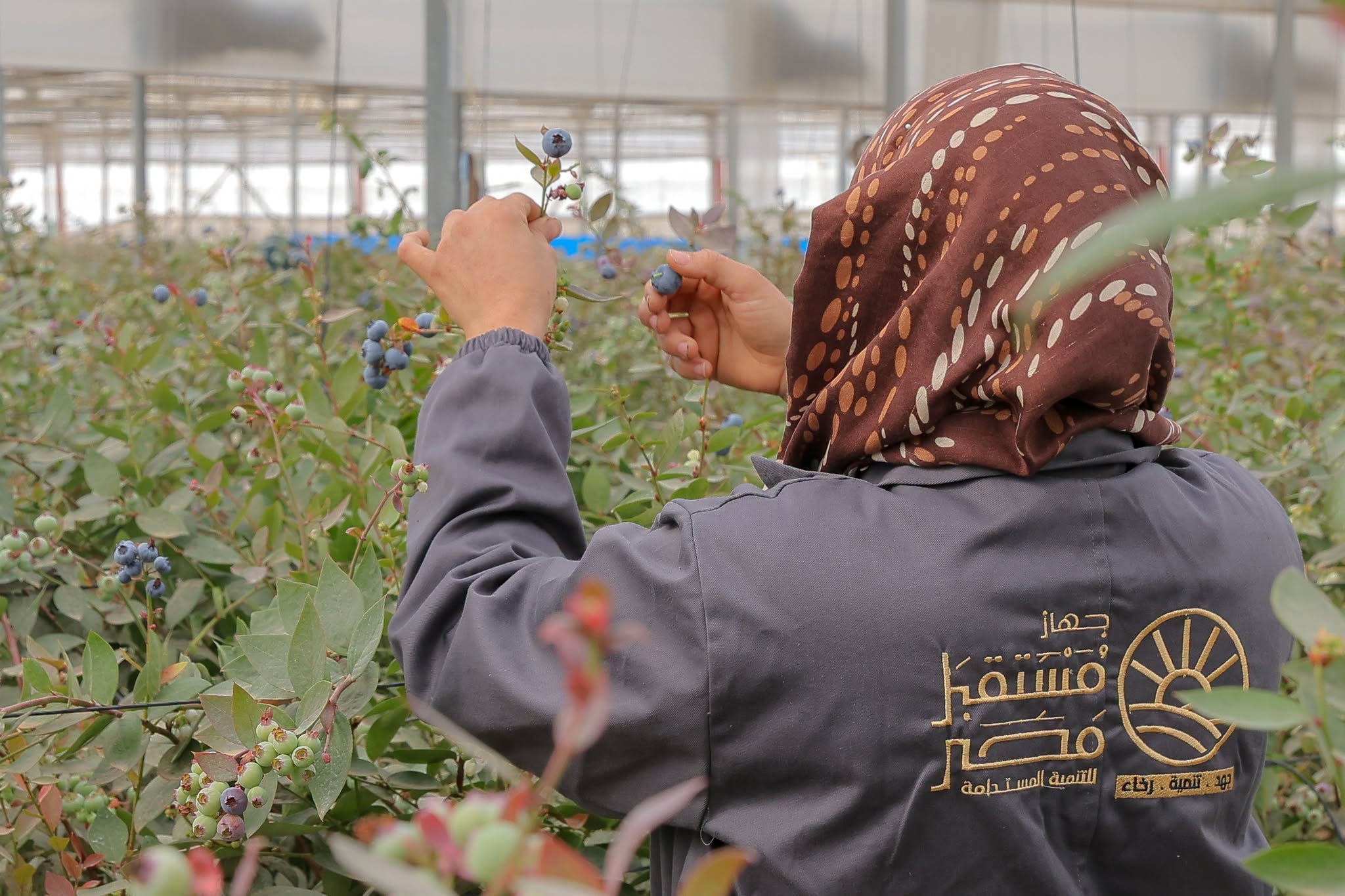
The military-run agency Future of Egypt (FoE), for example, which the OECD names, illustrates how those functions converge. FoE took over strategic commodity imports in December 2024 and gained domestic wheat purchasing authority in March 2025.
Recently, Law 147 of 2026 reorganized FoE as a “special national agency” reporting directly to the president, with Air Force Colonel Bahaa El-Ghannam serving as its chairman.
Sitting on its board are Agriculture Minister Alaa Farouk, Supply Minister Sherif Farouk, and Irrigation Minister Hani Sweilam, alongside Major General Amir Sayed Ahmed. However, they are listed as “experts” rather than ministry representatives.
FoE distributes subsidized fertilizer through Digital Smart Tree, a joint venture announced in April this year between the agency and the Agriculture Ministry, which also gives the agency a role in administering the landholding records used to determine farmers’ eligibility for subsidized supplies.
Officers have helped organize the system on the local level. In March, before the company’s formation was announced, Lieutenant Colonel Mohamed Azzouz, responsible for FoE’s digital transformation, and Major Ahmed Mohamed Morsi coordinated preparations with agricultural officials in the governorate of Beheira. Their work included plans to verify landholdings and exclude fictitious holdings from fertilizer subsidies.
By late last month, Azzouz was leading Digital Smart Tree’s delegation in talks with Gharbia agricultural officials over landholding records, crop inventories and monthly fertilizer requirements.
The Agriculture Ministry later announced that it has equipped 5,825 agricultural cooperatives with payment terminals and activated the fertilizer distribution system. It is also developing a unique digital identifier for each agricultural parcel, linked to the farmer card system used to administer subsidies.
These arrangements extend FoE’s involvement across farmers’ production cycle, from access to subsidized inputs to purchases of their harvests.
The Defense Ministry’s National Service Projects Organization (NSPO) operates a separate industrial network, including its construction of a fertilizer factory for El-Nasr for Intermediate Chemicals over a decade ago.
El-Nasr’s current chairman is Major General Abdel Hamid Sayed Ahmed, running its existing fertilizer capacity at 2.1 million metric tonnes annually, and a third complex is planned to open in 2028.
Silo Foods, which is also owned by the NSPO, provides a clearer link between military manufacturing and government demand, with registered products that include school biscuits, pasta, and milk.
In a July interview with Al-Masry Al-Youm, the company’s chairman, Major General Akram Abdel Galil El-Hefnawy, said Silo Foods had supplied the Supply Ministry with 300,000 metric tonnes of pasta since operations began, described school feeding as a founding objective, and said products also reached consumers through military outlets and the ration goods system.
The OECD’s proposal to redirect subsidy savings toward school meals would therefore expand a purchasing channel already served by a military company. Whether that improves nutrition and how contracts distribute the money are separate questions.
Security institutions also hold statutory regulatory seats, as Article 8 of the food safety authority’s founding law, for example, includes the armed forces’ veterinary services director and an Interior Ministry representative on its board, while Article 9 gives that board authority over inspection systems, inspector qualifications, and regulatory plans.
The Interior Ministry separately runs food retail operations, encompassing 1,450 fixed and mobile outlets.
The financial implications are explicit in FoE’s reorganization law, which requires the state treasury to finance its pre-existing tax, fees, related penalty liabilities, and allows four years of interest-free installments for existing social insurance obligations.
Its powers also extend beyond production, as the law also gives the agency company licensing and administrative powers inside designated sustainable development zones, expressly preserving the Defense Ministry’s jurisdiction.
In a seemingly contradictory statement, however, El-Ghannam said during last month’s ‘Egypt Forum’ that the agency paid taxes and customs duties, financed itself, and employed an entirely civilian workforce after reorganization. He added that the agency held stakes in more than 55 companies, only two wholly owned, with private investors participating in the others.
By law, the only person in the country who can quantify the amount of assistance the agency gets is President Abdel-Fattah El-Sisi himself, because despite Articles 24 and 25 requiring auditors and quarterly and annual financial statements, those reports are submitted through the board to the president, and do not require publication.
The OECD said that “agricultural support policies place a significant burden on Egypt’s economy”, averaging 2.8% of GDP in 2023-25, and representing the highest share among the 56 countries studied.
That figure combines government spending, including subsidies and agricultural infrastructure, with the estimated support producers receive from policies that keep domestic prices above international benchmarks. Buyers bear that second cost through higher prices.
The total therefore measures support financed by both taxpayers and buyers, without identifying how much military businesses receive.
Government allocations for subsidizing consumers’ food purchases are a separate measure. For 2026/27, Minister of Supply Sherif Farouk claimed that the food subsidy budget rose to 178 billion Egyptian pounds (about $3.2 billion), from 160 billion pounds the previous year.
The entire increase went to bread, whose allocation rose from 124 billion to 142 billion pounds, while funding for other goods purchased through ration cards remained unchanged at 36 billion pounds, meaning that the larger overall budget therefore provided no additional money for subsidized foods beyond bread.
The same statement described plans for more “varied food choices” and “preserving purchasing power”. But it announced no increase in the nominal goods allocation, even as purchasing power continues to erode.
Moreover, the OECD’s May review, citing United Nations (UN) estimates, put the number unable to afford a healthy diet at 66 million, or 57% of Egypt’s population.
Support also reaches farmers unevenly, as that earlier review said the Agricultural Bank served only 5–10% of nine million eligible farmers and excluded tenants from subsidized loans.
The OECD recommended greater accountability across ministries and state and military businesses, calling on Egypt to “improve the availability, transparency and quality of data”, including disclosures of public transfers to those enterprises. It also recommended redirecting resources toward nutrition and research.
The economic burden of agricultural support, it said, was “aggravated by the current heavy focus on food availability”, citing self-sufficiency targets, guaranteed minimum prices, and large-scale government purchases of staple crops.