


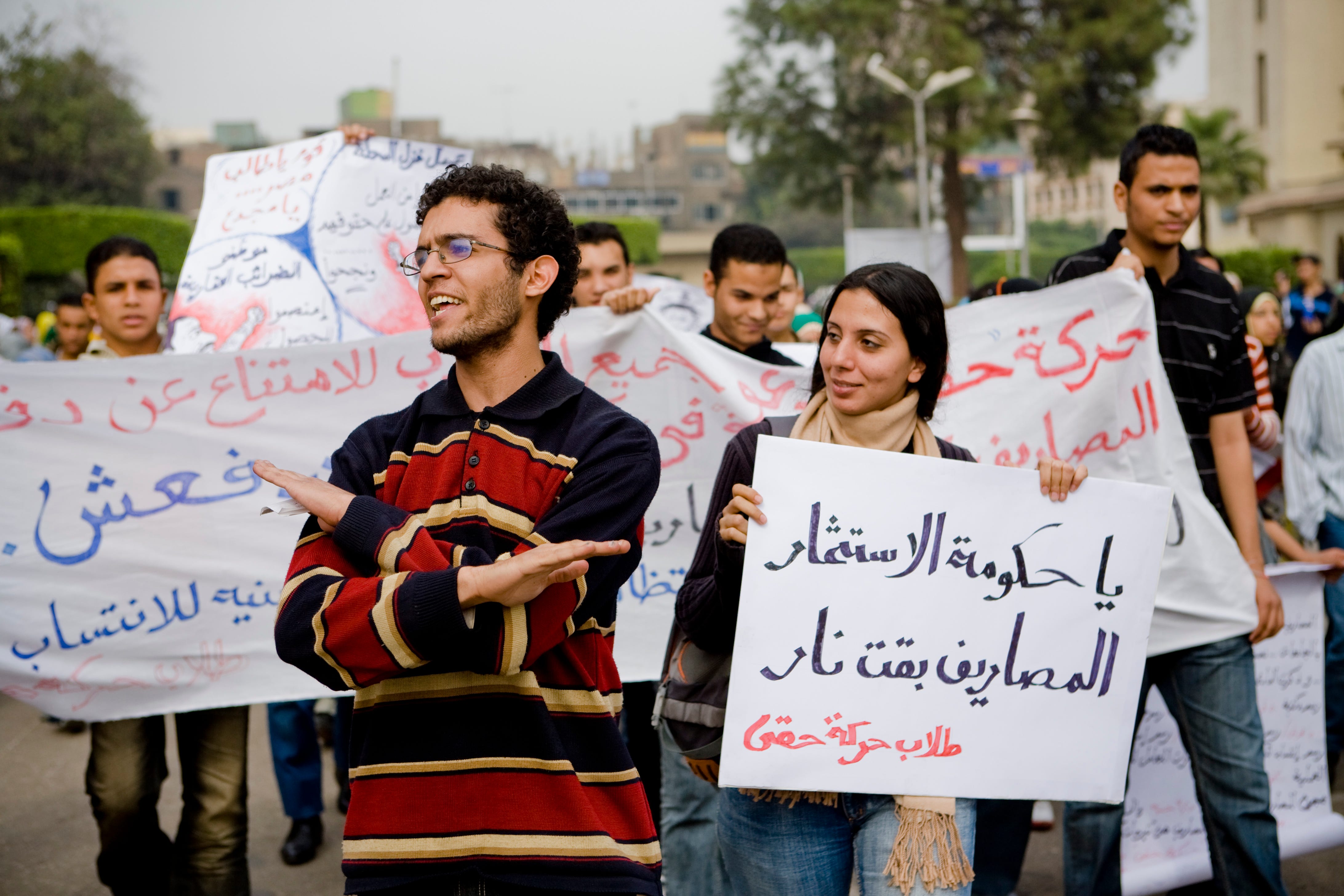
Egypt more than doubled its number of universities in a decade, yet young people from its wealthiest households were four times as likely to have entered higher education as those from its poorest, the Organization for Economic Cooperation and Development (OECD) said on Thursday.
Among Egyptians aged 20 to 29, 59.6% of those from the wealthiest fifth of households had attended a university or higher institute, compared with 14.9% from the poorest fifth, the OECD found, drawing on a 2023 labor market survey conducted by the Economic Research Forum and Egypt’s statistics agency, CAPMAS.
Of the 57 universities Egypt added in the decade to 2023/24, only four were traditional public universities. The government’s own count later rose from 108 universities in 2024 to 131 as of November 2026, a net gain of 23. The number of traditional public universities rose from 27 to 28 when South Valley University’s Hurghada branch became an independent university in September 2024.
Undergraduate enrollment, meanwhile, grew 61% in the decade to 2023/24, reaching 3.8 million. That number grew to 4 million higher education students in 2024/25 and 4.2 million in 2025/26, an increase of 205,000 in the latest year.
Private and nonprofit universities, foreign university branches and institutions set up under international agreements enrolled 655,800 students in 2025/26, up from 496,300 a year earlier. Enrollment at private higher institutes rose from 841,700 to 874,800. Together, these institutions accounted for about 192,600 of the 205,000 additional students, or 94% of net enrollment growth, according to The Cairo Report’s calculations. The share of all higher education students attending traditional public universities and Al-Azhar fell from 62.9% in 2023/24 to 59.2% in 2024/25 and 55.6% in 2025/26.
In June, the finance, planning and higher education ministries agreed to settle 48.5 billion Egyptian pounds in construction costs for 11 state-owned nonprofit universities over three years. Finance Minister Ahmed Kouchouk said these universities “cost students less than private and international universities”. The OECD, for its part, described their fees as “relatively affordable.”
This year, a subsidized place at Cairo University’s medical school required 308 out of 320 on Egypt’s secondary school exam, or 96.25%. At its fee-charging affiliate, Cairo National University, the cutoff in September’s third admissions round was 91.88%. A new medical student there pays 170,000 pounds for one year.
That tuition bill amounts to more than two years’ pay at the private sector minimum wage of 7,000 pounds a month, or 20 months at the 8,500-pound minimum due January 2027, if every penny was saved—assuming the almost impossible possibility that prices remain unchanged. The affiliate’s founding decree reserves full scholarships for 10% of each faculty’s planned annual intake. Across the country, higher education prices rose 17% in the year to October, against 12% inflation overall.
In 2023, 47% of 15- to 19-year-olds took private lessons or attended tutoring groups, the OECD found. As The Cairo Report previously reported, the Education Ministry brought paid tutoring into state-run schools. This school year, schools can charge up to 100 pounds per student per lesson, or 150 pounds for a group of ten or fewer.

At the start of the current school year, a government accountant earning a monthly household income of no more than 10,000 pounds shared his family’s tutoring expenses with Masrawy. Monthly lesson fees totaled 2,600 pounds, which rose to 3,500 pounds when including transport costs and exam booklets.
While Egypt built campuses, its core public funding for higher education fell in real terms between 2021/22 and 2024/25. Spending on that measure came to 0.85% of gross national income in 2021/22. By 2024/25, the allocation was 81.1 billion pounds, or 0.61%. The OECD excludes capital investment and university hospitals, which receive separate allocations.
Article 21 of Egypt’s constitution guarantees free education at state universities and requires spending on university education equivalent to at least 2% of gross national product. The Finance Ministry counted 293 billion pounds toward that obligation in 2024/25 and 412.4 billion pounds in 2026/27. Its calculation includes spending by agencies outside the education budget and assigns education a share of the cost of servicing the public debt.
The 2026/27 budget law sets aside 2.42 trillion pounds for interest, or 46.6% of planned state expenditure, as The Cairo Report noted in October. That is 6.5 times the 371.8 billion pounds the Finance Ministry allocated for education, from schools through universities, in its breakdown of spending by function.

Under a pilot proposed in February 2025, some public universities would keep more of the income they earn and raise more from international students and fees at their nonprofit affiliates. The OECD backed more predictable public funding and greater discretion for universities over how they spend it, while warning that reliance on tuition could put places beyond some families’ reach.
Public universities already cover part of the cost of teaching at private ones. Lecturers who take second jobs at private campuses keep the health coverage and pensions attached to their public posts, the OECD said. In July, investigative outlet Zawia3 published a university vice dean’s payslip, which showed that of their 12,671 pounds monthly pay, just 1,797 pounds was basic salary. Allowances and incentives made up the rest.
Earlier this month, the government supposedly approved hiring 33,977 academic and assistant posts at public universities and Al-Azhar over five years, and announced a pay package worth 25 billion pounds, in which universities must pay half the increase in the quality allowance for academic staff from their own revenue.
On the employment end, the share of Egyptian degree holders aged 25 to 34 in formal work fell from 42% in 2013 to 25% in 2023. Over the same decade, the share in informal work rose from 17% to 28%. In 2023, 27.6% of female graduates in that age group had a job, compared with 80.2% of men.
More recently, university graduates and people with postgraduate qualifications made up 44.6% of all unemployed Egyptians in the third quarter of 2026, up from 43.4% a year earlier, according to CAPMAS.
The OECD called for closer ties between universities and employers but found no recent representative survey to substantiate employers’ complaints about graduates’ skills. The public sector’s share of Egyptian jobs fell from 38% in 1998 to 22% in 2023, and formal private sector employers failed to fill the gap, according to the Economic Research Forum. In a separate study, 76% of university graduates doing irregular private sector work said their jobs required less education than they had. Among graduates with regular, formal private sector jobs, the figure was 14%.
The Health Ministry ended guaranteed public appointments for dentists—and graduates of medical professions more generally—starting with the class of 2023, and when young dentists pushed back and tried to challenge the decision in court, they were thrown into pretrial detention by State Security.
In July, the ministry assigned posts to 5,394 of the 9,068 graduates from that class who applied. In November, Hazem El-Berri of the Dental Syndicate said about 4,000 were still waiting for word on a second round.
In October, Abdel-Fattah El-Sisi said his term would end in 2030, and in the succession plan he laid out, doctorate holders aged 40 to 50 would be obligated to attend a 30-month indoctrination camp at the Egyptian Military Academy before voters got to choose from among those it trained.

The fact that Sisi would leave power remains highly unlikely, if not impossible. But if we were to brush his relentless grip on power aside, if we were to even brush aside the security apparatus’s complete control of all political life, and take his words at face value, if we were to engage his pledge in good faith, it’s important to understand the consequences of one of these obligations he listed.
By 2024, after a decade in which undergraduate enrollment grew, postgraduate enrollment had fallen 35% to 232,265. Egyptian universities awarded just 11,766 doctorates to Egyptians in 2024.
That is no small part of Sisi’s education legacy. So, if he does hypothetically leave in 2030, and if—even less likely—a civilian, someone not in the state’s security apparatus, is ever to get a shot at running for office, what kind of state will he have built if so few of its more than 110 million citizens ever get the chance to earn the degree he wants the army to look for while vetting a successor?