


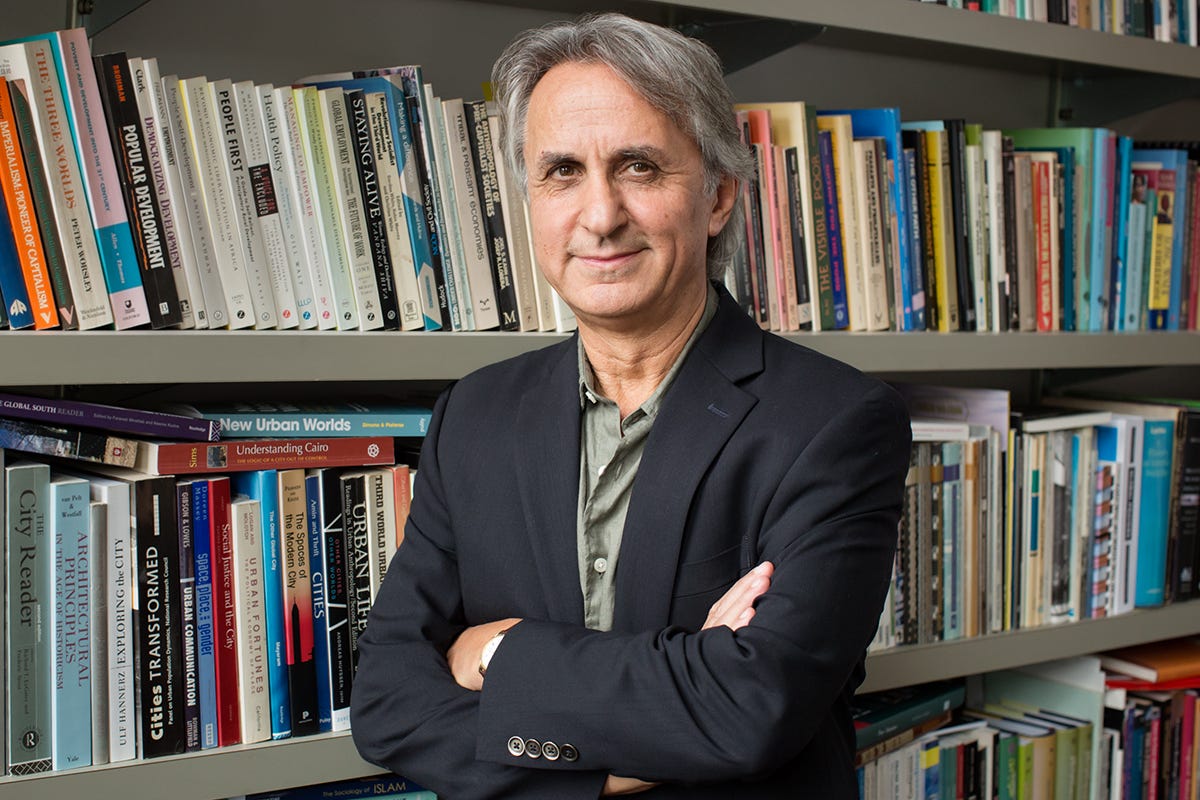
Asef Bayat, the Iranian sociologist who held a seminar in Cairo over the summer and developed the concepts of ‘social nonmovements,’ ‘post-Islamism’, and the ‘art of presence’, is widely regarded as one of the leading theorists of popular protest in the contemporary Middle East.
His own history makes him more than an outside observer.
He grew up in a poor village and then in a working class neighborhood in Tehran. His first research drew on direct interviews with factory workers and revolutionary councils in 1980 and 1981, before repression closed in on the Iranian left, which gives his work an empirical credibility rarely available to people in academia.
But empirical credibility doesn’t mean theoretical immunity, and if we were to put Bayat’s entire intellectual system on the table for a revolutionary Marxist dissection, it emerges as a coherent project, from beginning to end, to dissolve the revolutionary question into the flux of “everyday life.”
Deliberately or otherwise, it draws us away from the question revolutionary Marxism has posed since Trotsky: Who holds power, which class must wrest it away, and through what organization?
A critique that fails to confront its opponent’s strongest argument is worthless. I will therefore begin by presenting Bayat’s position in its strongest form, before testing it against what actually happened in Iran between 2022 and mid-2026.
A concept born of political defeat
Bayat’s explicit starting point is a personal admission with grave political implications. By his own account, the failure of the 1979 revolution to fulfill its promises drove him toward “the potency of everyday life and popular politics,” producing ‘Street Politics’ and ‘Life as Politics’. What is now presented as an innovative sociological discovery about ‘nonmovements’ is, at root, a retrospective theorization of a particular political defeat.
But the problem is not the defeat itself. Anyone who lived through the crushing of the Iranian revolution by the new theocratic capitalist state has every right to feel its pain. The problem is turning that defeat into a general theory, exported to the world as an intellectual alternative to the revolutionary question as a whole, rather than an inquiry into the failure of a particular leadership at a particular moment.
The difference is between “We lost a battle; let us find out why” and “The age of battles of this kind is over.”
The text under the microscope
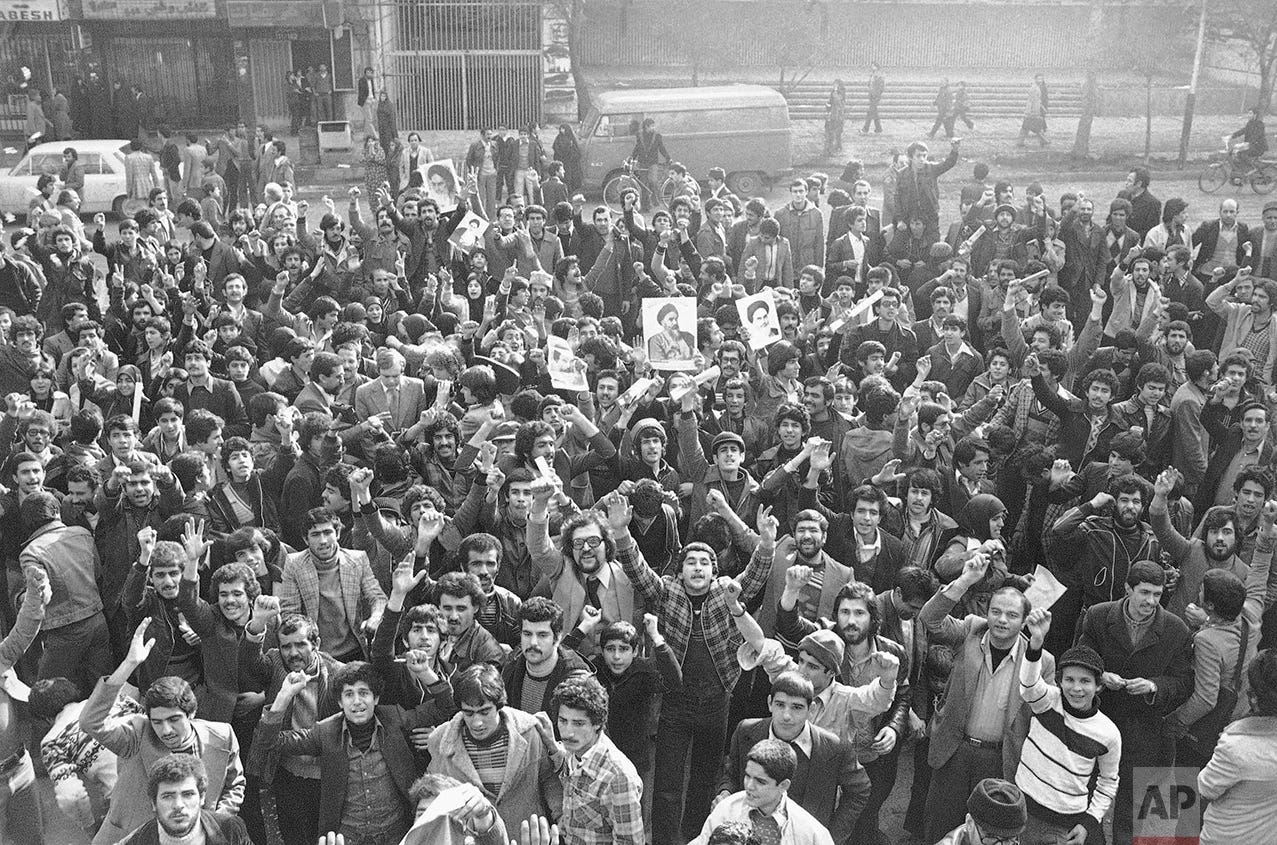
In ‘Life as Politics’, Bayat defines a ‘social nonmovement’ as “the collective actions of noncollective actors.” These, he explains, “embody shared practices of large numbers of ordinary people whose fragmented but similar activities trigger much social change, even though these practices are rarely guided by an ideology or recognizable leaderships and organizations”.
In contrast, organized social movements typically have a recognized leadership, a relatively coherent program and ideology, and the capacity for sustained mobilization in pursuit of their demands.
Everything considered a condition of revolutionary success, namely leadership, a program, ideology, and organized mobilization, Bayat places in the category of traditional movements, which the ‘nonmovement’ supposedly surpasses through its flexibility and ability to evade repression.
The absence of a revolutionary party is thus recast as a virtue rather than a weakness.
The concept’s origins are clearer still in his earlier ‘Street Politics’, where he coined his best-known phrase, “the quiet encroachment of the ordinary”, which he defines as the silent, patient, and pervasive manner in which ordinary and marginalized people (such as the urban poor, informal workers, and youth) advance on the propertied and powerful to secure a better life, survival, and autonomy.
Bayat’s strongest possible argument
Before criticizing Bayat, methodological fairness—indeed, tactical necessity—requires us to state his argument in the strongest terms he himself could use, rather than as an easily demolished caricature.
That strongest argument would be that the nonmovement is not a proposed substitute for revolutionary organization; rather, it describes what remains when organization has been crushed altogether. When the leaders of workers’ parties are executed, their unions dismantled, their newspapers shut down, and their cadres pursued for decades, class struggle does not disappear. It takes forms invisible to the state and the researcher alike: occupying land, making illegal electricity connections, working outside the formal economy, taking off one’s headscarf alone in the street. These practices are not a revolution, but they build social capacity, preserve a memory of action, and create horizontal networks of trust on which organization can draw when conditions allow it to reemerge.
In this reading, Bayat is not saying that there is no need for a party; he’s saying that this is what happens in the party’s absence, and that it isn’t nothing.
This is a serious argument, with substantial empirical support. Indeed, as Bayat establishes his concept, he adds a telling methodological qualification. He warns against “the trap of essentialism in reverse,” of “reading too much into ordinary behaviors, interpreting them as necessarily conscious or contentious acts of defiance,” because “these practices occur mostly within the prevailing systems of power”. The qualification shows a real vigilance about the limits of his analysis.
Fortunately, his strongest argument can be tested empirically. If accumulated social capacity produces organization when conditions allow, what conditions could be more favorable than the simultaneous military, economic and security collapse of the state, the killing of its supreme leader, and a vacancy at the summit of power lasting days?
The structural flaw in the early work
The deeper irony lies in Bayat’s very first book, ‘Workers and Revolution in Iran’.
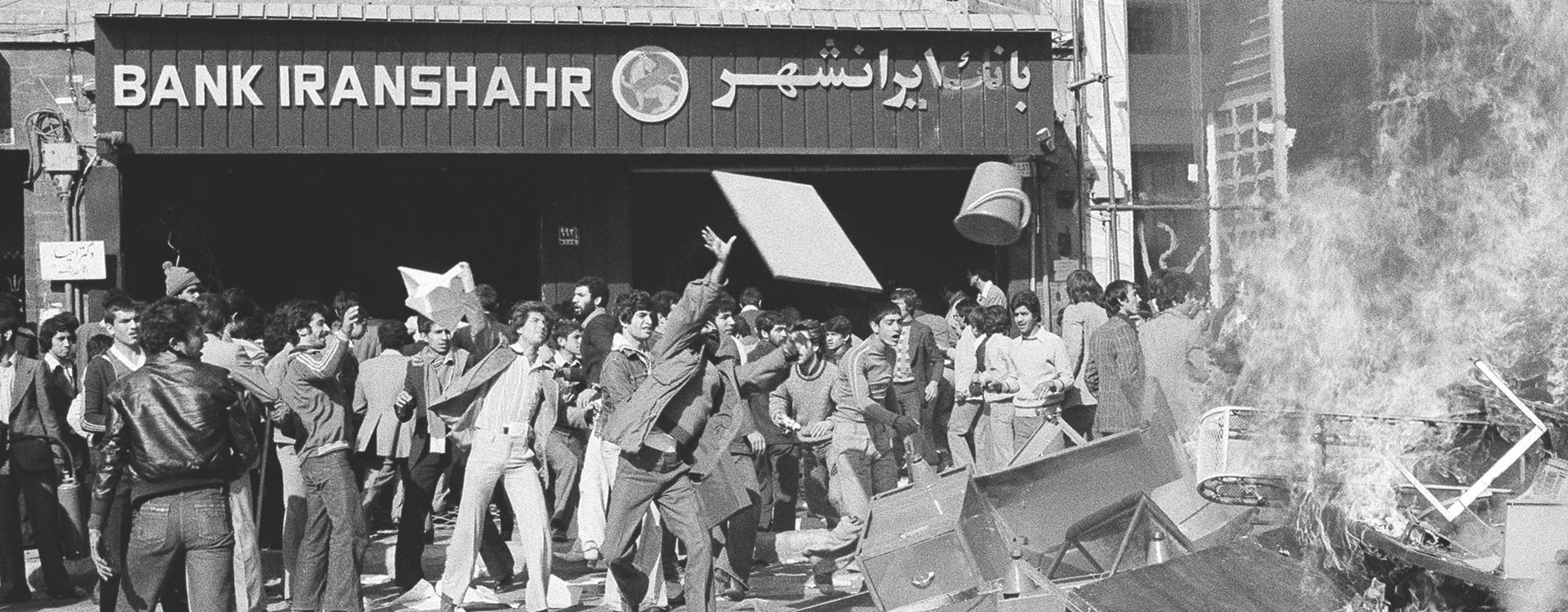
For all its flaws, it remains his closest engagement with serious Marxism, offering a relentless history of the formation of the Iranian working class and the emergence of shuras, or revolutionary workers’ councils, in Tehran’s factories between 1979 and 1982. It examines in detail how the new theocratic state crushed those councils through repression, domestication, and packaged reform.
Yet the book already contains the structural flaw that would later take root. Its vision of a state that helps expand workers’ control, rather than crushing it, ignores how every capitalist and Stalinist state of the 20th century crushed workers’ control through a combination of repression, bargaining and co-optation.
The answer is not a mixed economy that satisfies the state and workers alike, but workers’ power that actually takes hold of the means of production. More seriously, the book leaves the class character of the new Iranian state unresolved: Is it an anti-capitalist theocracy or a particular form of dependent state capitalism?
That vagueness was no passing lapse. It was the seed of all the later confusion in Bayat’s position on power.
Permanent revolution and the inverted lesson of the 1983 defeat
From here, Leon Trotsky’s theory of permanent revolution allows us to identify the central failing.
Trotsky argued that the domestic bourgeoisie in economically backward countries, organically tied to imperialist capital and more afraid of the working class than of the old despotism, is structurally incapable of carrying the tasks of the democratic revolution through to completion.
Only working class leadership can accomplish those tasks, and once the working class takes power, it does not stop at the limits of democracy.
Given a politically conscious revolutionary leadership and a vanguard organization, it moves on to socialist tasks and the revolution spreads across borders, because no economically backward country can survive as a socialist society in isolation—just like capitalism could never survive as an economic system in isolation.
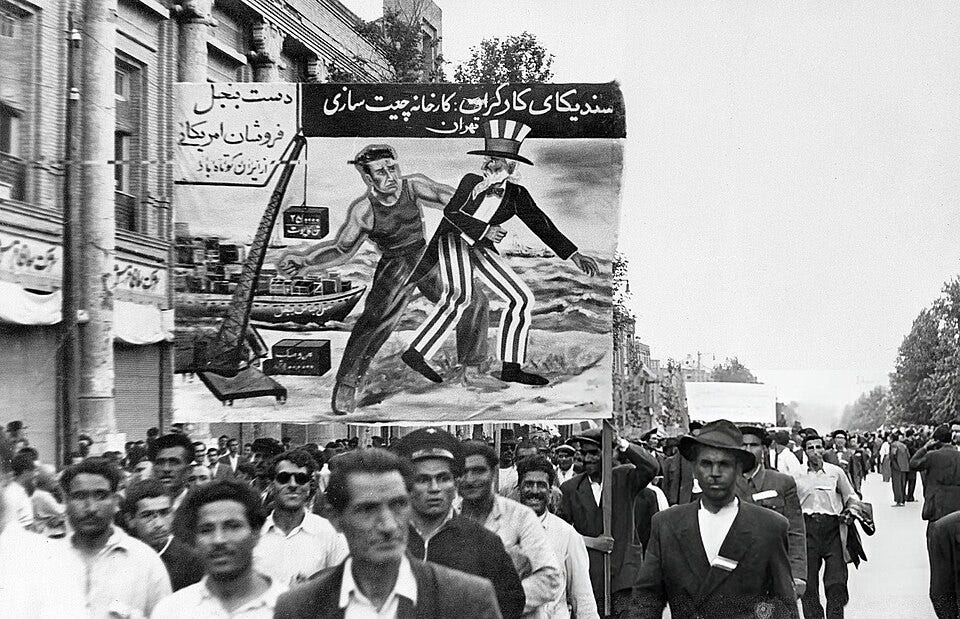
The 1979 revolution was a tragic validation of this analysis, not its refutation. Through the shuras it established in the factories, the Iranian working class possessed all the objective conditions necessary to lead the revolution.
What it lacked was not action: It struck, occupied factories and expelled managers. What it lacked was the subjective factor of leadership.
Here we must confront the strongest objection usually raised against this analysis. Was the Iranian left not already organized in 1979? Did the communist Tudeh Party and the guerrilla movement not have cadres, programs, newspapers and tens of thousands of members? If organization existed and was crushed nonetheless, does that not show that organization itself is no solution?
The objection turns the facts on their head. Tudeh and the majority faction of the guerrillas were not crushed while leading an independent struggle against the new state.
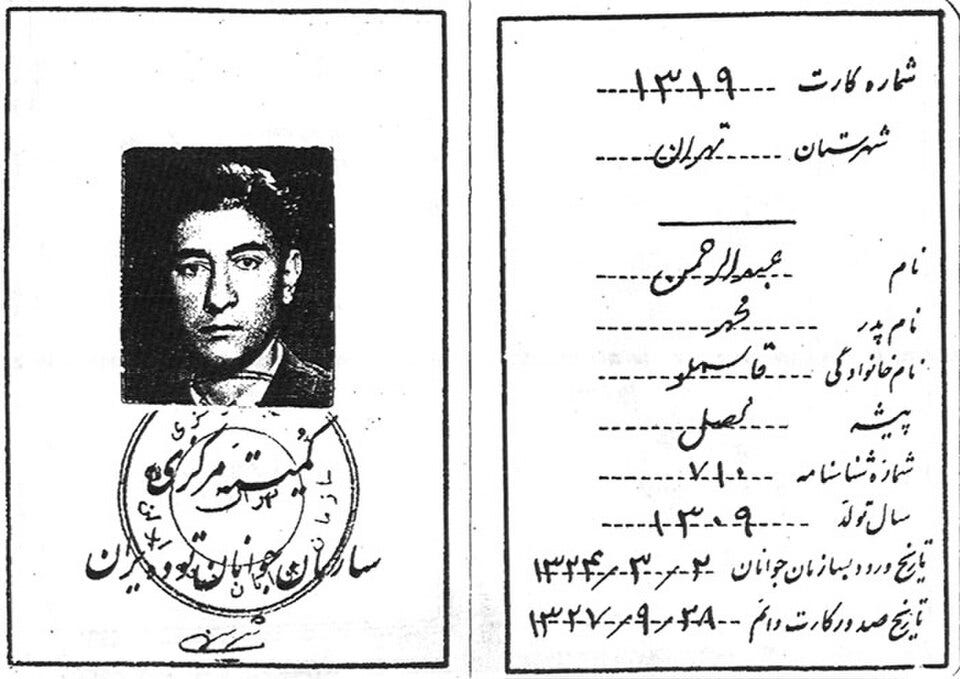
They were crushed after surrendering to it politically. They adopted a policy of support for Ayatollah Khomeini’s political line, on the grounds that it was anti-imperialist. They backed Khomeini against Mehdi Bazargan’s liberals, supported the campaign against Kurdistan, and took part in defending the regime against its own left wing opponents.
By the time their turn came in 1982 and 1983, they had stripped themselves of every means of self-defense: political independence, an independent working-class base, and credibility among those attacked before them.
The lesson of 1983 is therefore not that organization gets crushed. It is that an organization that dissolves itself into a front with a wing of the bourgeoisie is crushed twice: first politically, then physically.
This is precisely what Trotsky warned against in his critique of popular fronts. A party that suspends its independence in the name of an alliance against a greater enemy loses its reason for existing before it loses its cadres.
Set this lesson beside what Bayat proposes today, a “negotiated transition” with remnants of the regime or the military establishment, and we find the same formula, with the same expected outcome.
A Trotskyist diagnosis and a retreat from its conclusion
Bayat sees the same facts but draws the opposite conclusion. The clearest evidence is his explicit admission in an interview about his book ‘Revolution without Revolutionaries’, explaining why the revolutionaries remained outside power.
They “remained outside the structures of power because they were not planning to take over the state; when, in the later stages, they realized that they needed to, they lacked the resources,” including “unified organization, powerful leadership, strategic vision, and some degree of hard power,” needed to wrest control from the old regimes and those he calls “free riders”.
In its account of the disease, this diagnosis is Trotskyist to the bone. But Bayat reaches the brink of the conclusion and retreats. Rather than saying that the task is to build that unified organization and powerful leadership, he turns their absence into a neutral, at times even celebratory, descriptive concept: revolution without revolutionaries.
Elsewhere, he spells out what he means: “revolutions without revolutionary ideas”, which a revolutionary Marxist reads as an indictment and a program of action at once. Bayat reads it as a neutral feature of the neoliberal age, a structural fate rather than a political task.
His other central concept takes shape here in what he calls “refo-lution,” the hybrid of revolution and reform that marked the uprisings of 2011 and 2009.
Bayat distinguishes between “revolution as change” and “revolution as movement,” placing recent Arab and Iranian uprisings in the latter category. These were ingenious spontaneous eruptions that succeeded in mobilizing millions, but the change they called for remained an abstraction, sorely lacking in substance.
Again, the sociological description is accurate, but it is presented as a fixed characteristic, rather than the specific historical outcome of the organized revolutionary left’s absence from the leadership of those uprisings.
Bayat did originally propose ‘nonmovement’ as a legitimate critique of the Orientalist tendency to see the Middle East as incapable of organized action. But he replaces that prejudice with a more detrimental one, which is the systematic removal of revolutionary leadership from the heart of political analysis.
Post-Islamism and the safety valve
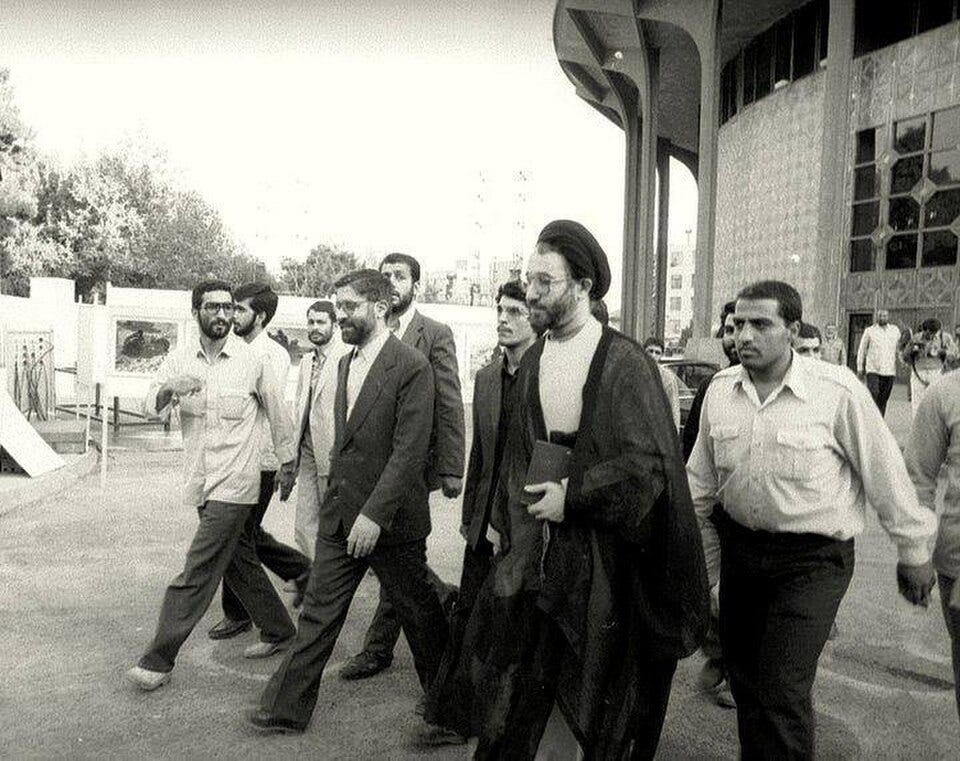
“Post-Islamism” exposes the same flaw from another angle. Bayat presents it as both the exhaustion of Islamism’s appeal and a project to move beyond it toward a “religious democracy” that upholds pluralism and individual freedoms. His central example is the reform movement under Mohammad Khatami between 1997 and 2004 {12}.
From the standpoint of permanent revolution, however, this is precisely the concept that demands the sharpest scrutiny. It confines the horizon of change to a struggle between factions of the religious state itself, offering this internal bureaucratic struggle to the masses as a possible route to emancipation.
Yet neither Khatami nor, later, Hassan Rouhani changed anything fundamental in the class structure of Iranian state capitalism, or in the repressive apparatus used to crush the student movement in 1999 and the Green Movement in 2009.
Seen from this angle, reformism obstructs revolution: it absorbs the revolutionary energy of the masses and converts it into electoral capital for a faction of the ruling class.
The irony is that Bayat himself, writing in the Journal of Democracy in 2023, records Khatami’s admission that the reformist path he led had reached a dead end. However, Bayat does not draw the logical conclusion: Reform from within the theocratic state apparatus was never a serious alternative to revolution, it always served as a safety valve against it {13}.
The gender question & the national question: Radicalization rather than subsumption
The “Woman, Life, Freedom” uprising, which followed the killing of Jina Mahsa Amini in September 2022, poses a test that no Marxist analysis can evade.
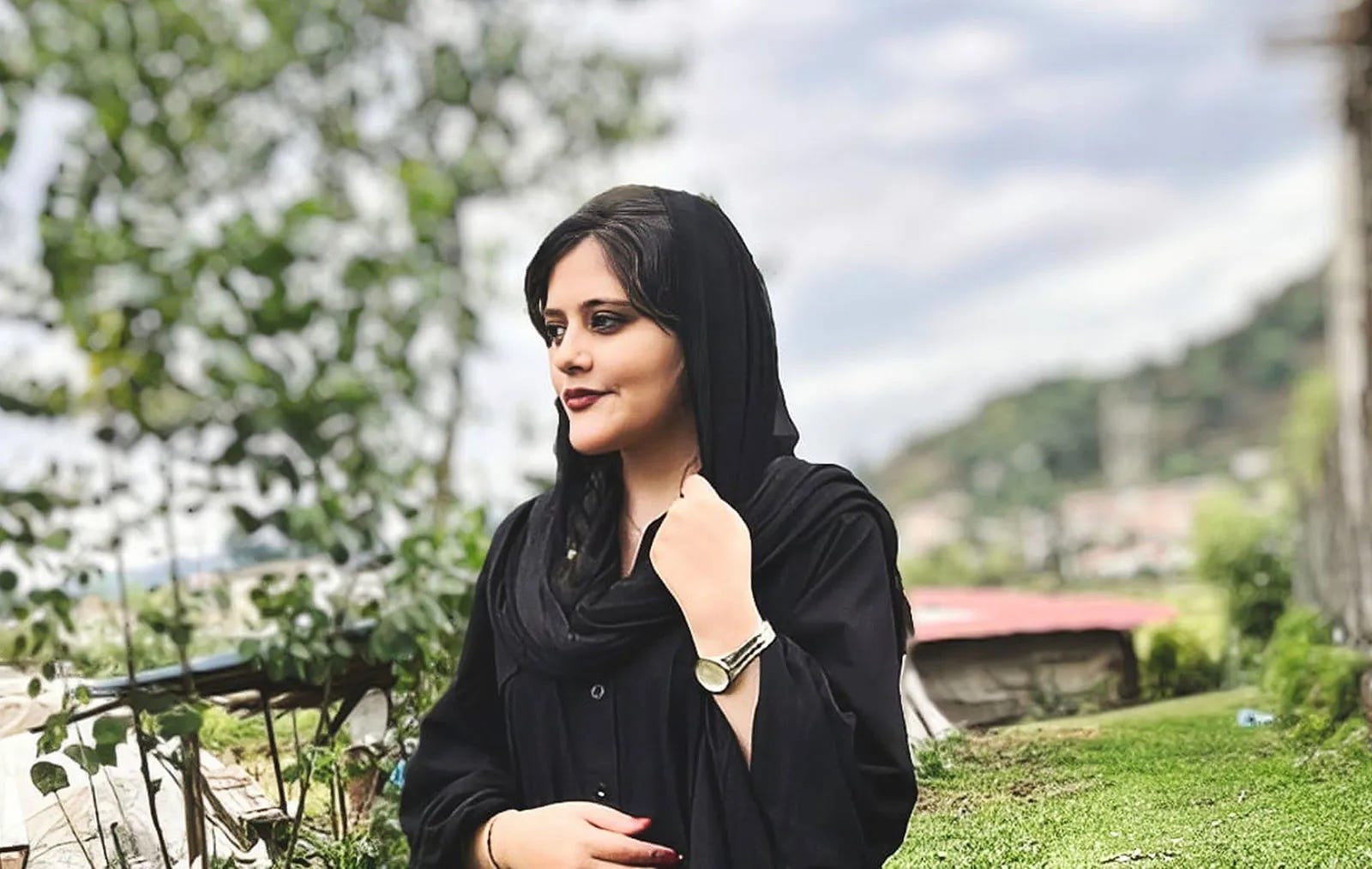
Its immediate impetus was a demand for bodily autonomy, its leadership on the ground was largely female, and its first spark came from the Kurdish regions.
The lazy response favored by part of the left, which tries to prove that the movement was “class-based at its core” and that its gender demand merely clothed an economic content, convinces no one and deserves to convince no one.
The correct position is the exact opposite: to show that the gender demand can be fulfilled only through working-class power, rather than subsuming it into the class question.
Compulsory hijab in Iran is not an ideological ornament the regime can discard by administrative decree, rather, it is a pillar of the management of labor power.
It is a means of regulating the terms on which women enter the labor market and public life, and of maintaining a hierarchy of wages and family relations that lowers the cost of reproducing labor power for capital and the state alike.
This is why reformism, despite two decades of intermittent rule, has been unable to touch it. Both wings of the Iranian bourgeoisie are incapable of accomplishing this elementary democratic task, just as they are incapable of achieving agrarian reform or effective national independence. That is the very definition of permanent revolution: a democratic task that only a power going beyond democracy can accomplish.
Exactly the same applies to the national question.
Ending the national oppression of Kurds, Baluchis and Ahwazi Arabs has remained an unfulfilled democratic task for a century. This is the classic material on which Trotsky and Lenin alike built their argument for the right to self-determination as a condition of working-class unity, rather than its opposite.
Iran’s most severely repressed regions in 2022, Kurdistan and Sistan-Baluchestan, are also its poorest and have its highest unemployment. The connection is a material structure, not a rhetorical coincidence.
The gender and national demands do not weaken the class framework; they give it greater force. They show that even the most basic democratic demands in Iran have hit the wall of the theocratic capitalist state, and that getting past it requires another power.
Who is the Iranian working class today?
In his 2023 essay, Bayat identifies a decisive structural fact: Neoliberal restructuring has fragmented the working class, undermined its job security and weakened its collective power {15}.
The diagnosis is accurate.
Decades of privatization, temporary contracts and growth in the informal economy have produced a scattered working class, much of it without contracts, unions or stability.
But Bayat presents this diagnosis as a neutral fact, rather than as the outcome of the collapse of the independent workers’ organization.
The revolutionary left should have built that organization, had it not been crushed in the 1980s after relinquishing its independence, as we have seen.
When class fragmentation becomes a fixed given, treated as a circumstance rather than the result of a political battle that can be won or lost again, analysis turns from an instrument of action into a lament for its impossibility.
More to the point, fragmentation does not erase the working class’s position in production.
Trotsky’s argument never required workers to be a numerical majority. Otherwise, he would not have written a word about Russia in 1905: Tsarist Russia was overwhelmingly a peasant country, with a proletariat making up only a small fraction of the population. For Trotsky, the condition is position in the process of production, not numbers.
By this criterion, what matters in Iran in 2026 is not the overall proportion of workers, but who stands at the economy’s arteries: oil and gas workers in Asaluyeh and Khuzestan, steelworkers in Isfahan and Ahvaz, port workers in Bandar Abbas, and truck drivers who carry everything everywhere.
They are not numerous, but they can bring the state to a halt.
Tehran’s urban middle class, however many it brings into the streets, cannot.
This is precisely what explains the difference between 2022 and 2023–2025. The main weight of “Woman, Life, Freedom” lay with urban residents, students and the young. Its geographical and symbolic reach was immense.
Yet it could not cross the threshold beyond protest because it did not touch the artery of production. The strike waves that followed, by contrast, actually frightened the regime. They took place where the surplus value that finances the repressive apparatus itself is produced.
The empirical test: 2023–2026
From 2023 through late 2025, Iran saw successive waves of strikes by steel, oil and gas workers, pensioners, teachers, nurses and truck drivers in Isfahan, Khuzestan, Asaluyeh, Bandar Abbas and Ahvaz. The background was wages left unpaid for two years, privatization of oil fields, a collapsing currency and inflation approaching 50% {16}.
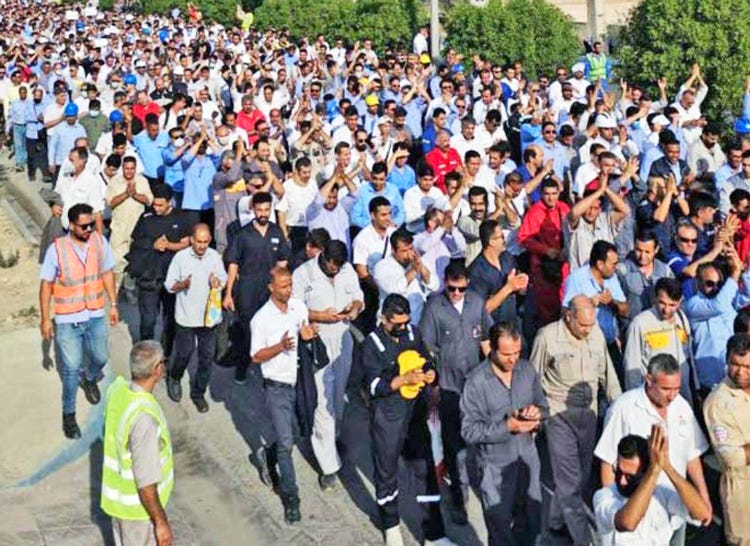
This is not a “nonmovement” in Bayat’s precise sense: unorganized action by noncollective actors. It is a succession of sectoral strikes with clear demands, thoroughly working-class in character, recurring, connecting and intersecting across regions.
It approaches the quantitative accumulation that, according to the dialectical logic Trotsky adopted, should produce a qualitative leap toward a comprehensive political confrontation, provided a unifying leadership exists.
But that accumulation still lacked an instrument capable of bringing together the demands of an oil worker in Asaluyeh, a nurse in Ahvaz and a student in Tehran within a single class program that makes power its objective.
Then came the 12-day war between Israel and Iran in June 2025.
It destroyed much of the nuclear program, killed several Revolutionary Guard commanders, left the economy in ruins and extinguished what remained of confidence in the regime’s ability to protect the country {17}. For all the arguments about the “art of presence,” this collapse produced no organized popular advance toward power, but another wave of scattered strikes and protests, crushed by the regime, and a drastic escalation in political executions {18}.
February 2026: The vacancy the ruling class filled
Then came the harshest test.
On February 28, 2026, Supreme Leader Ali Khamenei was assassinated in Tehran in a series of Israeli airstrikes targeting senior Iranian officials. The joint US-Israeli operation used US intelligence to locate several leaders. The Iranian government confirmed his death on March 1, after 36 years of absolute power {19}.
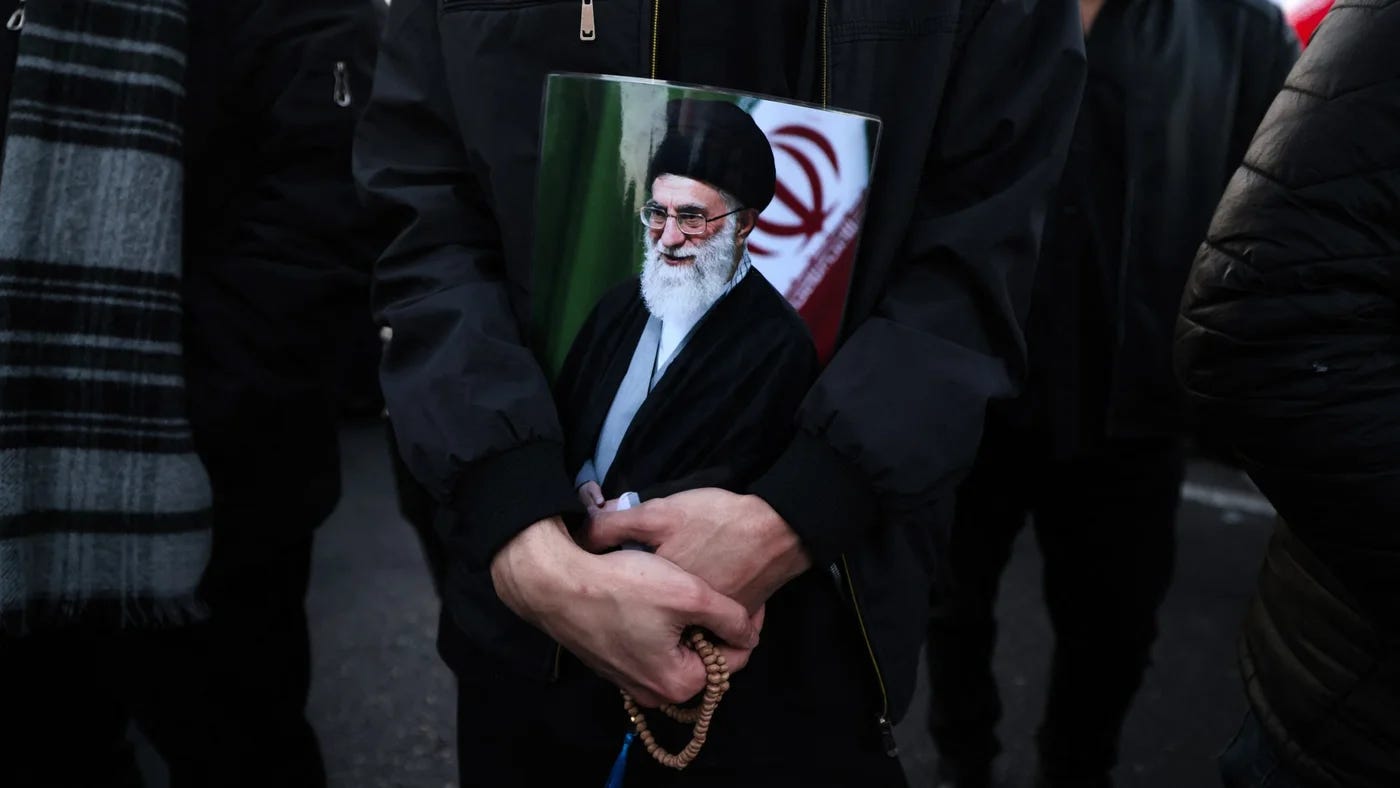
Here was the decisive test of everything discussed so far.
An actual vacancy opened at the summit of power and lasted eight full days, amid what was described as an unprecedented succession crisis. Dozens of officials had been killed in the same wave of attacks, an interim leadership council was formed, and several candidates, including Qalibaf and Larijani, competed for the post, while Alireza Arafi was nominated as interim supreme leader {20}.
Eight days of vacuum in a country undergoing simultaneous military and economic collapse, after three years of continuous strikes, and after 15 years of the “accumulation of social capacity” promised by the theory of nonmovements.
Who filled it?
On March 8, 2026, the Assembly of Experts chose Mojtaba Khamenei, the slain leader’s son, as the third supreme leader, under direct pressure from the Revolutionary Guard {21}. This was less an orderly transition than a closing of ranks.
Mojtaba himself was wounded in the strike that killed his father, surviving because he had left the building moments before it was hit {22}.
After his appointment, his prolonged absence from public view prompted widespread uncertainty about his fate. His first message as leader was read out on television rather than delivered in person, and the regime relied on written statements attributed to him to consolidate his rule {23}.
In plain political terms, the summit of the state collapsed and the position fell vacant. The “people,” dispersed according to the logic of “large numbers,” did not fill it. The ruling class did, regrouping through a hereditary succession that openly contradicted the anti-monarchical foundations of the 1979 revolution.
That is precisely what gives the charge of hereditary succession its political force {24}. The vacancy was filled by a man absent from public view.
The ruling class preferred a silent, wounded symbol to any opening for political struggle.
This matches exactly what Trotsky warned about in unfinished revolutions in dependent countries. Without an independent revolutionary leadership of the working class, collapse at the top does not bring the masses emancipation. It recycles power among remnants of the old ruling class and the imperialist powers that intervene to determine who succeeds whom.
This brings us back to the strongest version of Bayat’s position, set out in the third section.
If nonmovements accumulate social capacity on which organization can draw when conditions allow, when will conditions allow it, if they did not in March 2026?
However extensive it becomes, accumulated social capacity does not turn automatically into political power.
That leap requires an instrument. Its absence is not the fate of the neoliberal age. It is the outcome of a particular political battle, lost in the 1980s, that can be fought again.
Solidarity: An example that turns against its proponent
In his essay on the 2022 uprising, Bayat was obliged, despite his theoretical apparatus, to acknowledge the central problem. Iran was far from a “revolutionary situation,” because such a situation requires “an organized revolutionary force backed by millions” confronting “a crumbling government.”
Moving from a movement to a revolutionary situation requires “a leadership organization and a strategic vision capable of garnering popular confidence,” along the lines of Poland’s Solidarity, the African National Congress or Sudan’s Forces of Freedom and Change {14}.
Bayat brings back through the back door what he expelled through the front: Organized leadership, rather than the scattered “nonmovement,” is the decisive condition. But his examples are precisely the point of contention. They cannot be dispatched in a passing sentence.
Take Solidarity. It was neither small nor marginal. Its membership reached some 10 million, almost a quarter of Poland’s population, and it was rooted in the shipyards and mines, at the very heart of industrial production. In sheer organizational strength, it surpassed anything imaginable in Iran today. If mass organization alone were sufficient, Solidarity would be the finished model.

And the outcome? In 1989, Solidarity’s leadership sat down for Round Table talks with the same Stalinist bureaucracy that had crushed it in 1981. Those negotiations produced a government that oversaw “shock therapy,” industrial privatization and the dismantling of social protections. The largest workers’ organization in postwar European history ended up administering the neoliberal assault on its own members.
But the decisive question is: Why? Not because organization is inherently vulnerable to co-optation. Solidarity built itself as a trade union movement with a moral and national mission, but without a program for workers’ power. From the outset, it accepted the horizon of a “return to Europe,” meaning integration into global capital. It did not ask Trotsky’s question: Who owns the means of production after the bureaucracy falls? Because it did not ask, others answered for it.
Solidarity does not show that organization as such is co-opted. It shows that organization without a class program is co-opted. This is the distinction Bayat obscures when he presents it as a model for the leadership Iran needs. The example turns against his own argument.
Bayat recommends to Iranians the model that produced in Poland exactly what he criticizes in the Arab region: a revolution without revolutionary ideas, and change that remained an abstraction lacking in substance.
The same applies to the African National Congress, which ended up administering a capitalism with racist effects under Black leadership, and to Sudan’s Forces of Freedom and Change, which negotiated with the generals until they turned against it twice.
The task
This is the conclusion Bayat’s theoretical apparatus cannot accommodate.
Analyzing the past decade, he describes the symptoms of collapse accurately: the fragmentation of the working class, the failure of reformism, and protest’s inability to develop into a revolutionary situation. Yet he refuses to draw the only logical remedy from his own diagnosis.
The urgent task is to rebuild a revolutionary workers’ party wholly independent of every wing of the state, conservative and reformist alike, and equally independent of any imperialist patronage offering itself as an alternative.
Celebrating the “art of presence” and the masses’ ability to remain in public space will not do. Such a party must put forward a program linking the wages of oil and steelworkers to the demands of nurses, teachers and pensioners.
The gender demand and national rights must be integral to it, as democratic tasks that only workers’ power can accomplish, rather than tactical additions.
The program must aim to wrest power from theocratic state capitalism itself, rather than negotiate a transition with remnants of the regime or those who killed its leadership from abroad. This would prepare the ground for reorganizing the economy on a socialist basis, placing the means of production, beginning with oil, gas and steel, under workers’ own control.
It must immediately link that victory to the fate of the working class across the region, from Iraq to Lebanon to Egypt.
Any socialism, or even democracy, isolated within Iran’s borders, besieged by sanctions and imperialist power, is condemned in advance to strangulation or absorption into a new deal with global capital. The past three years have supplied concrete proof.
This is the question the logic of permanent revolution poses at Iran’s present juncture.
Contrary to what Bayat proposes, it is the only question capable of turning a “movement to reclaim life” into an actual revolution that reclaims not only everyday life, but power itself.
Sources and references
{1} Asef Bayat, Workers and Revolution in Iran: A Third World Experience of Workers’ Control (London: Zed Books, 1987). For his class background, see also his introduction to Revolution without Revolutionaries (Stanford University Press, 2017).
{2} Interview with Bayat in the Journal of Resistance Studies (2022), and his introductions to Street Politics (1997) and Life as Politics (2010).
{3} Asef Bayat, Life as Politics: How Ordinary People Change the Middle East (Stanford University Press, 2010), p. 14.
{4} Ibid., pp. 5, 14 (the distinction between organized movements and nonmovements).
{5} Asef Bayat, Street Politics: Poor People’s Movements in Iran (New York: Columbia University Press, 1997), chapter “The Quiet Encroachment of the Ordinary.”
{6} Life as Politics, p. 55 (his qualification about reading ordinary behavior as conscious resistance).
{7} Workers and Revolution in Iran (1987), the chapters on the shoras and their suppression.
{8} Leon Trotsky, The Permanent Revolution (1929) and Results and Prospects (1906). For his critique of the popular front, see The Spanish Revolution (1931–39).
{9} Asef Bayat, “New Texts Out Now: Revolution without Revolutionaries,” Jadaliyya (2018).
{10} Interview with Bayat in Mada Masr (February 2018): “revolutions without revolutionary ideas.”
{11} Revolution without Revolutionaries (Stanford University Press, 2017), p. 17 ff. (the concept of refolution).
{12} Asef Bayat, Making Islam Democratic: Social Movements and the Post-Islamist Turn (Stanford University Press, 2007).
{13} Asef Bayat, “Is Iran on the Verge of Another Revolution?” Journal of Democracy 34, no. 2 (April 2023).
{14} Ibid. (2023), on the conditions for a revolutionary situation and models of leadership.
{15} Ibid. (2023), on neoliberalism’s role in fragmenting the working class.
{16} Reports on workers’ strikes and economic collapse in Iran, 2023–2025.
{17} Reports on the 12-day war between Israel and Iran, June 2025.
{18} Reports by international human rights organizations on repression and executions, late 2025 to early 2026.
{19} “Assassination of Ali Khamenei,” Wikipedia, and Al Jazeera coverage (March 9, 2026), on the February 28, 2026, strike, official confirmation on March 1, and the joint US-Israeli operation.
{20} “2026 Iranian leadership crisis,” on the formation of the interim leadership council, the nomination of Alireza Arafi, competition between Qalibaf and Larijani, and the killing of more than 40 officials.
{21} “Mojtaba Khamenei,” on his election by the Assembly of Experts on March 8, 2026, and reports of direct pressure from the Revolutionary Guard.
{22} The Jerusalem Post (March 16, 2026), citing a leaked audio recording obtained by The Telegraph, on Mojtaba’s survival after leaving the building moments before the strike.
{23} Ibid., and subsequent reports on his absence from public view and the reading of his first message on television.
{24} The Jerusalem Post (March 2026), on the political characterization of the transition as hereditary succession in a system founded on opposition to monarchy.
