



This issue of The Cairo Report covers a strike in a paper company and another in a ceramic manufacturer, three “bread martyrs” in Menoufiya, the reignition of the Al-Wafd journalists’ battle against the newspaper administration, and a profession-wide initiative by the Pharmacists Club to battle the seven-year judicial guardianship imposed on the Pharmacists Syndicate.
Meanwhile, Washington priced Egypt's forced-labor record into a new tariff bracket, the medical school graduates’ crisis has gone to parliament, the Lawyers Syndicate is now facing backlash over the Loa Khalaf case, Samanoud workers face the aftermath of their strike, the crackdown against dissidents continues, and an Economist report revealed that Cairo sits 50% below the global average city wage premium.
Football, speech codes & a “deferred” sanction
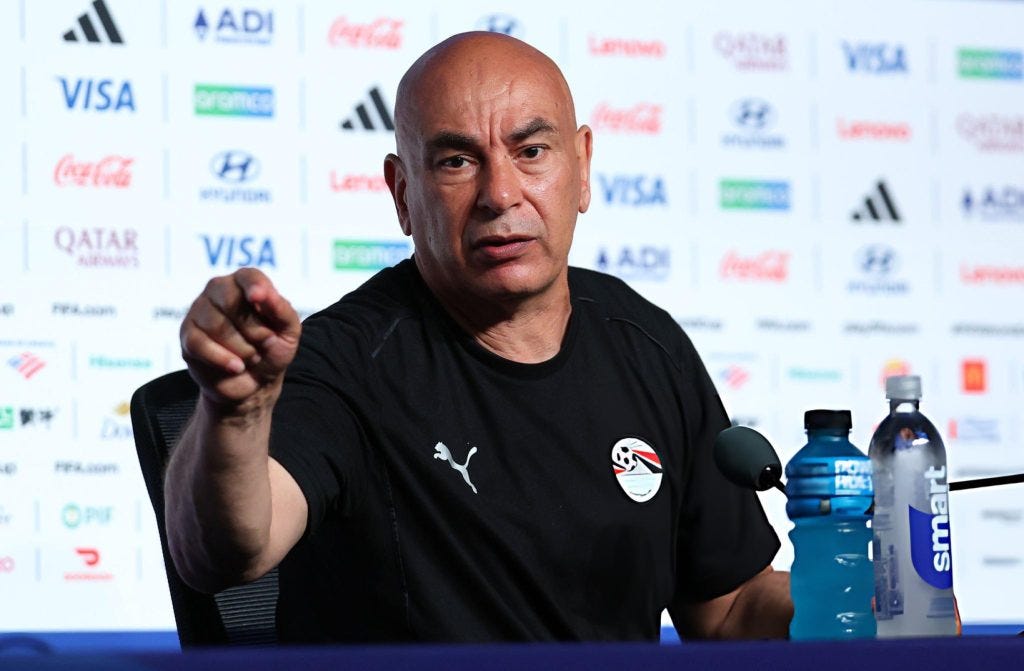
The Supreme Council for Media Regulation (SCMR), the country’s chief censor, has announced a set of sanctions against sports broadcasters over their coverage of Egypt’s World Cup run, then immediately suspended those penalties in the name of “unity” behind the national team.
The council’s statement singled out pundit and national critic Reda Abdel Aal for a four‑month on‑air ban and ordered a 200,000 pound fine against a TV channel for broadcasting his criticism of national team coach Hossam Hassan, alongside formal warnings to a roster of ex‑players and presenters on other channels.
After “studying” recommendations from its sports media monitoring committee, the council said it would postpone implementation and grant a “last chance to comply with professional codes and legal obligations,” reserving the right to activate the sanctions and add new ones in the event of further “violations.”
The move extends a pattern already visible in Hossam Hassan’s management of the national team. Since his appointment, he has used his post to affirm loyalty to the presidency and to blur the line between coaching and political sycophancy, while pursuing legal and regulatory action against critical sports commentators. Complaints filed by his lawyer have triggered previous investigations into journalists and producers, and now underpin the council’s latest disciplinary package, which formally frames sharp tactical criticism as a breach of state‑issued media “codes.”
Read more: Hossam Hassan and the blurring of lines between football and politics in Egypt
What looks like a compromise, announcing sanctions, then shelving them for the sake of “broad popular and media alignment,” is another version of the New Republic’s wider discipline: punishments are drafted, publicised, and kept in reserve, turning any future criticism into a calculated risk rather than a routine part of sports broadcasting.
The council’s insistence that it is merely enforcing technical “codes” against “excesses” masks the political content of those codes: they entrench a hierarchy in which the national team’s coach can attack referees, FIFA, or opponents in explicitly political language, while those who question his performance or style face the prospect of bans, fines, and permanent warnings on their records.
In that sense, the decision does not separate football from politics; rather, it formalises the fusion, using an ostensibly neutral regulatory body to police the tone of dissent around a coach who has already made clear which side of that fusion he stands on.
Cairo, a capital that does not pay
Cairo sits 50% below the global average city wage premium in a new study of more than 300 cities, meaning that, after adjusting for workers’ qualifications and local prices, the capital adds less wage value to a white-collar job than the average city in the global sample.
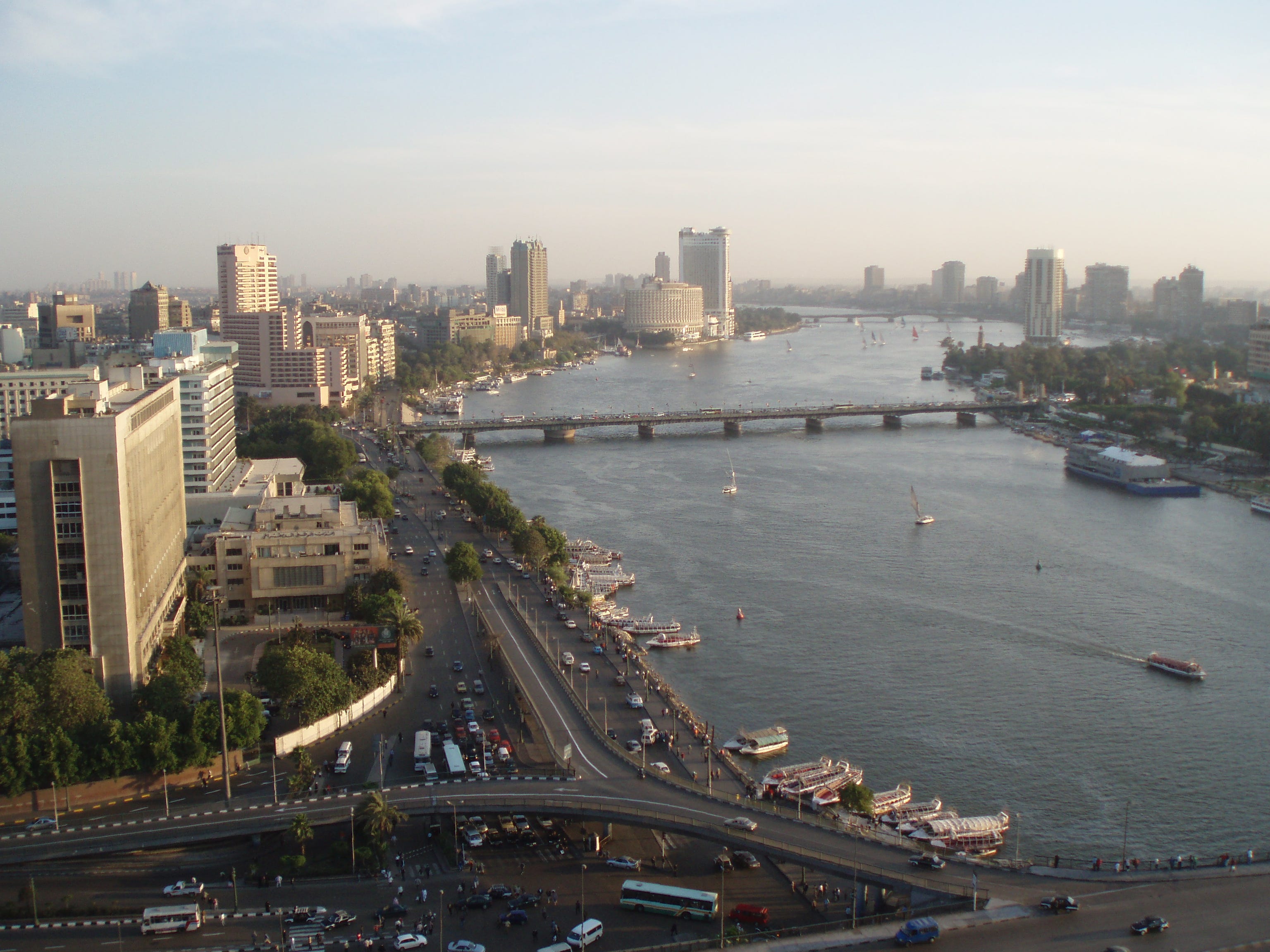
The measure separates the earnings associated with a worker’s own credentials from those generated by place: the firms, infrastructure, networks, and concentration of employment that should make a city produce better wages. In Cairo, that premium is weak. The analysis draws on the job histories of more than 500 million LinkedIn users and estimates how much wage differences among comparable workers can be attributed to the city itself.
While the comparison is instructive, it is not a migration guide. The model suggests that comparable LinkedIn-observed workers would receive substantially higher location premiums in Amman, Tunis, or Istanbul, where workers would earn 45–52% higher wages, while Jeddah’s 259% premium reflects the exceptional pull of a high-income Gulf labor market.
At the same time, capitals in war-torn countries such as Beirut, Tehran, and Tripoli also register larger premiums, ranging between 74–98%, although the figures say nothing about political stability, job security, or the conditions under which wages are earned. The dataset covers formal, educated white-collar workers, which cannot stand in for Cairo’s vast informal workforce, nor does it measure insecurity, workplace rights, or the unequal distribution of urban life.
Housing supplies the immediate material context missing from the model. The Built Environment Observatory’s first “Cairo Rent Index” placed the median advertised monthly rent for an unfurnished apartment at 10,000 pounds in the second quarter of 2026, above the recently mandated 8,000 pounds national minimum wage; rents had risen 15% from the same period last year. The index, based on more than 18,000 online listings across 26 districts, records a city split between 3,500 pound rents in El Marg and rents 31 times higher in upscale neighborhoods like Zamalek.
Cairo gathers workers without converting that concentration into a corresponding wage premium. Congested transport, strained infrastructure, and a housing market detached from wages do not merely make the city expensive; they narrow workers’ ability to change jobs, relocate, or refuse bad terms. The capital’s labor market thus holds people in place while its employers, public and private, continue to treat the statutory wage floor as an upper limit rather than the beginning of a livable income.
Paper company workers end sit-in after 11 days
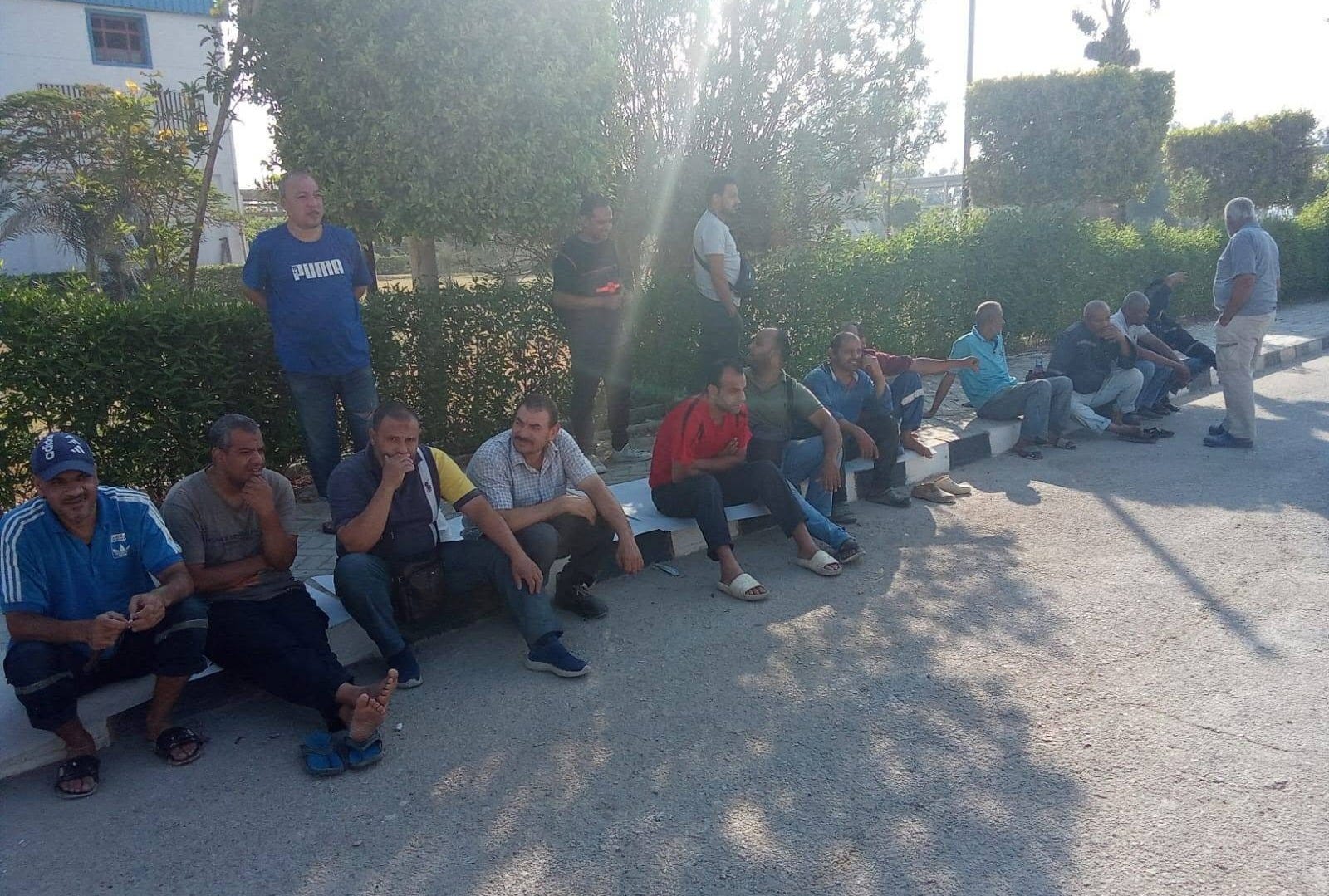
Workers at EMAK Paper Manufacturing Co. in Ain Sokhna ended their sit-in after 11 days, after the company dropped “administrative investigations” into a group of workers it had accused of “unlawful assembly” and “disrupting operations.”
The factory, located in the Suez special economic zone, a legal designation that structurally insulates investors from standard labor inspection regimes, is wholly owned by Kuwait’s M.A. Kharafi & Sons Group, a multi-billion-dollar private conglomerate whose Egyptian footprint spans construction, tourism, real estate, and airport management.
The workers began their sit-in after management repeatedly failed to address demands over wages, unpaid financial entitlements, and working conditions. Their demands included implementation of the minimum wage, payment of the outstanding share of annual profits from 2022, overtime pay, and increases to meal, shift, and risk allowances. Three workers told Mada Masr’s Ahmed Ashmawy that their basic monthly salaries range from 4,500–8,500 Egyptian pounds (USD 87–165), figures that fall short of rising living costs and remain disconnected from the profitability of the enterprise, including for many employees with more than a decade of service.
They also demanded potable drinking water, adequate work clothing, and occupational safety equipment that had not been issued for over five years, and access to the company’s internal bylaws. Management initially made ending the sit-in a precondition for formal negotiations, while workers maintained that production continued during their action, according to Al Manassa’s Ahmed Khalifa.
Founded in 1998, EMAK, which is a member of the American Chamber of Commerce in Egypt, began operating its Suez plant in 2004 with a first-stage investment of approximately USD 700 million. The Kharafi-owned company subsequently acquired Alexandria’s National Paper Company in 2005, expanding its Egyptian paper holdings, while corporate listings place EMAK’s workforce at between 250 and 499 employees.
The recent mobilization echoes a two-week sit-in by EMAK workers in 2012, during which two workers self-immolated and many went on a hunger strike, over nearly identical grievances regarding wages and suspended profit shares.
At the time, the protests similarly resulted in the delayed implementation of prior management agreements, yet the underlying disputes have not reached a structural resolution.
If anything, the recurrence demonstrates the utility of the New Republic’s “Special Economic Zone” model for capital, whereby it provides a landscape where multinational subsidiaries can use regulatory insulation and their parent conglomerate's broader economic weight to manage, rather than resolve, the conditions producing repeated labor grievances, indefinitely deferring the cost of compliance.
Ceramica El-Amir workers strike over delayed wages
Hundreds of workers at Ceramica El-Amir’s factory in 10th of Ramadan City launched an ongoing strike on Sunday, July 19, demanding payment of delayed June wages, regular monthly salary disbursements, and the restoration of suspended health insurance services, according to workers who spoke to Al Manassa’s Ahmed Khalifa.
The strike, which has brought production to a halt, began when the company’s bus drivers stopped working over the delayed wages, three striking workers told Mada Masr’s Ahmed Ashmawy. With company buses out of service, first-shift workers returned home using public transportation, while many employees scheduled for later shifts could not reach the factory, and those who did arrive joined the strike. Only a small number of electricity and kiln workers continued reporting for duty because their jobs “cannot stop,” one worker said.
Workers told Khalifa they want June salaries paid immediately, a commitment that wages will be paid by the fifth of each month, and health insurance services restored after months of suspension. One worker said the company routinely delays salaries until after the 20th of the following month, leaving many employees unable to cover household expenses and forcing them into debt. Hundreds of workers traveled to the factory at their own expense after the drivers walked out and refused management’s calls to resume work until their demands are met.
Workers also complained of low pay. According to Al Manassa, average monthly wages are around EGP 6,000, below Egypt’s minimum wage. One employee with 15 years of service said he earns EGP 6,200 a month, while others receive even less. He added that many workers no longer qualify for production bonuses because management has raised performance targets.
Ceramica El-Amir is not a small, marginal, or newly established employer, it was established in 1994 and began production in 1996, operating from factories in 10th of Ramadan City, with a daily output of approximately 38,000 square meters of ceramic and porcelain products, including tiles and sanitary ware.
A driver told Ashmawy that eight drivers filed a collective complaint with the Labor Office on Tuesday, July 21, over delayed wages and suspended health insurance benefits. They said the company continues deducting workers’ health insurance contributions without paying them to the Health Insurance Organization (HIO), resulting in the suspension of medical services.
Another worker said wage delays have become routine, noting that some employees received their May salaries on June 23 while others were not paid until July 6.
“July is almost over, and we’re still talking about getting paid for June,” he said.
Workers also raised safety concerns, with one employee telling Al Manassa that the company has refused to renew licenses for “deteriorated” transport vehicles, putting workers’ lives at risk.
The strike follows a similar action early last year, when Ceramica El-Amir workers went on strike for eight days to demand implementation of the national minimum wage. Police arrested 10 workers after the company accused them of “inciting the strike, sabotage, and disrupting production.” They were later released, and the strike ended after an agreement between management and workers.
However, the broader history of labor disputes at the company predates last year’s strike.
In 2012, Ceramica El-Amir workers joined workers from other ceramics companies in a protest outside the Ministry of Labor over management’s failure to implement an agreement covering wages, annual profit shares, meal and risk allowances, and other benefits. Workers at the time also accused company owners of bringing in armed men to intimidate those on strike.
Over a decade later, the immediate demands have shifted from the implementation of wage agreements to the elementary question of whether workers will receive their salaries on time, but the company’s reliance on pressure and delay remains familiar.
Section 301: Egypt priced into a forced-labor tariff bracket
The White House confirmed on July 23 that Egypt will face a 12.5% Section 301 tariff on all its exports to the United States, up from the 10% baseline that applied while the investigation was pending, after the US Trade Representative found Egypt’s failure to enforce a prohibition on forced-labor imports “actionable” under the Trade Act of 1974.
The finding is not unique to Egypt, it sits inside a memorandum covering 60 economies investigated since March, where Washington split targets into two tiers: a 10% rate for economies that already ban forced-labor imports but merely enforce it weakly, or that made specific enforcement commitments under bilateral trade agreements, and a 12.5% rate for everyone else found in violation. Egypt was not placed among the economies granted the lighter rate, which included Jordan, Bangladesh, and Pakistan among others, meaning it received no credit for interim commitments and was assigned the harsher bracket by default.
The tariff technically lands on the US importer’s ledger, not the Egyptian treasury, since it is collected at the American border rather than deducted from Egyptian export revenue directly. Applying the new rate to Egypt’s roughly USD 2.9 billion in exports to the US in 2025 raises the total duty burden from about 290 million dollars to 362.5 million dollars a year, an additional 72.5 million dollars in costs that US buyers now absorb on Egyptian-origin goods.
That cost, though, rarely stays with the importer. Buyers facing a thinner margin on Egyptian goods have every incentive to shift orders to suppliers charging lower rates, converting a border tax into lost manufacturing orders inside Egypt itself, a slower, less visible drain than any headline tariff figure suggests.
The timing compounds an already deteriorating external position. Egypt’s trade deficit widened by nearly 54% in the first quarter of 2026, a gap the tariff decision now presses against directly, threatening the non-oil export sector and foreign currency reserves the state has spent the past two years bragging about and trying to defend through IMF-backed adjustment.
What the decision makes explicit, in language the state cannot simply reframe as “external pressure,” is that Egypt’s own record on forced labor, and not merely its currency or its debt, is now priced into how the country trades with its largest single non-Gulf export market.
Al-Wafd journalists want CEO sacked, met with platitudes
Journalists at Al-Wafd newspaper, the country’s oldest partisan newspaper, have organized to demand the removal of chief executive Sherif Hamouda, after management attempted to impose a punitive surveillance regime on staff and threatened disciplinary action against anyone who dared talk of striking.
The union committee representing Al-Wafd’s journalists, chaired by Mohamed Adel Agamy, met on Sunday and issued a direct demand: Hamouda must go. The committee said the paper has been dragged through three years of avoidable crises by an executive more interested in disciplining his workforce than running a functioning newsroom.
The flashpoint came on July 14, when Hamouda handed down an order confining staff to the premises during working hours, ordered fingerprint records cross-checked against CCTV footage, and demanded journalists report back to the newsroom every two hours. Workers rightly rejected rules that had nothing to do with producing journalism and everything to do with control.
Behind the attendance order lies a longer pattern of alleged mistreatment. The union stated that salaries have routinely arrived late, pushed back to the 16th of the month, and split into three payments, while management imposed steep deductions on staff pay, only unwinding them piecemeal over the following fortnight. Workers who simply asked when they’d be paid found themselves referred for internal investigation.
The union committee stated that some journalists were considering legal action against Hamouda, accusing him of running smear campaigns against staff on social media over “arbitrary decisions” unsuited to journalistic work.
The union also accused Hamouda of a string of broken promises, made six months ago, dressed up as achievements: newsroom refurbishments, modern computers, a digital studio, an on-site nursery for staff children, announced with fanfare, none delivered.
Only ten second-hand computers ever showed up, the committee said, and a “training academy” floated as a new revenue stream was launched without any actual courses or infrastructure, leading workers to question what it was really for. Staff further allege that Hamouda installed himself as a de facto editor-in-chief, overriding the paper’s actual editors, and brought in outside administrative personnel to sideline existing employees.
Rather than address these grievances, party management responded with the language of discipline. In a statement issued hours before the union’s meeting, Al-Wafd’s Higher Committee warned that “instigators of unlawful strike action” could face legal and disciplinary measures, and pointedly noted that labor law permits sacking workers on open-ended contracts.
Management, the statement said, would not let “rights become a means of pressuring the institution,” an unmistakable warning shot aimed at any collective action.
Editor-in-chief Yasser Shoura, caught between staff and ownership, said he hoped talks, expected soon between party chairman El-Sayed El-Badawi, staff, and the party’s executive bureau, would avoid “liquidation, dismissals, or any measures of that kind.”
He insisted a parallel plan to halve the party’s overall spending would not mean cutting journalists’ jobs or contracts.
On Saturday, July 25, El-Badawi met with the union committee and, according to the committee’s statement, pledged to relocate Hamouda’s office, freeze some of his recent decisions, and bring the matter before the party’s Higher Committee.
He also announced plans to form an advisory council with staff representation to study the paper’s problems, and committed to renovating the first floor of the paper’s headquarters. Separately, Higher Committee member Khaled Kandil reportedly proposed additional measures aimed at stabilizing the institution.
The union said it welcomed the seriousness of the discussion and looked forward to seeing the commitments translated into concrete steps. Notably, the statement did not address Hamouda’s removal, the union’s central demand, directly, leaving that question unresolved for now.
In June, El-Badawi referred 22 journalists at the newspaper to investigation in response to their protest over delayed salary payments until mid-month and the deteriorating work environment within the institution.
The decision, which constitutes a violation of the workers’ right to protest and demand their wages under labor law, was only suspended after the direct intervention of the head of the Journalists Syndicate, Khaled El-Balshy.
The journalists did not stage a full strike, despite being legally entitled to do so. Instead, they held a symbolic sit-in at the newspaper’s headquarters to protest the continued delay in salary payments until the 13th of the month and the disbursement of payments in installments to some employees but not others.
As clarified by an emergency meeting of the newspaper’s union committee on June 11, they also demanded the provision of the most basic necessities for journalistic work: a decent workspace, a reliable internet connection, and sufficient computers to meet the employees’ needs.
This came months after the newspaper journalists, staff, and administrators organized a four-day sit-in in October 2025 demanding the implementation of the national minimum wage, which had been increased to 7,000 pounds.
El-Balshy hosted a press conference at the newspaper’s headquarters in Dokki, where he said that “An agreement was reached with the newspaper’s management to increase all employees by 3,500 pounds, regardless of their current salaries, so that everyone can benefit.”
The journalists and staff chanted: “What does a minimum wage mean? It means a journalist can barely live... can’t afford to look after his family... can’t afford gas and bread... can’t buy his wife a “chalet”... Do you hear us, Your Excellency?”
Three more workers martyred for bread
A sewage-clearing operation in Sadat City, Menoufiya, turned fatal on Sunday, July 19, when two men carrying out maintenance work inside a sewage well near Al-Azhar’s Faculty of Islamic Studies were overcome by toxic gas and fell into the shaft. According to local reports, the victims were workers Mohamed Mohamed Sobhy, 42, and Maher Farhat Abdel Maksoud, 55. Sobhy reportedly entered the well in an attempt to rescue Abdel Maksoud after he called for help. Passing by the scene, Ahmed Mostafa Abul Yazid, 46, heard their pleas and jumped in to help, according to Masrawy.
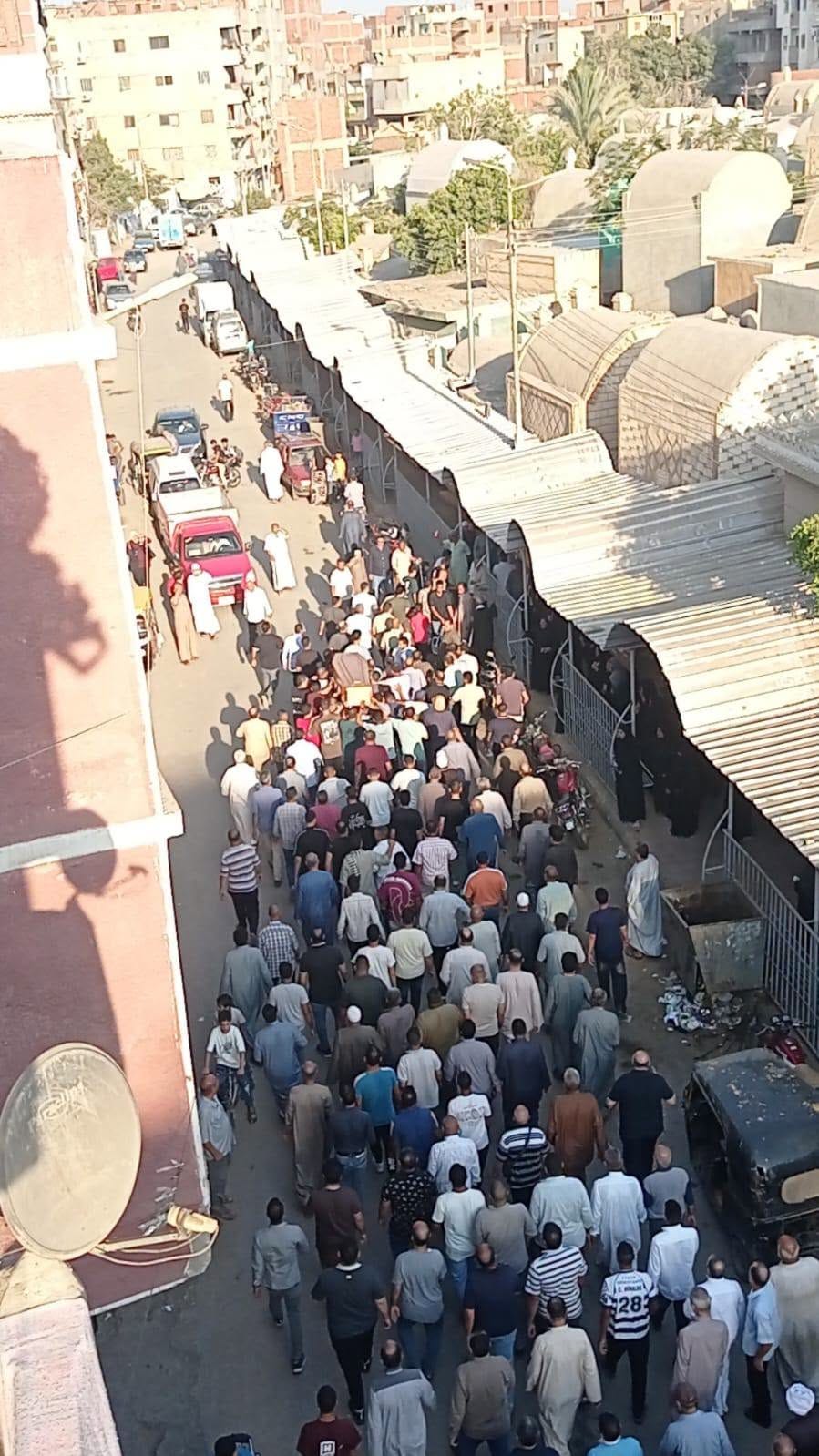
The three men were pulled from the well by rescue teams and transported to Sadat Central Hospital, where Sobhy and Abdel Maksoud were pronounced dead. Abul Yazid was admitted to the hospital’s intensive care unit after inhaling toxic fumes. He died on Wednesday, July 22.
On Sunday, the Center for Trade Union and Workers’ Services (CTUWS) issued a statement mourning the workers, describing them as people “who went out in search of a living, and the hand of negligence killed them.” It called for a serious, transparent investigation into the full circumstances of the accident, free from attempts at a cover-up.
CTUWS also renewed its longstanding demands for strict enforcement of occupational health and safety standards across all workplaces, adequate training and protective equipment, and a ban on any work inside sewage networks or other hazardous sites without full compliance with approved safety protocols.
Prison Watch: More detention, more delays, more renewals
The Cairo Criminal Court’s Terrorism Circuit adjourned the trial of Sayed Ali Fahim, known as “Sayed Moshagheb,” and five co-defendants to September 22, to hear witness testimony, the Egyptian Commission for Rights and Freedoms (ECRF) reported on July 20.
The defendants face charges of unlawful assembly and possession of fireworks in Case No. 7304/2026 (Bulaq al-Dakrour misdemeanors); prosecutors referred the case to criminal trial on June 20 after Moshaghab was rearrested just hours after his release in late April.
A Fakar Tany investigation by Tarek Hafez filled in the backstory. Moshagheb, the Ultras White Knights capo, spent roughly 11 years in and out of detention on 13 separate cases since 2015, including a seven-year sentence in the “Air Defense Stadium” case (of which he was acquitted on the underlying murder charges), was released on April 15.
Within three hours, a crowd of what prosecutors estimate at 100–300 people gathered outside his family home in Bulaq al-Dakrour to celebrate, some setting off fireworks. According to the case file, National Security investigators allege the gathering was pre-arranged by Moshagheb to demonstrate force and reassert Ultras influence in the area. Moshagheb has denied all charges in his prosecutorial testimony, saying he did not know the crowd, did not organize anything, and only wanted to get inside his house; he described being handed a firework by a stranger while being carried on people’s shoulders.
His lawyer, Osama El-Gohary, argues the case lacks any injured parties or complaints from residents, and that Moshagheb was actually arrested inside his home after the gathering had already dispersed, not “caught” in the assembly itself as the police report claims. Dozens of lawyers have reportedly volunteered to join his defense team.
On the same day, the Supreme State Security Prosecution renewed the pretrial detention of lawyer Mohamed Abu El-Diyar, coordinator of the Committee for the Defense of Prisoners of Conscience, for another 15 days, ECRF reported, in Case No. 4502/2026, on charges of spreading false news and joining a terrorist group.
Abu El-Diyar had asked to be released, citing pending client work at his law office. He was arrested on May 25 along with lawyer Wafaa El-Masry and Dr. Hanan El-Tantawy, both of whom were released on 50,000-pound bail; Abu El-Diyar alone was ordered held.
Per a July 21 Facebook post by lawyer Khaled Ali, State Security Prosecution renewed filmmaker Omar Salah Marei’s custody for a sixth time, for 15 more days, pending investigation. During the session, he reported having started medical treatment for his arm and having been permitted to receive antidepressant medication, and said he is awaiting an internal-medicine specialist review for a thyroid condition.
Marei was arrested from his home on May 11, not brought before prosecutors until May 16, and is held in Case No. 3835/2026 on charges including spreading false news.
In tandem, Ali stated, the Badr Criminal Court postponed the trial of activist Mohamed El-Qassas, deputy head of the Strong Egypt party, to October 20 to hear the prosecution’s pleading. El-Qassas has been detained for his activism since February 2018.
Meanwhile, political parties, rights groups, and labor organizations have called for the release of labor leader Shady Mohamed, held in pretrial detention for two years and three months in the so-called “Palestine Banner” case (No. 1644/2024), Al Manassa’s Ahmed Khalifa reported.
A joint statement warned of a “serious deterioration” in his health amid continued delays in getting him an MRI for a suspected tendon injury in his left shoulder, as previously covered by The Cairo Report.
Shadi’s case also featured in a memo submitted by a delegation from the Committee for the Defense of Prisoners of Conscience to the National Council for Human Rights (NCHR) Vice President Mohamed Anwar El-Sadat on July 21.
The delegation, which included lawyers Magda Rashwan, Wafaa El-Massry, and Mahienour El-Masry, along with relatives of several detainees, cited Shadi’s case as an example of prolonged pretrial detention combined with denial of needed medical care, alongside broader demands: an end to “tadwir” (bringing new charges against detainees at the end of their terms), enforcement of legal limits on pretrial detention, and guaranteed access to healthcare as a constitutional right that doesn’t lapse with detention.
The same delegation highlighted the case of Mohamed Adel, former spokesman of the April 6 Youth Movement, who has spent more than twelve years in detention and imprisonment across a series of successive cases and reportedly suffers from multiple health problems. During the meeting, his wife, Rufida Hamdy, submitted a request for a presidential pardon on his behalf, calling for an end to his and his family’s prolonged ordeal.
On July 22, the Terrorism Circuit at Badr Court adjourned nine cases at its latest session, according to ECRF, with most defendants facing charges of joining and financing a terrorist organization, including Case 3562/2025 (Al-Matariya), one of multiple “Palestine Solidarity” cases, which involves defendants arrested for hanging pro-Palestine posters outside Al-Azhar University, adjourned to October 21 to hear witnesses and process evidence.
On Saturday, July 25, the Alexandria Economic Court sentenced engineer Tamer Sherine Shawky to three years in prison on “false news” charges.
Journalist Karem Yehia also released a report on July 20, stating that 30 journalists remain imprisoned in Egypt, including 25 in pretrial detention, and five serving prison sentences.
Since Yehia began producing the list in May 2021, he has documented 75 detained journalists, of whom 45 have been released.
The report argues that prolonged pretrial detention has become routine, noting that 7 journalists have been held for more than five consecutive years, 18 have exceeded the legal two-year limit for pretrial detention, and journalist Mohsen Radi has been imprisoned for over 10 years.
It also documents arrests from homes and public places, enforced disappearances, repeated detention renewals in state security cases, and prison sentences linked to journalists’ work or writings.
According to the report, arrests have continued despite the launch of Egypt’s “National Dialogue” in 2022, with 15 journalists arrested since then, including the re-arrest of Safaa El-Kourbegi, and 8 arrests recorded in 2024; including Ahmed Douma, Ashraf Omar, Heidar Kandil, and Ismail El-Eskandarani.
The report contends that broadly defined charges such as “spreading false news,” “misusing social media,” and “joining a terrorist group” have been used against journalists for their reporting or peaceful expression.
On July 20, the NCHR, headed by Dr. Ahmed Ihab Gamaleldin, hosted a European Parliament delegation led by Mounir Satouri, chair of the Subcommittee on Human Rights, as part of ongoing EU-Egypt human rights dialogue.
Lawyers Syndicate faces backlash for policing women
Update: The dispute over the suspension of lawyer Loaa Khalaf by the Sohag Bar Association escalated this week, as fellow lawyer Ahmed Qenawy, a member of the Committee for the Defense of Prisoners of Conscience, publicly challenged the union’s account of why she was investigated, while the Bar Association has maintained the case is unrelated to her hijab or personal appearance.
Qenawy, who has represented Khalaf during the proceedings, wrote in a series of now-deleted Facebook posts, that the very first question put to her during the Sohag investigation concerned her “unsuitable” attire, despite her routinely wearing a jacket similar to the professional dress of judges and prosecutors. He quoted her response as denying the accuracy of the union committee’s memo and defending her appearance as appropriate to the profession.
Qenawy said that on the same day, he filed a formal complaint against a member of the local bar committee, alleging the member had told Khalaf directly that she must wear the hijab and had described her clothing as unsuitable for court, remarks he said touched on her “person and reputation.”
He separately described a second, five-hour investigation session focused on a public post in which Khalaf had mentioned Egypt’s National Council for Women (NCW). Qenawy argued this could not reasonably be treated as “seeking support from an external party,” since the Council is a state body established by law, not a foreign or outside organization.
He said he had promised colleagues not to publish further details of that specific session for now.
In a further post, later removed, Qenawy addressed Bar Association head Abdel Halim Allam directly, asking him to review both the dress-code question in the Sohag interrogation and the NCW investigation, and to close the case. He also said Khalaf had faced personal insults and character attacks online from other lawyers over the case.
Bar Association head Allam has said the suspension of a trainee lawyer, whose registration dated back only 21 days, stemmed from violations of professional appearance standards inside the courts, not from a ban on the hijab, adding that the union does not mandate a specific style of dress but requires appearance “befitting the sanctity of the courts.”
The case has also fed into a wider public complaint from lawyers about working conditions and the union’s approach to regulating appearance.
Lawyer Reem El Kholy urged the Bar Association’s leadership to address issues such as lengthy waits without seating during interrogations, overcrowded and chaotic court-roll systems, poor conditions during pre-trial detention renewals, low pay for junior lawyers, and delays in issuing certificates and case documents. She argued that if the union can regulate dress, it should also address these conditions.
No final disciplinary ruling in Khalaf’s case had been announced as of this writing.
“Takleef” crisis goes to Parliament
Update: Safinaz Talaat, a member of Parliament’s Health Affairs Committee representing Gharbiya governorate for the El-Adl (Justice) Party, announced on Tuesday, July 21, that she had filed the urgent statement with the Speaker of Parliament, Hisham Badawi, arguing that the delayed placement of recent graduates had become “a real issue affecting thousands of Egyptian families.”
“The assignment file has become a matter of legal and constitutional rights, not administrative discretion,” Talaat stated on Facebook.
Her intervention comes less than two weeks after the Ministry of Health and Population announced the results of the 2023 placement round for dentistry and physical therapy graduates, assigning roughly half of each graduating class under the government’s new “needs-based” placement system, as covered by The Cairo Report. The decision triggered objections from graduates, many of whom argue the policy is being applied retroactively to students who enrolled under a system that guaranteed placement for all graduates, and have subsequently filed a lawsuit against the health ministry.
In her parliamentary submission, Talaat argued that applying the September 2022 recommendation to allocate placements according to workforce needs cannot legally be applied to students who enrolled before the policy was adopted.
She said graduates from the 2018 and 2019 admission cohorts entered university with a legitimate expectation of guaranteed placement under Law No. 29 of 1974, making any retroactive change inconsistent with constitutional principles protecting legal certainty and acquired rights.
The lawmaker also criticized conflicting government messaging over when the new policy would take effect, saying earlier official statements indicated it would apply beginning with the 2025 graduating class before later references shifted to the “2025 placement movement,” creating confusion among students and graduates.
Talaat called on the government to issue placement decisions covering all dentistry, pharmacy, and physical therapy graduates from the 2023 and 2024 classes, refrain from applying the 2022 recommendations retroactively, adhere to the statutory timelines governing placement procedures, and publicly disclose the criteria used to determine workforce needs and candidate selection.
She also requested that the government provide Parliament with a formal explanation for the delays in completing the 2023 placements, the absence of a placement process for the 2024 class, and the legal basis for reports of a supplementary placement round for 2023 graduates.
Separately, responding to a comment on another Facebook post, Talaat pledged to continue pursuing the issue during Parliament’s next legislative session, saying her bloc had introduced three oversight tools, including a request for briefing, a parliamentary question, and an urgent statement, when the issue first emerged.
“We renew our promise that the first oversight tools in the next session will also address your problem,” she wrote. “We will not stop until a fair solution is reached.”
Pharmacists to battle years-long judicial guardianship of syndicate
The Egypt Pharmacists Club has launched a profession-wide initiative to unite pharmacists and build consensus around ending the judicial guardianship imposed on the Egyptian Pharmacists Syndicate, the country’s statutory professional body.
The club stated on Wednesday, July 22, that the initiative aims to bridge years of divisions within the profession and lay the groundwork for lifting the court-ordered guardianship, which has been in place since 2019, allowing the syndicate to return to elected leadership.
The Egypt Pharmacists Club, an independent professional association chaired by Dr. Mohamed Essmat, said it is coordinating the initiative with the Hope Union of Egyptian Pharmacists, also founded by Essmat, as well as representatives of regional syndicates, senior pharmacists, younger members of the profession and professional activists.
The initiative seeks to establish a consensus roadmap for restoring the syndicate’s elected administration without excluding any faction, the statement said.
“The strength of any profession is measured not by the size of its disagreements, but by its ability to overcome them when the future of the profession is at stake,” the statement said, describing the continued judicial guardianship as incompatible with the syndicate’s history and role as the profession’s representative body.
Organizers also plan to establish a professional consensus committee representing different currents within the profession to narrow differences, create conditions for ending the long-running divisions, and support the legal steps required to lift the guardianship before free syndicate elections are held.
The current judicial guardianship stems from a February 2019 ruling by Egypt’s Court of Urgent Matters dissolving the syndicate’s elected council and appointing a judicial guardian pending new elections.
According to the court ruling and the lawsuit that prompted it, the decision followed months of internal turmoil during 2018, including rival general assemblies that adopted conflicting resolutions, disputes over the suspension of then-syndicate head Mohie Ebeid, allegations that pharmacists and council members were forcibly prevented from entering the syndicate headquarters, and a series of legal cases stemming from violence at the headquarters.
Ebeid was later suspended by a final administrative court ruling and separately faced criminal investigations over an alleged assault inside the syndicate, while journalists and pharmacists also filed assault complaints against him.
While the Pharmacists Club has no legal authority over the syndicate or the judicial process, the initiative represents an attempt by an influential professional organization to build broad support for ending the guardianship and restoring elected governance.
The statement repeatedly emphasized reconciliation over confrontation, stressing that no faction should be excluded from the process and urging pharmacists to place the profession’s collective interests above past disputes in pursuit of restoring the syndicate to elected leadership.
Samanoud, where strike breaking begins at home
Update: According to a worker who spoke with The Cairo Report on condition of anonymity, the six women suspended from Samanoud Weaving and Textile Company’s garment department have returned to work, after management promised that their pay increases, meaning the implementation of the newly mandated 8,000 pound minimum wage the company is already legally obligated to apply, would be applied.
The promise arrived stripped of any acknowledgment that the company’s annual raises have gone unpaid for the past two years. When workers raised the outstanding raises directly with the company’s chairman, he told them to “be grateful that you’re getting paid at all,” a response that treats a legally mandated wage increase as a favor rather than an obligation, and folds two years of withheld raises into the cost of that favor.
The reprisal that followed the four-day strike documented last week has not receded so much as evolved. The worker who spoke to The Cairo Report said that a security guard at the company, Mohamed El-Ghadban, has enlisted his own wife, an employee at the garment factory, to report on workers’ planned actions and grievances, as a demonstration of loyalty to the chairman that doubles as an internal surveillance channel inside the shop floor itself.
The security guard then relays this information upward, prompting the chairman to summon National Security forces to encircle the company and intimidate and coerce striking workers, the same security apparatus that brokered the promises that ended last week’s walkout in the first place.
The arrangement collapses whatever distance existed between the company’s internal disciplinary authority and the state’s coercive one. National Security is no longer arriving after a strike breaks out to manage its conclusion; it is kept on standing call, activated through a domestic informant network built inside a single household, to pre-empt the next one.
This follows directly from the pattern previously documented at Samanoud, where the company’s 2024 minimum-wage strike ended in arrests, a labor leader’s arbitrary dismissal, and a return to the same unmet demands within months, a cycle in which each round of retaliation becomes the infrastructure for the next.
Security Sector update:

So, what?!
This week’s developments show a state managing dissent the same way it manages debt: by deferring the reckoning rather than resolving it. EMAK’s shelved investigations, the SCMR’s suspended sanctions, and Al-Wafd’s unaddressed demand to remove its chief executive all follow the same script, where discipline is announced, publicized, then held in reserve as a standing threat rather than delivered or dropped.
That deferral increasingly has a price tag attached to it from outside the country as well as inside. Washington’s Section 301 tariff makes Egypt’s forced-labor enforcement a line item in its trade balance, just as Cairo’s weak wage premium and record rents describe a capital that concentrates workers without compensating them for it.